


Tencent Unveils AI Platform, Eyes Middle East Expansion at Global Digital System Summit  

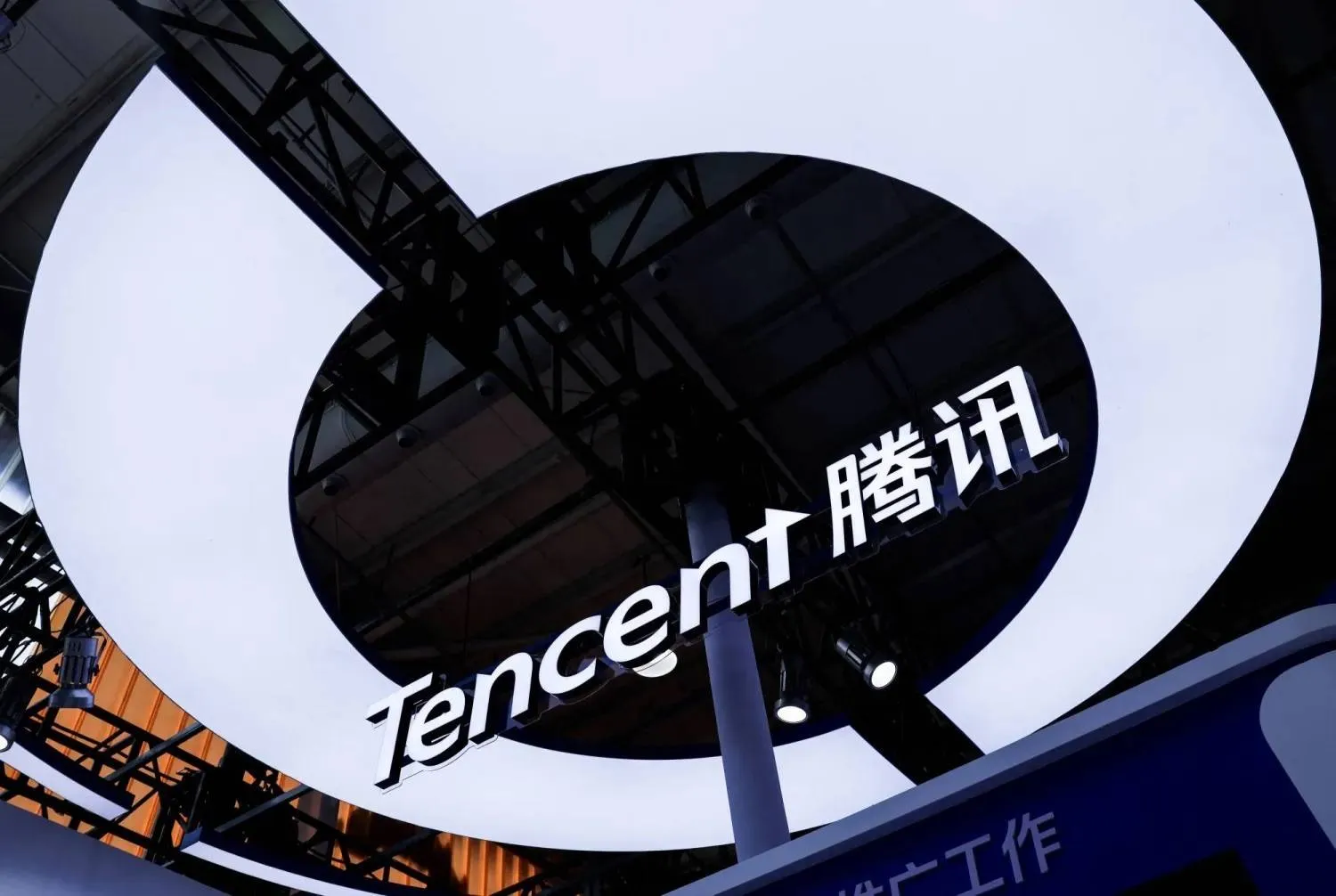
Tencent’s logo is displayed at its pavilion at the China International Fair for Trade in Services in Beijing, China. (Reuters)
TT

Tencent Unveils AI Platform, Eyes Middle East Expansion at Global Digital System Summit  

Tencent’s logo is displayed at its pavilion at the China International Fair for Trade in Services in Beijing, China. (Reuters)

Chinese technology giant Tencent has announced the global rollout of new scenario-driven artificial intelligence (AI) capabilities, aiming to help enterprises improve industrial efficiency and accelerate international expansion.

The announcement came Tuesday at the Global Digital System Summit 2025, held on September 16 and 17 at the Shenzhen World Exhibition and Convention Center.

During his keynote, Dowson Tong, Senior Executive Vice President of Tencent and CEO of its Cloud and Smart Industries Group, said: “Practical applications of AI drive business efficiency, while international expansion unlocks new growth opportunities. The solutions we launch today will empower enterprises on their journey toward intelligence and globalization, ensuring sustainable and scalable growth.”

At the summit, Tencent Cloud unveiled its Agent Development Platform 3.0, enabling companies to create autonomous AI agents and integrate them into operations such as customer service, marketing, inventory management, and research. The company also introduced its Agent Runtime infrastructure, designed to provide a robust environment for developing and deploying these agents.

Tencent expanded its SaaS+AI suite, adding advanced office collaboration tools. These include AI Minutes within Tencent Meetings, which recorded 150% year-on-year growth, and Learn Share, now used by more than 300,000 clients with a 92% accuracy rate. Another highlight was Code Buddy, an AI programming tool that cuts coding time by 40% and boosts R&D efficiency by 16%.

The company also launched new models in its Hunyuan 3D series, offering advanced 3D content generation for media and gaming. With more than 2.6 million downloads on Hugging Face, Hunyuan has become the most widely adopted open-source 3D model series.

Over the past year, the Hunyuan ecosystem has expanded with more than 30 models, including translation tools covering 30+ languages, as well as image, video, and 3D content generation tools.

Expanding global footprint

Tencent Cloud reported that its international customer base has doubled in the past year, with double-digit growth across Asia over the last three years in markets such as Hong Kong, Southeast Asia, and Japan. More than 90% of China’s leading internet companies and 95% of its top gaming firms now rely on Tencent Cloud to power their overseas growth.

Day one of the summit featured discussions with global partners including UAE-based e&, Indonesia’s Dana, GoTo Group, and MUFG Bank (China). Executives highlighted the importance of adopting AI and cloud solutions to drive global competitiveness.

Tencent also announced a series of new partnerships across Asia-Pacific, the Middle East, Europe, and North America. Notably, it revealed plans to invest $150 million in its first Middle East data center in Saudi Arabia, while building a third data center in Osaka, Japan, alongside a new regional office.

Alongside its technology push, Tencent plans to raise about $1 billion by issuing offshore yuan-denominated “dim sum” bonds in three tranches (5, 10, and 30 years). Initial price guidance stands at 2.6%, 3.0%, and 3.6% respectively, targeting non-US investors.

The company continues to spend heavily on AI, though at a moderated pace. After capital expenditures of 36.6 billion yuan ($5.14 billion) in Q4 2024 and 27.5 billion yuan in Q1 2025, spending fell to 19.1 billion yuan in Q2. Tencent has told analysts it will adopt a more cautious approach to ensure long-term profitability from its AI initiatives.

Rival Alibaba recently raised $3.2 billion through zero-coupon convertible bonds to fund international growth and cloud expansion. Around 80% of those proceeds will be directed toward new data centers, technology upgrades, and improved cloud services.

Today, Tencent operates 55 data centers across 21 markets, supported by nine international technical hubs in Asia, Europe, and the Americas.

The company has also released international versions of key products, including Code Buddy and Cloud Mall, while its EdgeOne security and acceleration platform has gained more than 100,000 global users within three months of its latest update, reducing website deployment times from a full day to just one minute.



UN's FAO: World Food Prices Fall for 3rd Month in November

FILE PHOTO: Prices of food are displayed at the Borough Market in London, Britain May 22, 2024. REUTERS/Maja Smiejkowska/File Photo
TT

UN's FAO: World Food Prices Fall for 3rd Month in November

FILE PHOTO: Prices of food are displayed at the Borough Market in London, Britain May 22, 2024. REUTERS/Maja Smiejkowska/File Photo

World food commodity prices fell for a third consecutive month in November, with all major staple foods except cereals showing a decline, the United Nations' Food and Agriculture Organization said on Friday.

The FAO Food Price Index, which tracks a basket of globally traded food commodities, averaged 125.1 points in November, down from a revised 126.6 in October and the lowest since January, Reuters reported.

The November average was also 2.1% below the year-earlier level and 21.9% down from a peak in March 2022 following Russia's full-scale invasion of Ukraine, the FAO said.

The agency's sugar price reference fell 5.9% from October to its lowest since December 2020, pressured by ample global supply expectations, while the dairy price index dropped 3.1% in a fifth consecutive monthly decline, reflecting increased milk production and export supplies.

Vegetable oil prices fell 2.6% to a five-month low, as declines for most products including palm oil outweighed strength in soy oil.

Meat prices declined 0.8%, with pork and poultry leading the decrease, while beef quotations stabilized as the removal of US tariffs on beef imports tempered recent strength, the FAO said.

In contrast, the FAO's cereal price benchmark rose 1.8% month-on-month. Wheat prices increased due to potential demand from China and geopolitical tensions in the Black Sea region, while maize prices were supported by demand for Brazilian exports and reports of weather disruption to field work in South America.

In a separate cereal supply and demand report, the FAO raised its global cereal production forecast for 2025 to a record 3.003 billion metric tons, compared with 2.990 billion tons projected last month, mainly due to increased wheat output estimates.

Forecast world cereal stocks at the end of the 2025/26 season were also revised up to a record 925.5 million tons, reflecting expectations of expanded wheat stocks in China and India as well as higher coarse grain stocks in exporting countries, the FAO said.


World Bank Forecasts 4.3% Growth for Saudi Economy, Supported by Non-Oil Activities

The Saudi flag. Asharq Al-Awsat
TT

World Bank Forecasts 4.3% Growth for Saudi Economy, Supported by Non-Oil Activities

The Saudi flag. Asharq Al-Awsat

The World Bank affirmed on Thursday that Saudi Arabia's economy has gained significant momentum for 2026-2027, driven by robust non-oil sector expansion under Vision 2030.

In a report titled “The Gulf’s Digital Transformation: A Powerful Engine for Economic Diversification,” the World Bank said growth is expected to persist in the Kingdom with non-oil activities expanding by 4% on average.

The report lifted its forecast for Saudi Arabia’s real GDP growth to 3.8% in 2025 compared to a 3.2% last October.

The forecast represents a major upward revision affirming the resilience of the Saudi economy and its ability to absorb external volatility. It also indicates growing confidence in the effectiveness of ongoing structural reforms within Vision 2030.

On Tuesday, Saudi Arabia approved its state budget for 2026, projecting real GDP growth of 4.6% in 2026.

The report showed that in the Kingdom, economic momentum is strengthening across oil and non-oil sectors with non-oil activities expanding by 4% on average and oil activities expanding by 5.4%, bringing overall real growth to an average of 4.3%.

It said oil activities grew by 1.7% y/y in the first half of 2025, benefiting from the phase-out of OPEC+ voluntary production cuts starting in April 2025.

At the financial level, the fiscal deficit between 2025 and 2027 is projected to remain at an average of 3.8% of GDP.

Meanwhile, the current account balance slightly recovered, settling at 0.5% of GDP in the first quarter of 2025 against -2.6% in the second half of 2024.

The report said real GDP growth remained stable at 3.6% y/y in the first half of 2025, thanks to the stabilization of the oil sector and sustained non-oil growth.

Non-oil activities expanded by 4.8% over the period, in line with the performance of 2024 while non-oil growth was driven by the wholesale, retail trade, restaurants, and hotels sector (+7.5% y/y in the first half of 2025), consolidating the role of hospitality and tourism as engines of economic diversification.

The report also indicated that oil activities grew by 1.7% y/y in the first half of 2025, benefiting from the phase-out of OPEC+ voluntary production cuts starting in April 2025.

These trends are expected to persist in 2026-2027, with non-oil activities expanding by 4% on average and oil activities expanding by 5.4%, bringing overall real growth to an average of 4.3%.

Job Market and Inflation
The report said the labor market mirrors the stabilization of the real economy and is rapidly becoming more inclusive to women.

Overall unemployment decreased by 0.7 point between the first quarter of 2024 and the first quarter of 2025, with the female unemployment rate dropping from 11.8% to 8.1% over the same period.

Also, inflation remained low and stable in Saudi Arabia, settling at an average of 2.2% in the first half of 2025.

However, price increases have been concentrated in the housing and utilities sector as rental prices have become a key issue, largely because rental supply has failed to match demographic growth, especially in Riyadh.

While this reflects the government’s efforts to dynamize the Kingdom’s urban centers, the price increases prompted the government to freeze rental prices in Riyadh for the next five years, as anticipated increases in housing supply should help control rental prices.

Finally, the report said Saudi Arabia’s external position stabilized in the second half of 2024 and the first quarter of 2025.

Although net foreign direct investment has remained relatively stable, the World Bank has emphasized that recent changes in foreign ownership regulations in Saudi Arabia, coupled with continued structural reforms, are positive steps to attract greater flows of foreign direct investment (FDI).


Visa Relocates European Headquarters to London's Canary Wharf

FILE PHOTO: A drone view of London's Canary Wharf financial district, two days before the government presents its critical pre-election budget, in London, Britain March 3, 2024. REUTERS/Yann Tessier/File Photo
TT

Visa Relocates European Headquarters to London's Canary Wharf

FILE PHOTO: A drone view of London's Canary Wharf financial district, two days before the government presents its critical pre-election budget, in London, Britain March 3, 2024. REUTERS/Yann Tessier/File Photo

Visa is relocating its European headquarters to London's Canary Wharf financial district, the Canary Wharf Group said on Friday.

The firm is leasing 300,000 square feet on a 15-year term at One Canada Square, and is set to relocate from Paddington in the summer of 2028, the group added.

Canary Wharf Group, which runs the wider financial district and is co-owned by QIA and Canada's Brookfield, was hit hard by the pandemic-induced fall in office demand.

The area is now enjoying a rebound as more firms push staff to return to office, Reuters reported.

"Canary Wharf continues to attract a diverse range of global businesses. We are delighted to welcome Visa who have chosen the Wharf for their European headquarters as the best location to support their business growth," Shobi Khan, Canary Wharf Group CEO, said.

JPMorgan Chase last week unveiled a plan to build a tower in the Canary Wharf financial district that will contribute 9.9 billion pounds ($13.2 billion) over six years to the local economy - including the cost of construction - and create 7,800 jobs.

Qatar's sovereign wealth fund is revising plans for a revamp of its HSBC skyscraper in the east London district to retain more office space, Reuters reported in November.