

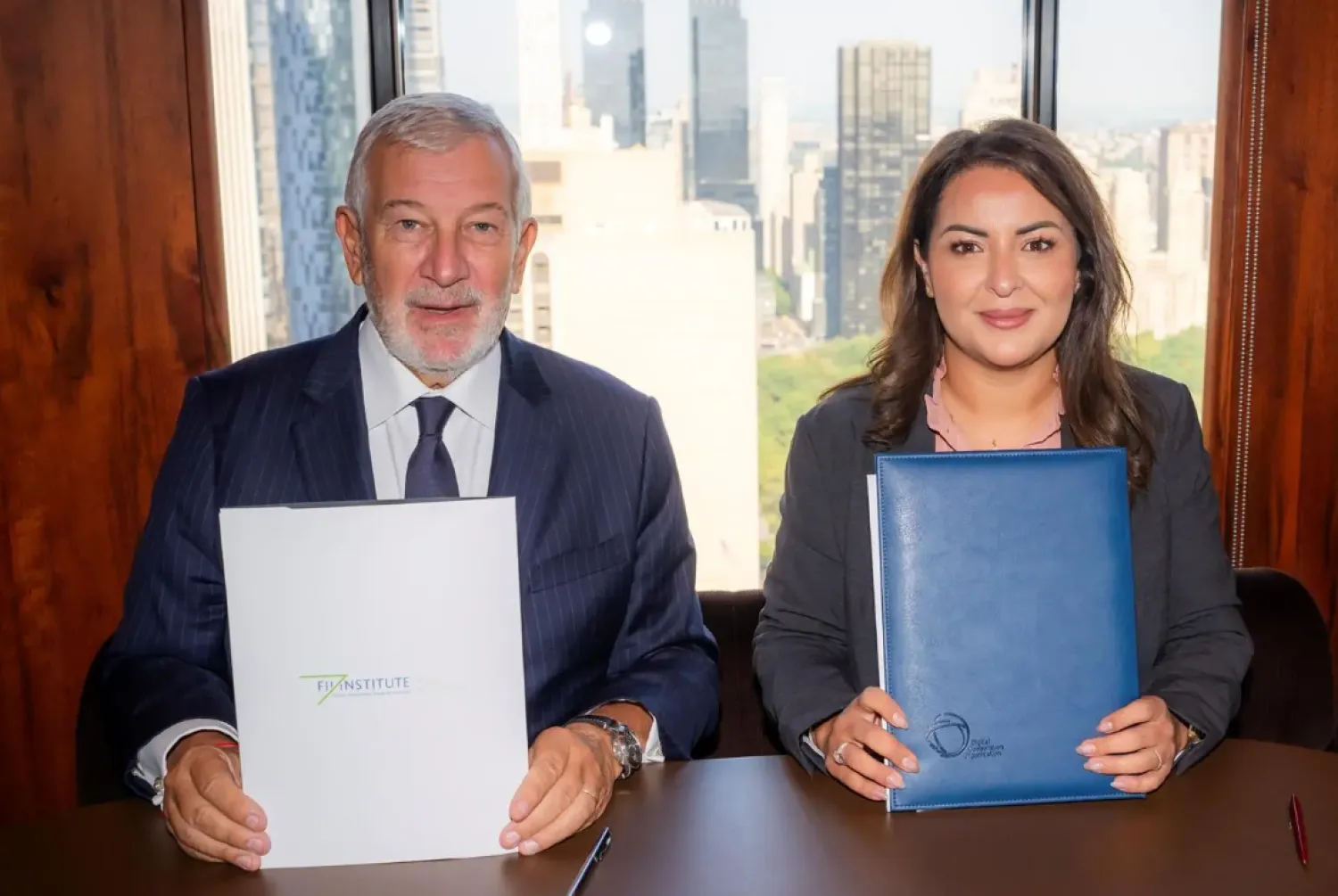

FII Institute, Digital Cooperation Organization Sign MoU to Advance Inclusive AI in Emerging Markets

The MoU establishes collaborative workstreams around AI Inclusion - SPA
TT

FII Institute, Digital Cooperation Organization Sign MoU to Advance Inclusive AI in Emerging Markets

The MoU establishes collaborative workstreams around AI Inclusion - SPA

The Future Investment Initiative (FII) Institute and the Digital Cooperation Organization (DCO) signed a memorandum of understanding to accelerate the inclusive adoption of artificial intelligence (AI) across emerging markets.

The partnership will drive collaboration on FII Institute’s AI Initiative, expand joint conclaves, and co-create thought-leadership publications, SPA reported.

The agreement aligns with FII9’s theme, “The Key to Prosperity: Unlocking New Frontiers of Growth”, which will convene global investors and visionaries in Riyadh from October 27 to 30, 2025.

The MoU establishes collaborative workstreams around AI Inclusion: ensuring emerging markets share in AI’s benefits, FII Conclaves: knowledge-driven, invite-only dialogues, and Publications: co-developing actionable thought leadership.

As part of the agreement, the DCO will serve as Knowledge Partner for FII Institute’s AI Initiative through July 31, 2026, supporting both FII9 and the post-summit program.

Chairman of the Executive Committee and Acting CEO of the FII Institute Richard Attias said: “AI sits at the core of FII Institute’s strategy for an inclusive digital future. Partnering with the DCO expands our ability to ensure fast-growing digital economies benefit from AI adoption, not only in Saudi Arabia but across global markets.”

Director General of the DCO Dr. Hajar El Haddaoui added: “This partnership comes at a pivotal moment for the global digital economy. By combining DCO’s mandate for inclusive digital growth with FII’s forward-looking AI agenda, we are creating tangible pathways for our Member States and partners to benefit from cutting-edge innovation.

Signing this MoU during UNGA underscores our shared commitment to ensuring digital prosperity is inclusive, sustainable, and borderless.”
The DCO is the world’s first intergovernmental body dedicated to accelerating inclusive digital growth.

Representing 16 Member States, with a combined GDP of over $3.5 trillion and 800 million people, the DCO enables cross-border cooperation, forward-looking policies, and opportunities in the digital economy. Its focus on AI and the Future of Work ensures that emerging markets are active beneficiaries of next-generation technologies.

The FII Institute is a global non-profit foundation driven by data, innovation, and impact. Through its THINK, XCHANGE, ACT pillars, the institute fosters actionable solutions across AI, sustainability, healthcare, and education.

FII9, held from October 27 to 30, 2025, in Riyadh, will gather leaders for plenaries, labs, and exclusive conclaves designed to translate dialogue into deals and policy roadmaps.

The MoU with the DCO dovetails with the Institute’s ongoing AI Inclusive initiative—ensuring emerging markets access funding, expertise, and capacity-building to accelerate equitable AI adoption.




Apple, Google Send New Round of Cyber Threat Notifications to Users Around World

The Apple logo is seen in this illustration taken September 24, 2025. (Reuters)
TT

Apple, Google Send New Round of Cyber Threat Notifications to Users Around World

The Apple logo is seen in this illustration taken September 24, 2025. (Reuters)

Apple and Google have sent a new round of cyber threat notifications to users around the world, the companies said this week, announcing their latest effort to insulate customers against surveillance threats.

Apple and the Alphabet-owned Google are two of several tech companies that regularly issue warnings to users when they determine they may have been targeted by state-backed hackers.

Apple said the warnings were issued on Dec. 2 but gave few further details about the alleged hacking activity and did not address questions about the number of users targeted or say who was thought to be conducting the surveillance.

Apple said that "to date we have notified users in over 150 countries in total."

Apple's statement follows Google's Dec. 3 announcement that it was warning all known users targeted using Intellexa spyware, which it said spanned "several hundred accounts across various countries, including Pakistan, Kazakhstan, Angola, Egypt, Uzbekistan, Saudi Arabia, and Tajikistan."

Google said in its announcement that Intellexa, a cyber intelligence company that is sanctioned by the US government, was "evading restrictions and thriving."

Executives tied to Intellexa did not immediately return messages.

Previous waves of warnings have triggered headlines and prompted investigations by government bodies, including the European Union, whose senior officials have previously been targeted using spyware.

Threat notifications impose costs on cyber spies by alerting victims, said John Scott-Railton, a researcher with the Canadian digital watchdog group Citizen Lab.

He said they were "also often the first step in a string of investigations and discoveries that can lead to real accountability around spyware abuses."


AI Bubble to Be Short-lived, Rebound Stronger, NTT DATA Chief Says

FILE PHOTO: Figurines with computers and smartphones are seen in front of the words "Artificial Intelligence AI" in this illustration taken, February 19, 2024. REUTERS/Dado Ruvic/Illustration/File Photo
TT

AI Bubble to Be Short-lived, Rebound Stronger, NTT DATA Chief Says

FILE PHOTO: Figurines with computers and smartphones are seen in front of the words "Artificial Intelligence AI" in this illustration taken, February 19, 2024. REUTERS/Dado Ruvic/Illustration/File Photo

A potential artificial intelligence bubble will deflate faster than past tech cycles but give way to an even stronger rebound as corporate adoption catches up with infrastructure spending, the head of Japanese IT company NTT DATA Inc. said.

Despite worries around supply chains, the direction of travel is clear, CEO Abhijit Dubey said in an interview with the Reuters Global Markets Forum.

"There is absolutely no doubt that in the medium- to long-term, AI is a massive secular trend," he said.

"Over the next 12 months, I think we're going to have a bit of a normalization ... It'll be a short-lived bubble, and (AI) will come out of it stronger."

With demand for compute still running ahead of supply, "supply chains are almost spoken for" over the next two to three years, he said. Pricing power is already tilting toward chipmakers and hyperscalers, mirroring their stretched valuations in public markets, he added.

AI has triggered the biggest technological shake-up since the advent of the internet, fueling trillions of dollars of investment and eye-watering equity gains. But it has caused shortages of memory chips, drawn regulatory scrutiny, and created growing unease over the future of work.

Dubey, who is also the firm's chief AI officer, said his company has begun rethinking recruitment strategies as AI reshapes labor markets.

"There will clearly be an impact ... Over a five- to 25-year horizon, there will likely be dislocation," he said. However, he added that NTT DATA continues to hire across locations.

Speakers at the Reuters NEXT conference in New York discussed how AI may upend work and job growth.

AI startup Writer Inc.'s CEO May Habib said customers are focused on slowing headcount growth.

"You close a customer, you get on the phone with the CEO to kick off the project, and it's like, 'Great, how soon can I whack 30% of my team?'," she said.

Still, a PwC survey of the global workforce released in November suggests the reality of generative AI usage has yet to match boardroom expectations.

Daily use of GenAI remains "significantly lower" than widely touted by executives, PwC said, even as workers with AI skills commanded an average wage premium of 56% — more than double last year's figure.

PwC also flagged a widening skills gap, with about half of non-managers reporting access to training resources, compared with roughly three-quarters of senior executives.


EU Launches Antitrust Probe into Meta over Use of AI in WhatsApp

FILE - Attendees visit the Meta booth at the Game Developers Conference 2023 in San Francisco on March 22, 2023. (AP Photo/Jeff Chiu, File)
TT

EU Launches Antitrust Probe into Meta over Use of AI in WhatsApp

FILE - Attendees visit the Meta booth at the Game Developers Conference 2023 in San Francisco on March 22, 2023. (AP Photo/Jeff Chiu, File)

Brussels has opened a new antitrust investigation into Meta Platforms over its rollout of artificial intelligence features in WhatsApp, the European Commission said on Thursday, reflecting rising scrutiny of Big Tech's use of generative AI.

The move, reported earlier by Reuters and the Financial Times, marks the latest action by European regulators against large technology firms as the bloc seeks to balance support for the sector with efforts to curb its expanding influence.

The European Commission opened the investigation into "Meta's new policy regarding AI providers' access to WhatsApp" after the California-based company integrated its Meta AI system into the messaging service earlier this year.

A WhatsApp spokesperson said that "the claims are baseless", adding that the emergence of chatbots on its platforms "puts a strain on our systems that they were not designed to support".

"Even still, the AI space is highly competitive and people have access to the services of their choice in any number of ways, including app stores, search engines, email services, partnership integrations, and operating systems."

Meta AI, a chatbot and virtual assistant, has been built into WhatsApp's interface since March 2025 across European markets.

Italy's antitrust watchdog opened a parallel investigation in July into allegations that Meta leveraged its market power by integrating an AI tool into WhatsApp. The probe was expanded in November to examine whether Meta further abused its dominance by blocking rival AI chatbots from the messaging platform.

The FT, citing officials, said that the EU probe will be conducted under traditional antitrust rules rather than the EU's Digital Markets Act, the bloc's landmark legislation currently used to scrutinize Amazon and Microsoft's cloud services for potential curbs.