


Saudi Minister of Culture Announces Establishment of Riyadh University of Arts

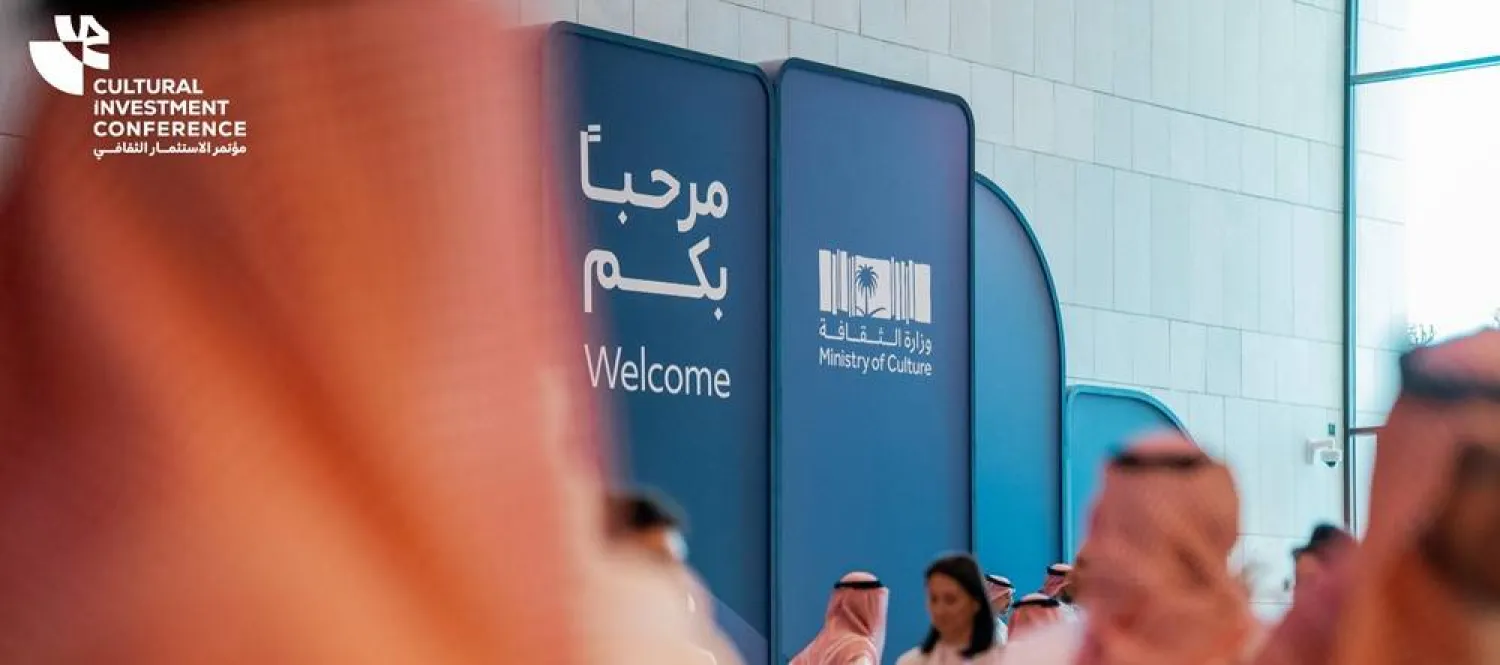
Saudi Minister of Culture Prince Bader bin Abdullah bin Farhan made the announcement at the inaugural Cultural Investment Conference in Riyadh on Monday. (Saudi Ministry of Culture)
TT

Saudi Minister of Culture Announces Establishment of Riyadh University of Arts

Saudi Minister of Culture Prince Bader bin Abdullah bin Farhan made the announcement at the inaugural Cultural Investment Conference in Riyadh on Monday. (Saudi Ministry of Culture)

Saudi Minister of Culture Prince Bader bin Abdullah bin Farhan announced on Monday the establishment of the Riyadh University of Arts (RUA).

As one of the most significant investments in cultural education, the university aspires to become a hub for cultural education in the Kingdom, offering a range of degrees that equip students to impact the creative industries further and drive growth in the Kingdom’s cultural sector, in alignment with Saudi Vision 2030, said a statement by the Ministry of Culture.

Speaking at the inaugural Cultural Investment Conference, which kicked off in Riyadh, the minister said: "We are proud to launch Riyadh University of Arts as an extraordinary step in advancing Saudi Arabia’s cultural sector which enjoys unlimited support from Custodian of the Two Holy Mosques King Salman bin Abdulaziz Al Saud and Prince Mohammed bin Salman bin Abdulaziz Al Saud, Crown Prince and Prime Minister.”

“This institution will serve as a cornerstone for creative education and cultural innovation, enabling our students to acquire the skills, knowledge, and vision that will shape the Kingdom’s cultural future,” he added. “By supporting talents and celebrating our heritage, we aim to equip the next generation with the skills necessary to boost the creative economy's growth. Through this pioneering university, we empower Saudi artists and creators to leave their unique mark on the local and international cultural stage.”

The university aims to rank among the world’s top 50 international universities specializing in arts and culture, with a mission to cultivate an innovative education environment that empowers students to discover their passions, develop their talents, promote creativity, and contribute to the creative economy, he went on to say.

RUA will cater to educational levels through gradual phasing, covering all subsectors and offering a comprehensive academic portfolio that ensures continuous education in the fields of arts and culture. RUA’s academic offerings include short courses, diplomas, bachelor’s, higher diplomas, master’s, and PhDs.

Located in its Irqah campus in Riyadh, the university will launch through its first three colleges: Music, Film, and Theatre & Performing Arts. Colleges will gradually expand to thirteen colleges, offering programs across a range of disciplines, including Architecture & Design, Culinary Arts, Visual Arts, Heritage Studies, Literature, Cultural Management, Arts Management, Fashion, and more.

RUA will also provide scholarships for cultural talents. Full details of the university will be announced on the university’s official website when it launches in the first quarter of 2026.

The university has built partnerships with leading international institutions to design academic programs, collaborate in research, and offer enriching programs in cultural education and development. With a focus on fostering creativity and building entrepreneurial skills, RUA aims to strengthen the Kingdom’s talent pipeline, empowering artists, scholars, and cultural leaders to drive growth within Saudi Arabia and contribute to shaping the Kingdom’s cultural future.

RUA will directly contribute to the growing demand for skilled professionals in the cultural sector. This field is expected to see 7% annual growth in demand for qualified cultural talents, creating over 300,000 new jobs over the next decade.

With its focus on nurturing talent, RUA will become a cornerstone of the Kingdom’s economic strategy, driving the cultural sector to contribute over SAR80 billion to the national economy by 2030. The university aims to supply the cultural sector with qualified professionals by graduating 25,000-30,000 students by 2040 and training 1,000-1,500 teachers to support this growth.


Saudi Ambassador to Lebanon Visits Ameen Rihani Museum

Saudi Ambassador to Lebanon Fahd Al-Dosari is seen during his visit to the museum. (SPA)
TT

Saudi Ambassador to Lebanon Visits Ameen Rihani Museum

Saudi Ambassador to Lebanon Fahd Al-Dosari is seen during his visit to the museum. (SPA)

Saudi Ambassador to Lebanon Fahd Al-Dosari visited on Monday the Ameen Rihani Museum in the town of Freike in Matn District, reported the Saudi Press Agency.

The ambassador was received by members of the Rihani family, led by the museum's curator, Ameen Albert Rihani, who welcomed him and praised the historic relations between Saudi Arabia and Lebanon.

They recalled the historic meeting between King Abdulaziz bin Abdulrahman Al Saud and Lebanese writer and historian Ameen Rihani in 1922.

During the visit, Al-Dosari toured the museum's historical and literary sections and viewed the exhibition marking the centenary of the book “Rihaniyyat”.


On World Camel Day, Saudi Arabia’s AlUla Celebrates Camel Heritage and Reinforces Its Cultural Identity

In Saudi Arabia, the relationship with camels extends beyond traditional heritage to form an integral part of national identity and collective memory. (SPA)
TT

On World Camel Day, Saudi Arabia’s AlUla Celebrates Camel Heritage and Reinforces Its Cultural Identity

In Saudi Arabia, the relationship with camels extends beyond traditional heritage to form an integral part of national identity and collective memory. (SPA)

World Camel Day, observed annually on June 22, serves as a global occasion to reflect on the enduring relationship between humans and camels throughout history.

The day highlights camels' economic contributions, their role in supporting food security and sustainable development, and their cultural significance, which extends beyond geographical boundaries and has made them a deeply rooted symbol in the collective memory of peoples worldwide, reported the Saudi Press Agency on Monday.

In Saudi Arabia, the relationship with camels extends beyond traditional heritage to form an integral part of national identity and collective memory. This is reflected in the significant attention devoted to the sector through specialized initiatives and events, support for camel owners, and efforts to preserve and sustain this heritage as one of the Kingdom's most prominent cultural assets.

Across AlUla, rock art and inscriptions dating back thousands of years tell the story of the close relationship between humans and camels. (SPA)

Across AlUla, rock art and inscriptions dating back thousands of years tell the story of the close relationship between humans and camels. These animals contributed to the prosperity of trade routes, facilitated mobility, and supported the stability of successive communities.

Camels remain an essential part of AlUla's heritage and a testament to the deep connection between people and their environment since ancient times.

Today, camels in AlUla are more than witnesses to history. They are an integral part of the region's cultural and sporting landscape and a key element of the tourism experience offered by the land of civilizations.

Through a contemporary vision that combines the authenticity of history with the aspirations of the future, AlUla continues to showcase this rich heritage, ensuring that camels remain among the most enduring symbols in the story of people and place across generations.


Najran Sees Growing Interest in Heritage and Archaeological Artifact Collection

These collections also include artifacts illustrating stages of the modern Saudi state, serving as educational platforms that bridge the past and present - SPA
TT

Najran Sees Growing Interest in Heritage and Archaeological Artifact Collection

These collections also include artifacts illustrating stages of the modern Saudi state, serving as educational platforms that bridge the past and present - SPA

Najran Region has witnessed growing enthusiasm among community members and heritage enthusiasts for collecting traditional and archaeological artifacts that document historical eras linked to the region’s civilization and the lives of previous generations, contributing to reconnecting society with its roots and raising awareness of the importance of preserving tangible heritage as an essential part of cultural identity.

Heritage enthusiasts play a significant role in preserving Najran’s cultural legacy by establishing private museums that display archaeological items, traditional tools, clothing, photographs, and historical collections reflecting daily life and customs, SPA reported.

These collections also include artifacts illustrating stages of the modern Saudi state, serving as educational platforms that bridge the past and present.

The hobby of collecting heritage items in Najran ranges from gathering everyday tools such as pottery and agricultural equipment to traditional clothing, jewelry, weapons, books, and manuscripts. Motivations vary between personal documentation, preserving family memory, and academic research aimed at understanding historical social and economic practices.

Local markets and seasonal exhibitions, along with digital platforms, have contributed to expanding this hobby, enabling knowledge exchange and increasing awareness of preservation methods and historical value. Community initiatives and workshops further support proper documentation and conservation, ensuring that this passion complements heritage preservation while adhering to scientific and legal standards.
