
The dispute over the return of bodies, the issue that nearly blew up US President Donald Trump’s peace plan, is only the first landmine. More major challenges lie ahead. The plan, drafted as a set of general principles, demands a deep dive into the details. Both parties signed it reluctantly.
Hamas finds many of its provisions hard to swallow. Israel, meanwhile, is plotting how to dismantle the plan without being blamed for rejecting it, the same tactic it used since the first ceasefire talks. It keeps laying obstacles before Hamas, dodging commitments required for a permanent truce, and probing for loopholes to stall the next phases.
Article 19 of the plan stipulates that as the reconstruction of Gaza advances, and when the reform program of the Palestinian Authority is implemented with integrity, conditions may finally be ripe for a credible path toward Palestinian self-determination and statehood.
In this tug-of-war, the first landmine came in the form of the bodies crisis.
On the surface, Hamas appeared slow to act, handing over four bodies on the first day and saying it struggled to locate the rest. Israel, whose intelligence knew the truth, erupted in protest — shutting down the Rafah crossing, cutting humanitarian trucks by half, and complaining directly to President Trump while threatening to resume hostilities. Optimism quickly faded.
When asked about the next looming issue, Hamas’s disarmament, Trump said the group had promised him it would comply.
“If they (Hamas) don't disarm, we will disarm them. And it will happen quickly and perhaps violently,” said Trump.
The Facts Behind the Delay
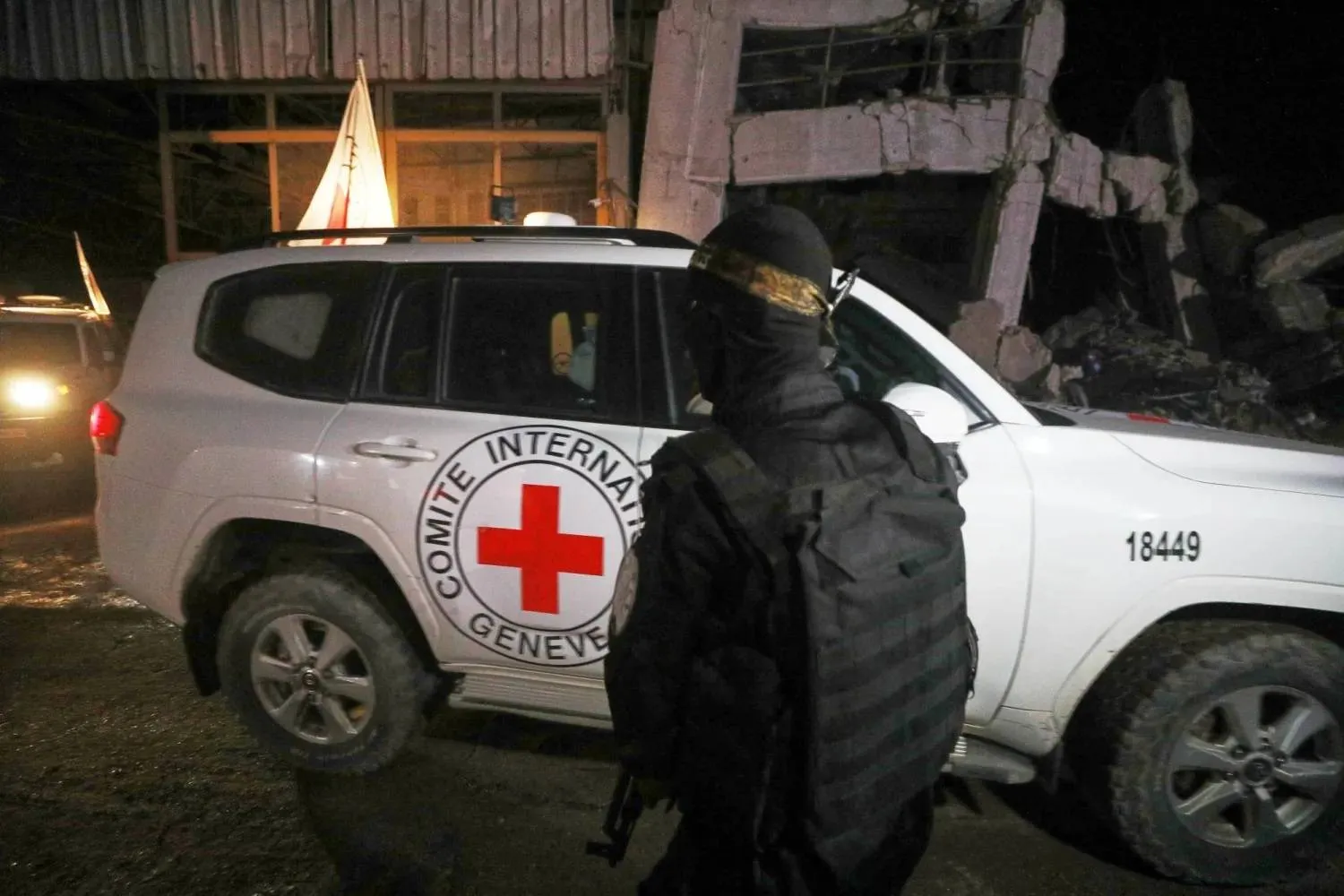
In reality, Hamas did not breach the agreement. The deal set no deadline for returning the bodies. During negotiations, the group had already said it could not recover all remains within days and would need time — some were buried beneath the rubble from Israel’s airstrikes, requiring heavy machinery to retrieve, while others were held by Hamas members who had since been killed without disclosing the bodies’ locations.
Some of the remains are in areas under Israeli control — a fact that negotiators, particularly the Americans, acknowledged.
A joint mechanism was established to address such disputes, including a committee of experts from Egypt, Qatar, and Türkiye, with the US and Israel offering technical support if needed.
Yet it became clear Hamas could have returned more than four bodies on the first day. After Israel’s threats and punitive measures through the Rafah crossing and aid restrictions, the group backtracked and began releasing more remains — earning itself a black mark in the eyes of Washington and the wider public.
Israel, for its part, manufactured a crisis out of proportion. Such issues can arise during any truce, and a clear mechanism was already in place to resolve them. Above all, Israel knows from experience how difficult it is to locate war dead. It has suffered that same ordeal throughout its own history.
The Israeli army maintains a special unit of hundreds of soldiers, officers, and forensic experts working six days a week to search for missing bodies. According to military data, 568 Israeli soldiers remain missing since the Zionist movement began its war in Palestine in 1914.
Despite Israel’s advanced technology, vast experience, and the help of nations scarred by war, including Germany, Britain, France, and Japan, it still has not recovered the remains of 92 soldiers missing since 1948.
Israel also lost soldiers’ remains in the 1967 and 1973 wars — even while controlling the battlefield. So why blame Hamas? Why provoke a major crisis over 20 bodies when Israel itself has caused the disappearance of thousands, perhaps tens of thousands, of Palestinian corpses still buried under Gaza’s ruins, with no means yet to recover them?
Observers say Hamas could have avoided such a confrontation, and Israel should not have inflated it into a full-blown crisis. The only plausible explanation, they argue, is that both sides are struggling to digest the terms of Trump’s plan.
More landmines are likely ahead. Even if another war does not erupt, the mounting frustrations may “exhaust Trump and his team.”
Reports suggest his adviser Steve Witkoff has already decided to step down and return to business. If Washington turns its back, Israel will again be spared a path that leads toward Palestinian statehood.