


Ithra’s Khoos Residency Weaves Together Cultures Through Palm Craft

Held in Dhahran and Al Ahsa the residency explored the traditional craft of Khoos
TT

Ithra’s Khoos Residency Weaves Together Cultures Through Palm Craft

Held in Dhahran and Al Ahsa the residency explored the traditional craft of Khoos

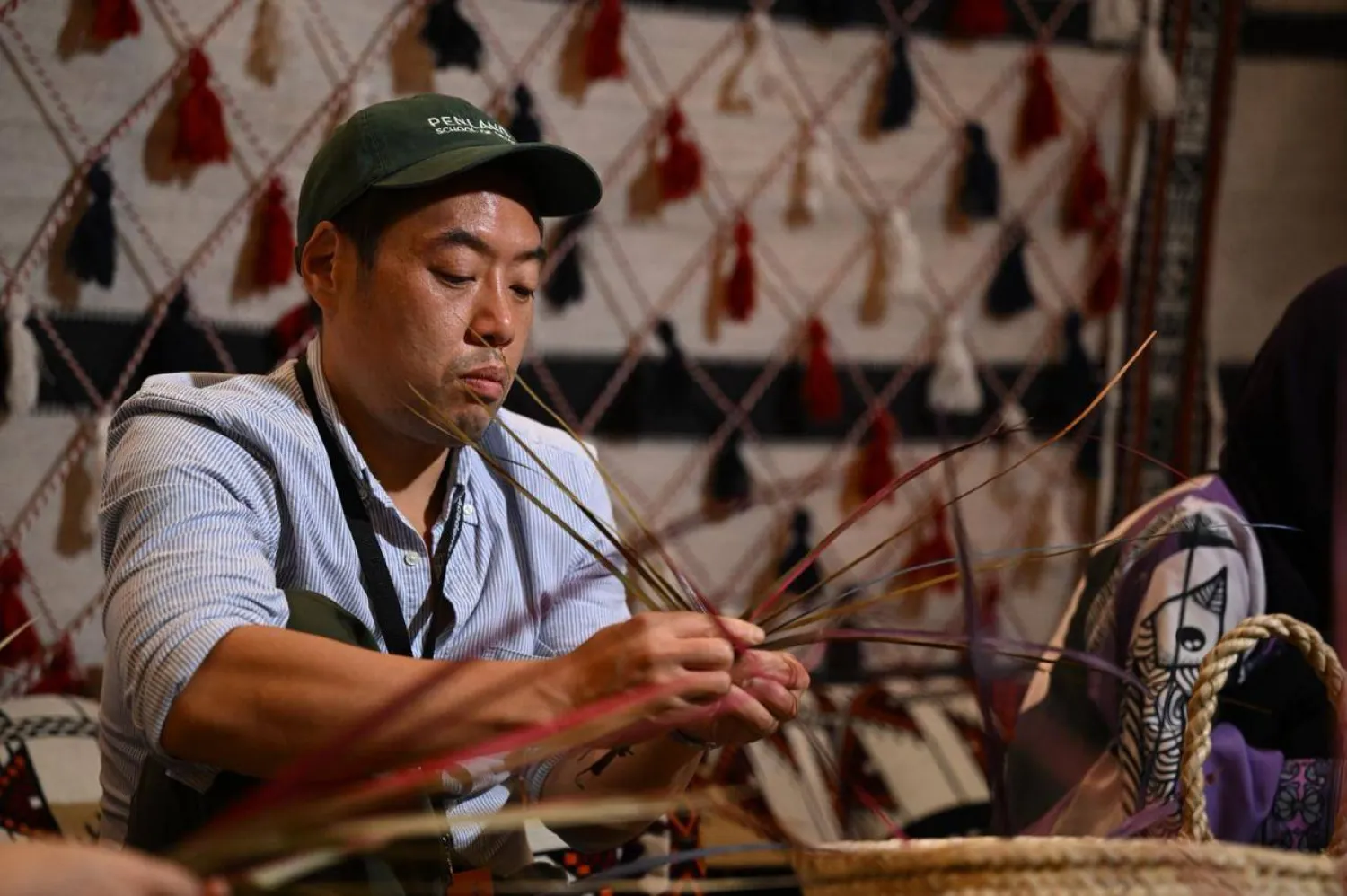
The King Abdulaziz Center for World Culture (Ithra) has concluded its transformative Khoos Residency, a 12-day program that brought together 10 designers, artists, and craftspeople from Saudi Arabia, the UAE, Bahrain, Chile, and South Korea. Held in Dhahran and Al Ahsa—home to the world’s second-largest oasis—the residency explored the traditional craft of Khoos, or palm frond weaving, as a medium for cultural exchange and contemporary design.

Guided by renowned architect and designer Abeer Seikaly, the residency unfolded through workshops, field visits, and reflective sessions that invited participants to explore both the natural and symbolic significance of the palm tree. Master artisans, including Masouma Hamdan—whose family has practiced palm weaving for generations—led hands-on sessions in dyeing, weaving, and structural building.

For South Korean sculptor Heechan Kim, the experience was deeply introspective. “Being immersed in the rhythm of the palm—its generosity, texture, and patience—allowed me to see making as both an act of listening and an act of thinking,” he shared. “Working alongside Masouma, I felt the power of shared silence—how understanding can flow through the movement of hands rather than words.”
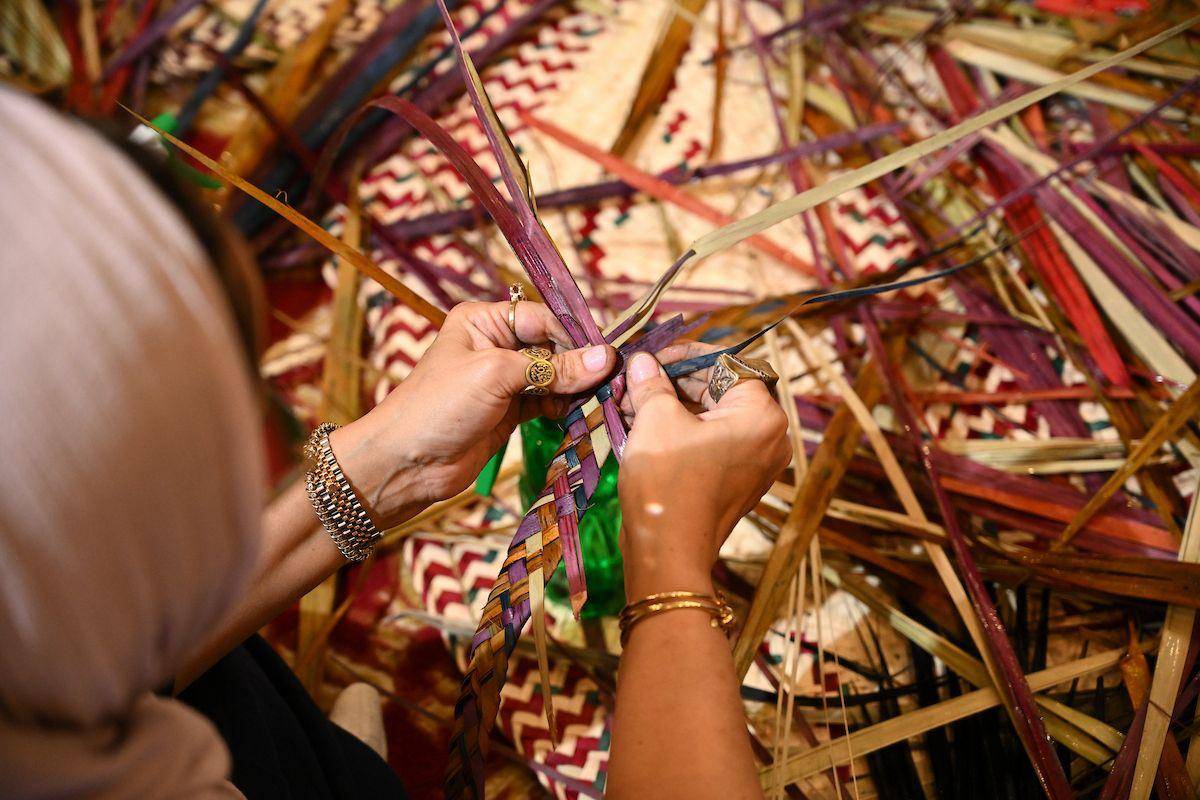
This sentiment resonated throughout the residency. Artists experimented with palm fronds as sculptural forms, while designers explored eco-printing, typography, and architecture. Saudi participant Bashaer Hawsawi reflected, “The craft dissolves barriers between cultures and calls on everyone to speak a shared language—the language of the hand, of patience, and of memory.”

Workshops such as The Mudhif as Embodiment by Iraqi architect Ola Znad, Palmscapes by Saudi artist Jana Malaikah, and Refarming Craft in Lifestyle by Abdurahman Alabed, founder of Qormuz, highlighted the intersection of palm weaving with architecture, fashion, and ecological design. These sessions revealed the palm’s story as a shared narrative across desert landscapes—from Mesopotamia to Morocco, and the Arabian Gulf to Latin America.

The residency’s second phase took participants to Al Ahsa, a UNESCO World Heritage Site, where they engaged with the environment that has nurtured palm weaving for centuries. Visits to Ibrahim Castle, Bayt Al Bay’ah, and Souq Al Qaisaria offered insights into the social and architectural lineage of the craft.
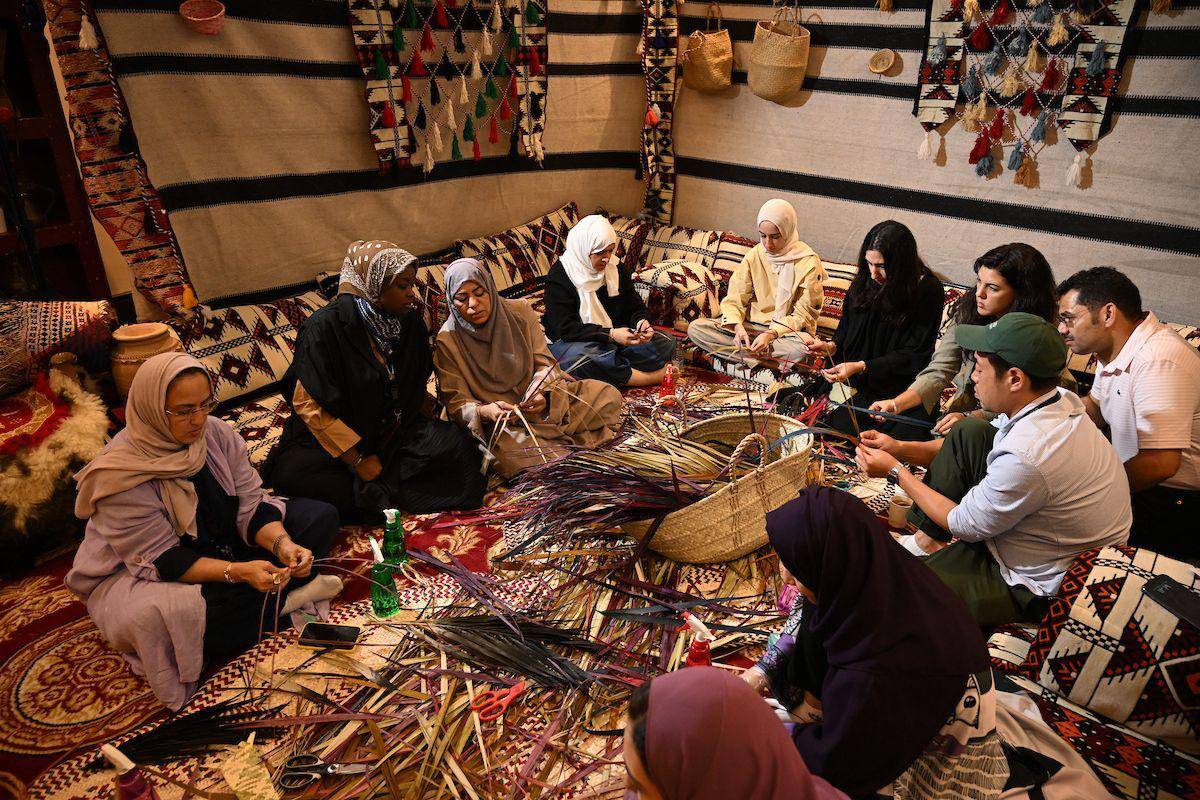
“The diversity of voices we encountered—designers, philosophers, and even farmers—was incredibly impactful,” said Kim. “Experiencing the palm tree through so many perspectives made this not just an educational process, but a self-reflective journey as an artist and as a human being.”

As the program concluded, participants developed personal projects—installations, objects, and performances—that embodied their shared experiences. What emerged was not just a renewed appreciation for a traditional craft, but a contemporary dialogue on sustainability, cultural continuity, and the tactile nature of design.

The Khoos Residency proved that craft is a universal language—one that connects people across geography and culture through gestures of care, repetition, and memory.


Red Sea Fund Launches Second Round to Support Film Projects in Production Stage

File photo of the fifth day of the Red Sea International Film Festival - SPA
TT

Red Sea Fund Launches Second Round to Support Film Projects in Production Stage

File photo of the fifth day of the Red Sea International Film Festival - SPA

The Red Sea Fund, affiliated with the Red Sea Film Foundation, announced the opening of applications to support film projects in the production stage within the second round of this year’s support program, which will continue until March 21, as part of its efforts to enhance the cinema industry and empower innovators in the region, SPA reported.

The round aims to support promising cinematic voices from the Kingdom and the Arab world, as well as filmmakers from Africa and Asia, through financial grants that help complete film projects and present their creative narratives globally, with a special focus on projects ready to enter production and begin filming.


Prince Mohammed bin Salman Project Restores Historic Al-Jami' Mosque in Tabuk Region

The renovation utilized modern technologies to restore the mosque's original identity - SPA
TT

Prince Mohammed bin Salman Project Restores Historic Al-Jami' Mosque in Tabuk Region

The renovation utilized modern technologies to restore the mosque's original identity - SPA

The Prince Mohammed bin Salman Project for the Development of Historical Mosques has completed the restoration of Al-Jami' Mosque in Duba, Tabuk Region, as part of its mission to preserve the Kingdom's architectural heritage under Vision 2030.

As one of Duba’s oldest landmarks, the mosque is deeply intertwined with the city’s maritime history, traditionally serving as a central meeting point for sailors. Throughout its history, the mosque underwent several construction phases, including significant contributions by King Abdulaziz and King Fahd, before its selection for the current national development project, SPA reported.

The renovation utilized modern technologies to restore the mosque's original identity, increasing its area to 972.23 square meters and its capacity to 779 worshippers. The architectural style is inspired by traditional Red Sea heritage, incorporating natural materials like stone, mud, and wood for intricate mashrabiyas.

Executed by specialized Saudi firms, the project balances traditional standards with sustainability to rehabilitate the site for worship while highlighting its cultural significance. By restoring such landmarks, the project ensures the preservation of the Kingdom’s diverse architectural and social memory for future generations.


Leading Portraiture Competition Celebrates Saudi Heritage Through Art

Throughout its history, the award has emphasized themes rooted in Saudi heritage and national initiatives - SPA
TT

Leading Portraiture Competition Celebrates Saudi Heritage Through Art

Throughout its history, the award has emphasized themes rooted in Saudi heritage and national initiatives - SPA

The Dia Aziz Dia Award for Portrait, hosted by the Saudi Arabian Society for Culture and Arts in Jeddah, is a leading platform for portraiture and the only competition of its kind in the Middle East. It fosters national identity through contemporary art, connecting veteran and emerging artists.

Throughout its history, the award has emphasized themes rooted in Saudi heritage and national initiatives, including Saudi women, the Arabian horse, the Saudi Green Initiative, and King Abdulaziz.

These themes highlight art's role in reflecting social transformations and contributing to the cultural goals of Saudi Vision 2030, SPA reported.

The current ninth edition, with a theme focused on King Salman, invited artists to depict the leadership and humanity of the Custodian of the Two Holy Mosques. This edition attracted significant participation, with 787 submissions from 42 cities, including international entries.

Of these, 61 works were shortlisted for the final competition, with prizes totaling SAR170,000 awarded to three main winners and seven incentive recipients.