


Trump Warns Hamas 'We Will Have No Choice but to Go in and Kill them' if Bloodshed Persists in Gaza

US President Donald Trump speaks in the Oval Office of the White House, Thursday, Oct. 16, 2025, in Washington. (AP Photo/Alex Brandon)
TT

Trump Warns Hamas 'We Will Have No Choice but to Go in and Kill them' if Bloodshed Persists in Gaza

US President Donald Trump speaks in the Oval Office of the White House, Thursday, Oct. 16, 2025, in Washington. (AP Photo/Alex Brandon)

US President Donald Trump on Thursday warned Hamas “we will have no choice but to go in and kill them” if internal bloodshed persists in Gaza.

The grim warning from Trump came after he previously downplayed the internal violence in the territory since a ceasefire and hostage deal between Israel and Hamas went into effect last week in the two-year war.

Trump later clarified he won’t send US troops into Gaza after launching the threat against Hamas, The Associated Press reported.

“It’s not going to be us,” Trump said in an exchange with reporters. “We won’t have to. There are people very close, very nearby that will go in and they’ll do the trick very easily, but under our auspices.”

The president did not specify if he was speaking of Israel, but action by Israeli forces could risk violating terms of the ceasefire agreement.

The president's shift in tone with Hamas was notable.

Trump said Tuesday that Hamas had taken out “a couple of gangs that were very bad” and had killed a number of gang members. “That didn’t bother me much, to be honest with you,” he said.

The Republican president did not say how he would follow through on his threat posted on his Truth Social platform, and the White House did not immediately respond to a request for comment seeking clarity.

But Trump also made clear he had limited patience for the killings that Hamas was carrying out against rival factions inside the devastated territory.

“They will disarm, and if they don’t do so, we will disarm them, and it’ll happen quickly and perhaps violently,” Trump said.

The ceasefire plan introduced by Trump had called for all hostages — living and dead — to be handed over by a deadline that expired Monday. But under the deal, if that didn’t happen, Hamas was to share information about deceased hostages and try to hand them over as soon as possible.

Israeli Prime Minister Benjamin Netanyahu said Wednesday that Israel “will not compromise” and demanded that Hamas fulfill the requirements laid out in the ceasefire deal about the return of hostages’ bodies.

Hamas’ armed wing said in a statement Wednesday that the group honored the ceasefire’s terms and handed over the remains of the hostages it had access to.

The United States announced last week that it is sending about 200 troops to Israel to help support and monitor the ceasefire deal in Gaza as part of a team that includes partner nations and nongovernmental organizations. But US officials have stressed that US forces would not set foot in Gaza.

Israeli officials have also been angered by the pace of the return of the remains of dead hostages the militant group had been holding in captivity. Hamas had agreed to return 28 bodies as part of the ceasefire deal in addition to 20 living hostages, who were released earlier this week.

Hamas has assured the US through intermediaries that it is working to return dead hostages, according to two senior US advisers. The advisers, who were not authorized to comment publicly and briefed reporters on the condition of anonymity, said they do not believe Hamas has violated the deal.

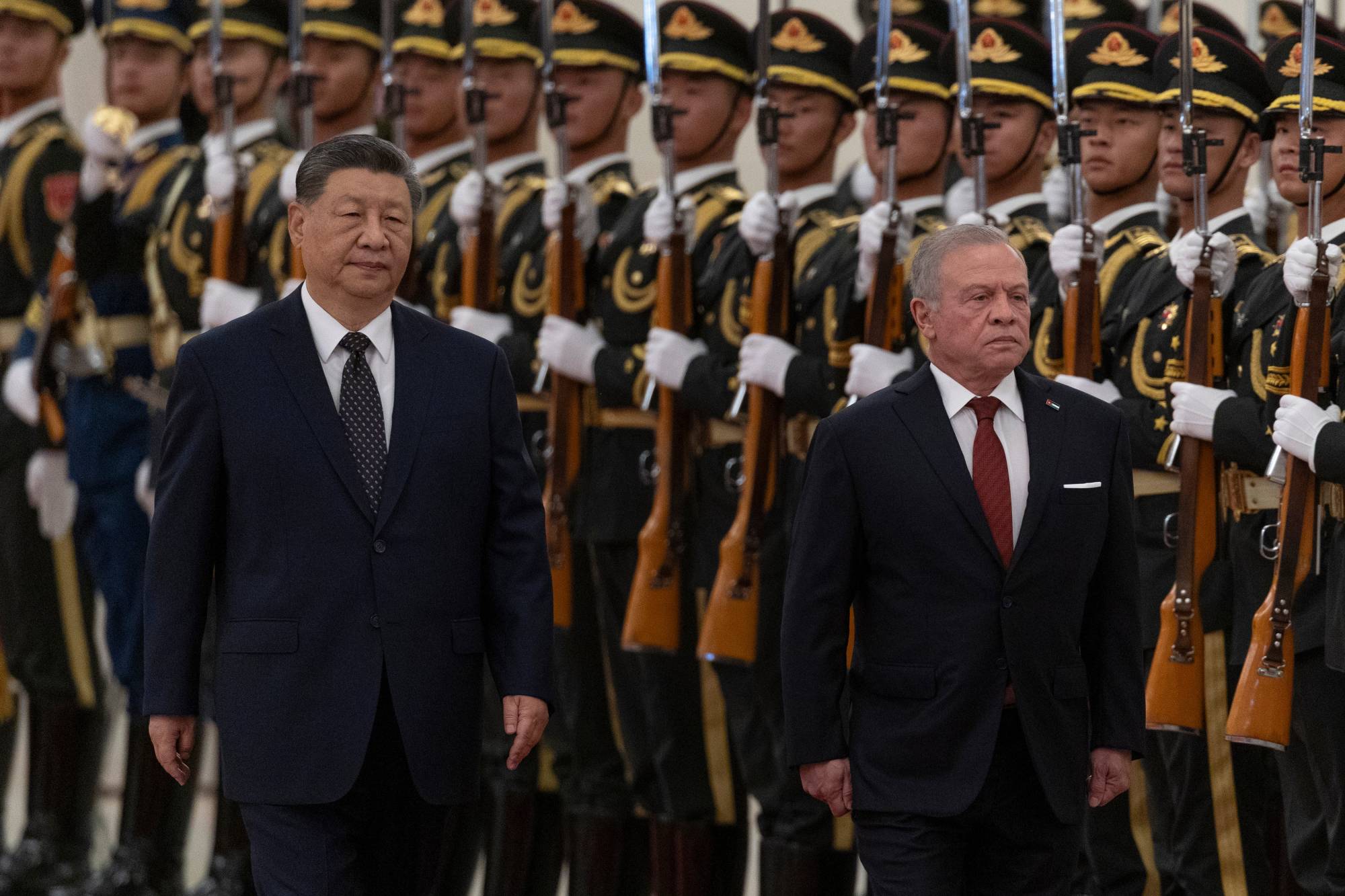

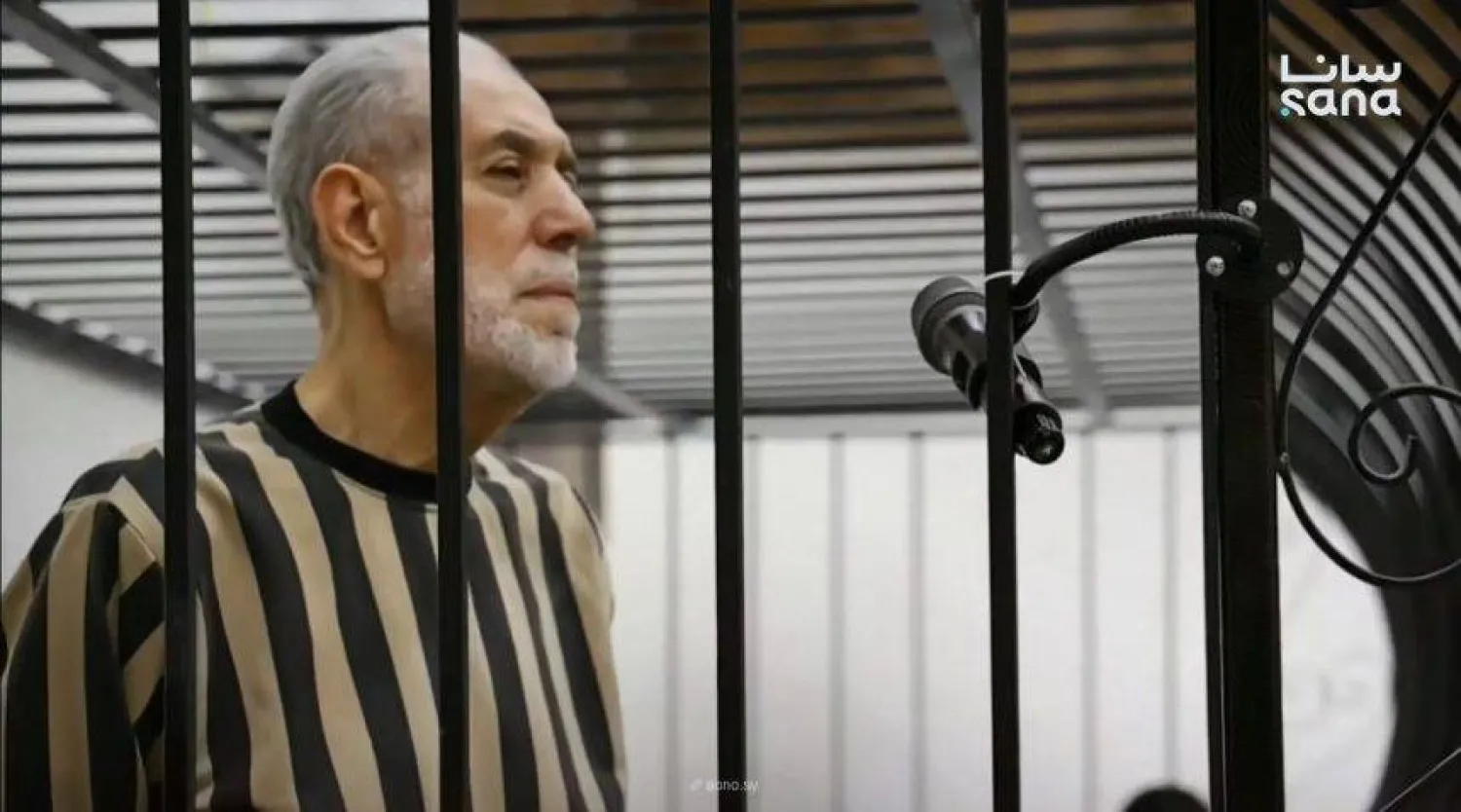
Israel Seeks to Cement Status Quo of Its New Occupation in Syria

Members of Israel’s special reserve unit “Alpine Mountains” during training on Mount Hermon in Syria (Israeli army) 
TT

Israel Seeks to Cement Status Quo of Its New Occupation in Syria

Members of Israel’s special reserve unit “Alpine Mountains” during training on Mount Hermon in Syria (Israeli army) 

A senior Israeli official has acknowledged that disagreements with Syria remain “very deep,” dismissing what the United States has described as a positive atmosphere surrounding negotiations. “The reality is quite different,” the official said.

The remarks indicate that Israel intends to preserve the current situation created by its recent occupation of Syrian territory and rejects any withdrawal, not only from Mount Hermon but also from the nine positions it established following the collapse of Bashar al-Assad’s regime.

Israel has reportedly set far-reaching conditions in return, including barring Syria from deploying anti-aircraft missiles.

According to a report by Maariv political correspondent Anna Barsky, intensive talks held in Paris over two days last week, involving representatives from Israel, Syria, and the United States, produced only a limited outcome.

The discussions resulted in an agreement to establish a coordination mechanism aimed at preventing field-level friction, to be managed with active US involvement, but fell short of any broader political or security breakthrough.

Barsky wrote that there is currently no possibility of reaching a security agreement between Israel and Syria. While she cited Syria’s demand for an Israeli withdrawal from Syrian Mount Hermon as the main obstacle, the report suggests that Israel’s own demands are the primary factor blocking progress.

According to the senior official, Israel’s conditions include maintaining the new reality that emerged after Assad’s downfall in December 2024. This includes areas formerly designated as a UN-monitored buffer zone, an additional strip deeper along the border covering about 450 square kilometers, and all the peaks of Mount Hermon.

Israel is also seeking to strip the Syrian army of what it defines as strategic weapons, including advanced anti-aircraft systems or any arms that could disrupt the existing military balance. In addition, it demands that no foreign forces be present in Syria if they could restrict the Israeli army’s freedom of movement, specifically Russian or Turkish forces.

The report noted that the US administration, while pressing both sides to advance toward security understandings, supports Israeli demands it considers essential to Israel’s security, particularly remaining on Mount Hermon, though Washington is expected to propose compromise arrangements.

At the same time, Barsky reported growing concern in Tel Aviv over a parallel Syrian track: efforts by Damascus to coordinate with Moscow to redeploy Russian military forces in Syria, especially in the south.

Israel views such a move as a direct threat to its operational freedom and has worked to thwart initiatives aimed at restoring a Russian presence there. According to Maariv, Israel has conveyed a firm message to Damascus, Moscow, and Washington that it will not tolerate Russian forces in southern Syria.

The newspaper linked this stance to past experience, noting that while Russia maintained two main bases in Syria - Hmeimim Air Base and the naval facility in Tartus - it also deployed military police and observation posts near the disengagement zone in the south. Israel believes a return to that model would impose new operational constraints and alter the rules of engagement.

Although Russia’s footprint in Syria shrank after Assad’s fall, Israeli assessments suggest Moscow is seeking, in coordination with Syria’s new authorities, to rebuild its influence despite its preoccupation with the war in Ukraine.

The report said that both Moscow and Damascus view a Russian presence in southern Syria as strategically valuable, particularly as a means of constraining Israel.


Hezbollah Raises Civil War Threat Over Disarmament Plan

Hezbollah members take an oath in front of a monument to Iranian General Qassem Soleimani in Beirut in 2022 (AP file photo)
TT

Hezbollah Raises Civil War Threat Over Disarmament Plan

Hezbollah members take an oath in front of a monument to Iranian General Qassem Soleimani in Beirut in 2022 (AP file photo)

Hezbollah escalated its response to Lebanese President Joseph Aoun and Prime Minister Nawaf Salam over plans to press ahead with restricting weapons to the state and extending the move to areas north of the Litani River, raising the specter of civil war as tensions over the issue intensify.

Mahmoud Qamati, vice president of Hezbollah’s political council, said in a televised interview that statements by the president and prime minister on confining weapons north of the Litani meant the government was heading toward chaos and instability, and toward an internal situation that no one would accept, possibly even a civil war.

The government last week tasked the Lebanese army commander, during a cabinet session, with preparing a plan to restrict weapons north of the Litani, after announcing that the objectives of the first phase of the plan to confine arms to the state south of the river had been achieved.

Qamati’s Position

Hezbollah says that before any discussion begins on the fate of its weapons outside the area south of the river, Israel must stop violating Lebanese sovereignty, withdraw from points it occupies, and release prisoners.

Qamati said on Tuesday that some parties were insisting on implementing foreign dictates and offering concessions to Israel for free and without any return.

He added that the army’s role was not to protect Israel from any military action from Lebanon, but to confront Israel, which he said occupies Lebanese territory.

Accusing some members of the government of collusion to implement a US-Israeli plan for personal calculations, Qamati called for a return to reason, wisdom, and “Lebanese-Lebanese dialogue”.

War Against Whom?

Lebanese Industry Minister Joe Issa El-Khoury expressed surprise at Hezbollah’s threat of a civil war, asking between whom such a war would take place, between an illegitimate armed group and the legitimate army.

Civil wars, he said, usually erupt between illegitimate armed groups, warning that if Hezbollah did not hand over its weapons, other unarmed groups might rearm on the grounds that the army was unable to protect them.

Speaking to Asharq Al-Awsat, El-Khoury said it was unacceptable for one group alone to be armed to fight Israel, adding that Lebanon either builds a state together or looks for other projects. While the region was moving forward with strong momentum, he said, Lebanon was moving backward.

El-Khoury said the army’s forthcoming plan to restrict weapons north of the Litani should not include multiple phases, but rather a single phase running until the end of March.

He stressed that linking implementation to the army’s capabilities and resources was misplaced.

He recalled that the strongest militia after the civil war was the Lebanese Forces, which later committed to building the state and handed over its weapons to the army, thereby eliminating the need for army deployment in areas where the group had been present.

That, he said, was what should happen today with Hezbollah.

Party Warning

Sources familiar with Hezbollah’s internal thinking told Asharq Al-Awsat that the group did not want a clash with the army, and that the army did not intend to seize weapons by force.

The warning issued by Qamati, they said, was directed at political forces pushing for disarmament by force. The sources added that the current moves were an attempt to create the right conditions to reach a consensus solution to the issue.

Remarks by Rajji

Hezbollah’s veiled threats of civil war coincided with a fierce campaign by lawmakers from the Shiite duo, Amal and Hezbollah, against Lebanese Foreign Minister Youssef Rajji.

In a televised interview, Rajji said that the ceasefire declaration approved by the government provided for Hezbollah’s weapons to be confined in return for a halt to Israeli attacks, and that as long as the weapons were not fully confined, Israel, unfortunately, had the right to continue its attacks.

Hezbollah lawmaker Ali Ammar described the remarks as dangerous, saying they required a clear and firm stance from the president and prime minister, as well as a halt to such statements, which he said inflamed internal divisions and served only to benefit the enemy.

Qassem Hashem, a member of the Development and Liberation bloc, said Rajji’s comments went beyond impropriety to justifying Israeli aggression against Lebanon, calling it a violation of sovereignty and a blow to national dignity.

He said the remarks should not pass without accountability in cabinet, and that in a fully sovereign state, the minister would be dismissed.

Another lawmaker from the bloc, Mohammed Khawaja, asked the president and prime minister whether Rajji was truly Lebanon’s foreign minister, accusing him of focusing on finding justifications for Israel.

In response, El-Khoury told Asharq Al-Awsat that Rajji’s remarks reflected the government’s position, not a personal view.

He said the agreement approved by Hezbollah listed the parties authorized to carry weapons and did not include Hezbollah, meaning that the group’s insistence on keeping its arms constituted a breach of the agreement and provided Israel with a pretext to refuse to implement its provisions.


Sources to Asharq Al-Awsat: Gaza Committee Members to Meet Mladenov at US Embassy in Cairo

Palestinian Ali Shaath, a leading candidate to head the Gaza Administration Committee, in a photo released by his family.
TT

Sources to Asharq Al-Awsat: Gaza Committee Members to Meet Mladenov at US Embassy in Cairo

Palestinian Ali Shaath, a leading candidate to head the Gaza Administration Committee, in a photo released by his family.

Palestinian sources reported that figures nominated to lead a temporary Gaza Administration Committee are scheduled to meet on Thursday with Bulgarian diplomat Nickolay Mladenov, the nominee to head the executive body of the Board of Peace, at the US embassy in Cairo.

Sources from civil society and Palestinian factions, who spoke to Asharq Al-Awsat on condition of anonymity, said that meetings of some factions in Cairo on Wednesday would discuss several issues related to the second phase, including agreement on the names put forward for the Gaza Administration Committee.

They added that there was preliminary acceptance of these names.

The sources said that despite reservations by the Palestinian Authority over the committee, some of its members, and the fact that its work would report to the Board of Peace to be announced by US President Donald Trump, assessments suggest there will be no opposition to it given the current internal Palestinian situation and the urgent need for Hamas to exit the governance scene in Gaza.

The Palestinian Authority had hoped that a minister from the government led by Mohammad Mustafa would assume responsibility for the committee, but Israel and the United States opposed that option.

Arrangements for travel

Regarding travel for committee members based inside Gaza, the sources said arrangements were underway, though the mechanism had not yet been finalized as of Wednesday afternoon. They said members based outside the enclave, in European countries or in Ramallah, including Ali Shaath, who is seen as the likely head of the committee, were expected to arrive in Cairo on Wednesday.

The sources said those already in Egypt were prepared, and that members inside Gaza could be included virtually if travel proved impossible, though that scenario was not expected.

Meetings with Mladenov

The meeting will focus on the committee’s mandate to administer Gaza.

An announcement is expected once agreement is reached on the members and their responsibilities, either on Wednesday or Thursday, ahead of Trump’s anticipated announcement of the Board of Peace. Mladenov would head the board’s executive body and oversee the technocratic committee.

Several meetings between committee members and Mladenov are planned, all at the US embassy, according to some sources, who added that a dedicated financial fund had been designated to support the committee’s work.

Multiple sources said the committee would assume full governmental responsibilities in Gaza and that Hamas would expedite the handover of authority and provide all necessary support.

Asharq Al-Awsat reported on Tuesday evening some of the names expected to join the new committee, which is set to comprise between 15 and 18 members. Most are from Gaza, comprising mainly businessmen, economists, civil society leaders, and academics.

Names obtained by Asharq Al-Awsat include Ali Shaath, a former deputy transport minister in the Palestinian Authority; Abdel Karim Ashour, head of the Agricultural Relief Committees and a civil society activist; Aed Yaghi, head of the Medical Relief Society; Aed Abu Ramadan, head of the Gaza Chamber of Commerce; Jabr al-Daour, president of Palestine University; Bashir al-Rais, an engineering consultant; Omar Shomali, head of Palestinian Telecommunications in Gaza; Ali Barhoum, an engineer and consultant at Rafah municipality, and lawyer Hanaa Terzi.

A civil society source said there was broad agreement on these names so far, adding it was not yet known whether Israel had approved them. Changes could still be made if disputes emerge over any of the nominees.
