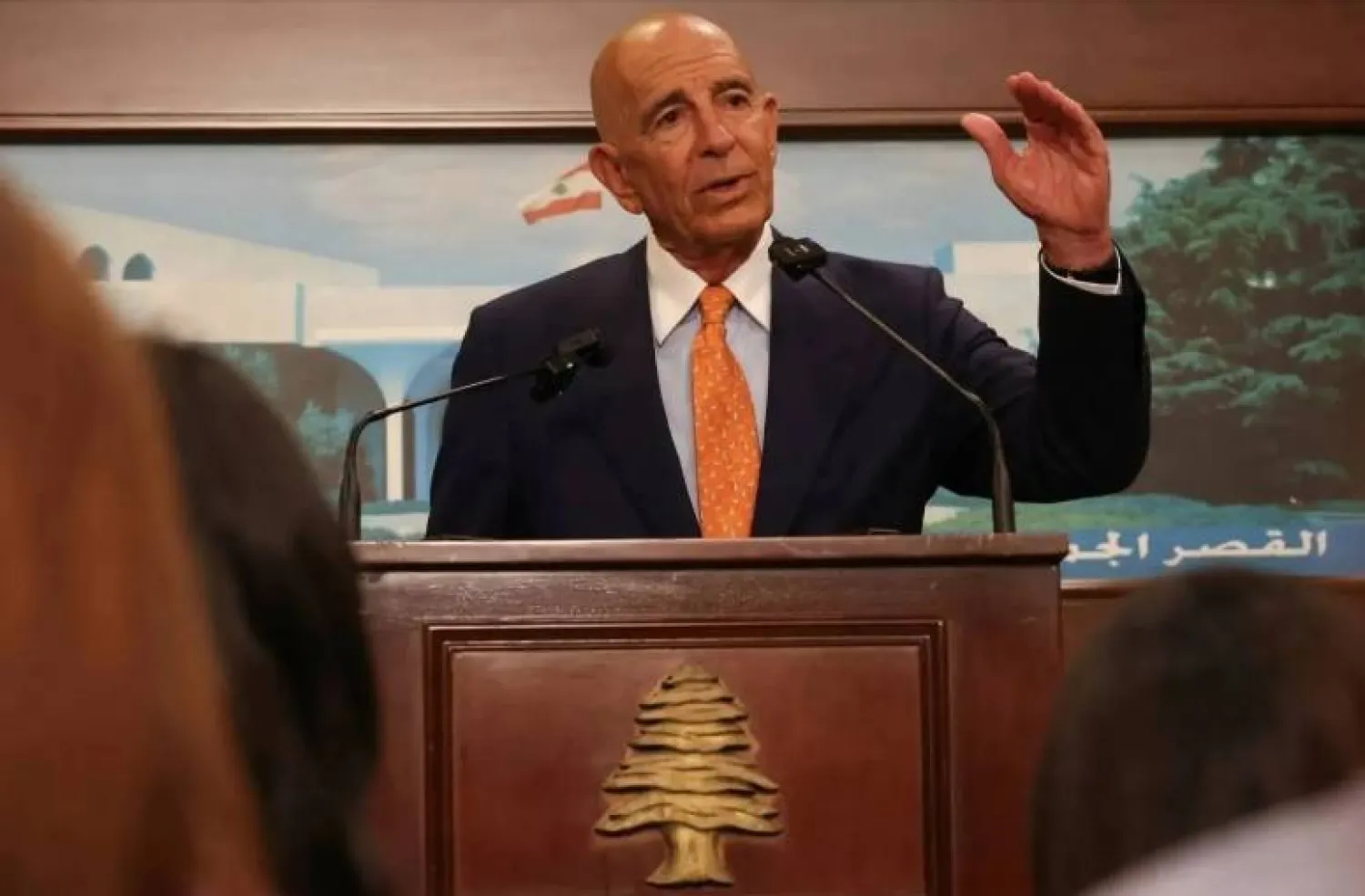

US envoy Tom Barrack on Monday urged Lebanon to disarm Hezbollah, warning that “Israel may act unilaterally” if the Lebanese government continues to hesitate in its decision to impose state monopoly over arms.
Hezbollah’s “foreign control undermines Lebanon’s sovereignty, deters investment, and erodes public confidence and is a constant red flag to Israel,” said Barrack in an opinion piece published on his X account.
“Regional partners are ready to invest, provided Lebanon reclaims the monopoly on legitimate force solely under the Lebanese Armed Forces. Should Beirut continue to hesitate, Israel may act unilaterally – and the consequences would be grave,” he warned.
Barrack accused the Lebanese government of failing to adopt what he termed a “One More Try” plan by the US, a framework for phased disarmament, verified compliance, and economic incentives under the supervision of Washington and Paris.
“Lebanon declined to adopt it due to Hezbollah representation and influence in the Lebanese Council of Ministers,” he said in the opinion piece titled “A Personal Perspective – Syria and Lebanon Are the Next Pieces for Levant Peace.”
He said the cabinet is trapped in “sectarian paralysis” and that Israel has simply said the rhetoric does not match reality.
“The Lebanese government’s principle of ‘One Country, One Military’ remains more aspiration than reality, constrained by Hezbollah’s political dominance and the fear of civil unrest,” Barrack added.
Earlier this month, Lebanon’s army chief briefed the government for the first time on its plan to disarm Hezbollah.
The government first aimed to disarm the group by the end of the year, but officials later said resources are too limited to meet the deadline. The current aim is to fully clear a stretch along the Lebanon-Israel border, defined as south of the Litani river, by the end of November before moving into further phases.
In his opinion piece, Barrack warned that if Hezbollah comes under serious military attack from Israel and faces territorial, political, or reputational losses, it will almost certainly seek to postpone next year’s parliamentary elections to preserve its power base and regroup.
A postponement “under the pretext of war would ignite major chaos within Lebanon, fracturing an already fragile political system and reigniting sectarian distrust,” said Barrack, who also serves as US ambassador to Türkiye.
“The perception that one militia can suspend democracy could potentially erode public confidence in the state, invite regional interference, and risk pushing Lebanon from crisis into outright institutional breakdown,” he added.