
Lebanon stands at a political and security crossroads amid mounting external pressure, a deadlocked political landscape, and escalating military tensions marked by Israel’s continuing daily violations of the November ceasefire.
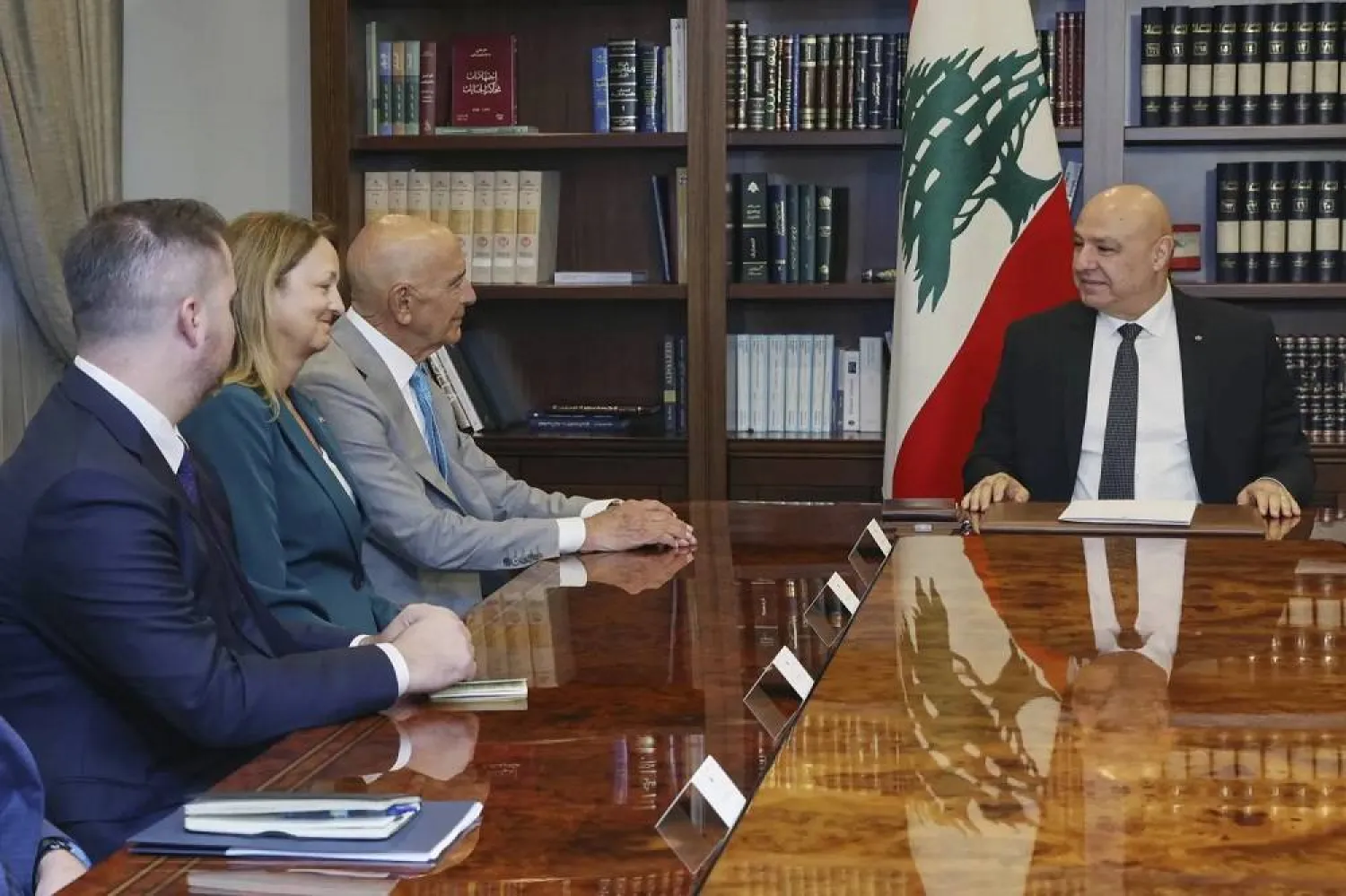
The stalemate was laid bare by Parliament Speaker Nabih Berri, who told Asharq Al-Awsat on Monday that the proposed negotiation track between Lebanon and Israel - known as the “US paper” - had collapsed.
His remarks came just hours after US envoy Tom Barrack warned that if Beirut continues to hesitate over disarmament, Israel may act unilaterally, and the consequences will be "grave", adding that it is time for Lebanon to disarm Hezbollah as it had said it would.
“Should Beirut continue to hesitate, Israel may act unilaterally and the consequences would be grave,” cautioned Barrack in an opinion piece posted on his account on the X platform.
Berri said Barrack had informed Beirut that Israel rejected a US proposal to launch a negotiation process starting with a two-month halt to Israeli operations and culminating in an Israeli withdrawal from occupied Lebanese territory, alongside border demarcation and security arrangements.
Barrack also revealed that an offer the US made to Lebanon earlier this year, part of a plan called “One More Try,” included a framework for phased disarmament, verified compliance, and economic incentives under American and French supervision.
However, Lebanon “refused to adopt it due to Hezbollah's representation and influence in the Lebanese cabinet,” he claimed.
Fears of escalation
What lies ahead remains uncertain with many watching how the political deadlock might affect Lebanon’s fragile security. Beirut’s insistence on upholding the ceasefire agreement, which Berri described as “the only current path” despite obstacles related to Hezbollah’s disarmament, does not necessarily mean Israel will abide by it.
Ministerial sources close to the presidency said the prospect of military escalation “cannot be ruled out,” adding: “There is no doubt this is a critical stage, and escalation could happen at any moment, especially since Israeli violations have not ceased.”
The sources noted that “Israeli drones have been flying constantly over Baabda - the location of the presidential palace - in recent days.”
While the sources rejected talk of a complete breakdown in negotiations, they stressed that “Israel is not committed to the ceasefire agreement” and that “Washington is not applying the necessary pressure to enforce it.”
“How can the Lebanese Army complete its deployment along the southern border when the Israeli occupation persists?” they asked.
The sources reiterated that the president opened the door to negotiations based on the maritime border demarcation experience, which both Israel and Hezbollah respected, in addition to Lebanon’s adherence to the ceasefire.
“The problem,” they said, “is that the other side is neither responsive nor committed to what has been agreed upon, while the US remains completely silent.”
Successive setbacks
In this tense atmosphere, retired Major General and political science scholar Abdul Rahman Chehaitli said the “November agreement has collapsed, leaving Lebanon in a grim reality.”
Political science and international relations professor Imad Salamey likewise said Lebanon “is going through a clear escalation phase, especially as political forces shy away from pursuing a negotiated settlement with Israel amid the absence of serious guarantees from Washington or Tel Aviv.”
He recalled Barrack’s repeated warnings of a potential new military confrontation “under the pretext of enforcing Hezbollah’s disarmament,” adding that “in reality, the situation points to a series of successive setbacks in the security understandings.”
A Gaza-style approach
A year after the November deal, Salamey said “confidence in the diplomatic process is eroding by the day,” noting that there are “no signs that any disarmament effort will be met with an Israeli withdrawal from occupied Lebanese land or a permanent halt to violations.”
This, he argued, “deepens Lebanese suspicions that US pressure aims to impose a security arrangement serving Israel’s interests.”
According to Salamey, any future Lebanese deal “would need an approach similar to the one adopted in Gaza - under regional sponsorship and with Iran’s cooperation as a guarantor - to consolidate the ceasefire and lay the groundwork for a broader settlement.”
Without such balanced regional and international guarantees, he warned, “the risk of escalation will remain, if not grow, as the circle of military and political confrontation widens in the South.”
Pressure for direct talks
Chehaitli said Israel’s ongoing pressure, backed by Washington, aims to force Lebanon into direct negotiations. “All the rounds of shuttle diplomacy by Barrack were merely time-wasting exercises, while Israel was busy in Gaza,” he told Asharq Al-Awsat.
“Now it seems Tel Aviv is shifting its focus toward Lebanon, using military pressure to push for direct talks.”
“In the coming phase, we may witness significant escalation targeting Hezbollah’s areas of influence to make any ceasefire conditional on a political deal,” he added. “Israel believes it has won the war and now wants to impose its terms.”