Saudi Arabia’s Vision 2030 took center stage as the Future Investment Initiative (FII) summit opened in Miami, with the kingdom delivering a balanced message that combined strategic caution with investment confidence.
Saudi Finance Minister Mohammed Al-Jadaan warned of geopolitical disruptions that could surpass the economic impact of the COVID-19 pandemic, while stressing the resilience of the Saudi economy and its ability to manage crises.
Meanwhile, Public Investment Fund (PIF) Governor Yasir Al-Rumayyan outlined a new phase of growth driven by an upcoming five-year strategy, saying the kingdom has evolved from building internally to a global platform that invites capital to seize unprecedented opportunities.
Against a backdrop of accelerating global economic and geopolitical shifts, the fourth edition of the FII PRIORITY summit kicked off in Miami on Thursday under the theme “Capital in Motion.”
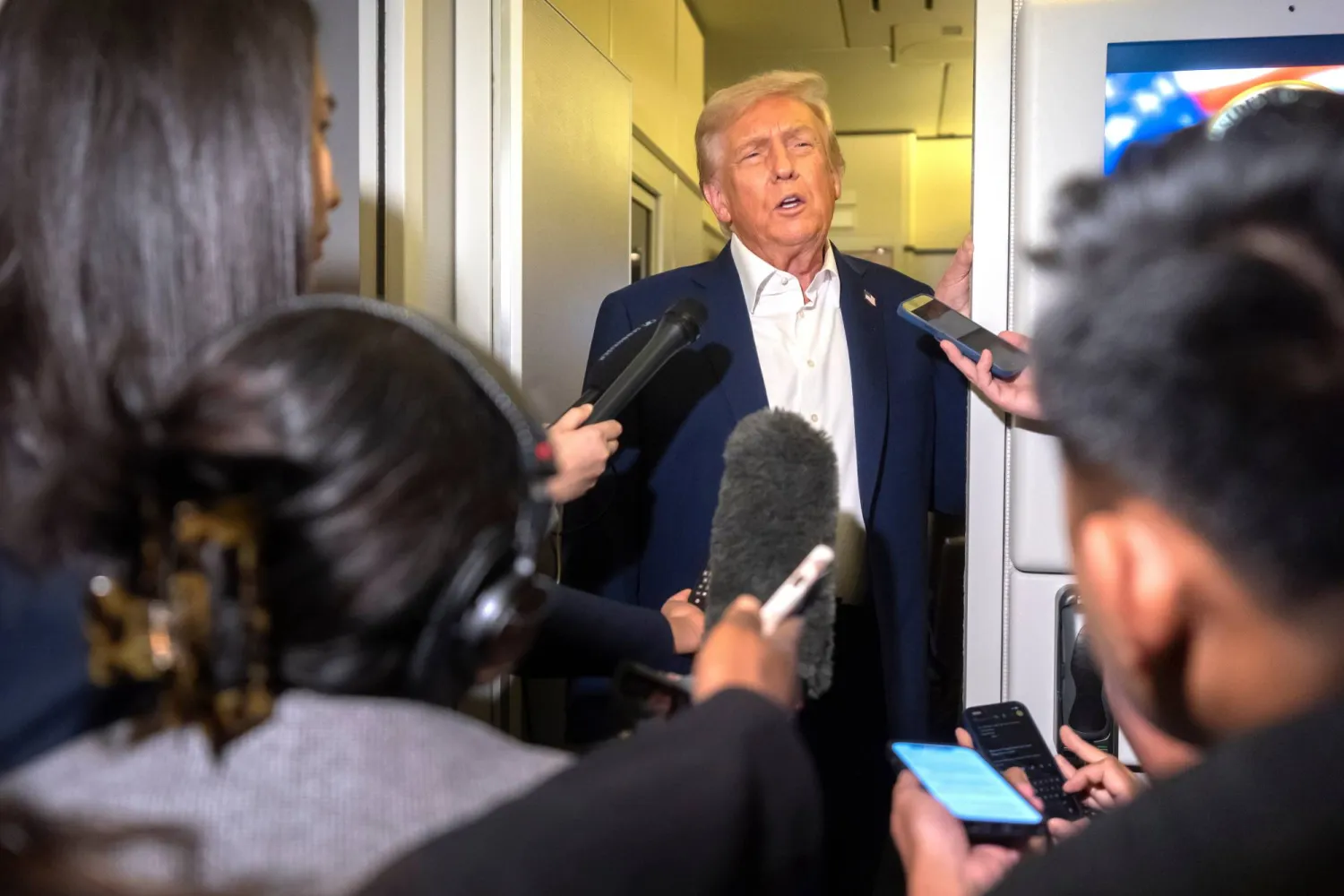
The event, which runs through Friday and will conclude with remarks by US President Donald Trump, brings together more than 1,500 participants, including business leaders, policymakers, and investors from the United States, Latin America, the Middle East, Europe, Asia, and Africa.
It aims to reshape global capital flows and promote inclusive, sustainable growth.
The summit comes at a time when the world is undergoing what the FII Institute described as a “redistribution, repricing, and reimagining of capital,” adding that understanding and responsibly shaping these shifts is a shared global priority.
Al-Jadaan warns of escalating risks
Speaking during a panel discussion, Al-Jadaan said current geopolitical tensions could trigger global economic consequences more severe than those seen during COVID-19, calling for swift international action to contain the fallout.
“What we saw in the last few weeks is an impact beyond what we have seen even post-COVID, in terms of supply chain disruption, and if this continues, I think we will see even more severe impact,” Al-Jadaan said.
“We really need to make sure we resolve the conflict very quickly and come together to do that for the global economy not to be impacted even more.”
“You will need to mute a lot of the media noise for you to really understand what’s happening on the ground,” al-Jadaan said.
Al-Jadaan added that while oil has dominated media coverage, it is refined products – including fertilizers, steel, and aluminum – that have been most affected.
Long-term investment safeguards energy security
Al-Jadaan highlighted Saudi Arabia’s proactive approach to crisis management and energy security, pointing to the East-West pipeline as a key example.
He said the kingdom invested heavily in the pipeline over 50 years without immediate returns, but it now serves as a vital strategic alternative and secure route for oil supplies.
The pipeline is currently being used efficiently to manage global oil flows and mitigate the impact of the energy crisis, reinforcing Saudi Arabia’s role as a stabilizing force in international energy markets.
He added that the Saudi economy has demonstrated strong crisis management capabilities, supported by solid fiscal buffers and structural flexibility under Vision 2030, positioning it as a model of certainty in a volatile global environment.
A model of certainty and resilience
Al-Jadaan said investors are currently focused on three key factors: certainty, resilience, and growth prospects. He noted that Saudi Arabia offers a distinctive model, backed by financial stability and a proven ability to navigate crises.
Economic resilience, he added, has become a strategic approach embedded in Saudi policy, supported by investment in human capital and advanced technologies, enabling the kingdom to maintain positive growth despite global volatility.
Gulf transformation into an integrated economic force
At the regional level, Al-Jadaan praised the growing coordination and economic resilience among GCC countries, saying they have demonstrated strong adaptability as a unified economic bloc.
“They (GCC states) are a lot more resilient working together,” al-Jadaan said.
The transformation into a unified economic bloc has enhanced investment opportunities across sectors such as logistics, defense, real estate, and technology, making the region more attractive and transparent to investors.
He stressed that global economic stability depends on regional stability and secure supply chains for essential industries, urging international cooperation and noting that economies investing in people and technology will be best positioned for sustainable growth.
Al-Rumayyan: Saudi economy remains robust
Al-Rumayyan said Saudi Arabia’s economy remains “strong, stable and resilient,” as PIF prepares to unveil a new five-year strategy within weeks.
He outlined a strategic shift in the sovereign wealth fund’s approach, moving from predominantly self-funded investments toward a broader model that invites both domestic and international partners.
He emphasized that PIF operates as a long-term investor, measuring returns “not in quarters, but in decades,” while maintaining a diversified and structurally resilient portfolio.
Since its establishment, PIF has undergone several phases, initially focusing on building the national economy and, since 2015, accelerating sector development.
The next phase will involve greater participation from local and international investors, moving beyond a reliance on direct investments.
The governor said the upcoming strategy, expected to be revealed within weeks, will focus on mobilizing third-party capital and creating more opportunities for global investors to participate in Saudi-led projects.
“We put the foundation for many of these investments initially,” the PIF governor said. “Now we are looking in a greater way at how to invite people to come and work with us.”
He noted that major global asset managers, including BlackRock and Franklin Templeton, have already begun establishing funds in partnership with PIF to invest in the Saudi economy.
Al-Rumayyan highlighted the evolution of PIF from its early role as a “nation builder” to its current position as a global investor and ecosystem developer, with a recent increased focus on domestic deployment.
He said the fund is now entering a new phase aimed at “crowding in” private sector participation across key sectors, including infrastructure, real estate, data centers, pharmaceuticals, and renewable energy.
The shift reflects a broader ambition to transform Saudi Arabia into a global investment hub.
“In the past, we tried to bring Saudi to the world,” he said. “Now we are in a stage where we want to bring the world to Saudi.”
Al-Rumayyan pointed to large-scale developments such as Red Sea Global as examples of this approach, noting that the project has already attracted 19 international hotel operators and is expanding partnership models in infrastructure and risk-sharing mechanisms.
He added that “de-risking” projects for investors remains a central pillar of PIF’s strategy, enabling greater participation from private capital.
On artificial intelligence, Al-Rumayyan said Saudi Arabia is “very well positioned” to benefit from the technology, citing strong access to computing infrastructure, energy resources, and a supportive regulatory environment.
He stressed that AI should be viewed as an enabler rather than a standalone product, with its value driven by efficiency gains across industries.
“We see AI as a tool,” he said. “The end product is what our companies deliver, cutting costs and improving efficiency.”
He highlighted partnerships with major US technology firms, including Microsoft, Google, and Oracle, as well as tangible results from companies such as Saudi Aramco, which he said reduced drilling costs by about 20% and improved delivery efficiency by 30% through AI adoption.
Al-Rumayyan also underscored the FII's role as a global platform for building partnerships, stressing that networking and collaboration are key outcomes beyond formal discussions.
“It’s not only the dialogue,” he said. “It’s the relationships and the knowledge that people take away.”
Attias: platform to shape global investment flows
FII Chairman and acting CEO Richard Attias affirmed that the Miami summit serves as a global platform to understand shifts in the international economy amid rapid cross-border flows of capital and technology.
Speaking to reporters, Attias said the summit opened with a session on “the New LATAM Order,” reflecting growing interest in the region. He described Miami as a strategic meeting point between North and South America and a hub for redirecting investments.
Sessions featured business leaders and political officials, as well as closed-door meetings among investors.
Summit agenda
The summit’s agenda covers global investment and economic relations, including discussions on US-Gulf investment partnerships under pressure and the evolving structure of agreements between the United States and Latin America.
It also focuses on technology transitions, particularly artificial intelligence and the digital economy.
Energy and resources are also on the agenda, with sessions on how energy deals will reshape power and profitability, and the race for critical minerals. Other discussions address aviation and tourism, including whether accounting defines competitiveness in the aviation sector and where smart investments in travel infrastructure are headed.
Broader topics include global economic outlooks, the flow of power and capital, and how to address a $3 trillion exit backlog, as well as closed sessions for decision-makers to set investment priorities.