
Ortagus Briefed on Hezbollah Activities in Lebanon during Israel Visit

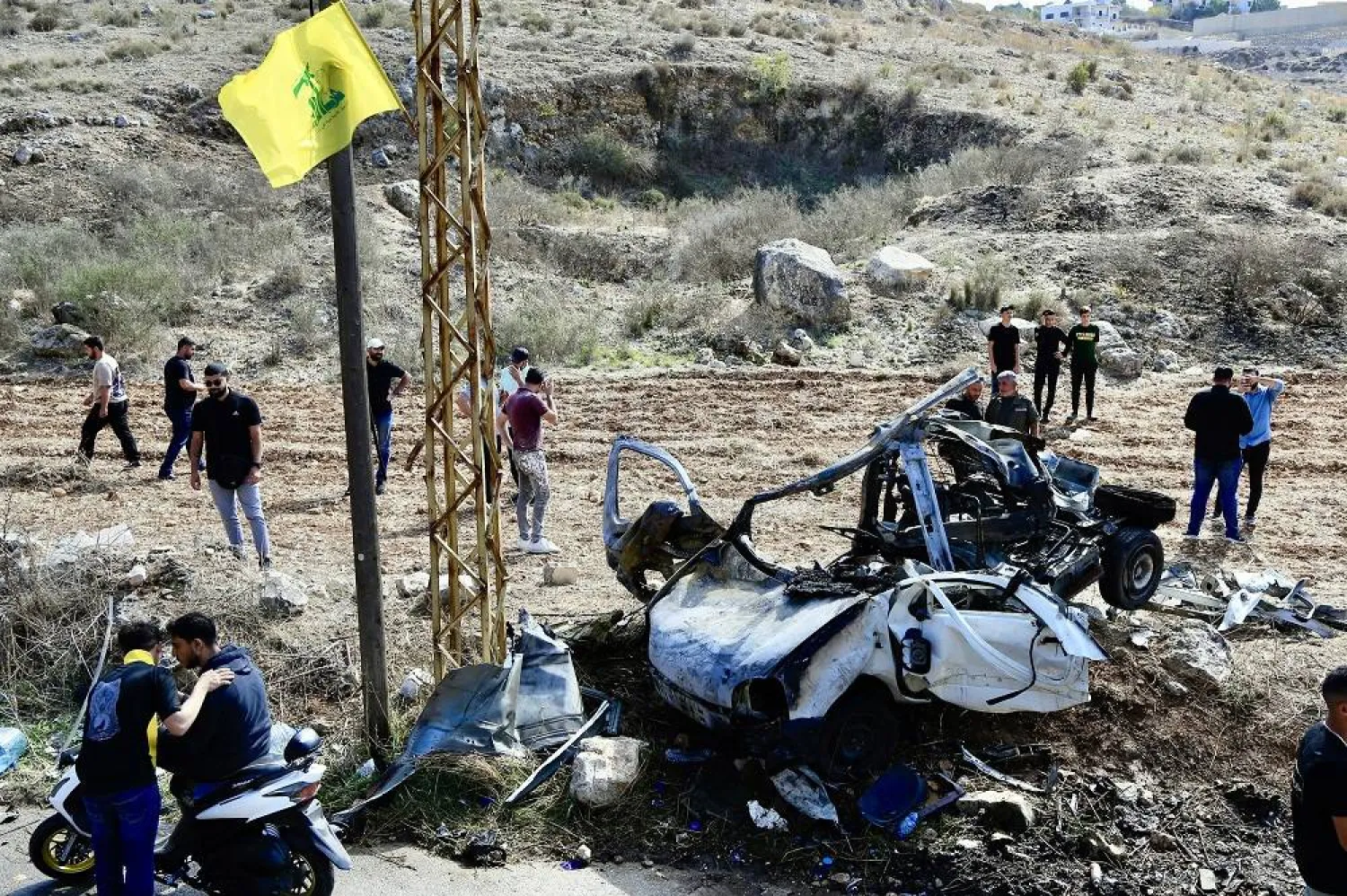
People inspect the wreckage of a vehicle targeted by an Israeli drone in the village of Harouf in the Nabatieh Governorate, southern Lebanon, 25 October 2025. (EPA)
TT

Ortagus Briefed on Hezbollah Activities in Lebanon during Israel Visit

People inspect the wreckage of a vehicle targeted by an Israeli drone in the village of Harouf in the Nabatieh Governorate, southern Lebanon, 25 October 2025. (EPA)

US envoy to Lebanon and Israel Morgan Ortagus was briefed on Sunday on Hezbollah’s activities and attempts to rebuild its military infrastructure in Lebanon. 

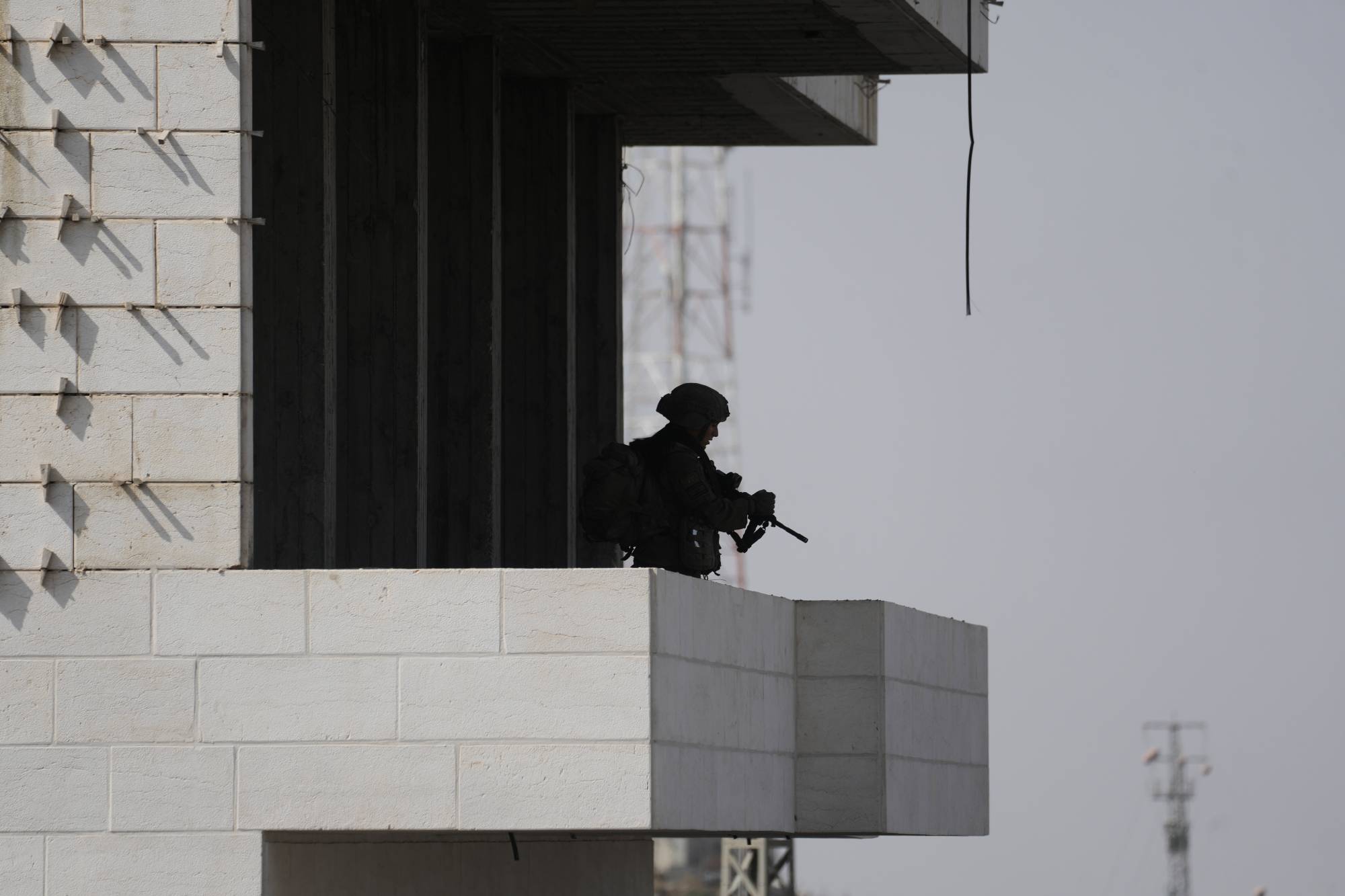
During a visit to Israel, she was also briefed on the army’s defensive and offensive plans along the border with Lebanon. 

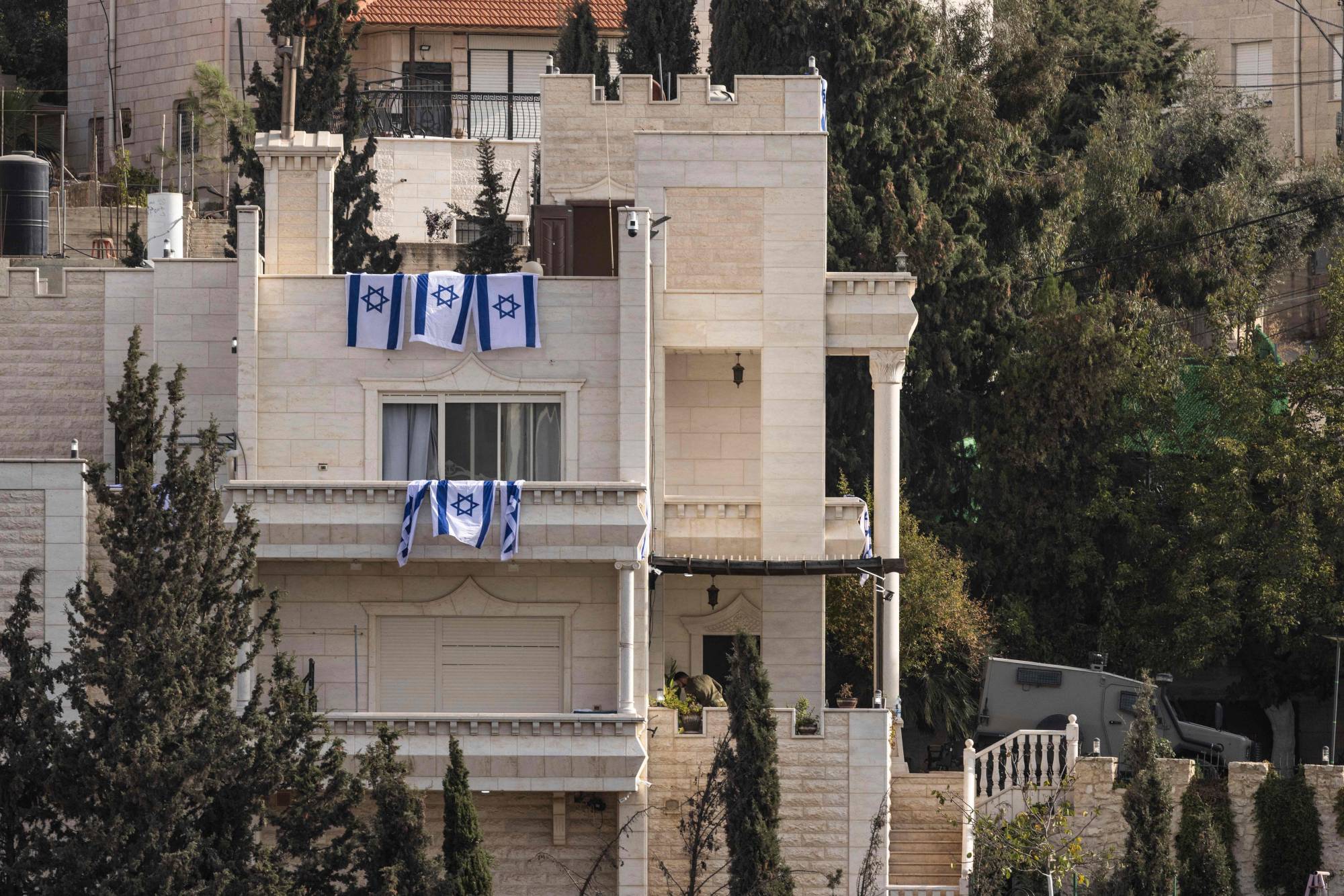
Ortagus, Defense Minister Israel Katz, US Ambassador to Israel Mike Huckabee, Israeli Ambassador to the US Yechiel Leiter, Commander of Israel’s Northern Command Rafi Milo, and representatives of the US Central Command and Israeli national security council toured the Israeli border with Lebanon on Sunday, a day before Ortagus is set to visit Beirut to attend meetings of the committee overseeing the ceasefire between Lebanon and Israel. 

The meeting is set to be held on Wednesday as Israel has intensified its assassinations of members of Iran-backed Hezbollah. Since Thursday, it has killed eleven people, including at least seven Hezbollah members. 

Israel has assassinated over 365 members of the party since the ceasefire was reached in November in what it says are efforts to prevent Hezbollah from rebuilding its military capabilities and infrastructure. 

During Sunday's tour, Katz expressed his gratitude to US President Trump and Ortagus for their support for Israel and its efforts to protect its borders. 

Israel will continue to defend its northern regions against any threats, he vowed. 

On Sunday, Israeli Prime Minister Benjamin Netanyahu warned that his country would seek no approval to strike targets in Gaza or Lebanon, despite agreeing to ceasefires.  

"Israel is an independent state. We will defend ourselves by our own means and we will continue to determine our fate," Netanyahu told a meeting of government ministers.  

"We do not seek anyone's approval for this. We control our security," he said, following a week of visits by a parade of the highest level US officials seeking to consolidate the ceasefire in Gaza. 

Lebanon is under international pressure to disarm Hezbollah and implement its government decision to impose state monopoly over arms. Hezbollah has remained defiant, however, refusing to lay down its weapons despite the daily Israeli attacks against its members. 

Head of Hezbollah’s parliamentary bloc MP Mohammed Raad said on Sunday: "Key to Lebanon's security and stability does not lie in meeting the conditions of the enemy, but in making Israel meet its commitments and really cease its attacks." 

He underlined the need to bolster national unity to confront Israel’s ambitions. 

Moreover, he said it was "wrong to claim that the resistance [Hezbollah] was to blame for the enemy’s shameful attacks. Rather, Israel is attacking Lebanon because it is pursuing an expansionist agenda and it wants Lebanon to yield to it." 

On Sunday, the Lebanese Health Ministry said one person was killed in an Israeli strike on a vehicle in the southern town of al-Naqoura. Another person was killed in an Israeli drone strike on the town of al-Nabi Chit and a third, a Syrian, was killed in a strike on the town of al-Hafir on Sunday night. 

Israel killed two people on Saturday on a strike on a car and motorcycle. Its army said it targeted members of Hezbollah’s Radwan Unit. 

Lebanese political parties are demanding that Hezbollah lay down its weapons. 

Member of the Strong Republic bloc MP Said al-Asmar said an Israeli military escalation is still on the table. "This is what we have been hearing from American officials, and the Lebanese people will pay the price of such a development," he warned, saying the solution lies in Hezbollah’s disarmament. 

"We are not acquitting Israel of anything, but we also have a responsibility that we are not meeting. Israel will continue to attack us as long as Hezbollah keeps on asserting that it is recovering its capabilities and ready to go to war at any moment," he added. 


Iraq Hands Over Two Cleared ISIS Suspects to US, Finland

US military vehicles move along a road in a convoy transporting ISIS group detainees being transferred to Iraq from Syria, on the outskirts of Qahtaniyah in Syria's northeastern Hasakeh province on February 7, 2026. (AFP)
TT

Iraq Hands Over Two Cleared ISIS Suspects to US, Finland

US military vehicles move along a road in a convoy transporting ISIS group detainees being transferred to Iraq from Syria, on the outskirts of Qahtaniyah in Syria's northeastern Hasakeh province on February 7, 2026. (AFP)

Iraq's judiciary said Tuesday it had handed over two detained foreigners, from Finland and the United States, to their countries after finding that had not been ISIS group members.

Many prisons in Iraq are packed with ISIS suspects.

In February, the United States completed the transfer of 5,700 ISIS detainees, including hundreds of foreigners, from Syria to Iraq.

The National Center for International Judicial Cooperation (NCIJC) said it has handed "two suspects -- a minor from Finland and another from the United States -- to the competent authorities in their countries after it was confirmed that they don't belong to the ISIS terrorists."

"The handover took place after all legal and judicial procedures were completed," the judiciary said in a statement carried by the Iraqi News Agency (INA).

The judiciary did not specify whether the two detainees referred to were among those who had been transferred from Syria.

Upon the detainees' arrival in Iraq, the judiciary began interrogations before taking legal action against suspects from some 60 countries.

These include 3,543 Syrians, 467 Iraqis and 710 detainees from other Arab nations.

There are also more than 980 foreigners including from Europe, Asia, Australia and the United States.

ISIS swept across Syria and Iraq in 2014, committing massacres. Iraq, backed by US-led forces, proclaimed victory over ISIS in the country in 2017, and the Kurdish-led Syrian Democratic Forces ultimately defeated the group in Syria two years later.

Iraqi courts have handed down hundreds of death sentences and life terms to those convicted of terrorism offences, including foreign fighters.


UN Official: War Pushes Seven in 10 Sudanese Into Poverty

Saddam Najwa, a malnourished, 17-month-old internally displaced child reaches out for a cup of water at the paediatric ward of the Mother of Mercy Hospital in Gidel, near Kauda, within the Sudan's People Liberation Movement-North (SPLM-N) controlled area of the Nuba Mountains, South Kordofan, Sudan June 25, 2024. REUTERS/Thomas Mukoya/File Photo
TT

UN Official: War Pushes Seven in 10 Sudanese Into Poverty

Saddam Najwa, a malnourished, 17-month-old internally displaced child reaches out for a cup of water at the paediatric ward of the Mother of Mercy Hospital in Gidel, near Kauda, within the Sudan's People Liberation Movement-North (SPLM-N) controlled area of the Nuba Mountains, South Kordofan, Sudan June 25, 2024. REUTERS/Thomas Mukoya/File Photo

Around seven in 10 people in Sudan are now living in poverty, a senior UN official told AFP on Tuesday, nearly twice as many as before the war between the army and paramilitary forces broke out three years ago.

"Before the war, we were probably looking (at) around 38 percent of people living in poverty, and now we are estimating about 70 percent," said the UN Development Programme's Sudan representative Luca Renda, as the agency released a new report on poverty timed to coincide with the anniversary of the start of the war.

The figures Renda cited were based on a poverty line of about $4 a day, while at least a quarter of the population is believed to be surviving on less than half that, he said.

Conditions are particularly severe in some of the worst-affected areas, including parts of southern Kordofan, now the war's main battleground, and North Darfur, where as many as 70 to 75 percent of people are living in deprivation, Renda added.

Now in its fourth year, the war between Sudan's army and the Rapid Support Forces (RSF) has killed tens of thousands of people, displaced more than 11 million, and thrust several areas into hunger and famine.

Donors are due to gather in Berlin on Wednesday for an international conference on the conflict, aimed at reviving faltering peace talks and mobilizing aid for one of the world's worst humanitarian crises.

"Three years into this conflict, we are not just facing a crisis -- we are witnessing the systematic erosion of a country's future," Renda said.

The UNDP report found that nearly seven million people were pushed into extreme poverty in 2023 alone, while average incomes have fallen to levels last seen in 1992. Extreme poverty rates are now worse than in the 1980s, according to the report.

"These figures are not abstract," Renda said. "They reflect families torn apart, children out of school, livelihoods lost and a generation whose prospects are steadily diminishing."

More than 21 million people in Sudan face acute food insecurity, while two-thirds of the population urgently needs assistance, according to the UN.

Analysts, meanwhile, see little sign of de-escalation, with fighting intensifying in the Kordofan region and Blue Nile state, and drone attacks killing more than 500 civilians between January and mid-March, the UN said.


Iraq's Coordination Framework Close to Naming Candidate for PM's Post

02 November 2025, Iraq, Najaf: Iraqi Prime Minister Mohammed Shia al-Sudani delivers a speech during a campaign rally of his Reconstruction and Development Coalition in Najaf. (dpa)
TT

Iraq's Coordination Framework Close to Naming Candidate for PM's Post

02 November 2025, Iraq, Najaf: Iraqi Prime Minister Mohammed Shia al-Sudani delivers a speech during a campaign rally of his Reconstruction and Development Coalition in Najaf. (dpa)

Iraq's pro-Iran Coordination Framework is leaning towards nominating Prime Minister Mohammed Shia al-Sudani for a second term days after the election of Nizar Amedi as president.

This would mean abandoning the nomination of former PM Nouri al-Maliki, whose chances of becoming premier are nil after US President Donald Trump’s declaration that he opposes his candidacy.

Sudani is not the only name being floated. Head of the Justice and Accountability Commission Bassem al-Badri and former PM Haidar al-Abadi are seen as “consensus” candidates.

A leading source in the Framework told Asharq Al-Awsat that the coalition has no more than two weeks to decide on a candidate.

Speaking on condition of anonymity, he said the coalition wants to take advantage of the truce between the United States and Iran to name a candidate and form a government.

A new candidate may be named very soon, he added.

He acknowledged the complex relations and divisions within the Framework, stressing however that time was running out for its members to name a candidate before the US-Iran war erupts again.

The source highlighted the “pivotal” role played by President of the Supreme Judicial Council Faiq Zaidan in trying to overcome differences and ensure that a candidate is named within the constitutional deadline.

On the possible candidates, the source said it was difficult to identify who has the greatest chances, but it is certain that Maliki is out of the race.

Sudani remains a strong candidate, while Abadi and Badri are also in the running. A fourth figure may also emerge as a candidate, he revealed.

On why Maliki continues to cling on to his nomination, the source explained that the former PM is awaiting the Framework to withdraw his candidacy because it named him in the first place.

He believes that there is no justification for him to pull out from the race unless the Framework decides so to avoid being viewed as having yielded to American pressure, the source said.

Meanwhile, Maliki appears to have become isolated within the Framework and he is now seeking to obstruct efforts to nominate Sudani and Abadi in an effort to portray himself as playing a major role in naming a prime minister.

Reports said that Maliki had informed the Framework of his readiness to quit the race in exchange for the coalition refraining from nominating Sudani for a second term.

He also demanded that it refrain from naming a former PM to the post, a reference to Abadi who was a member of Maliki’s Dawa party.

President of the Islamic Supreme Council of Iraq Humam Hamoudi said on Sunday the Framework has no more than two weeks to name a candidate, urging consensus or a majority agreement over the issue.

“The new government will have fundamental challenges ahead of it, starting with building an army capable of defending Iraq’s sovereignty and activating diplomacy to bolster partnerships with neighboring countries to help consolidate regional security and stability,” he stressed.

Meanwhile, Sudani and his Construction and Development Coalition are committed to his candidacy.

Sources within his alliance believe he is “close to being appointed” by the president to form a new government.

Leading member of the coalition Khalid Walid told local media on Monday that Sudani enjoys the support of the majority of the members of the Framework.

He believes that the coming 48 hours will be decisive for Sudani’s candidacy, especially amid the challenges facing Iraq that demand the formation of a government that enjoys broad political support and that can overcome the crises at hand.