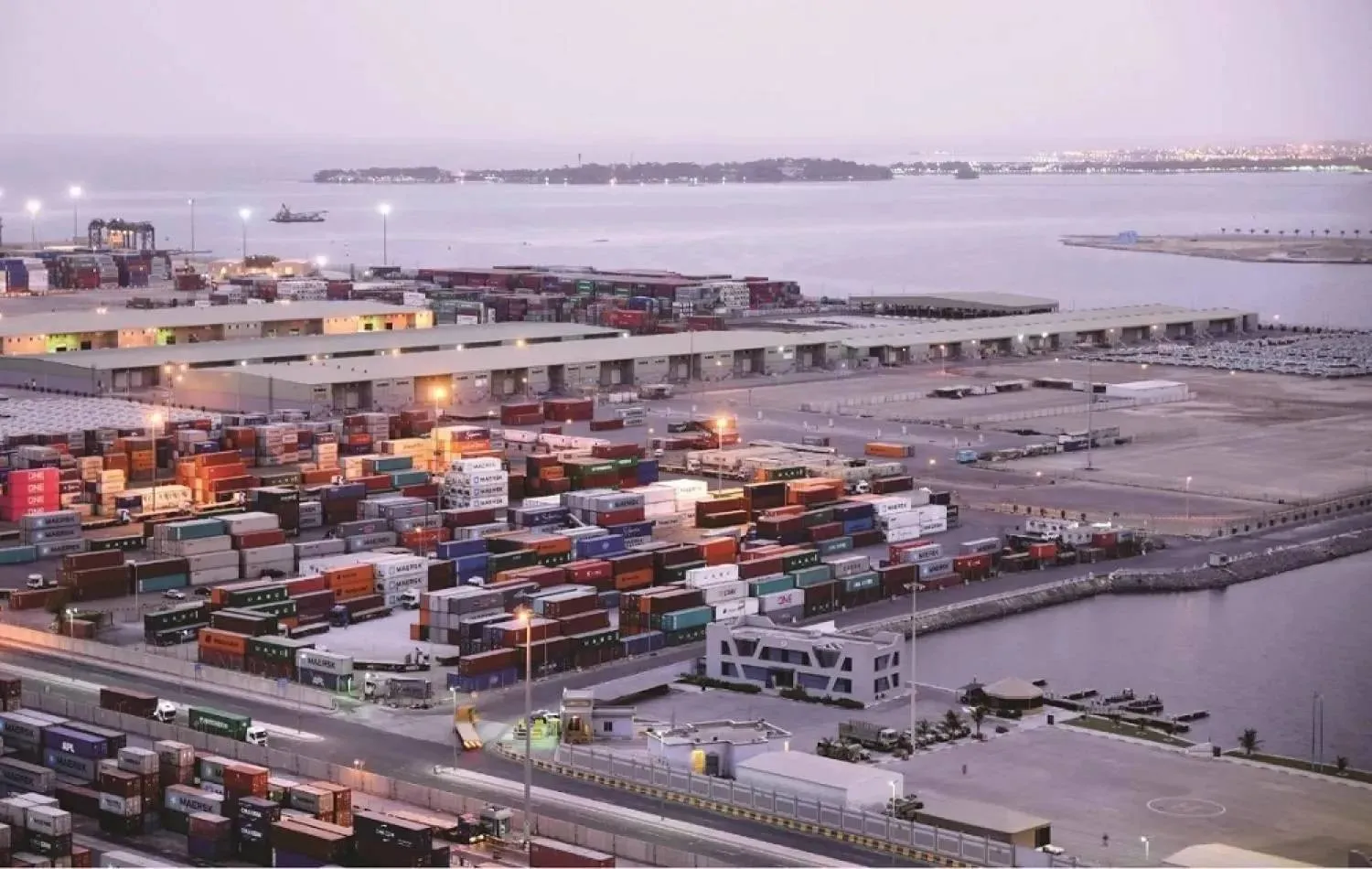
Port competitiveness is no longer just about handling more ships and containers. Keeping trade moving and infrastructure secure against physical and cyber threats has become just as critical, as ports grow more reliant on digital systems and supply chains become increasingly complex.
The economic fallout from port disruptions and their impact on global trade took center stage at a session titled "Securing Infrastructure" during the Saudi Maritime and Logistics Congress 2026, which opened Wednesday in Jeddah with maritime and infrastructure security experts in attendance.
Discussions focused on threats facing ports and shipping companies, particularly cyberattacks capable of crippling operations and disrupting trade, and the need to strengthen port readiness to keep services running and limit economic losses.
Professor Waheed Sami Abu Shanab, a professor of marine engineering at King Abdulaziz University's Faculty of Maritime Studies, said Saudi ports now face a challenge that goes beyond expanding capacity: withstanding disruptions while keeping trade flowing at the lowest possible cost.
Speaking to Asharq Al-Awsat on the sidelines of the session, Abu Shanab said Saudi Arabia's ports on the Red Sea and Arabian Gulf gave the kingdom a strategic advantage as international trade routes shift. But making the most of that position requires greater investment in operational resilience, logistics connectivity and cybersecurity.
Investments top $3.7 billion
The challenges come as Saudi Arabia ramps up investment in port infrastructure. Its ports now have 34 logistics centers, including 17 at Jeddah Islamic Port, backed by investments exceeding 14 billion riyals ($3.7 billion), alongside projects to upgrade container terminals and boost handling capacity.
Abu Shanab said the investments include more than 2 billion riyals to develop a container terminal at Jubail Port and an initial 1.6 billion riyals for a fourth container terminal at Jeddah Islamic Port. Other projects involve upgrading cargo-handling equipment and expanding the use of modern operating systems.
He said future investment must focus on operational efficiency, reserve capacity and stronger links between ports, roads, railways and logistics hubs to absorb sudden surges in shipping volumes and redirect cargo when routes are disrupted.
Abu Shanab floated a preliminary proposal for an additional 10 billion to 20 billion riyals in investment over five years to strengthen strategic ports' readiness.
He stressed that the figure was a proposed planning scenario, not an official assessment of the sector's needs or an approved budget.
Cyberattacks threaten trade beyond ports
Abu Shanab warned that growing reliance on digital systems exposes ports to cyber threats whose economic impact could ripple through factories, markets and supply chains.
He pointed to the 2017 cyberattack on global shipping group Maersk, which the company estimated cost it between $200 million and $300 million after widespread disruption to its operations and systems.
A failure of digital systems managing containers, vessel schedules and cranes could leave cargo stranded, drive up delay and insurance costs, and undermine shipping companies' commitments and customer confidence, he said.
To illustrate the potential costs, Abu Shanab offered a hypothetical scenario: a delay affecting 5,000 twenty-foot equivalent units (TEUs), each incurring an additional 1,000 riyals in costs, would generate a direct bill of 5 million riyals before indirect losses.
He stressed that the calculation did not reflect actual losses at Saudi ports but illustrated the potential cost of disruptions. Investing in prevention and business continuity, he argued, could be cheaper than shutting down a strategic port.
Competitiveness goes beyond handling fees
Abu Shanab said regional ports should be judged not simply by their handling charges but by the total cost of getting goods from ships to markets, including customs clearance, storage, inland transport and schedule reliability.
Saudi ports overseen by the Saudi Ports Authority handled about 8.3 million TEUs in 2025, up 10.58% from a year earlier, highlighting growing activity and the need to expand capabilities without compromising service efficiency.
Artificial intelligence could help schedule vessel arrivals and allocate berths, while upgraded handling equipment could cut waiting times and fuel, storage and transportation costs, making services more reliable for shipping lines, he said.
"The most competitive port is not necessarily the one with the lowest fees, but the one offering the lowest total logistics cost, the greatest reliability and the fastest access to markets," Abu Shanab said.
Simulating crises before they strike
Abu Shanab called for a national simulation model using digital twins and artificial intelligence to test how ports and supply chains would respond to facility shutdowns or shifting maritime routes, and measure the time and cost of restoring operations.
He also urged stronger protection for critical infrastructure, including submarine cables, energy and telecommunications facilities, alongside improved vessel monitoring systems, disaster recovery centers and backup operating plans to keep essential services running.
Saudi Arabia's ports on two coastlines, coupled with expanding logistics services and transport networks, offer a foundation for more reliable supply chains, he said. But realizing that potential depends on matching existing investments with operational and technological readiness.
Protecting maritime infrastructure, Abu Shanab concluded, is no longer a standalone security or technical concern. It is central to port competitiveness and Saudi Arabia's ability to keep trade flowing, attract shipping lines and secure long-term investment.