


Sudan's RSF Says Arrests Fighters Accused of Abuses in El-Fasher

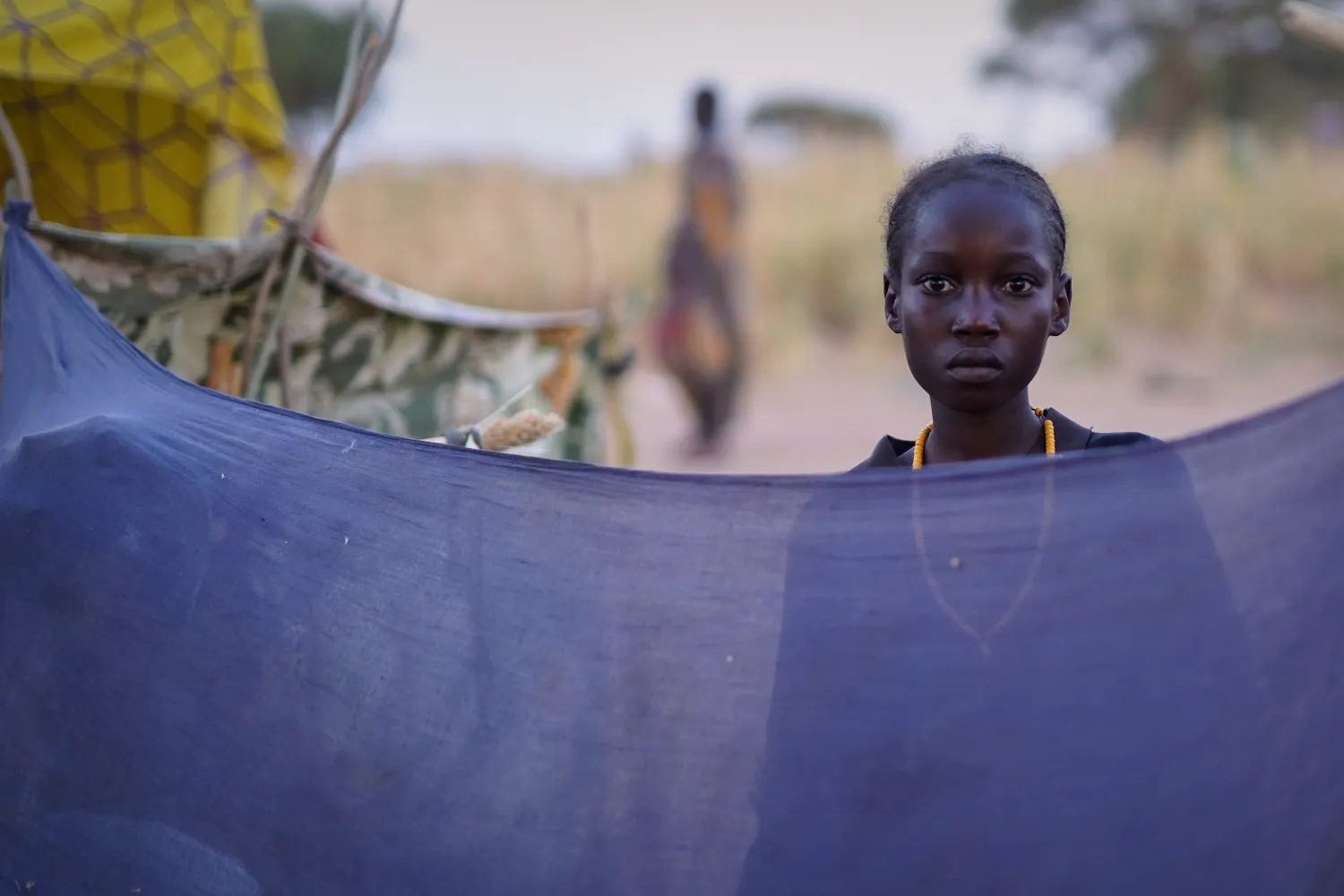
This photo released by UNICEF shows a woman from el-Fasher at a displacement camp where residents sought refuge from fighting between government forces and the RSF, in Tawila, Darfur region, Sudan, Wednesday Oct. 29, 2025. (Mohammed Jammal/UNICEF via AP)
TT

Sudan's RSF Says Arrests Fighters Accused of Abuses in El-Fasher

This photo released by UNICEF shows a woman from el-Fasher at a displacement camp where residents sought refuge from fighting between government forces and the RSF, in Tawila, Darfur region, Sudan, Wednesday Oct. 29, 2025. (Mohammed Jammal/UNICEF via AP)

Sudan's paramilitary Rapid Support Forces said they had arrested several fighters accused of committing abuses during the capture of the city of El-Fasher, as the United Nations said "horror is continuing" in the Darfur region.

The RSF, at war with the army since April 2023, seized El-Fasher -- the army's last stronghold in Darfur -- on Sunday after an 18-month siege.

In a statement late Thursday, the RSF said it had detained several fighters accused of "violations that occurred during the liberation" of the city, including one known as Abu Lulu who appeared in multiple videos on his TikTok committing summary executions.

In one clip verified by AFP, he is seen shooting unarmed men at close range. Another shows him standing among armed men near dozens of bodies and burnt vehicles.

A third video shows Abu Lulu attempting to coerce captives into praising army chief Abdel Fattah al-Burhan.

When they refused, he executed them, saying, "When we came here, we had two choices: death or victory."

The RSF released a video appearing to show Abu Lulu behind bars in what they claimed to be a North Darfur prison. It said "legal committees" had begun investigations "in preparation for bringing them (the fighters) to justice".

The group also affirmed its adherence to "the law, rules of conduct and military discipline during wartime".

El-Fasher has been cut off from all communications since its fall, but survivors who reached the nearby town of Tawila told AFP of mass killings, children shot before their parents and civilians beaten and robbed as they fled.

Emtithal Mahmoud, a US-based Sudanese poet from El-Fasher, said she recognized her cousin, Nadifa, in a video shared by RSF accounts, lying dead on the ground.

Since Sunday, videos circulating online have shown men in RSF uniforms carrying out summary executions around the city.

More than 36,000 people have fled El-Fasher since Sunday, according to the UN's migration agency, while the fate of about 177,000 civilians still trapped in the city remains unknown.

'Horror is continuing'

UN humanitarian chief Tom Fletcher told the Security Council on Thursday there were "credible reports of widespread executions" after the RSF entered El-Fasher.

"We cannot hear the screams, but... the horror is continuing," he said, describing rapes, mutilations and killings with impunity.

Fletcher said the RSF claimed to be investigating, but questioned its commitment amidst "appalling news" from North Darfur.

RSF leader Mohamed Hamdan Daglo had earlier vowed accountability for "anyone who has made a mistake", while an RSF-led coalition alleged many videos were "fabricated" by army-linked outlets.

Satellite imagery analyzed by Yale's Humanitarian Research Lab showed clusters in the city "consistent with adult human bodies", and "discoloration" that may indicate "pools of blood", its director told AFP.

The RSF -- descended from the Janjaweed militias accused of atrocities in Darfur two decades ago -- and the army both face war crimes accusations.

The US has previously determined the RSF committed genocide in Darfur.

El-Fasher's fall gives the RSF full control over all five state capitals in Darfur, effectively splitting Sudan along an east-west axis.

The RSF is now entrenched in Darfur with a self-declared rival government and is pushing into the neighboring Kordofan region, where the UN says similar atrocities have occurred.

The army holds Sudan's north, east and center.

Peace efforts led by Washington and regional powers have so far failed.



Yemen Minister Says Efforts Underway to Bring Capital Back to Hadhramaut

 Yemeni National Shield forces during the recapture of military camps in Hadhramaut and Al-Mahrah (Reuters)
Yemeni National Shield forces during the recapture of military camps in Hadhramaut and Al-Mahrah (Reuters)
TT

Yemen Minister Says Efforts Underway to Bring Capital Back to Hadhramaut

 Yemeni National Shield forces during the recapture of military camps in Hadhramaut and Al-Mahrah (Reuters)
Yemeni National Shield forces during the recapture of military camps in Hadhramaut and Al-Mahrah (Reuters)

At a critical moment when the Yemeni government is seeking to rebuild confidence in the national economy, official indicators suggest a tangible improvement in the investment climate, particularly in provinces where the internationally recognized government has regained control, most notably Hadhramaut and Socotra.

These moves come as part of a broader government effort to reassure traders and investors and to create a safe and stable environment for the return of capital that left the country in recent years, amid improving security conditions, the spread of state institutions, and growing interest among local and regional business leaders in resuming investment activity in liberated areas.

Monitoring stocks and price stability

Yemen’s Minister of Industry and Trade Mohammed al-Ashwal told Asharq Al-Awsat that the ministry issued official instructions the day before yesterday aimed at reassuring southern communities about the availability of essential commodities and price stability.

He stated that three separate memoranda were sent to the heads of the ministry’s offices in Mukalla, Seiyun, and al-Mahrah, containing clear directives to closely monitor commodity stocks and continuously track market activity on a daily basis.

Al-Ashwal said the instructions emphasized the importance of ensuring that Saudi aid reaches its intended beneficiaries and is not diverted or sold in markets, underscoring that the ministry gives this issue top priority due to its direct impact on market stability and food security.

Reassurances in three provinces

On security, the minister said conditions were reassuring and that security was stable in Hadhramaut, Seiyun, and Al Mahrah. He said the measures taken had helped boost confidence among citizens and traders alike, creating a sense of stability in market activity.

He pointed to ongoing communication with the Yemeni Saudi Business Council, noting that a meeting in Mecca resulted in a set of joint projects that reflect the strength of economic ties between the two countries and open new horizons for investment and cooperation across several vital sectors.

Normalizing the situation in Aden

Regarding the situation in Aden, the minister stated that the government is currently working to fully normalize conditions until security is firmly established, particularly in the temporary capital.

He added that the deployment of the National Shield forces would lead to the unification of the security authority in charge, which would have a positive impact on security and administrative stability and provide investors and traders with a clear counterpart to deal with.

Capital between flight and resilience

Regarding investors and business leaders in the south, al-Ashwal stated that following the Houthi coup, significant capital left the southern areas; however, some local businessmen remained resilient despite the volatility and challenges, continuing their commercial activities under extremely difficult conditions and helping to preserve a minimum level of economic activity.

He said local business leaders demonstrated honorable positions in the darkest circumstances and played a positive role in maintaining the economic cycle.

He called on traders who had left the country after the Houthi coup to return, especially to Hadhramaut, stating that the province would not be the same as it was before, given the expansion of state institutions and the consolidation of security through the army, security agencies, and local authorities.

Al-Ashwal said the country is witnessing notable economic momentum during a period in which conditions have stabilized in many southern provinces.

He said there is clear interest among business leaders who left Yemen about a decade ago and who now show a desire and readiness to return and invest again, amid improved security and economic conditions and an expanding area of stability.

Progress in Hadhramaut

He added that in recent hours, he had been in contact with the heads of chambers of commerce in Aden, Mukalla, and Taiz, reassuring them about security and stability.

He said he met with the governor of Hadhramaut on Monday, who confirmed that several practical steps had been taken to ensure the smooth functioning of commercial activity in the province.

Al-Ashwal said the impact of these steps is now clearly visible in Hadhramaut, where social and economic life has returned at a good pace, reflecting an improved business environment and a gradual revival of commercial activity.

Confidence signals to investors

Regarding government efforts to strengthen the local economy, al-Ashwal stated that the government, through the Ministry of Industry and Trade, is preparing to launch an industrial zone in Aden as a clear indicator of economic stability, alongside three other industrial zones in Hadhramaut and two in Socotra.

He said signing the contract for the Aden industrial zone would send a practical message that the economic situation is stable and developing dynamically.

Saudi role

In this context, al-Ashwal spoke at length about the importance of Saudi Arabia’s role, thanking the kingdom for its efforts to support stability in Yemen.

He said this support is ongoing and has directly contributed to strengthening economic stability and supporting state institutions.


Deadly Clashes in Syria’s Aleppo Deepen Rift Between Govt, Kurdish Forces

Smoke billows in the distance, in Aleppo, northern Syria, 07 January 2026. (EPA)
TT

Deadly Clashes in Syria’s Aleppo Deepen Rift Between Govt, Kurdish Forces

Smoke billows in the distance, in Aleppo, northern Syria, 07 January 2026. (EPA)

Fierce fighting in Syria's northern city of Aleppo between government forces and Kurdish fighters killed at least four people on Wednesday and drove thousands of civilians from their homes, with Washington reported to be mediating a de-escalation.

The violence, and statements trading blame over who started it, signaled that a stalemate between Damascus and Kurdish authorities that have resisted integrating into the central government was deepening and growing deadlier.

Clashes broke out on Tuesday, when at least six people were killed, including two women and a child, in an exchange of shelling between Syrian government troops and the Kurdish-led Syrian Democratic Forces (SDF).

After relative calm ‌overnight, shelling ‌resumed on Wednesday and intensified in the afternoon, Reuters reporters in ‌the ⁠city said. Aleppo's health ‌directorate said a further four people were killed and more than two dozen wounded.

By evening, fighting had subsided, the Reuters reporters said.

Ilham Ahmed, who heads the foreign affairs department of the Kurdish administration, told Reuters that international mediation efforts were underway to de-escalate. A source familiar with the matter told Reuters the US was mediating.

THOUSANDS OF CIVILIANS FLEE

The Syrian army announced that military positions in the Kurdish-held neighborhoods of Sheikh Maqsoud and Ashrafiyah were "legitimate military targets." Two Syrian security officials told Reuters that they expected a ⁠significant military operation in the city.

The government opened humanitarian corridors for civilians to flee flashpoint neighborhoods, ferrying them out on city buses. A ‌source from the government's civil defense rescue force said an ‍estimated 10,000 people had fled.

"We move them ‍safely to the places they want to go to according to their desire or to ‍displaced shelters," said Faisal Mohammad Ali, operations chief of the civil defense force in Aleppo.

The latest fighting has disrupted civilian life in what is a leading Syrian city, closing the airport and a highway to Türkiye, halting operations at factories in an industrial zone and paralyzing major roads into the city center.

The Damascus government said its forces were responding to rocket fire, drone attacks and shelling from Kurdish-held neighborhoods.

Kurdish forces said they held Damascus "fully and directly responsible for ... the dangerous escalation that threatens ⁠the lives of thousands of civilians and undermines stability in the city."

During Syria's 14-year civil war, Kurdish authorities began running a semi-autonomous zone in northeast Syria, as well as in parts of Aleppo city.

They have been reluctant to give up those zones and integrate fully into the government that took over after ex-President Bashar al-Assad's ousting in late 2024.

Last year, the Damascus government reached a deal with the SDF that envisaged a full integration by the end of 2025, but the two sides have made little progress, each accusing the other of stalling or acting in bad faith.

The US has stepped in as a mediator, holding meetings as recently as Sunday to try to nudge the process forward. Sunday's meetings ended with no tangible progress.

Failure to integrate the SDF into Syria's army risks further violence and ‌could potentially draw in Türkiye, which has threatened an incursion against Kurdish fighters it views as terrorists.


Presidential Adviser to Asharq Al-Awsat: Security Stable in Yemen’s Aden

Presidential Leadership Council member Abdul Rahman Al-Mahrami Abou Zaraa during a previous meeting with the Hadhramaut governor, attended by adviser Jaber Mohammed. (Photo courtesy of Abu Zaraa’s office)
TT

Presidential Adviser to Asharq Al-Awsat: Security Stable in Yemen’s Aden

Presidential Leadership Council member Abdul Rahman Al-Mahrami Abou Zaraa during a previous meeting with the Hadhramaut governor, attended by adviser Jaber Mohammed. (Photo courtesy of Abu Zaraa’s office)

Security in Yemen’s interim capital, Aden, was stable on Wednesday, a senior official said, after security forces moved swiftly to deploy across the city and secure key government institutions.

Jaber Mohammed, a presidential adviser and director of the office of Presidential Leadership Council member Abdul Rahman Al-Mahrami, also known as Abou Zaraa, told Asharq Al-Awsat that the security plan had been implemented within hours.

Since the early morning, brigades of the Giants Forces have deployed across Aden’s main streets, securing vital government institutions. “The security situation is calm and stable,” Mohammed said.

Meanwhile, Mohammed al-Ghaithi, a member of the Southern Transitional Council delegation that arrived in Riyadh, said the atmosphere was positive and that preparations were underway to launch a series of meetings related to intra-Southern dialogue.

In a post on X, he stated that he arrived with colleagues from Aden in Riyadh.

“In a positive atmosphere, we will begin a series of meetings to prepare for intra-southern dialogue under the sponsorship of our brothers in the Kingdom of Saudi Arabia,” he added.

Earlier, Presidential Leadership Council member Abdullah al-Alimi said that developments in the south represented a restoration of the state's authority, its institutions, legitimacy, and reference frameworks.

Al-Alimi said this was aimed at preserving stability and public calm, and clarifying the truth, free from the logic of conflicts and illusory victories.

The Presidential Leadership Council had decided to revoke the membership of Aidarous al-Zubaidi and refer him to the public prosecutor over accusations including high treason, undermining Yemen’s political and economic standing, obstructing state efforts to confront the coup, and fueling internal strife.

In another post on X, al-Alimi stated that the responsibility for maintaining security and stability rested with state institutions, local authorities, and all loyal citizens, in a manner that ensured the rule of law and protected civilians.

“What is happening today in the southern governorates after the rebellion of Aidrous al-Zubaidi, despite all the sincere efforts made by our brothers in the Kingdom of Saudi Arabia and the Presidential Leadership Council to prevent reaching this stage, is not what we had hoped for, and we are not happy with what has happened,” he said.

The Saudi-led coalition backing Yemen’s legitimate government later announced new details surrounding the movements of al-Zubaidi, following military escalation by forces affiliated with the council in Hadhramaut and Al-Mahra.

Coalition spokesman Major General Turki al-Maliki stated that the coalition had informed al-Zubaidi on January 4 to travel to Saudi Arabia within 48 hours to meet with Presidential Leadership Council Chairman Rashad al-Alimi and coalition leaders to discuss the reasons behind the recent military escalation.

He said arrangements had been made for al-Zubaidi to travel on a Yemenia Airways flight, but the flight was delayed for several hours before being canceled, followed by heightened tensions and the appearance of gunmen and military vehicles near civilian facilities around the airport.

Al-Maliki added that forces affiliated with the Southern Transitional Council then moved to impose measures in Aden, including a military deployment, obstruction of movement inside the airport, the closure of some roads, and armed deployments across the city, which the coalition described as an “unjustified escalation” that threatened security and stability.