



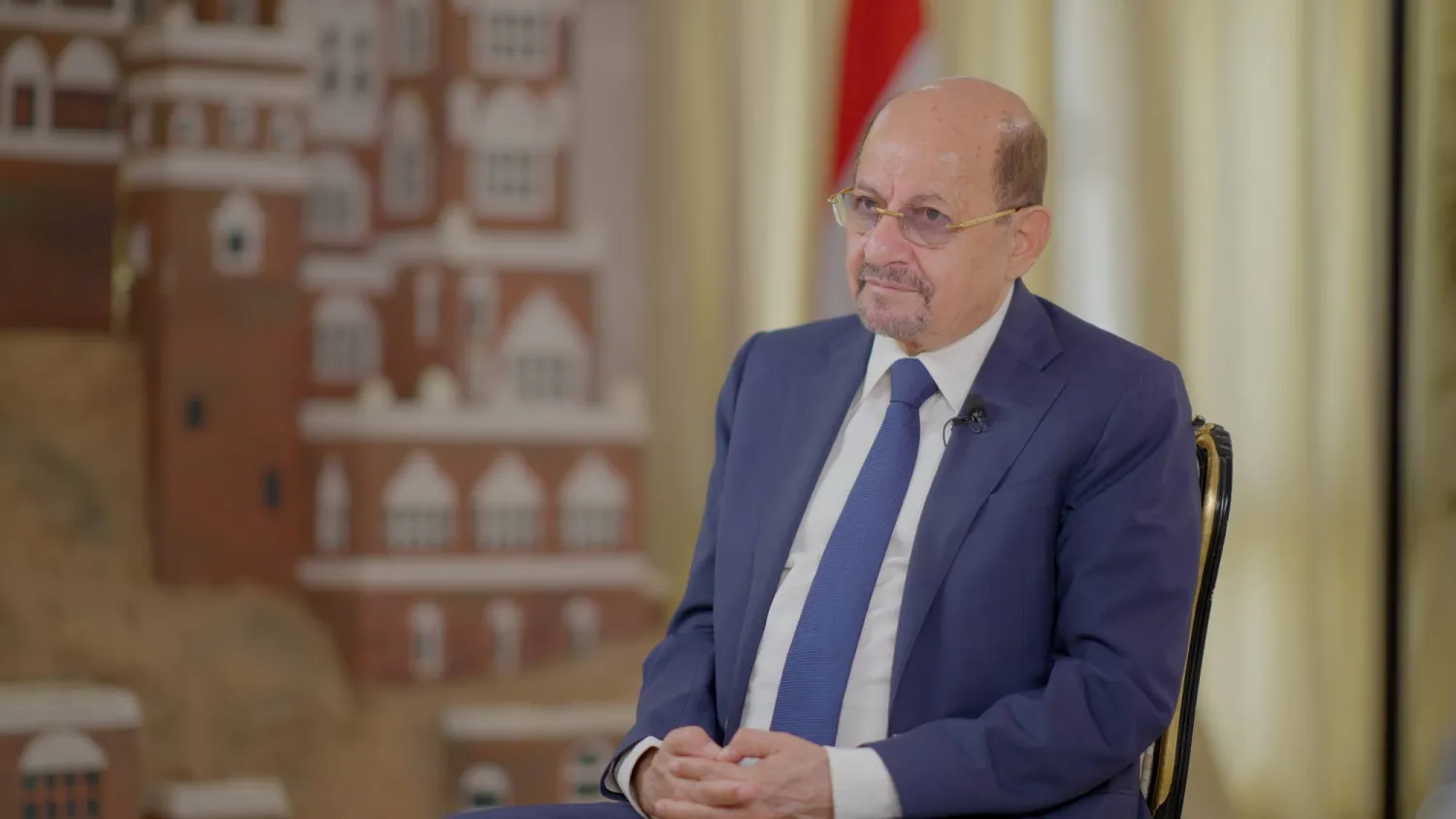

Yemeni Foreign Minister Shaya Zindani has warned that the war ignited by the Houthi militia has spilled beyond Yemen’s borders to become “a direct threat to international peace and security.”
Speaking on the sidelines of the 21st IISS Manama Dialogue, Zindani reaffirmed his government’s determination to advance economic reforms and pursue a just and lasting peace.
In his address to the forum, Zindani described the Houthis as “a cell planted by Iran in the Arab body,” driven by a sectarian ideology that has no sense of national identity.
He said the situation in Yemen exemplifies “a stark case of undermining the international order” by an armed group operating outside the law, financed and armed by expansionist regional powers.
The minister pointed to what he called “a painful paradox”: a movement possessing ballistic missiles and drones, while the internationally recognized government lacks an integrated national defense system. This, he said, reflects “a flaw in international justice and a double standard in global policy.”
Zindani criticized the international community for failing to implement UN Security Council Resolution 2216, arguing that such inaction has allowed Iran greater freedom to interfere in Yemen. He warned that continued silence over Houthi violations “poses a threat to the global order as a whole.”
Despite scarce resources, Zindani noted that the legitimate government controls more than 70 percent of Yemen’s territory and continues to act “with national responsibility.”
He stressed that the government “did not start this war” but seeks peace “based on legitimacy and respect for sovereignty.”
On the sidelines of the forum, Zindani held talks with UK Foreign Secretary Yvette Cooper on ways to strengthen bilateral relations.
He praised Britain’s steadfast support for Yemen’s Presidential Leadership Council and government, as well as its humanitarian and development assistance, and cooperation in maritime security and coast guard operations.
Zindani underscored the importance of continuing this partnership to safeguard navigation in the Red Sea and Gulf of Aden, and to combat illicit activities that endanger regional and international security.
He also highlighted Yemen’s ongoing economic and administrative reforms, citing progress in stabilizing the national currency, boosting revenues, and improving spending efficiency despite formidable challenges.
According to Yemeni state media, Cooper reaffirmed the United Kingdom’s commitment to supporting Yemen’s government, calling for continued reforms, stronger development initiatives, and improved living conditions for the Yemeni people.


