

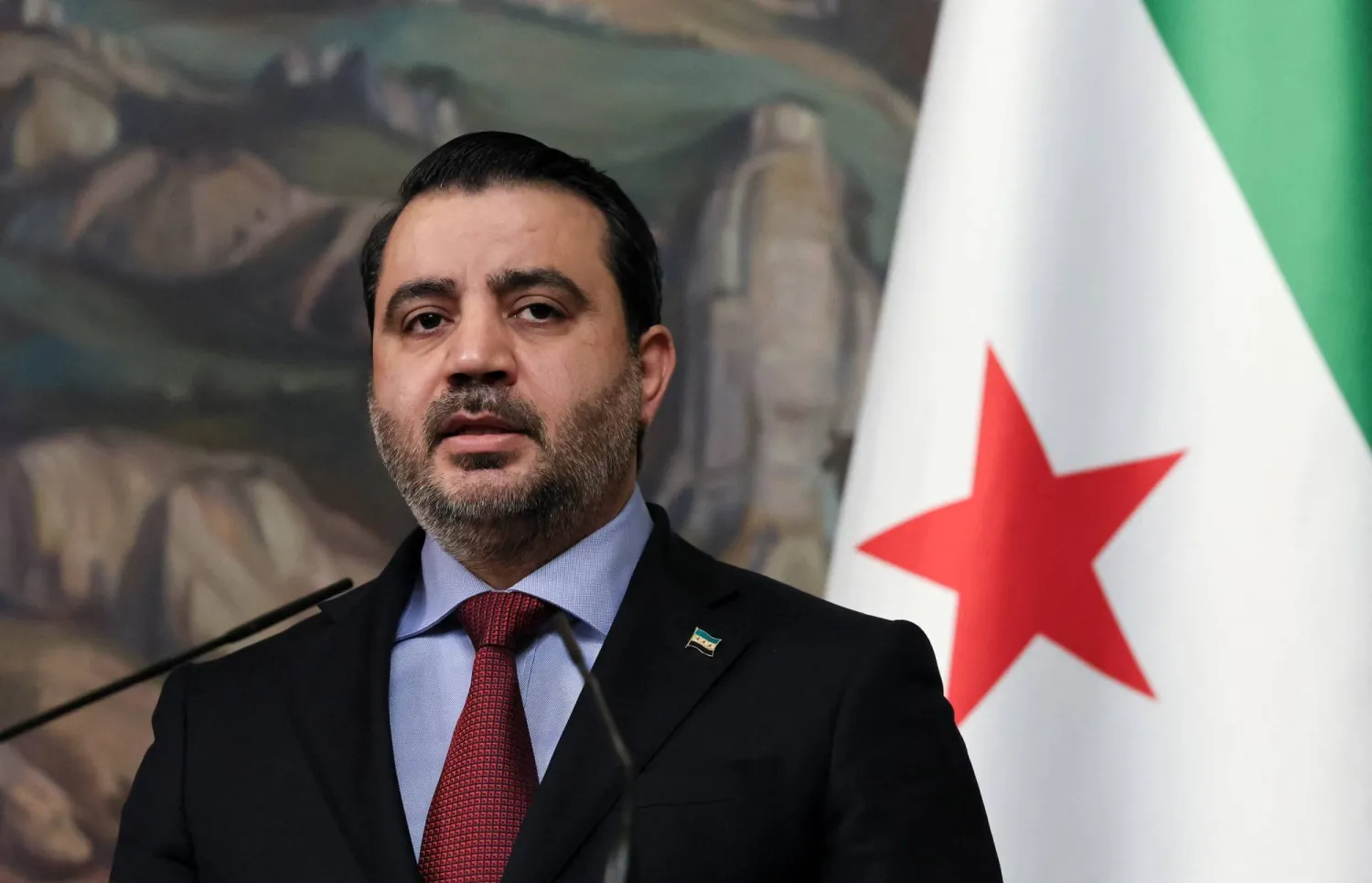

Syria Seeking ‘Very Strong Strategic Partnership’ with US

Syrian Foreign Minister Asaad al-Shaibani. (Reuters file)
TT

Syria Seeking ‘Very Strong Strategic Partnership’ with US

Syrian Foreign Minister Asaad al-Shaibani. (Reuters file)

Syrian Foreign Minister Asaad al-Shaibani said on Sunday that Damascus is seeking to build a “very strong strategic partnership” with the United States.

He added, however, that it still wants to maintain “an equal distance with all countries and build relations based on cooperation and openness.”

Speaking at a press conference in Manama, he confirmed that interim President Ahmed al-Sharaa will visit Washington soon.

Informed sources in Damascus told Asharq Al-Awsat that the visit aims to follow up on previous agreement between Syria and the US and that the conditions are ripe to announce a strategic partnership.

The partnership would positively impact several files, especially negotiations domestically between Damascus and the Syrian Democratic Forces (SDF) and regionally with Israel.

Shaibani said Syria has several issues it wants to discuss with the US, starting with lifting sanctions and opening a chapter in relations.

Maintaining the sanctions is no longer justified, he stressed, adding that Damascus wants to forge “a very strong partnership” with Washington.

It will also continue to extend its hand in cooperation with allies and friends in the region, added the FM.

Syria had confronted massive challenges in past and it never surrendered. It remained committed to justice, he stated, underlining the government’s commitment to bolster civil peace and impose the rule of law.

On Israel, Shaibani said Syria was handling its provocations diplomatically and out of its keenness to protect its interests without being dragged to escalation or a clash.

Sharaa’s visit to the US would a first for a Syrian president.

Wael Alwan, a researcher at Jusoor for Studies, told Asharq Al-Awsat that the visit should have been announced on the sidelines of Sharaa’s trip to New York where he attended the United Nations General Assembly in September.

However, some Syrian arrangements needed to be made and now the conditions are ready to announce the strategic partnership, he remarked.

This will be the most important step the Syrian government takes in “repositioning itself on the regional and international levels,” he went on to say.

Should they reach an agreement, it would signal the end of Syria’s alignment with what the West described as the “Axis of Evil”. Syria is no longer a source of alarm in the region, he said. On the contrary, it has become an ally in combating terrorism, ensuring security and joint Arab, Turkish and western interests that all align with Syria’s interests.

“The new Syria does not want to be part of one axis against another, but it wants to build balanced relations with everyone,” Alwan added.

US envoy to Syria Tom Barrack said last week that Sharaa would sign with US President Donald Trump in November an agreement for Syria to join the international anti-ISIS coalition that was formed in 2014.



Iraq Denies US Claims Deputy Oil Minister Helped Iran Evade Sanctions

A view of the Shuaiba oil refinery southwest of Basra, Iraq. (Reuters/File Photo)
TT

Iraq Denies US Claims Deputy Oil Minister Helped Iran Evade Sanctions

A view of the Shuaiba oil refinery southwest of Basra, Iraq. (Reuters/File Photo)

Iraq's oil ministry has denied US accusations against its deputy minister, who the United States hit with sanctions over alleged support to Iran as Washington escalates pressure on Baghdad to break with Iranian-linked groups.

The US State Department on Thursday announced sanctions on Ali Maarij al-Bahadli, saying he "abused his government position to divert Iraqi oil in support of the Iranian regime and its terrorist proxies."

It accused him of fraudulently mixing Iraqi and Iranian oil as part of a scheme to help Iran avoid sanctions.

His ministry said late Thursday that "it denies the accusations" against Bahadli and stressed "the importance of transparency in addressing all... accusations on the basis of evidence and facts," according to the INA state news agency.

The ministry said it was prepared to investigate the matter, but added that "crude oil export operations, marketing, loading onto tankers, and related procedures" were not part of Bahadli's job.

After entities run by an Iraqi businessman were sanctioned over the same accusations last year, Iraq's state oil marketing company SOMO denied that any oil mixing operations were taking place in the country's ports or territorial waters to help Iran.

The United States has unilateral sanctions against Iranian oil, seeking to punish any country or company that buys it.


Emergency Declared in Libya's Zawiya Refinery amid Clashes Near Facility

Reuters file photo of Libya's Sharara oilfield
TT

Emergency Declared in Libya's Zawiya Refinery amid Clashes Near Facility

Reuters file photo of Libya's Sharara oilfield

An emergency was declared in Libya's Zawiya refinery, west of the capital Tripoli, amid clashes near the facility, ⁠two engineers told ⁠Reuters on Friday.

Zawiya, 40 km (25 miles) west ⁠of Tripoli, is home to Libya's biggest functioning refinery, with a capacity of 120,000 barrels per day.

The refinery ⁠is ⁠connected to the country's 300,000 bpd Sharara oilfield.


More than Half of Lebanon Population Depends on Aid, Says EU Official

European Union Commissioner for Equality, Preparedness and Crisis Management Hadja Lahbib arrives for a meeting of the College of European Commissioners in Brussels, Belgium, May 6, 2026. REUTERS/Yves Herman
TT

More than Half of Lebanon Population Depends on Aid, Says EU Official

European Union Commissioner for Equality, Preparedness and Crisis Management Hadja Lahbib arrives for a meeting of the College of European Commissioners in Brussels, Belgium, May 6, 2026. REUTERS/Yves Herman

More than half of Lebanon's population depends on humanitarian aid, a European Union official said on Friday, as Israel continues its attacks on the country despite a ceasefire in the two-month-long war with militant group Hezbollah.

"At present, more than three million people, meaning more than half of the population here in Lebanon, depend on humanitarian aid to survive," EU crisis management chief Hadja Lahbib told reporters after meeting Lebanese President Joseph Aoun in Beirut.

Lahbib said that since the start of the war on March 2 the 27-member bloc has provided 100 million euros in aid and sent six planes carrying humanitarian aid, with a seventh expected on Saturday.

Israeli strikes in Lebanon have killed more than 2,700 people and displaced over one million since early March, according to authorities.

The UN launched an emergency appeal in March for $308 million in humanitarian aid for Lebanon, but in two months it has raised just $126 million, according to UN agencies.

Lahbib, who said that the ceasefire has opened "a narrow window of hope", called for Hezbollah "to cease its attacks and be disarmed" and said that "Israel must put an end to its bombardments".

"For a ceasefire to lead to peace, courage is needed -- political courage to address the root causes of this conflict."

Israel and Lebanon are set to hold a third round of talks in Washington next week to end the war, despite Hezbollah's opposition to direct negotiations.