NATO Tests War Preparedness on Eastern Flank Facing Russiahttps://english.aawsat.com/features/5205056-nato-tests-war-preparedness-eastern-flank-facing-russia
NATO Tests War Preparedness on Eastern Flank Facing Russia
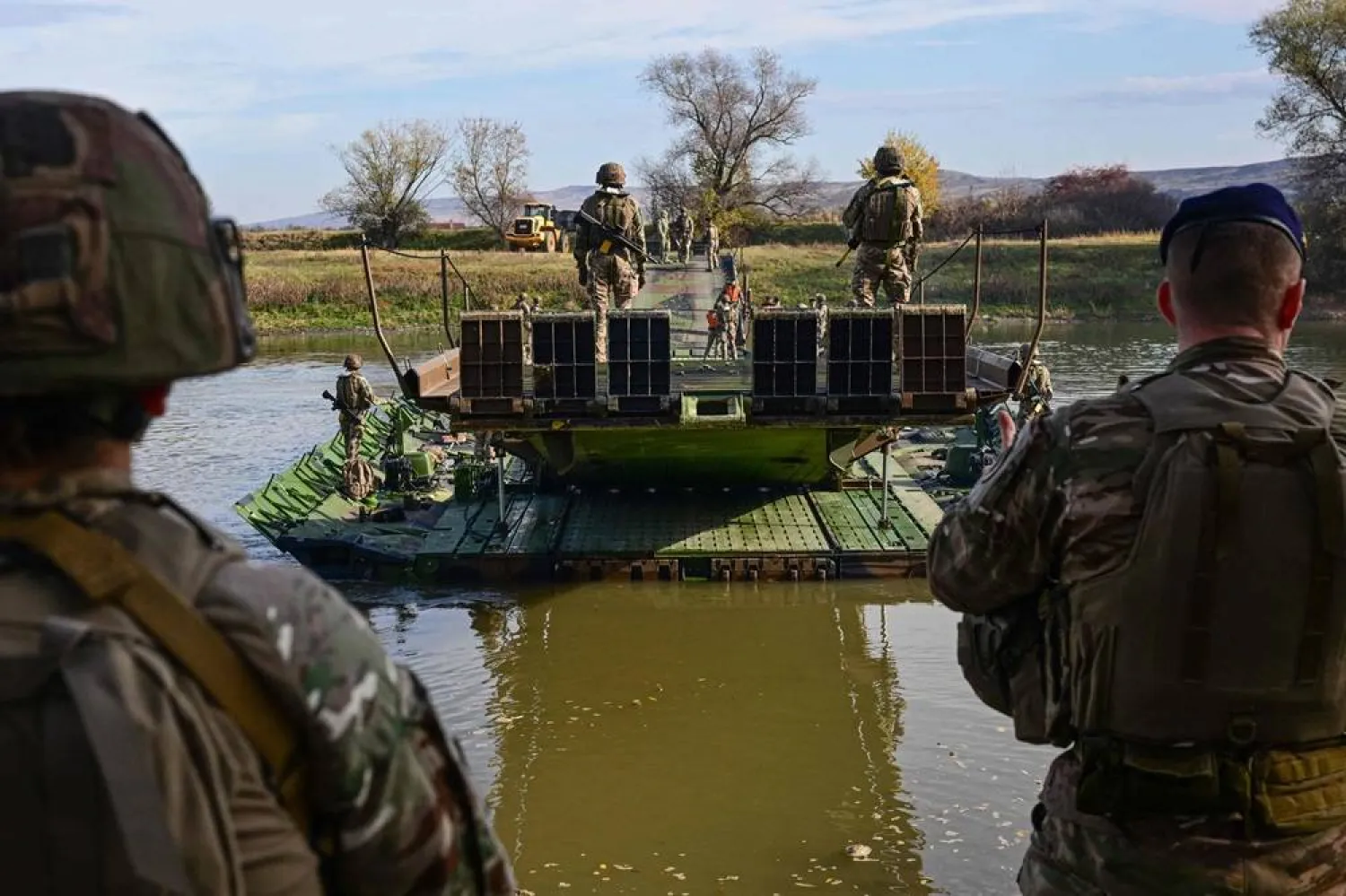
France's Army personnel from the combat engineering corps maneuver a motorized floating bridge (PFM) across the Mures River during the "Dacian Fall" military exercise in Santimbru on November 3, 2025. (AFP)
TT
TT
NATO Tests War Preparedness on Eastern Flank Facing Russia
France's Army personnel from the combat engineering corps maneuver a motorized floating bridge (PFM) across the Mures River during the "Dacian Fall" military exercise in Santimbru on November 3, 2025. (AFP)
On the Mures river in central Romania, French armored vehicles and Romanian trucks board a motorized floating bridge, part of a large military exercise to showcase NATO's ability to rapidly increase force levels on its eastern flank facing Russia.
The drill -- planned for months and seen as an "integration exercise" for NATO members -- comes after Washington last week said it would pull some troops out from the area.
Romania, which shares some 650 kilometers (400 miles) of border with Ukraine, has gained in strategic importance since Russia invaded its neighbor in 2022.
In the Dacian Fall exercise from October 20 to November 13, French-led troops from Belgium, France, Luxembourg and Spain are engaged in maneuvers and live-fire artillery and tank drills, together with Romanian soldiers.
Since Moscow's full-scale invasion of Ukraine, Paris has deployed nearly 1,500 soldiers in Romania and doubled them for the exercise. In case of a crisis, this can be increased to 5,000 troops.
"We must demonstrate our ability to integrate into a NATO division," said French General Maxime Do Tran, commander of the 7th Armored Brigade deployed for Dacian Fall.
The exercise, conducted across Romania, follows "NATO's real defense plans" and serves to signal the alliance's "strategic solidarity", he added.
While French army engineers skillfully dock the massive motorized barge on the banks of the Mures during one exercise, 200 meters (220 yards) away, Romanian engineers speedily put up a pontoon.
The French and Romanian teams will then switch roles.
"In Europe, there's a watercourse every 20 to 30 kilometers; crossing is a complex skill that had somewhat been lost," said Colonel Jerome Paris, head of the French engineering detachment.
About 60 kilometers to the north, amid sun-scorched grassy hills, Romanian General Dorin Toma, who commands NATO troops in Romania and Bulgaria, observes French engineers destroying obstacles identified by small quadcopter drones.
"It's an integration exercise," he said, adding that at the end of a two-year cycle to integrate forces "we're in a very good position".
The challenge is to maintain the level as "people are changing, weapons systems are changing".
"We need to keep the pace," he said.
On Washington's announcement that it would pull some troops out from NATO's eastern flank, General Toma said that from "a military standpoint, it changes nothing" given how the United States showed in 2022 that they were ready to deploy significant resources to the country at short notice.
Washington has denied its announcement amounted to a US withdrawal from Europe.
Romania's defense ministry said last week that 900-1,000 US soldiers would remain, down from the about 1,700 currently deployed.
Transporting equipment to Romania was a complex logistical operation that faced administrative hurdles.
For each country crossed, every license plate must be specified in documentation along with the names of personnel in the convoy, which has to be escorted by local police.
The French military prohibits, with some exceptions, the publication of surnames of its staff.
"Mobility corridors" with clearly identified routes and streamlined administrative procedures are a solution.
The Netherlands, Germany, and Poland are setting up one from North Sea ports to the Belarusian border.
"Harmonization is underway, but it takes time," Lieutenant Colonel Alexis said.
Iran Prolongs Talks in Stalemate to Influence US Midterms, Officials Sayhttps://english.aawsat.com/features/5331671-iran-prolongs-talks-stalemate-influence-us-midterms-officials-say
An Iranian woman walks past a mural of late Iranian Supreme Leader Ali Khamenei on a street in Tehran, Iran, 14 October 2026, amid the ongoing conflict between Iran and the United States. (EPA)
TT
TT
Iran Prolongs Talks in Stalemate to Influence US Midterms, Officials Say
An Iranian woman walks past a mural of late Iranian Supreme Leader Ali Khamenei on a street in Tehran, Iran, 14 October 2026, amid the ongoing conflict between Iran and the United States. (EPA)
Iran has deliberately prolonged talks with the US to try to weaken Donald Trump politically ahead of November's US midterm elections, senior officials say, while fears of renewed military action and deep distrust of Washington have reinforced Tehran's reluctance to strike a quick deal to end the war.
Three senior Iranian officials and an Iranian insider, speaking to Reuters on condition of anonymity, said Tehran was convinced the US president was ready to resort to renewed attacks to try to break the stalemate in the eight-month-old war.
"Iran is preparing for renewed Israeli and US attacks, not for a deal with America to end the war," one of the officials said. "The clerical establishment is determined not to give Trump a political victory."
Tehran analyst Saeed Leylaz said that, by prolonging the talks, "Iran is influencing the US election without taking any unlawful action".
IRAN CAN EXPLOIT TRUMP'S POLITICAL PROBLEMS
The war, which began in February when the US and its ally Israel launched strikes on Iran, has helped drive Trump’s approval rating to a record low as polls suggest that Americans worried about high gasoline prices will punish his Republican Party in the November 3 congressional elections.
Trump has repeatedly said he expects oil prices to drop after the elections, but has not offered a detailed plan to end the war and reopen the Strait of Hormuz, a vital global energy shipping route effectively closed by Iran since the war began.
Iranian attacks both threatened and real have kept ship traffic through the strait to a trickle, while a US maritime blockade and trade sanctions have cut off Iran's oil export revenues and exacerbated growing domestic economic woes.
With Tehran refusing to make concessions it believes could benefit Trump politically, there is little chance of a breakthrough before the elections, the officials said.
Under pressure from Israel, Washington wants Iran’s decades-long nuclear program - which Iran says is purely peaceful and Western powers allege has military dimensions - on the table from the outset.
For its part, Tehran insists that its conditions under a "seven-day plan" must be met before nuclear negotiations begin. It offers no prospect of giving up the leverage over the Strait of Hormuz that the conflict prompted it to seize.
Iran's Foreign Ministry and the US White House did not respond to Reuters requests for comment.
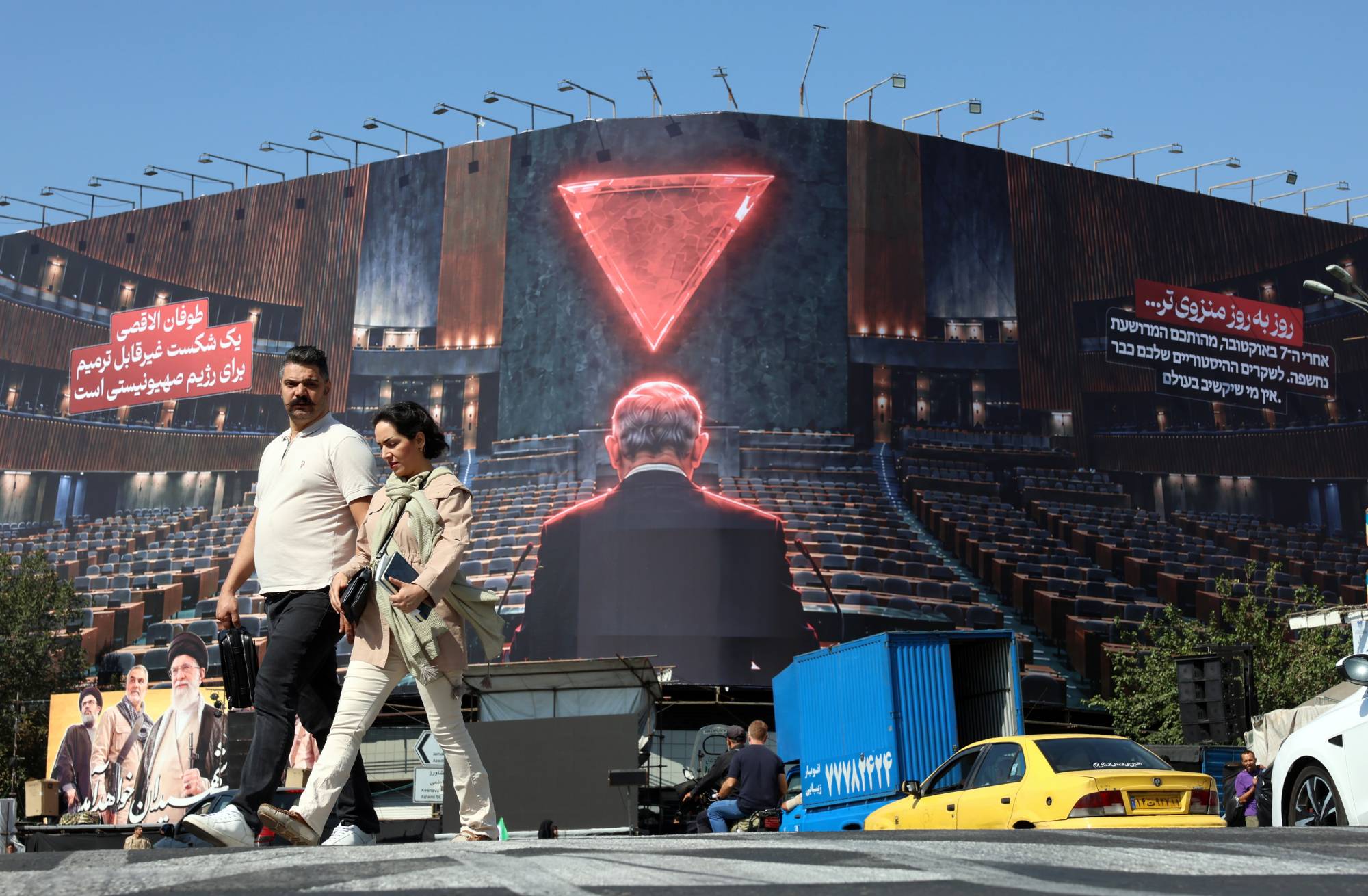
An Iranian couple walks near an anti-Israel billboard featuring Israeli Prime Minster Benjamin Netanyahu and a sentence reading in Persian “Day by day isolated” at the Enghelab square in Tehran, Iran, 12 October 2026. (EPA)
IRAN CANNOT TRUST WASHINGTON, OFFICIALS SAY
Iran’s proposal, conveyed through Qatari mediators, offered to reopen the strait within seven days, albeit under Iranian control, provided that Washington lifted its maritime blockade, eased restrictions on Iranian oil exports, released frozen assets and ended hostilities on all fronts.
Iranian Foreign Minister Abbas Araghchi said on Sunday that the offer remained on the table, with messages being exchanged through mediators.
Tehran's view that Washington cannot be trusted to commit to diplomacy stems from the attacks on Iran that have derailed previous negotiations, one Iranian official said.
In June 2025, an Israeli attack wrecked plans for a sixth round of US-Iran nuclear talks in Oman. And last February, the US and Israel launched their war just after another round of talks ended, with further technical discussions scheduled.
Maintaining a state somewhere between war and peace through the US midterms allows Iran to sustain pressure on Washington while reiterating its commitment to diplomacy.
Trump has said the US will not bomb Iran again before November 3. However, the officials said Tehran continues to expect that bombing will resume, sooner or later.
Alex Vatanka, director of the Iran program at the Middle East Institute in Washington, said the clerical establishment clearly wanted to hurt Trump politically.
"But the fundamental issue is that Tehran believes that Trump is interested in regime change ... and following Israeli Prime Minister (Benjamin) Netanyahu’s policy of seeking to bring down Iran’s ruling establishment," he said.
US Defense Secretary Pete Hegseth discussed Iran with Netanyahu on Monday, three Israeli officials said, in an unannounced visit to Israel a week before a parliamentary election in which Netanyahu's position is at risk.
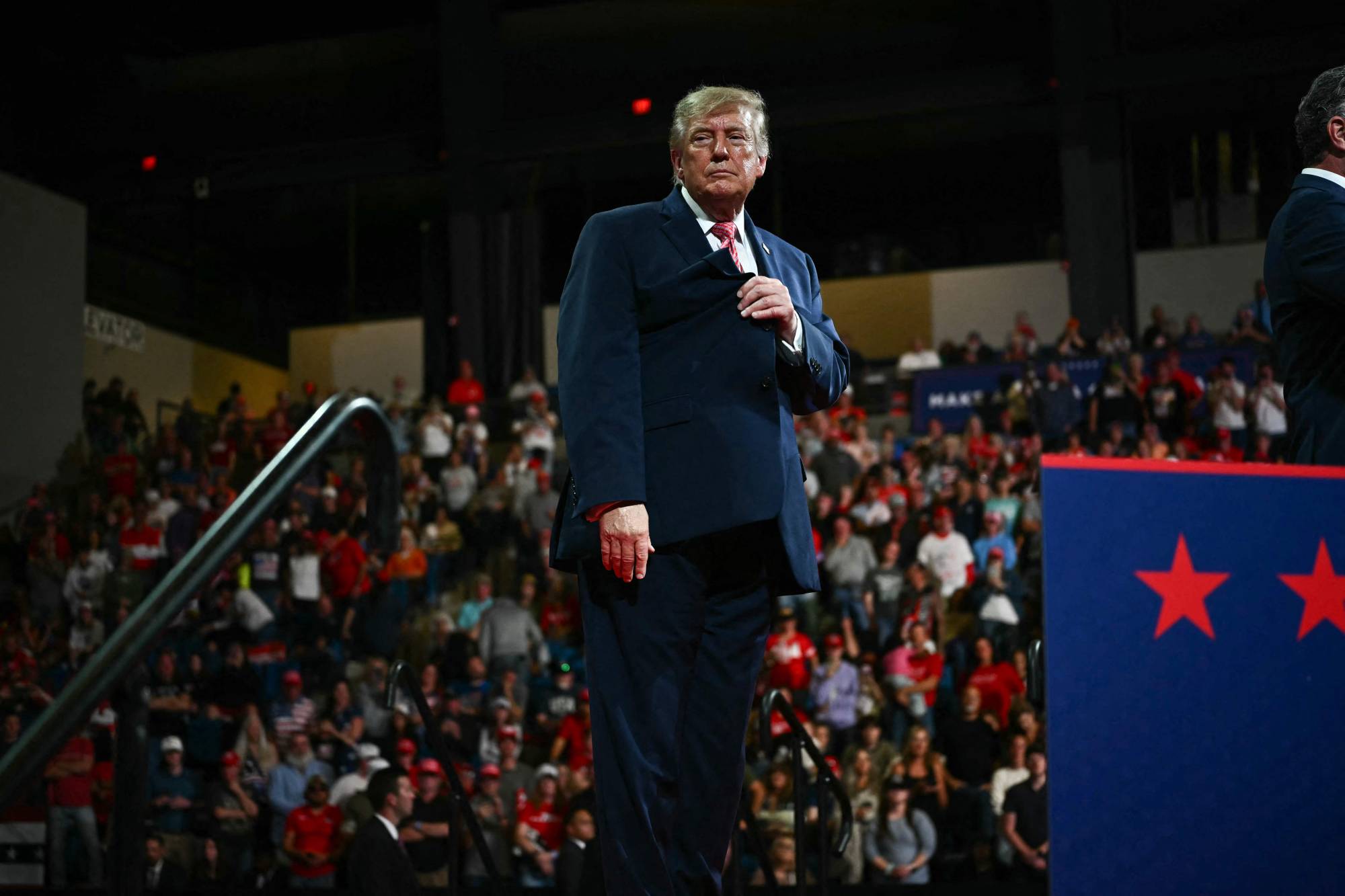
US President Donald Trump looks on during a campaign rally at the Heartland Credit Union Arena in Park City, Kansas, a suburb of Wichita, on October 19, 2026. (AFP)
RETURN TO PRE-WAR STATUS IMPOSSIBLE FOR IRAN, SAYS ANALYST
Iran’s strategy of keeping negotiations alive without rushing towards agreement comes at a cost.
Prolonged uncertainty is weighing on Iran’s already crippled economy and wearing down public patience. Thousands were killed at the turn of the year when the security forces crushed spiraling anti-government protests.
Annual inflation hit 73.6% in September, according to the Statistical Centre of Iran, and the rial currency has fallen nearly 35% against the dollar since Washington reapplied its naval blockade in July.
Iran’s seaborne crude exports fell to zero in the second week of September from a 14-day average of 230,000 barrels per day at the start of the month, and remained there as of October 5, according to energy intelligence platform Vortexa.
But the leadership's distrust of Washington extends beyond the current conflict to existential concerns. Iran believes the US has repeatedly broken agreements even when Tehran honored its commitments, Leylaz said, leaving little confidence that any comprehensive deal would endure.
“Reaching a sustainable deal with the US, even after the Trump administration, is no longer possible because of the deepened distrust,” Leylaz said. "Nothing will go back to the pre-war status quo."
Can Trump’s Endorsement Boost Netanyahu’s Election Chances?https://english.aawsat.com/features/5331431-can-trump%E2%80%99s-endorsement-boost-netanyahu%E2%80%99s-election-chances
An ultra-Orthodox Jewish man walks past an electoral banner for the Reservist party's list led by Yoaz Hendel (R) and Yaron Zelekha (L) in Bnei Barak near Tel Aviv on October 18, 2026. (Photo by Ilia YEFIMOVICH / AFP)
Can Trump’s Endorsement Boost Netanyahu’s Election Chances?
An ultra-Orthodox Jewish man walks past an electoral banner for the Reservist party's list led by Yoaz Hendel (R) and Yaron Zelekha (L) in Bnei Barak near Tel Aviv on October 18, 2026. (Photo by Ilia YEFIMOVICH / AFP)
US President Donald Trump’s endorsement of Israeli Prime Minister Benjamin Netanyahu ahead of the October 27 election has given the ruling right-wing camp a boost. But whether it can reverse Netanyahu’s declining electoral fortunes remains uncertain.
Netanyahu and his Republican allies had lobbied hard to secure Trump’s backing. According to Israel’s Channel 12 and Channel 13, White House officials struggled with the decision, holding numerous meetings with figures from Israel’s governing coalition and opposition and requesting in-depth opinion polls.
Aware that Trump dislikes backing losers and prefers strong leaders, Netanyahu assembled a team to convince Washington that his electoral prospects had improved.
Meanwhile, the opposition’s “change camp” sought to discourage US interference. Former Prime Minister Yair Lapid met officials from both American parties, promising that an alternative Israeli government would maintain closer ties with the Trump administration and cooperate more fully in implementing his peace plan.
But Washington’s proposal for a unity government bringing together Netanyahu and his main rival, Gadi Eisenkot, exposed divisions and hesitation within the opposition. Its apparent reluctance to cooperate reportedly frustrated Trump and contributed to his decision to endorse Netanyahu.
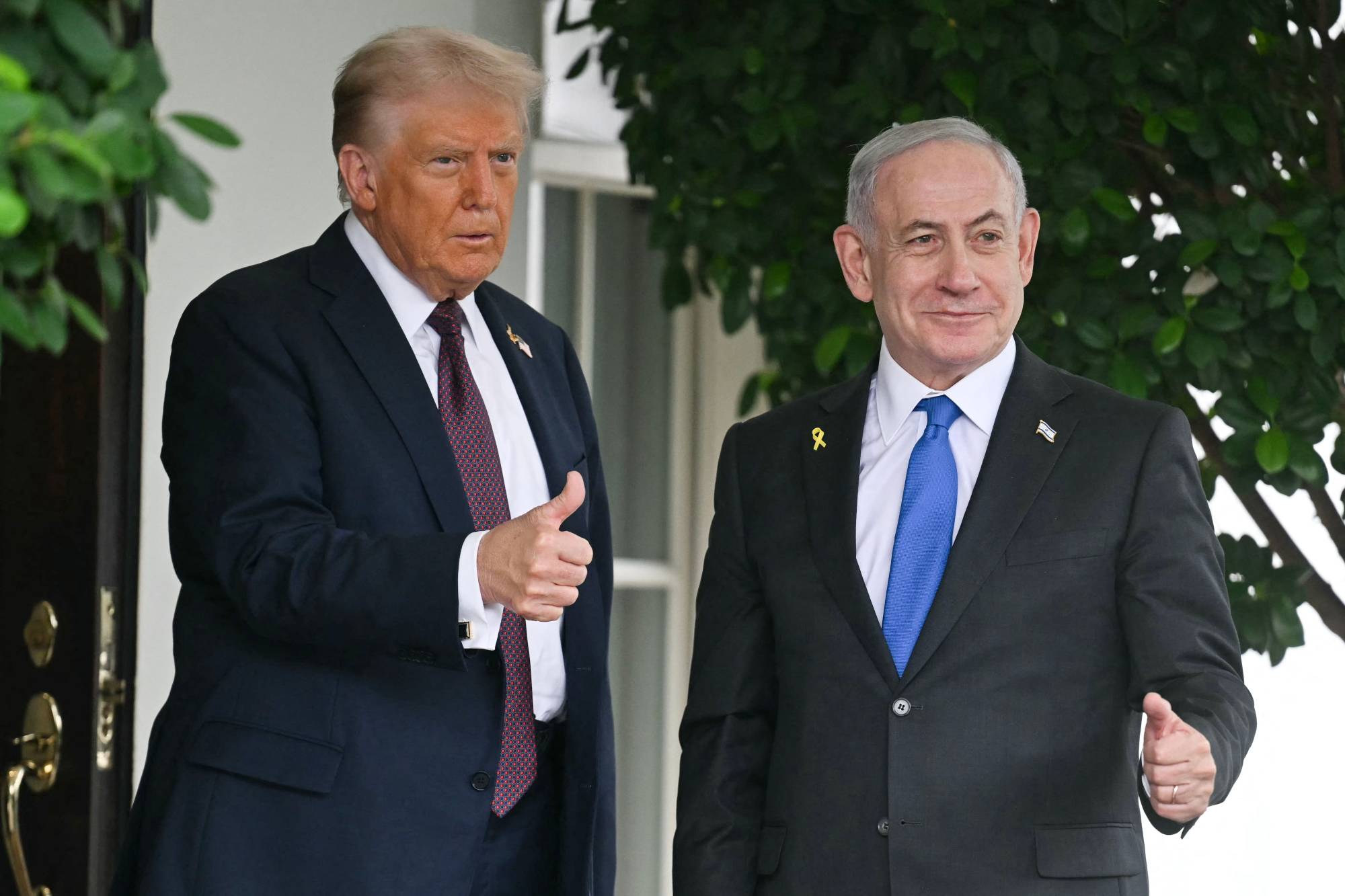
(FILES) US President Donald Trump greets Israeli Prime Minister Benjamin Netanyahu as he arrives at the West Wing of the White House in Washington, DC on September 29, 2025. (Photo by Jim WATSON / AFP)
Can Trump revive Netanyahu’s fortunes?
The president’s backing is likely to resonate primarily with right-wing voters rather than the Israeli electorate as a whole, reflecting sharply divided attitudes toward him.
In 2024, Trump enjoyed support from 60% to 72% of Israelis. By early 2025, 61% considered him the preferred US president for advancing Israel’s interests, including 96% of right-wing respondents, 52% of centrists, 30% of left-wing voters and 32% of Arab citizens.
Confidence in Trump rose to 75% in March 2026 before plunging to 26% that summer following Washington’s agreement with Tehran. Surveys also found that 81% of left-wing respondents, 73% of centrists and 65% of right-wing voters believed Israel’s security was not a priority for him.
Israeli media have frequently greeted Trump’s shifting positions with skepticism and even ridicule.
His clashes with Netanyahu have particularly unsettled the right. In 2025, when the Israeli leader opposed Washington’s proposed negotiations with Iran, Israeli outlets reported that Trump had demanded he fall into line with the American approach, telling him that he and his government were now part of Trump’s plan, not the other way around.
In June 2026, Axios and CNN reported details of a heated telephone conversation in which Trump allegedly shouted at Netanyahu over strikes on Beirut and attempts to obstruct US-Iran negotiations. According to those accounts, the American president called him completely “crazy,” claimed to have kept him out of prison and accused his policies of turning public opinion against Israel.
With Likud holding 36 seats in the Knesset but polling at just 18 to 21, Netanyahu hopes Trump’s intervention will persuade disillusioned right-wing supporters to return to the party.
Its impact may be limited, however, among voters who view Trump unfavorably, including some on the right and a larger share of the political center.
Much of the Israeli media, described in the analysis as aligned with the opposition’s “change camp” and the country’s entrenched establishment, has played down the announcement. Some commentators have even called it a bad omen, pointing to Trump’s previous support for Hungary’s Viktor Orban and Brazil’s Jair Bolsonaro, both of whom subsequently lost elections.
What might Netanyahu offer in return?
Israeli political analysts have advanced several theories about what Trump hopes to gain from supporting the prime minister.
One is that Netanyahu pledged to strike Iran independently, with US forces providing assistance from a distance rather than participating directly, as they did in June.
Trump appeared to reinforce that interpretation by describing Netanyahu as the only Israeli prime minister both willing and able to attack Iran. He added that while he could order US strikes himself, he had no interest in doing so.
Another explanation centers on Washington’s interest in a post-election unity government involving Netanyahu and Eisenkot, who would share the premiership.
Under this scenario, Trump wants a strong, predominantly right-wing Israeli government reflecting the country’s political majority and capable of making far-reaching decisions to implement his peace plan.
The endorsement could therefore give Netanyahu an opportunity to stage an “October surprise,” borrowing a term from US politics for a late campaign development capable of dramatically reshaping electoral prospects.
But the Israeli leader must still prove that he can turn Trump’s support into votes.
Netanyahu moved quickly to capitalize on the announcement Sunday evening, posting a video on Telegram urging Israelis to pay close attention to the president’s remarks.
Fifteen minutes later, he released another recording describing Trump’s endorsement as unconditional and emphasizing their partnership.
Netanyahu credited their cooperation with major achievements against Iran and its regional allies, claiming they had dealt crushing blows to both and removed the immediate threat of nuclear bombs.
He also portrayed Trump as determined to work alongside him to complete the task of eliminating the Iranian threat within the next two years, or possibly sooner.
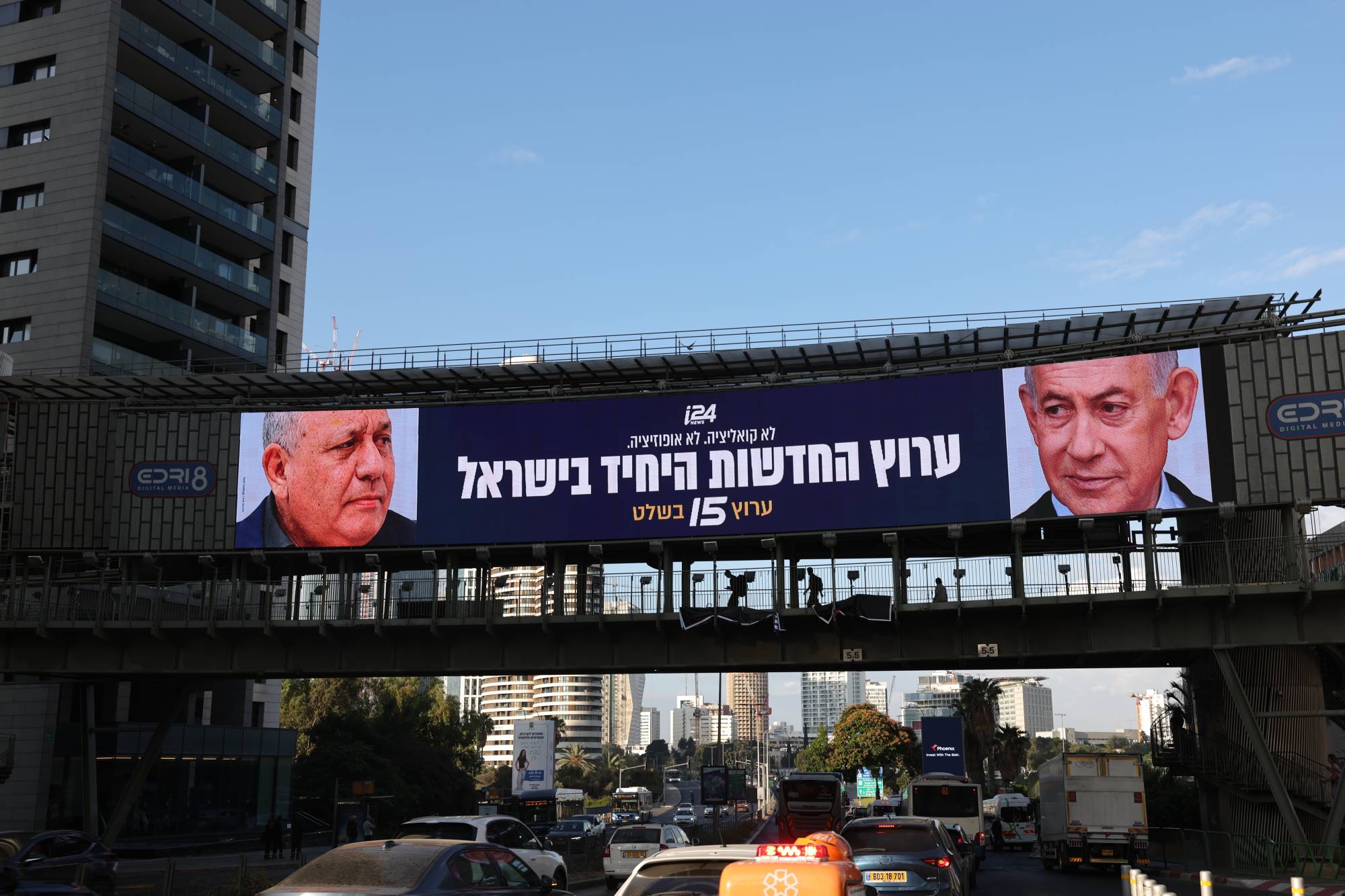
Vehicles drive past an election billboard featuring images of Israeli Prime Minister Benjamin Netanyahu (R) and Yashar party leader Gadi Eisenkot (L) in Ramat Gan near Tel Aviv, Israel, 18 October 2026. EPA/ABIR SULTAN
Opposition caught off guard
Opposition leaders were stunned by the announcement.
An associate of Lapid disclosed that people close to Trump had indicated earlier Sunday that the president did not intend to interfere in Israel’s election.
The official suggested that the endorsement might have been compensation for Netanyahu after Trump refused to launch another attack on Iran.
Eisenkot’s allies were divided over whether to ignore the development to preserve good relations with Washington or publicly suggest that Netanyahu had offered concessions in return, potentially including advancing Trump’s Gaza plan and accepting a Palestinian state.
Speaking at Tel Aviv University on Sunday evening, Eisenkot expressed appreciation for Trump’s contribution to Israel’s security and the hostage agreement but insisted that Israeli voters alone would choose their government.
He added that the US administration would be able to cooperate with any government elected in Israel.
What You Need to Know About the 2026 US Midterm Electionshttps://english.aawsat.com/features/5331079-what-you-need-know-about-2026-us-midterm-elections
A poll worker lays out voter participation stickers during early voting in the US midterm elections at Desert Breeze Community Center on October 17, 2026 in Las Vegas, Nevada. (AFP)
TT
TT
What You Need to Know About the 2026 US Midterm Elections
A poll worker lays out voter participation stickers during early voting in the US midterm elections at Desert Breeze Community Center on October 17, 2026 in Las Vegas, Nevada. (AFP)
Early voting has been underway for weeks ahead of the November 3, 2026, midterm elections, when US voters will elect members of the House of Representatives and Senate and governors in states across the country.
Held in the middle of each four-year presidential term, the midterms by definition do not involve the president. But for anyone who thinks they lack drama or importance this year, consider these two statistics:
More than 100 million people likely will cast ballots in this year's midterm voting, if turnout is anything like the previous midterm in 2022; and as of October 12, a record $3.8 billion had been spent on political advertisements that have been aired so far. Top spending is in battleground US Senate races in Texas, Ohio and Michigan, according to AdImpact, which tracks the activities.
Elon Musk alone has spent about $366 million to support Republicans, according to campaign finance records.
Still, midterms generally attract fewer voters than the higher-profile presidential races. More than 155 million votes were cast in the 2024 presidential election, for example.
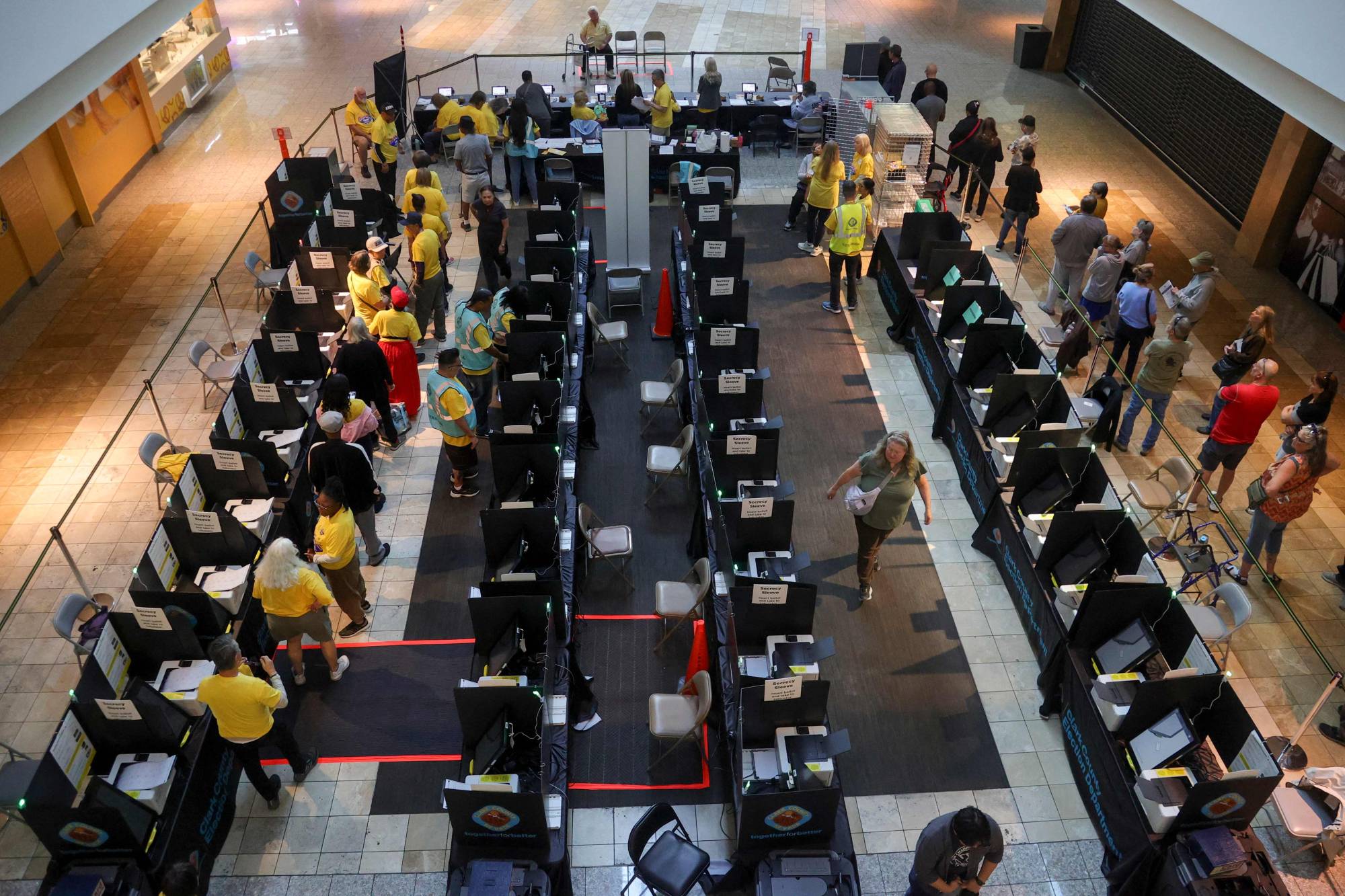
Poll workers set up voting machines during early voting for the US midterm elections at Galleria Mall on October 17, 2026 in Henderson, Nevada. (AFP)
CONTROL OF CONGRESS AT STAKE
Plenty is at stake in this midterm election as Democrats try to win majority control of the US Congress.
Currently, Republicans hold a 218-214 majority in the House, where there are two vacancies and one independent who caucuses with Republicans. Democrats must win a net gain of four seats to win control.
Democrats also are fighting to win the Senate, where Republicans hold a 53-47 majority. They must net four additional seats to get control. Ten races, including those in Maine, Ohio, North Carolina, Iowa and Georgia, could decide the outcome.
CAN MIDTERMS AFFECT THE PRESIDENCY?
Midterm elections generally are dangerous territory for the political party that holds the White House and/or Congress. For 2026 that means that President Donald Trump and his Republicans controlling the US Senate and House of Representatives are in perilous political positions.
The midterms can be an opportunity for voters to, in effect, grade the president's performance, and possibly trigger White House course corrections if they receive low marks.
Midterm election results also can give aspiring presidential candidates hints on how to tailor their messages to voters in the next presidential campaign, which in this case will be in 2028.
WHAT ARE POLLS SHOWING?
Approval of Trump's performance is at an all-time low of 32%, according to a September Reuters/Ipsos poll.
Domestic issues like rising consumer prices are likely to have an impact on the outcome of many races and could erode support for Republicans.
At the same time, there is evidence that Democrats are more enthusiastic about voting this year than Republicans. If early voting trends continue, it could point to a Democratic win in November.
There are also signs that Latino voters who veered to Trump in 2024 might be returning to Democrats because of frustration over the economy and some of Trump's immigration enforcement tactics.
However, a landslide for the Democrats is far from assured. Republicans could benefit from continued skepticism towards Democrats, a Republican spending advantage on campaigns, and fears from moderate voters over some primary wins by left-wingers.
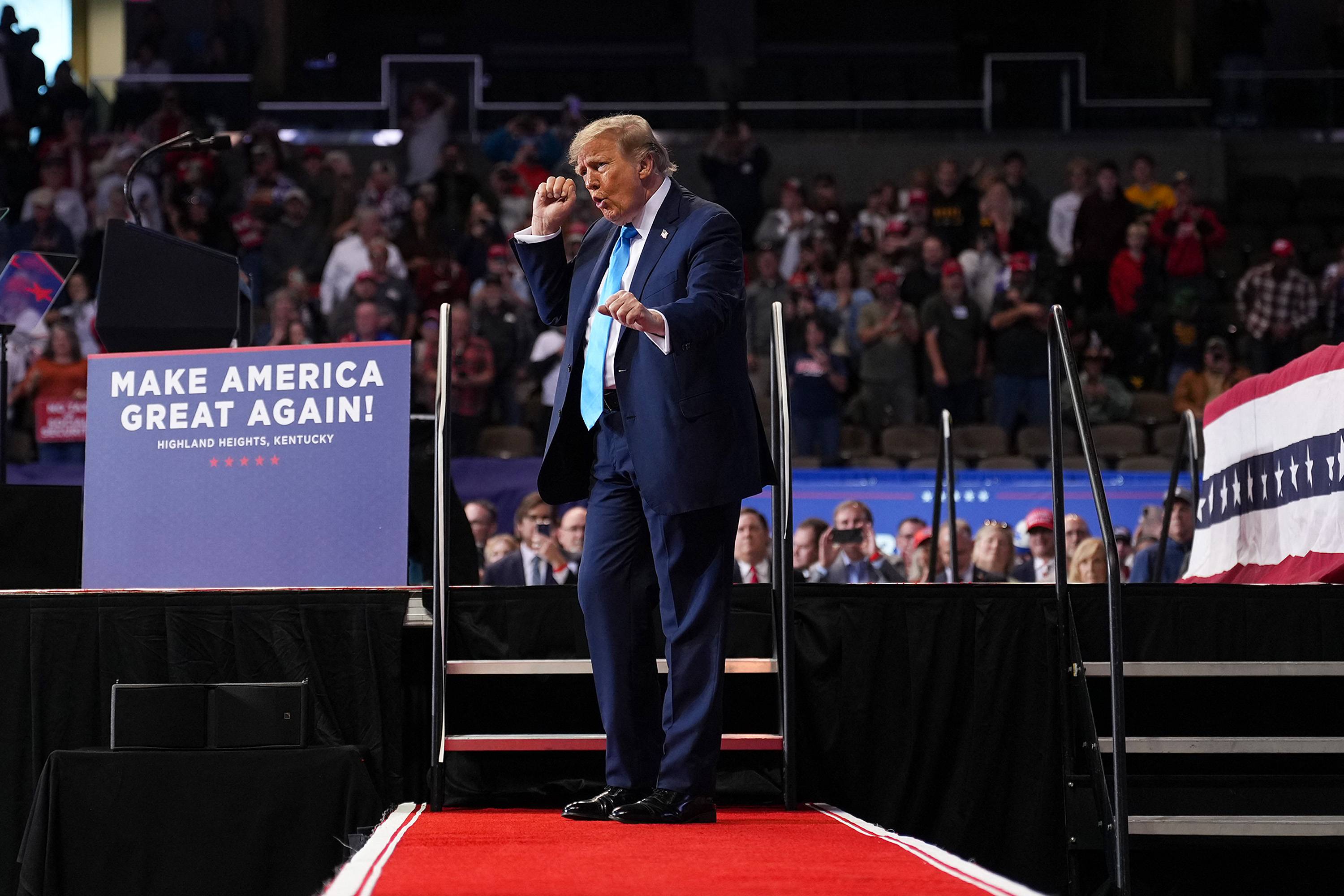
US President Donald Trump dances as he walks off the stage after speaking during a midterm rally at Truist Arena on the Northern Kentucky University campus on October 17, 2026 in Highland Heights, Kentucky. (Getty Images/AFP)
RECENT MIDTERM HISTORY
Recent history tells the story of the shockwaves a midterm election can produce.
In the 2010 midterms, during the Democratic presidency of Barack Obama, Republicans scored major victories, winning 63 additional House seats amid an underperforming US economy and weak support for Obama's landmark healthcare reform legislation. Democrats lost their majority. In the Senate, they held onto control despite losing six seats.
The Republican wave was a "shellacking," Obama lamented at the time. He subsequently faced Republican demands for significant reductions to non-defense spending.
Democrats returned the favor in 2018, with Trump in the White House. They gained a net total of 40 House seats, but lost a net two Senate seats.
This year's elections also have races for governors in 39 of the 50 states and voting in nearly every state for seats in their state-level legislative bodies.
Currently, Republicans control 55% of state legislative seats across the country, while Democrats hold 43.8%, according to Ballotpedia.
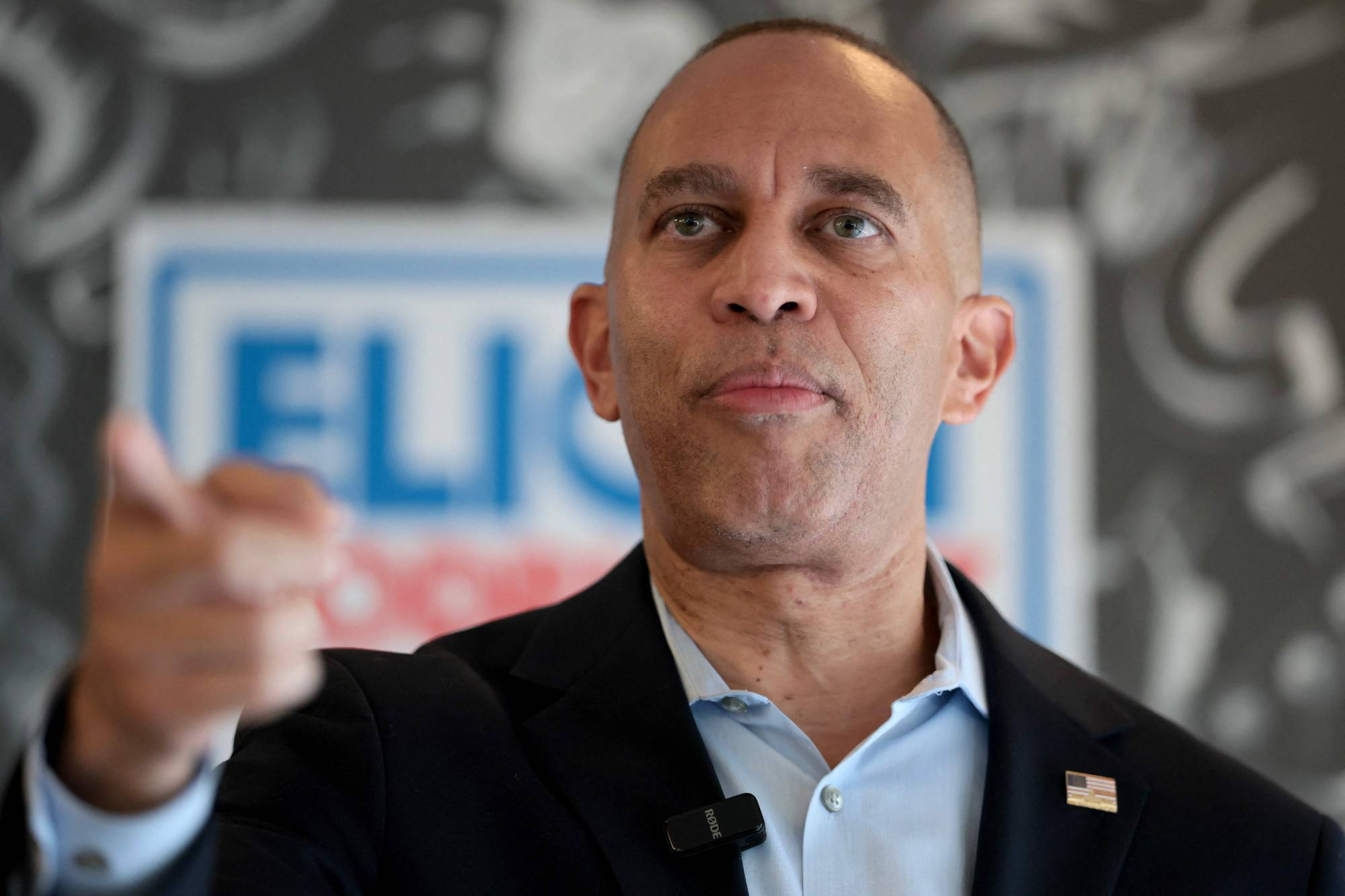
US House Minority Leader Hakeem Jeffries (D-NY) speaks to the media as he campaigns with Florida Democratic Congressional candidate Eliott Rodriguez at the CAO Bakery and Cafe on October 16, 2026 in Miami, Florida. (Getty Images/AFP)
WHO WILL BE SPEAKER?
If Democrats manage to win the House, the next speaker — second in line for the presidency after the vice president — is likely to be Democratic Representative Hakeem Jeffries of New York. He is currently the House Democratic leader.
Jeffries, who would become the first Black American to hold the powerful office, would be in a position to direct House committees to launch investigations into a range of controversial activities by Trump and his associates. Jeffries repeatedly has said Democrats would look into what he has called "unprecedented levels of corruption" during the Trump administration.
Jeffries also would steer Democrats' legislative priorities through the House. He has said Democrats would focus on making healthcare, groceries, housing, energy and other costs more affordable.
A Republican win, on the other hand, would ensure that the speaker's gavel remains in that party's hands, either with current speaker Mike Johnson or whichever Republican prevails if he is challenged for the job. Republican priorities are likely to be focused on additional tax cuts, huge increases in defense spending, and deeper social safety net reductions, building on Trump's 2025 "One Big Beautiful Bill."
MARQUEE RACES
Among the most-watched House races are Republican Representative Mike Lawler's bid for reelection to a New York district that Democratic candidate Kamala Harris won in her 2024 presidential campaign and an open seat in a Nebraska swing district where farmers and truckers face sharply higher fuel prices as a result of the US war against Iran.
Also high on Democrats' list of House seats they hope to take from Republicans are two in Pennsylvania and one in New Jersey.
Hovering over all of this are questions over whether Trump will try to meddle in the elections, which are administered by the 50 individual states.
Since 2020, he has repeatedly insisted there is widespread cheating in US elections, despite a lack of evidence. State election officials and Democrats in Congress have been preparing for possible legal challenges to any moves by his administration to try to intervene.
لم تشترك بعد
انشئ حساباً خاصاً بك لتحصل على أخبار مخصصة لك ولتتمتع بخاصية حفظ المقالات وتتلقى نشراتنا البريدية المتنوعة