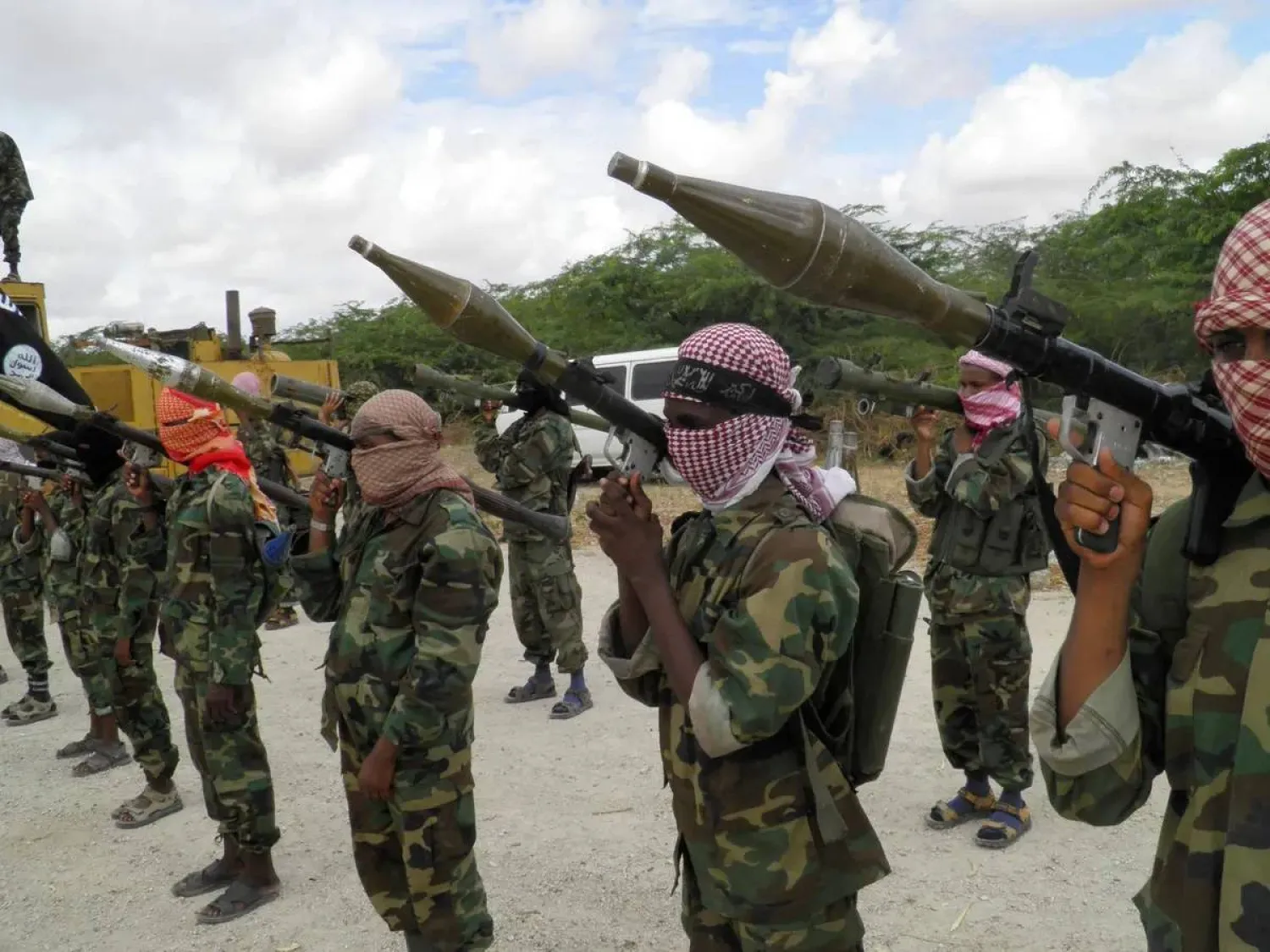

In the Libyan city of Sabha, known as the “Bride of the South,” authorities dismantled three terrorist networks in August, revealing links stretching across and back to the African coast.
Five months earlier, in March 2025, security forces in western Libya had reported the arrest of another “terrorist organization” and aired “confessions” from several members who said they belonged to a jihadist group called “Nasr”. They spoke of “plans to recruit young men and manufacture drones.”
Across the vast belt of the Sahel, spanning countries separated by as much as 2,300 kilometers, militant attacks have intensified in recent months. Omar al-Mahdi Bashara, a veteran Chadian rebel, says these operations aim to “subject the region to the calculations of global powers and exploit its impoverished, underdeveloped populations.”
Bashara, who leads the Chadian National Salvation Movement, told Asharq Al-Awsat that “the former colonizer is overseeing from afar the drawing of a new map for the Sahel and the Sahara in blood, with his eyes fixed on the region’s resources.”
The Sahel stretches from the Atlantic Ocean to the Red Sea. Geographically and climatically, it encompasses northern Senegal, southern Mauritania, Mali, southern Algeria, Niger, Chad, South Sudan and Eritrea.
The Food and Agriculture Organization (FAO) and the UN Office for the Coordination of Humanitarian Affairs (OCHA) use a broader definition that includes Mauritania, Senegal, Mali, Burkina Faso, Niger, Nigeria, Cameroon and Chad.
The term “Sahel” here does not refer to a sea coast, but to the “edge” — the long geographic strip lying south of the Sahara Desert, from the Atlantic coast in the west (Mauritania and Senegal) to the Red Sea in the east (Sudan and Eritrea).
As terrorist organizations have expanded across this belt, they have also deepened the bloodshed through armed attacks targeting soldiers and civilians over the past decade, leaving more than 150,000 people dead, according to the Africa Center for Strategic Studies.
Before tracing the map of these groups — which Bashara sums up as “a nightmare weighing on a region forgotten by development” — it is worth noting a significant shift: these organizations are increasingly turning to modern technologies, even artificial intelligence, while expanding beyond their traditional rural strongholds into urban centers.
Groups that once thrived on the ignorance of poor communities are now adopting artificial intelligence, outpacing some of their state adversaries still clinging to rifles, cannons and conventional warplanes.
Domestic proxies
Amid a bloody contest for influence, recruits and resources, ISIS has come to rely on its affiliates in West Africa, Central Africa and the Greater Sahara, while al-Qaeda moves more fluidly through local alliances with Jama’a Nusrat al-Islam wal-Muslimin (JNIM) and Ansar al-Din.
Hamdy Abdulrahman Hassan, an African affairs expert who teaches at Zayed University and Cairo University, noted that “many of these globalized groups have taken on a local character, and the lines between them have blurred.” Local residents interviewed by Asharq Al-Awsat echoed the same view.
Both al-Qaeda and ISIS now have domestic proxies. As grievances against “new ruling regimes” have grown, these groups have managed to infiltrate social structures and exploit poverty — a key factor behind their resurgence, according to Fareh Wali from Somalia.
Wali explained that al-Shabaab members “win people over with money and by appealing to national sentiment, portraying themselves as defenders of the country against an infidel government.” In a written statement to Asharq Al-Awsat, he added: “They exploit people’s ignorance, poverty and hatred of those in power to recruit them. Those who refuse are kidnapped or killed.”
In Somalia, al-Shabaab killed around 30 people in two attacks, one on the Cairo Hotel in Beledweyne and another on a military recruitment center in Damanio, in March and May 2025.
Egyptian scholar Hassan identified several factors behind the surge in terrorist activity, including the region’s “porous” borders, which are “too loose to control,” and the “fragile state structures inherited from colonial rule.”
He also pointed to the wave of coups that have swept the region, saying: “These groups found an opportunity to expand, especially in the absence of regional coordination.”
In several parts of the Sahel, al-Qaeda has adopted local grievances and “localized its narratives to appeal to communities,” according to a July 2025 report by the UN Monitoring Team. This ideological pragmatism, the report said, helped expand the group’s territorial influence.
Dr. Ramadan Qarni, another African affairs expert, linked this deep societal penetration to the entry of international powers into the Sahel, which militant groups “used to stir local sentiment against them.”
Alongside the financial incentives mentioned by Wali, “perceived injustices” have served as another justification used by extremists to gain ground among Sahel and Sahara populations disillusioned with the “new authorities” that took power after eight successive military coups.
Hassan noted that the Macina Brigade, a JNIM affiliate active in central Mali and along the Burkina Faso border, draws its strength from the “historic grievances” of the Fulani, nomadic herders who accuse local authorities and Dogon militias of committing abuses against them, including “mass killings.”
Following this same pattern, al-Qaeda has expanded its operations through its local arm, JNIM, while ISIS and its affiliates have intensified their campaigns across the Sahara.
Blood and interests
The growing threat in the Sahel is not only measured by the frequency of attacks and rising death tolls, but also by the “pragmatism” of militant groups operating on volatile ground fraught with conflict, as they interact with civilians and seek to recruit new fighters for their brutal wars.
Contrary to expectation, the behavior of ISIS and al-Qaeda reveals contrasting ideologies. Mauritanian scholar and researcher on the Sahel, the Sahara and armed groups, Mohameden Ayeb, describes them as “a mix of global jihadist Salafism, local exploitation of ethnic and tribal disputes, and economic interests rooted in smuggling and extortion.”
While al-Qaeda and its branches tend to adapt to local environments in the Sahel and court the goodwill of tribes, ISIS rejects popular compromise and clings to the notion of a centralized caliphate, adhering to a stricter and more violent framework.
From his own experience in several Sahel countries, Sudanese national Abdelghani Ismail recounts witnessing the movements of extremist groups. “They try to impose themselves wherever they exist to achieve their goals of seizing power,” he said.
Ismail, who later traveled to Europe through Libya, told Asharq Al-Awsat that these groups “are locked in a battle for survival, driven by a misguided ideology, and they do not hesitate to blow up anyone who stands in their way.”
Map of groups and resources
In this fragmented security landscape, Ayeb maps militant groups across the Sahel and the Sahara, linking their movements in some areas to a push to control the region’s subterranean wealth.
Ayeb warns that the threat posed by these groups has changed from what it was before, as fighting has intensified in the border triangle of Mali, Niger and Burkina Faso, historically known as Liptako- ourma, a zone the 2024 Global Terrorism Index ranked among the ten most terror-affected areas in the world.
He told Asharq Al-Awsat that Jama’a Nusrat al-Islam wal-Muslimin, the al-Qaeda affiliate, and ISIS, Sahel Province, “have tightened their grip on this area rich in gold and uranium deposits,” and that “local arms of the groups have become the strike force in their sophisticated operations,” pointing to ISIS activity in Nigeria, Mozambique, Cameroon, Togo and Benin.
Al-Qaeda, he added, has not only deepened its reach in Mali, Niger and Burkina Faso, it is also present in the northwestern borderlands bordering Lake Chad, overlapping with other groups such as Boko Haram.
Ayeb said Jama’a Nusrat al-Islam wal-Muslimin, announced by al-Qaeda in March 2017, is a coalition of four main components, namely Ansar al-Din, led by Tuareg commander Iyad ag Ghaly, the Katibat al-Murabitun faction that split from al-Murabitun and was formerly led by Mokhtar Belmokhtar, the Macina Liberation Front, a socially rooted movement in central Mali led by Amadou Koufa, and the Greater Sahara Emirate, formerly affiliated with al-Qaeda in the Islamic Maghreb.
The group has reached a new level of operational capability, able to carry out complex attacks on well-fortified garrisons using drones, improvised explosive devices and large numbers of fighters, according to the UN report to the Security Council in June 2025.
Fighting has escalated in recent months between ISIS and al-Qaeda over the Liptako-Gourma triangle, Ayeb said, because the area is rich in raw gold and dense forest terrain that “is inaccessible to ground forces or airborne operations.”
Arms linked to ISIS, including units in West Africa Province and Greater Sahara Province, have expanded their footprint and their propaganda output to recruit fighters and raise funds, with signs of foreign fighters, mostly from West Africa, arriving during 2024.
The United Nations estimates that ISIS in West Africa comprises between 8,000 and 12,000 fighters. UN experts say Jama’a Nusrat al-Islam wal-Muslimin has also broadened its operational reach, operating with relative freedom in northern Mali and across much of Burkina Faso. ISIS activity in the Greater Sahara has also seen a resurgence, particularly along the Niger, Nigeria border where the group seeks to consolidate its presence.
Banditry and cattle theft
Militant groups in the Sahel employ multiple methods, often justified in religious terms, to secure weapons and funding, including theft and armed robbery. Ayeb described this as “a form of pragmatism that permits and forbids according to their interests.”
A report submitted by the UN Monitoring Team to the Security Council said ISIS has increasingly turned to kidnappings, either directly or through criminal networks, to obtain ransom payments. It added that such operations serve as a source of financing and recruitment, which “could further intensify as the group seeks to break its isolation in the border area between Burkina Faso, Mali and Niger.”
Bashara told Asharq Al-Awsat that “armed groups have widely resorted to kidnapping local residents.”
Member states informed the UN committee preparing the report that “cattle theft in the Lake Chad Basin has become a common source of revenue, with livestock sold in local markets.” The report also noted that Boko Haram collects zakat, or alms, at a rate of four to five cows for every 120.
Regarding weapons supplies, both al-Qaeda and ISIS depend on “small and light arms, either smuggled or stolen.” Member states observed that the transfer of these weapons “is coordinated among organized criminal networks.”
The report warned that both groups “are actively seeking to enhance their expertise in drone operations by recruiting specialists.”
‘Sea jihad’
As militant groups in the Sahel continue to build up their forces and arsenals, academic expert Hassan warned of what he calls a “dangerous development,” noting that these groups “are preparing to move westward from the Sahel toward the ocean, in an attempt to control maritime routes and revive what they call ‘sea jihad,’ targeting gas lines.”
He also pointed out that after ISIS declared its Mozambique Province in Central Africa, it is now seeking to expand its rule by establishing a Borno Province in West Africa.
This geographical belt, stretching from the Atlantic Ocean in the west to the Red Sea in the east, forms a semi-desert strip that separates the Sahara Desert to the north from the tropical regions to the south, extending roughly 5,400 kilometers.
The Mozambique Province, though smaller in size, is more brutal, posing a direct threat to major international economic interests linked to natural gas, making it a focal point of global attention.
Lake Chad
What is happening in the Sahel is closely linked to events in Chad, which on August 18 dealt a sharp blow to ISIS in West Africa by arresting six leaders of a local cell, including Muslim Yusuf, the youngest son of Boko Haram’s founder in Nigeria.
A report by the African Center for Strategic Studies (ACSS) said Boko Haram and its West Africa Province were responsible for about 66% of violent deaths in Nigeria in 2024.
Although Chad lies in Central Africa, its northern region, Borkou-Ennedi-Tibesti, is a direct extension of the Sahara, while its south is closer to tropical Africa, and the country is a member of the Group of Five Sahel States, G5.
Academic Hamdi Abdulrahman told Asharq Al-Awsat the Lake Chad area has become a “testing ground for ISIS’s new caliphate,” a development he describes as entrenching a grim picture of a bloody conflict that has quietly escalated into one of the most violent jihadist theaters in the world.
He said ISIS controls large swathes of rural land in the poorest and most densely populated parts of Nigeria, and it levies taxes said to generate about $190 million a year as it seeks to expand its influence.
He added that the group has built a parallel state infrastructure in West Africa, creating departments to oversee military operations, collect taxes and enforce sharia.
Conflict between Islamist insurgencies in the region’s northeast killed nearly 350,000 people and displaced more than two million by the end of 2020, the United Nations Development Program said.
Who controls the lake?
Four countries share responsibility for managing Lake Chad and its resources: Chad, which contains most of the lake, Nigeria to the west and southwest, Niger to the northwest, and Cameroon to the southwest.
Bashara, the former rebel, said that about 70% of the lake’s area, spanning northeastern Nigeria, southeastern Niger, northern Cameroon and western Chad, “is now beyond the control of these states.”
Bashara told Asharq Al-Awsat: “Unfortunately, these terrorist groups enjoy broad popular support among local populations, which explains their continued presence across most of the Lake Chad Basin.”
Local residents, including Somali analyst Wali, attributed this support to “financial inducements” used to advance the groups’ agendas, but he notes this does not prevent them from “oppressing the most vulnerable members of society, especially women.”
Women and girls bear the greatest burden, according to Sima Bahous, Executive Director of UN Women, who told the Security Council in August 2025, that this is a region where women are effectively erased from public life.
Bahous said that over one million girls are out of school, 60% of whom have never attended, amid widespread child marriage and sexual violence.
Strikes with cheap drones
The security vacuum in parts of the Sahel, combined with the overlap of local terrorist agendas and international interventions, is turning the region into a long-term conflict hotspot that threatens North Africa and Europe. Notable developments in terrorist tactics are a key factor.
Hassan warned that “current waves of violence are unlike previous ones, with significant advances in tactics and capabilities.”
Since April 2025, ISIS in West Africa launched a campaign called “Burning the Camps,” targeting fortified military bases long considered secure. Hassan said: “Observers might think these are ordinary raids, but the reality is far more complex.”
He added: “Terrorists in the Lake Chad region have learned to carry out night attacks using drones and night-vision devices,” cautioning that the area “has become a major battlefield for ISIS West Africa and its rival faction Boko Haram. ISIS today is different from before; it has acquired night-vision equipment that allows coordinated strikes during Nigeria’s low-visibility hours.”
The group now arms itself with commercially available, low-cost drones launched from safe distances to drop small explosives on army and security camps, which Hassan described as “a persistent aerial threat that complicates traditional defenses.”
The United Nations recorded more than 400 terrorist attacks in Burkina Faso, Mali and Niger alone between April and July 2025, killing 2,870 people, according to Leonardo Simao, head of the UN regional office for West Africa and the Sahel, speaking before the Security Council on August 8.
International maritime security
Concerns over the expanding use of modern technologies by extremist groups dominated the session. Simao warned of “increasing use of drones, encrypted communication technologies, and cooperation between terrorist groups and transnational organized crime networks.”
He also expressed concern for maritime security, noting that shipping routes “are now at risk” and that “youth have become a prime target for recruitment.”
In response to this threat, the Africa Center for Strategic Studies highlighted “growing cooperation between al-Shabaab in Somalia and the Houthis in Yemen,” warning of “rising risks to navigation in the Red Sea, Gulf of Aden, and western Indian Ocean.”
The center cited a UN report from February 2025 indicating “evidence of contacts between the Houthis and al-Shabaab, including actual meetings in 2024 regarding the transfer of military equipment and training from the Houthis in exchange for increased piracy and arms smuggling activities.”
The report noted that the relationship between the two groups “is based on mutual benefit, not sectarian affiliation,” and detailed a flow of weapons from Yemen to areas controlled by al-Shabaab between June and September 2024, including ammunition and explosives delivered via the ports of Marka and Barawe in Lower Shabelle. Al-Shabaab was tasked with escalating piracy operations in the Gulf of Aden and off the Somali coast.
‘Companies of evil’
UN concerns have grown over terrorist groups’ use of advanced technologies, including artificial intelligence and social media, which were described as “a new challenge” during a Security Council session last August.
These worries were reinforced by Rami Shaheen, an international expert on AI technology, who said, “Imagine a geographical theater spanning 10 African countries, where burning sands meet the coolest technologies in the AI world.” Shaheen noted that these groups are no longer simply armed militias, “they have become startup companies of evil investing in cutting-edge technologies.”
Shaheen told Asharq Al-Awsat about what he called “liquid recruitment,” highlighting the use of “customized content,” where “each target receives promotional messages tailored specifically to their vulnerabilities and hopes.” He gave the example of “a young man in Niger receiving an AI-modified video showing a prosperous future with the group.”
He also discussed what he termed “digital camouflage,” involving “self-destructing communication networks,” which are applications that send encrypted messages disappearing after being read.
He described this as a shift “from the rifle to the algorithm,” particularly when combined with funding through complex cryptocurrencies that are difficult to trace.
Shaheen’s points were echoed by Vladimir Voronkov, head of the UN Counter-Terrorism Office, before the Security Council in August, as reported by the UN mission in Libya.
Voronkov warned of the use of emerging technologies by extremist groups, saying they continue to use encrypted messaging platforms to secure their communications, exploit crowdfunding systems to raise funds, and increasingly experiment with AI to enhance their propaganda.
From Africa to Al-Hol in Syria
Libyan authorities dismantled three terrorist cells, announcing the discovery of large and varied caches of weapons buried in storage beneath a house in Sabha, including shells, bombs, improvised explosive devices, medium and heavy ammunition, and anti-aircraft guns.
Investigations indicated the first cell was responsible for recruiting fighters, facilitating their movement from North Africa to Somalia and the Sahel, and supplying them with forged passports and safe housing.
The second cell laundered money through front companies to help fighters and their families escape the Al-Hol camp in Syria and relocate to Libya, where they were housed in accommodation funded by ISIS, the cell also sought to make investments in regional states.
The third cell handled transfers to ISIS using cryptocurrencies.
A source at the Libyan public prosecutor’s office told Asharq Al-Awsat that ongoing investigations showed the cells received logistical support from groups in the Sahel, and from some neighboring Arab states.
The source also described the July 2024 dismantling of a cell led by a Libyan who had ties to Jama’a Nusrat al-Islam wal-Muslimin, saying that cell was involved in supplying satellite communications equipment.
In confessions aired by a security agency in western Libya, one suspect spoke of plans to target sensitive military and security sites, and of contacting Algerians to train members of the network in drone manufacture.
Expulsion of French forces
Explanations for developments in the African Sahel vary.
At the UN level, Senegalese diplomat Abdoulaye Mar Dieye, the UN Special Coordinator for the Sahel, believes that “the destruction of Libya has fueled counterterrorism challenges in the Sahel,” dismissing the idea that the crisis stems from events in northern Mali some 13 years ago.
In remarks reported by Senegalese media in early August, Dieye said: “The world owes a huge debt to the Sahel countries, and that debt has not yet been paid.”
At the same time, local residents in several Sahel states, speaking to Asharq Al-Awsat, said the situation in their countries is a predictable outcome of weak governance. Bashara noted that ethnic tensions have “fueled conflicts and opened the way for cross-border jihadist growth.”
Some observers argued that the expulsion of French forces from several Sahel states has paved the way for the rise of extremist groups.
Qarni said that “targeting numerous local leaders and chiefs has weakened governance,” adding that “the absence of genuine development frameworks and the channeling of national resources toward military efforts have also exacerbated the terrorist phenomenon.”
Bashara considered Qarni’s assessment one of the main factors enabling terrorist expansion, attributing the failure of governments in the Lake Chad Basin to confront these groups to “the exclusion of local communities from development and security,” adding, “N’Djamena has made security the responsibility of the people themselves.”
Mali has faced a deepening security crisis since 2012, fueled by armed rebellion. Yet the UN peacekeeping mission requested to leave the country at the end of 2023, after a decade of support to the government.
France remained the main security and military actor in Mali, Niger, Burkina Faso and Chad, and to a lesser extent in Mauritania, providing military and intelligence support until its withdrawal. Russia has since emerged as a “new alternative” in an attempt to fill the resulting vacuum.
Gold before ideology
Dieye said the aim of warring groups is less about religion and more about economic gain. Speaking in early August, he said, all the terrorism we see is not ideological; it is purely economic.
Ayeb agreed, noting that “the material dimension of these groups is always the priority,” explaining that “Nigeria is a gas country, Niger is a uranium region, and Mali is a gold zone; therefore, the problems these countries face are linked to their resources.”
Bashara added that “gold mines in northern Mali are overseen by terrorist groups.”
The Malian transitional government’s Minister of Mines, Amadou Keita, previously revealed that proceeds from illegal gold mining “contribute significantly to financing terrorist and criminal networks.”
The South African Institute for Security Studies points out that jihadist groups such as ISIS’s Sahel Province impose taxes on miners and control smuggling routes.
Gaddafi’s weapons
Experts on African affairs say developments in the African Sahel cannot be separated from the interests and historical legacies of international powers in a region plagued by poverty and conflict, despite its abundant resources.
Bashara said that “the French colonizer will not leave its former colonies so easily, seeing the resource-rich Sahel countries as part of its strategic reserve for itself and future generations.”
He accused France, whose forces were previously expelled from Sahel states, of “mobilizing its proxies in extremist groups and affiliated organizations to destabilize countries from which its military bases were recently removed.”
Following military coups in Mali (2021), Burkina Faso (2022), and Niger (2023), French troops were gradually withdrawn from these countries, eroding Paris’s historical influence in Mali, Niger, and Burkina Faso.
Russia quickly entered through southern Libya into the Sahel, especially Mali, deploying forces it calls the “African Legion” to fill the security vacuum, alongside growing influence from China and Türkiye.
The magazine African Defense Forum, affiliated with AFRICOM, previously reported on Russian moves in the Sahel, citing military analyst Andrew McGregor from the Jamestown Foundation in July 2025.
McGregor said Russia has been using the Khadim airbase as an advanced platform for operations in the region.
Located about 100 kilometers east of Benghazi, the Khadim base is believed by McGregor to have become a hub for storing weapons and smuggling resources to and from the African Sahel.
He added that Russia is repeating the mistakes of Moammar al-Gaddafi in the 1980s when he attempted to use Soviet weapons to expand influence in the Sahel. The Kremlin is now reinvesting in the same base Gaddafi used to attack Chad.
Russia, seeking to build new alliances in Africa, signed a defense memorandum of understanding with Niger, Mali, and Burkina Faso, announced on August 14.
However, the Conflict Armament Research Center, which tracks conventional weapons and military materials, said in April 2025 that weapons flowing from Libya to the Sahel accounted for only 7% of the total arms circulating there.
The situation in the African Sahel thus reveals a complex equation in which rising terrorist activity intertwines with international influence and interventions, while the struggle for resources remains a central objective pursued by armed groups.