
What Is China’s Singles’ Day and How Is It Celebrated? 

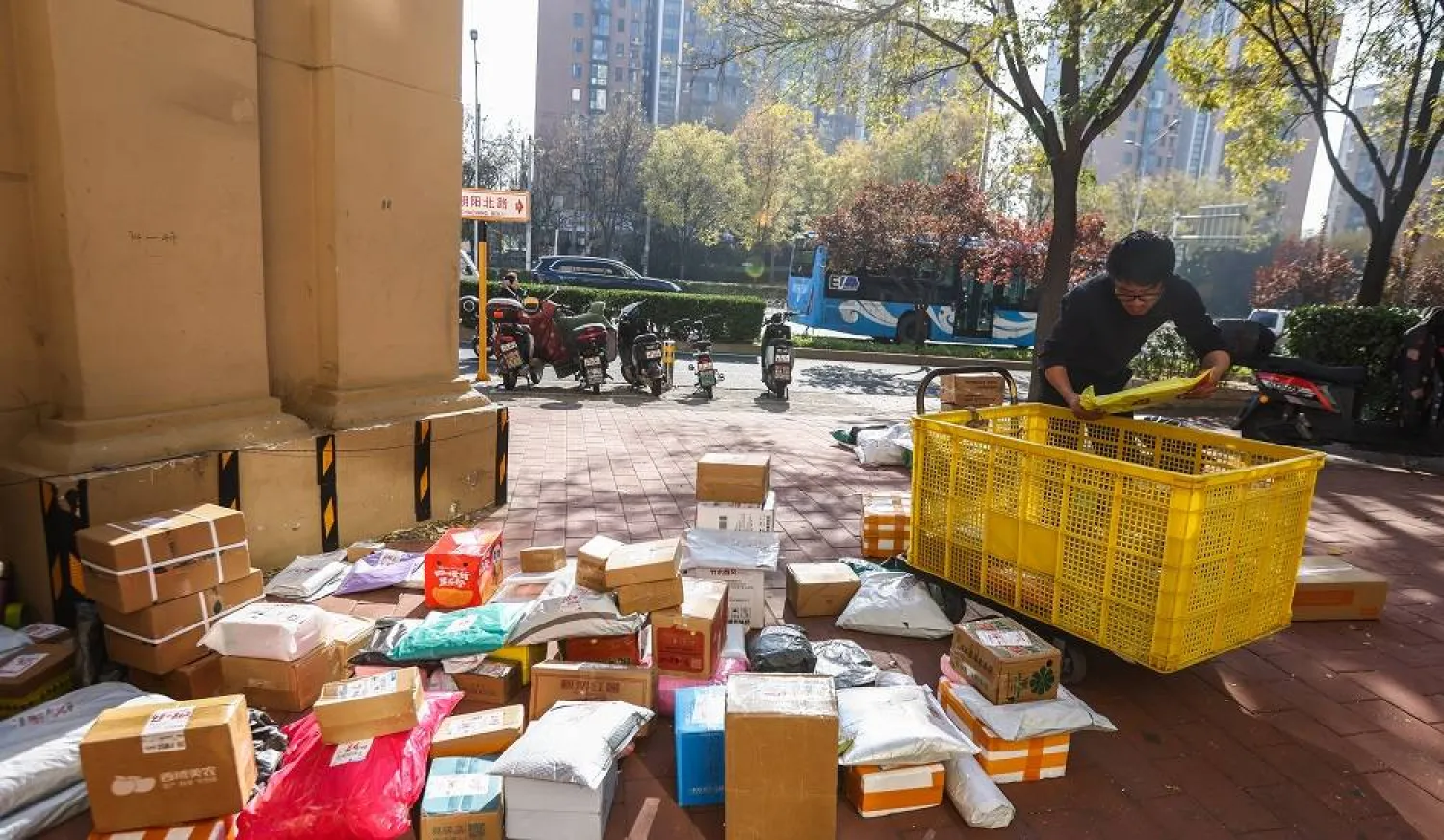
A courier sorts packages for delivery on Singles Day or '11.11' Global Shopping Festival, in Beijing, China, 11 November 2025. (EPA)
TT

What Is China’s Singles’ Day and How Is It Celebrated? 

A courier sorts packages for delivery on Singles Day or '11.11' Global Shopping Festival, in Beijing, China, 11 November 2025. (EPA)

Black Friday? No. Cyber Monday? Nope. Prime Day? Absolutely not. The world's biggest shopping event happens in China each year - and is called Singles' Day.

Originally a holiday to celebrate being single, as a counter to Valentine's Day, the event has grown into a weeks-long online shopping festival that this year began on October 9 and runs through November 11 - making it the longest Singles' Day sales period ever.

WHEN DID THE IDEA OF SINGLES' DAY ORIGINATE?

The idea for Singles' Day originated at China's Nanjing University back in 1993 and was originally called "Bachelor's Day." On the day, single people treat themselves with gifts and presents, while also organizing social gatherings and parties.

HOW MUCH DO CONSUMERS SPEND?

Last year, the total value of goods sold during the shopping bonanza - also known as "Double 11" - totaled 1.44 trillion yuan ($202 billion), according to data provider Syntun.

That is almost five times the $41.1 billion US shoppers spent last year during Cyber Week, the period from Black Friday to Cyber Monday, per data from Adobe Analytics.

Cyber Monday immediately follows Black Friday, which falls on the day after the US Thanksgiving Day holiday, the busiest shopping day of the year in the United States.

But growth has been harder to come by for major e-commerce players in China, which have extended their Singles' Day sales period and leaned heavily on subsidies and coupons to entice spending. Last year's sales growth rate of 27% was largely attributed to a longer overall festival period.

This year Alibaba Group pledged 50 billion yuan in subsidies for its 88VIP members over the Singles' Day period. The event has, in recent years, lost some of its novelty with the rise of other shopping festivals in China, including the midyear "618" sales which is the country's second-largest, and has also lengthened to a weeks-long event.

WHAT MAJOR BRANDS AND PRODUCTS ARE SHOPPERS BUYING?

While Alibaba started "Double 11" in 2009 to win over online shoppers with discounts and promotions, China's major e-commerce platforms now all take part in it. JD.com joined in 2012 and PDD Holdings-owned Pinduoduo has also become a significant player, offering low-cost products in competition with Alibaba-owned Tmall and Taobao platforms.

Last year, categories covered by a national 150 billion yuan household-appliance-subsidy scheme outperformed. With a higher comparison base this year, those categories are expected to decline.

Nomura analysts forecast in October that home appliance sales will fall 20% in the fourth quarter in China. Instant retail - one-hour delivery of online orders - is also a focus this year.

Alibaba and JD.com have poured billions into subsidies throughout 2025 to attract shoppers to rapid-delivery channels, which have been growing faster than e-commerce overall.

WHICH OTHER COMPANIES HOPE TO BENEFIT?

Many global companies, from apparel maker Nike to cosmetics firm Estee Lauder and consumer goods giant Procter & Gamble, have a big presence on Chinese e-commerce platforms such as Tmall and JD.com.

Aggressive discounting has been a hallmark of Chinese shopping festivals since pandemic restrictions ended in China in late 2022, though consumption overall has remained sluggish as people save more in the face of macroeconomic challenges and a prolonged property crisis.

According to Alibaba, 35 brands, including Nike, L'Oreal and local firms Anta and Proya, sold more than 100 million yuan of merchandise in the first hour of the sale this year.

At a press conference a few days into its Singles' Day sales period, JD.com said it would list over 100,000 "hit" products at its lowest prices of the year and sell 50,000 pairs of thermal Long Johns at 2 yuan each, shipping included.

Phone sales are expected to be strong this year, given recent launches of Apple's iPhone 17 series and Xiaomi's 17 series in September.

Within the first two hours, sales of iPhone on Apple's Tmall store exceeded the full-day total for the same period last year, according to Alibaba, which did not disclose specific figures.



UN's FAO: World Food Prices Fall for 3rd Month in November

FILE PHOTO: Prices of food are displayed at the Borough Market in London, Britain May 22, 2024. REUTERS/Maja Smiejkowska/File Photo
TT

UN's FAO: World Food Prices Fall for 3rd Month in November

FILE PHOTO: Prices of food are displayed at the Borough Market in London, Britain May 22, 2024. REUTERS/Maja Smiejkowska/File Photo

World food commodity prices fell for a third consecutive month in November, with all major staple foods except cereals showing a decline, the United Nations' Food and Agriculture Organization said on Friday.

The FAO Food Price Index, which tracks a basket of globally traded food commodities, averaged 125.1 points in November, down from a revised 126.6 in October and the lowest since January, Reuters reported.

The November average was also 2.1% below the year-earlier level and 21.9% down from a peak in March 2022 following Russia's full-scale invasion of Ukraine, the FAO said.

The agency's sugar price reference fell 5.9% from October to its lowest since December 2020, pressured by ample global supply expectations, while the dairy price index dropped 3.1% in a fifth consecutive monthly decline, reflecting increased milk production and export supplies.

Vegetable oil prices fell 2.6% to a five-month low, as declines for most products including palm oil outweighed strength in soy oil.

Meat prices declined 0.8%, with pork and poultry leading the decrease, while beef quotations stabilized as the removal of US tariffs on beef imports tempered recent strength, the FAO said.

In contrast, the FAO's cereal price benchmark rose 1.8% month-on-month. Wheat prices increased due to potential demand from China and geopolitical tensions in the Black Sea region, while maize prices were supported by demand for Brazilian exports and reports of weather disruption to field work in South America.

In a separate cereal supply and demand report, the FAO raised its global cereal production forecast for 2025 to a record 3.003 billion metric tons, compared with 2.990 billion tons projected last month, mainly due to increased wheat output estimates.

Forecast world cereal stocks at the end of the 2025/26 season were also revised up to a record 925.5 million tons, reflecting expectations of expanded wheat stocks in China and India as well as higher coarse grain stocks in exporting countries, the FAO said.


World Bank Forecasts 4.3% Growth for Saudi Economy, Supported by Non-Oil Activities

The Saudi flag. Asharq Al-Awsat
TT

World Bank Forecasts 4.3% Growth for Saudi Economy, Supported by Non-Oil Activities

The Saudi flag. Asharq Al-Awsat

The World Bank affirmed on Thursday that Saudi Arabia's economy has gained significant momentum for 2026-2027, driven by robust non-oil sector expansion under Vision 2030.

In a report titled “The Gulf’s Digital Transformation: A Powerful Engine for Economic Diversification,” the World Bank said growth is expected to persist in the Kingdom with non-oil activities expanding by 4% on average.

The report lifted its forecast for Saudi Arabia’s real GDP growth to 3.8% in 2025 compared to a 3.2% last October.

The forecast represents a major upward revision affirming the resilience of the Saudi economy and its ability to absorb external volatility. It also indicates growing confidence in the effectiveness of ongoing structural reforms within Vision 2030.

On Tuesday, Saudi Arabia approved its state budget for 2026, projecting real GDP growth of 4.6% in 2026.

The report showed that in the Kingdom, economic momentum is strengthening across oil and non-oil sectors with non-oil activities expanding by 4% on average and oil activities expanding by 5.4%, bringing overall real growth to an average of 4.3%.

It said oil activities grew by 1.7% y/y in the first half of 2025, benefiting from the phase-out of OPEC+ voluntary production cuts starting in April 2025.

At the financial level, the fiscal deficit between 2025 and 2027 is projected to remain at an average of 3.8% of GDP.

Meanwhile, the current account balance slightly recovered, settling at 0.5% of GDP in the first quarter of 2025 against -2.6% in the second half of 2024.

The report said real GDP growth remained stable at 3.6% y/y in the first half of 2025, thanks to the stabilization of the oil sector and sustained non-oil growth.

Non-oil activities expanded by 4.8% over the period, in line with the performance of 2024 while non-oil growth was driven by the wholesale, retail trade, restaurants, and hotels sector (+7.5% y/y in the first half of 2025), consolidating the role of hospitality and tourism as engines of economic diversification.

The report also indicated that oil activities grew by 1.7% y/y in the first half of 2025, benefiting from the phase-out of OPEC+ voluntary production cuts starting in April 2025.

These trends are expected to persist in 2026-2027, with non-oil activities expanding by 4% on average and oil activities expanding by 5.4%, bringing overall real growth to an average of 4.3%.

Job Market and Inflation
The report said the labor market mirrors the stabilization of the real economy and is rapidly becoming more inclusive to women.

Overall unemployment decreased by 0.7 point between the first quarter of 2024 and the first quarter of 2025, with the female unemployment rate dropping from 11.8% to 8.1% over the same period.

Also, inflation remained low and stable in Saudi Arabia, settling at an average of 2.2% in the first half of 2025.

However, price increases have been concentrated in the housing and utilities sector as rental prices have become a key issue, largely because rental supply has failed to match demographic growth, especially in Riyadh.

While this reflects the government’s efforts to dynamize the Kingdom’s urban centers, the price increases prompted the government to freeze rental prices in Riyadh for the next five years, as anticipated increases in housing supply should help control rental prices.

Finally, the report said Saudi Arabia’s external position stabilized in the second half of 2024 and the first quarter of 2025.

Although net foreign direct investment has remained relatively stable, the World Bank has emphasized that recent changes in foreign ownership regulations in Saudi Arabia, coupled with continued structural reforms, are positive steps to attract greater flows of foreign direct investment (FDI).


Visa Relocates European Headquarters to London's Canary Wharf

FILE PHOTO: A drone view of London's Canary Wharf financial district, two days before the government presents its critical pre-election budget, in London, Britain March 3, 2024. REUTERS/Yann Tessier/File Photo
TT

Visa Relocates European Headquarters to London's Canary Wharf

FILE PHOTO: A drone view of London's Canary Wharf financial district, two days before the government presents its critical pre-election budget, in London, Britain March 3, 2024. REUTERS/Yann Tessier/File Photo

Visa is relocating its European headquarters to London's Canary Wharf financial district, the Canary Wharf Group said on Friday.

The firm is leasing 300,000 square feet on a 15-year term at One Canada Square, and is set to relocate from Paddington in the summer of 2028, the group added.

Canary Wharf Group, which runs the wider financial district and is co-owned by QIA and Canada's Brookfield, was hit hard by the pandemic-induced fall in office demand.

The area is now enjoying a rebound as more firms push staff to return to office, Reuters reported.

"Canary Wharf continues to attract a diverse range of global businesses. We are delighted to welcome Visa who have chosen the Wharf for their European headquarters as the best location to support their business growth," Shobi Khan, Canary Wharf Group CEO, said.

JPMorgan Chase last week unveiled a plan to build a tower in the Canary Wharf financial district that will contribute 9.9 billion pounds ($13.2 billion) over six years to the local economy - including the cost of construction - and create 7,800 jobs.

Qatar's sovereign wealth fund is revising plans for a revamp of its HSBC skyscraper in the east London district to retain more office space, Reuters reported in November.