


IBM Says 'Loon' Chip Shows Path to Useful Quantum Computers by 2029

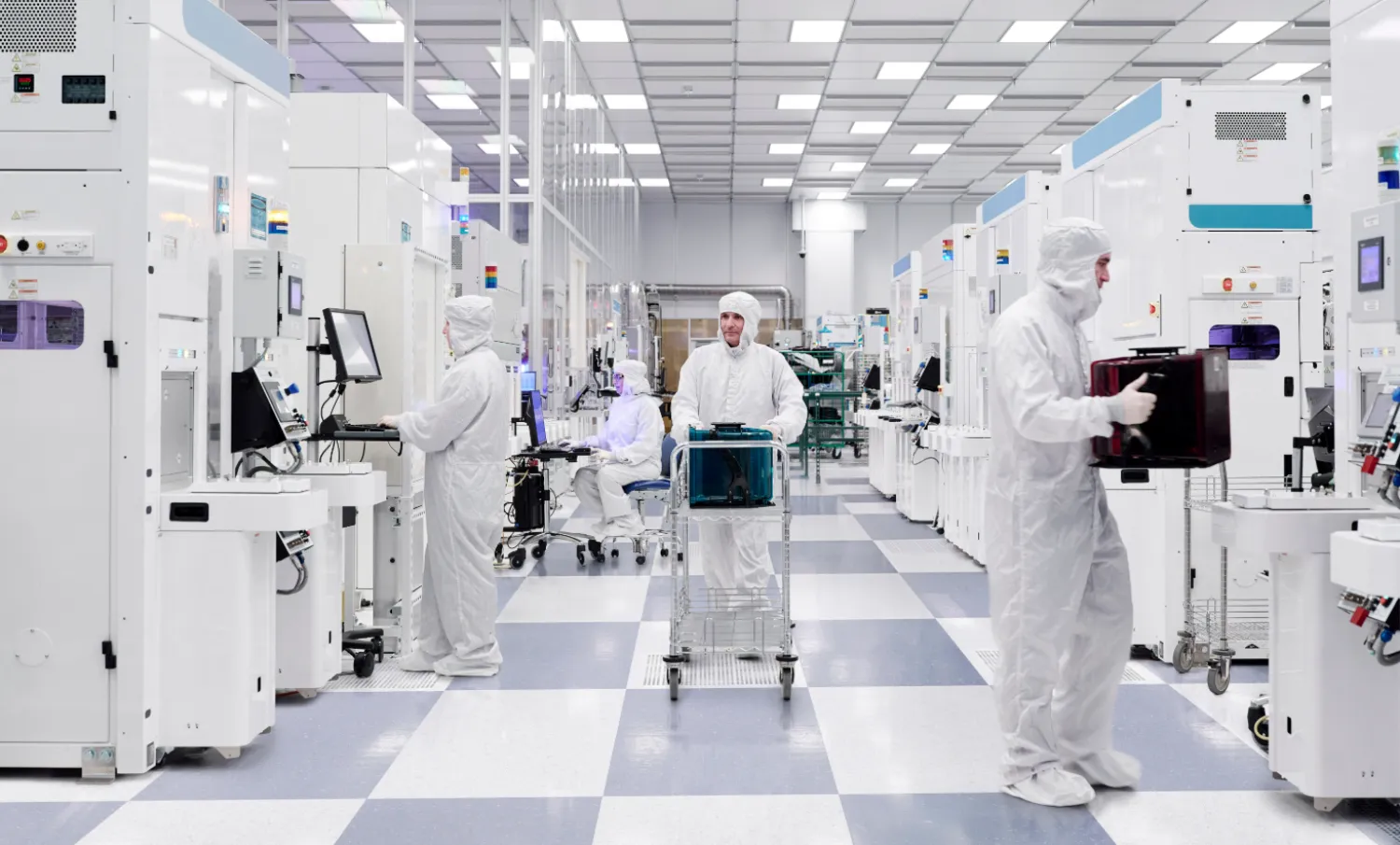
People work at a cleanroom that manufactures 300 millimeter silicon wafers containing quantum computing chips at the Albany NanoTech Complex in Albany, New York., US, in this handout image released on November 10, 2025. IBM/Handout via REUTERS
TT

IBM Says 'Loon' Chip Shows Path to Useful Quantum Computers by 2029

People work at a cleanroom that manufactures 300 millimeter silicon wafers containing quantum computing chips at the Albany NanoTech Complex in Albany, New York., US, in this handout image released on November 10, 2025. IBM/Handout via REUTERS

IBM announced on Wednesday it has built a new experimental quantum computing chip called Loon that demonstrates it hit a key milestone toward making useful quantum computers before the end of the decade.

Quantum computers could someday solve problems that would take classical computers thousands of years. But due to the uncertain nature of quantum mechanics, the chips are prone to errors, Reuters reported.

Correcting those errors is the key focus of tech giants such as Alphabet's Google and Amazon that are chasing quantum computers alongside IBM. In 2021, IBM proposed a new way of doing error correction: adapt an algorithm for improving cellphone signals to quantum computing and run it on a combination of quantum chips and classical computing chips.

The downside of IBM's idea is that the quantum chips become harder to build because they must contain not only basic building blocks of quantum chips called "qubits" but also new quantum connections between the qubits, Mark Horvath, a vice president and analyst at research firm Gartner, told Reuters in an interview.

"It's very, very clever," Horvath said. "Now, they're actually putting it in chips, so that's super exciting."

Jay Gambetta, director of IBM Research and an IBM fellow, said the key was tapping the Albany NanoTech Complex in New York, which houses the same chipmaking tools as the most advanced factories in the world.

Loon remains in its early stages, and IBM did not disclose when outsiders can test it. But the company also announced on Wednesday a chip named "Nighthawk" that will be available at the end of this year.

IBM believes Nighthawk could beat classical computers on some tasks by the end of next year and is working with a group of startups and researchers to share its code openly so that others can test those claims.

"We're confident there'll be many examples of quantum advantage," Gambetta told Reuters. "But let's take it out of headlines and papers and actually make a community where you submit your code, and the community tests things, and they select out which ones are the right ones."



Nvidia CEO Huang Says Next Generation of Chips Is in Full Production

 Nvidia CEO Jensen Huang speaks during a Nvidia keynote address at CES 2026, an annual consumer electronics trade show, in Las Vegas, Nevada, US January 5, 2026. (Reuters)
Nvidia CEO Jensen Huang speaks during a Nvidia keynote address at CES 2026, an annual consumer electronics trade show, in Las Vegas, Nevada, US January 5, 2026. (Reuters)
TT

Nvidia CEO Huang Says Next Generation of Chips Is in Full Production

 Nvidia CEO Jensen Huang speaks during a Nvidia keynote address at CES 2026, an annual consumer electronics trade show, in Las Vegas, Nevada, US January 5, 2026. (Reuters)
Nvidia CEO Jensen Huang speaks during a Nvidia keynote address at CES 2026, an annual consumer electronics trade show, in Las Vegas, Nevada, US January 5, 2026. (Reuters)

Nvidia CEO Jensen Huang said on Monday that the company’s next generation of chips is in "full production," saying they can deliver five times the artificial-intelligence computing of the company’s previous chips when serving up chatbots and other AI apps.

In a speech at the Consumer Electronics Show in Las Vegas, the leader of the world's most valuable company revealed new details about its chips, which will arrive later this year and which Nvidia executives told Reuters are already in the company's labs being tested by AI firms, as Nvidia faces increasing competition from rivals as well as its own customers.

The Vera Rubin platform, made up of six separate Nvidia chips, is expected to debut later this year, with the flagship server containing 72 of the company’s graphics units and 36 of its new central processors.

Huang showed ‌how they can ‌be strung together into "pods" with more than 1,000 Rubin chips and said they could improve ‌the ⁠efficiency of generating ‌what are known as "tokens" - the fundamental unit of AI systems - by 10 times.

To get the new performance results, however, Huang said the Rubin chips use a proprietary kind of data that the company hopes the wider industry will adopt.

"This is how we were able to deliver such a gigantic step up in performance, even though we only have 1.6 times the number of transistors," Huang said.

While Nvidia still dominates the market for training AI models, it faces far more competition - from traditional rivals such as Advanced Micro Devices as well as customers like Alphabet's Google - in delivering the fruits of those models to hundreds of millions of users of chatbots and other technologies.

Much of ⁠Huang’s speech focused on how well the new chips would work for that task, including adding a new layer of storage technology called "context memory storage" aimed at helping chatbots ‌provide snappier responses to long questions and conversations.

Nvidia also touted a new generation ‍of networking switches with a new kind of connection called co-packaged ‍optics. The technology, which is key to linking together thousands of machines into one, competes with offerings from Broadcom and Cisco ‍Systems.

Nvidia said that CoreWeave will be among the first to have the new Vera Rubin systems and that it expects Microsoft, Oracle, Amazon and Alphabet to adopt them as well.

In other announcements, Huang highlighted new software that can help self-driving cars make decisions about which path to take - and leave a paper trail for engineers to use afterward. Nvidia showed research about software, called Alpamayo, late last year, with Huang saying on Monday it would be released more widely, along with the data used to train it so that automakers can make evaluations.

"Not only do we open-source the models, we also open-source the data that we use ⁠to train those models, because only in that way can you truly trust how the models came to be," Huang said from a stage in Las Vegas.

Last month, Nvidia scooped up talent and chip technology from startup Groq, including executives who were instrumental in helping Alphabet's Google design its own AI chips. While Google is a major Nvidia customer, its own chips have emerged as one of Nvidia's biggest threats as Google works closely with Meta Platforms and others to chip away at Nvidia's AI stronghold.

During a question-and-answer session with financial analysts after his speech, Huang said the Groq deal "won't affect our core business" but could result in new products that expand its lineup.

At the same time, Nvidia is eager to show that its latest products can outperform older chips like the H200, which US President Donald Trump has allowed to flow to China. Reuters has reported that the chip, which was the predecessor to Nvidia's current "Blackwell" chip, is in high demand in China, which has alarmed China hawks across the US political spectrum.

Huang told financial analysts after his keynote ‌that demand is strong for the H200 chips in China, and Chief Financial Officer Colette Kress said Nvidia has applied for licenses to ship the chips to China but was waiting for approvals from the US and other governments to ship them.


TV Makers Tout AI Upgrades at CES, as Smartphone Threat Looms

Attendees view the Samsung Micro RGB 130-inch TV after it was unveiled during the Samsung Electronics First Look event ahead of the Consumer Electronics Show (CES) in Las Vegas, Nevada on January 4, 2026. (AFP)
TT

TV Makers Tout AI Upgrades at CES, as Smartphone Threat Looms

Attendees view the Samsung Micro RGB 130-inch TV after it was unveiled during the Samsung Electronics First Look event ahead of the Consumer Electronics Show (CES) in Las Vegas, Nevada on January 4, 2026. (AFP)

A century after Scottish inventor John Logie Baird demonstrated the first mechanical television system, TVs face mounting competition from a much more recent invention: smartphones.

But with a suite of new models boasting massive screens, richer imagery and artificial intelligence enhancements -- on display this week at the Consumer Electronics Show in Las Vegas -- manufacturers don't plan on TVs being relegated to the dustbin of history.

The proportion of daily viewing on TV sets declined from 61 percent at the start of 2017 to 48 percent late last year, according to market tracker Ampere Analysis. Smartphone viewing, meanwhile, nearly doubled over that same period to 21 percent.

"This is the battle between big screens, which are traditionally for older people who grew up around televisions, and younger people who have either a phone, tablet, or laptop on which they're doing their consumption," said Patrick Horner, leader of TV research at Omdia.

He said that in China, seen as a trendsetter in the global market, young consumers are shunning large-screen televisions in favor of smartphones or tablets.

Around the world, television ownership is constant or declining, with average selling prices also holding steady or dropping, according to Horner.

One way for TV makers to protect or increase revenue when unit sales don't rise is to get people to buy ever larger and smarter screens, at a higher price.

- TVs get personal -

Those massive screens once again starred at CES, with producers touting AI to personalize experiences and sharpen picture quality.

Also in the spotlight was "Micro RGB" technology that dramatically ramps up picture quality using ultra-precise control of colors in LED displays.

Samsung Electronics, the top TV seller for 20 consecutive years, unveiled what it billed as the world's first 130-inch Micro RGB TV and spoke of packing AI into its products.

"We will embed AI across every area, every product, and every service," Samsung device experience division chief executive TM Roh said during a media event.

Hisense, LG, Samsung, Sony, and TCL were also at CES.

AI is being used to improve picture and sound quality, as well as help people find shows they want or ask questions about what they're seeing.

"I am really curious to see if most brands at CES can actually prove their new AI devices live up to their claims," said Forrester principal analyst Thomas Husson.

- Amazon vs Walmart -

Behind the scenes, e-commerce titans Amazon and Walmart are shaping the future of television as they vie for dominance -- not in selling TVs, but in advertising and e-commerce.

"This is really a knockdown, drag-out fight between Amazon.com and Walmart," Horner told AFP.

Walmart closed a $2.3 billion deal to buy TV maker Vizio in late 2024, as a strategic response to Amazon boosting sales through advertising on its Fire smart TVs and devices, often through its Prime Video streaming service.

"Amazon was putting advertisements on television programming for things that Amazon sold," Horner said. "So now Walmart is going to be putting advertisements on your television for things that Walmart sells."

And the profit margin on selling ads dwarfs the markup on selling TV hardware.

Walmart is expected to sell more than a million of its "Onn" brand TVs monthly and use an operating system it acquired with Vizio to pump advertising to viewers.

"Televisions are no longer about making profit from TV hardware," Horner said. "They're an ad delivery device being inserted into your living room to boost e-commerce sales."


AMD Shows off New Higher Performing AI Chip at CES Event

 Lisa Su, CEO of AMD, holds an AMD Ryzen AI Halo Developer Platform during an AMD keynote address at CES 2026, an annual consumer electronics trade show, in Las Vegas, Nevada, US, January 5, 2026. (Reuters)
Lisa Su, CEO of AMD, holds an AMD Ryzen AI Halo Developer Platform during an AMD keynote address at CES 2026, an annual consumer electronics trade show, in Las Vegas, Nevada, US, January 5, 2026. (Reuters)
TT

AMD Shows off New Higher Performing AI Chip at CES Event

 Lisa Su, CEO of AMD, holds an AMD Ryzen AI Halo Developer Platform during an AMD keynote address at CES 2026, an annual consumer electronics trade show, in Las Vegas, Nevada, US, January 5, 2026. (Reuters)
Lisa Su, CEO of AMD, holds an AMD Ryzen AI Halo Developer Platform during an AMD keynote address at CES 2026, an annual consumer electronics trade show, in Las Vegas, Nevada, US, January 5, 2026. (Reuters)

Advanced Micro Devices CEO Lisa Su showed off a number of the company's AI chips on Monday at the CES trade show in Las Vegas, including its advanced MI455 AI processors, which are components in the data center server racks that the company is selling to firms like ChatGPT maker OpenAI.

Su also unveiled the MI440X, a version of the MI400 series chip designed for on-premise use at businesses. The so-called enterprise version is designed to fit into infrastructure that is not specifically designed for AI clusters. The ‌MI440X is a version ‌of an earlier chip that the US plans ‌to ⁠use in a supercomputer.

AMD ‌is one of Nvidia's strongest rivals but has struggled to have as much success. In October, AMD signed a deal with OpenAI that, in addition to the financial upside, was a major vote of confidence in AMD's AI chips and software. But it is unlikely to dent Nvidia's dominance, as the market leader continues to sell every AI chip it can make, analysts said.

At the Monday event, OpenAI President Greg Brockman joined Su on ⁠stage and said chip advancements were critical to OpenAI's vast computing needs.

Looking to the future needs of ‌companies like OpenAI, Su previewed the MI500 and said it ‍offered 1,000 times the performance of an ‍older version of the processor. The company said the chips would launch in ‍2027.

At the event, Su hosted Daniele Pucci, CEO of Generative Bionics, an Italian AI developer, who unveiled GENE.01, a humanoid robot.

"Our first commercial humanoid robot will be manufactured in the second half of 2026," Pucci said at the event.

Earlier on Monday, Nvidia showed off its next-generation Vera Rubin platform, which is made up of six separate chips. CEO Jensen Huang said it was in full production. It is expected to debut ⁠later this year.

In October, AMD signed the deal with ChatGPT maker OpenAI that will add billions of dollars to the company’s annual revenue. The first deployment of AI chips that incorporate AMD’s MI400 series will roll out this year. Nvidia has generated tens of billions of dollars in quarterly revenue from its AI chip sales, a feat that AMD has struggled to achieve thus far.

OpenAI is a key customer of AMD and executives at the Santa Clara, California-based company expect the deal to lead to significant additional new sales.

Also on Monday, AMD launched its Ryzen AI 400 Series processors for AI PCs, alongside Ryzen AI Max+ chips for advanced local inference and gaming. Intel held a launch event ‌earlier for its Panther Lake chips that it said would be available for order on Tuesday.
