


Gaza War Becomes Cash Surge for US Weapons Makers

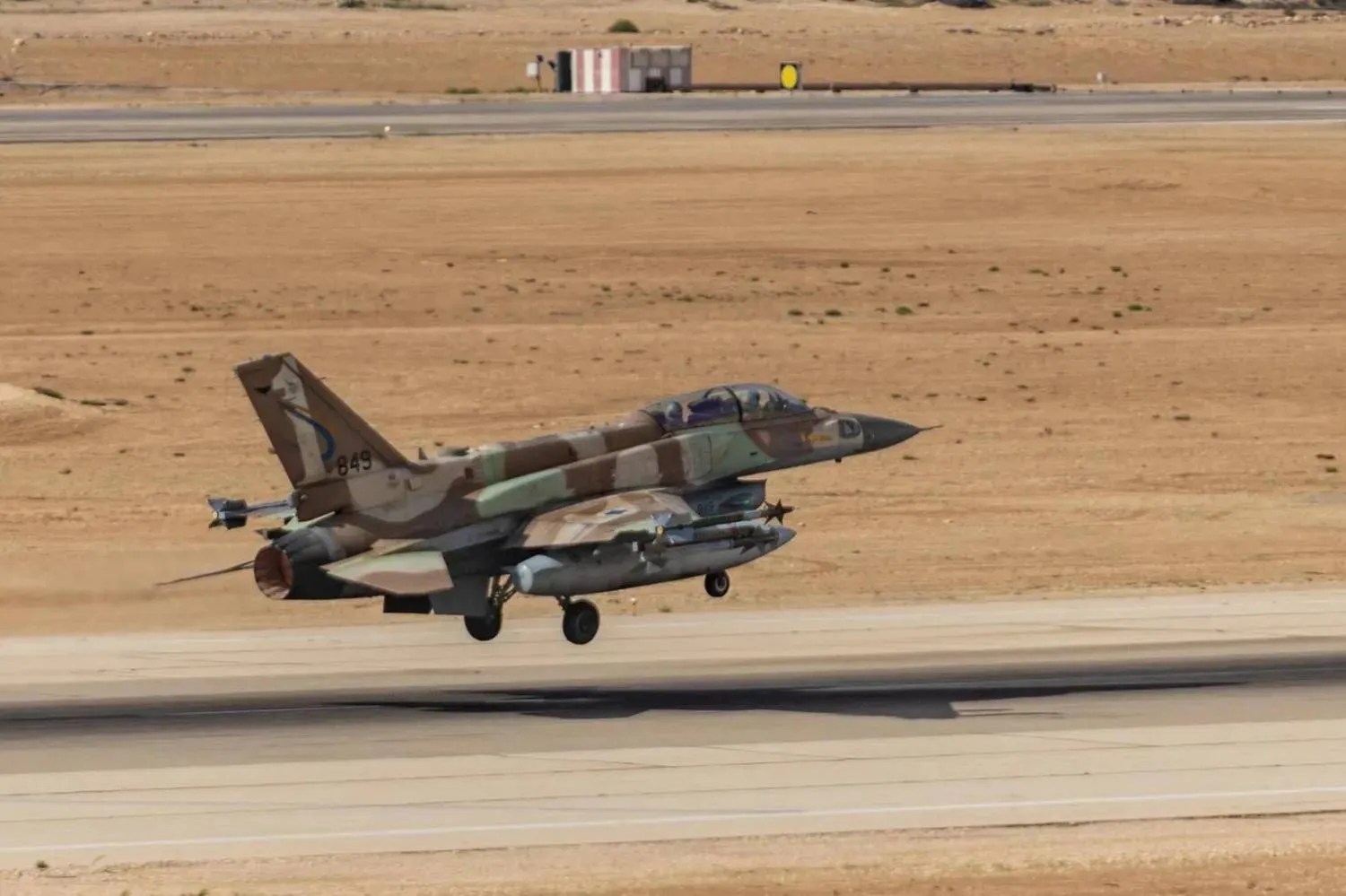
An Israeli F-16 carrying air-to-air missiles and extra fuel tanks takes off from an air base (Israel Defense Forces)
TT

Gaza War Becomes Cash Surge for US Weapons Makers

An Israeli F-16 carrying air-to-air missiles and extra fuel tanks takes off from an air base (Israel Defense Forces)

Israel’s war in Gaza, which erupted in October 2023, has become one of the most profitable conflicts for major US defense contractors.

As Gaza was being devastated and hundreds of thousands of civilians faced death and starvation, weapons factories across several US states were running at full capacity to meet Israel’s expanding military demands, generating more than 32 billion dollars in sales in just two years, according to a Wall Street Journal analysis based on US State Department data.

After the Hamas attack on southern Israel on October 7, 2023, and the large-scale Israeli military campaign that followed, Washington moved quickly to open an unprecedented weapons pipeline that included precision-guided munitions, long-range missiles, fighter jets and field equipment.

While Israel typically receives around 3.3 billion dollars in annual military assistance, that figure doubled in 2024 to 6.8 billion dollars in direct funding, not including non-cash support such as logistics, training and intelligence coordination.

A US State Department spokesperson said the Trump administration remains committed to Israel’s right to defend itself, adding that Washington is currently leading a regional effort to end the war through lasting security arrangements.

But despite talk of a “possible end” to the conflict, Pentagon data show that weapons production lines in US factories have not slowed and that supply contracts run through 2029, meaning arms deliveries to Israel will continue even after the fighting stops.

Who is benefiting most?

Boeing sits at the top of the list of beneficiaries after securing a 18.8 billion dollar deal to sell upgraded F-15 fighter jets to Israel, with delivery expected in four years.

The company also won an additional 7.9 billion dollars in contracts to supply Tel Aviv with guided bombs and associated weapons systems. These deals alone represent a major leap compared with Israel’s previous commitments to Boeing, which totaled less than 10 billion dollars over an entire decade.

Northrop Grumman, Lockheed Martin and General Dynamics secured specialized contracts for fighter jet spare parts, precision missiles and 120-millimeter tank rounds used in Merkava tanks.

Caterpillar benefited from soaring demand for its armored D9 bulldozers, widely deployed by the Israeli military to destroy homes and infrastructure in the enclave.

According to the US Defense Security Cooperation Agency, most of the deals are concentrated in aerial munitions and attack aircraft, while ground systems such as tanks and armored vehicles represent a far smaller share of total sales.

War as an economic opportunity

The conflict has not only been a military campaign, it also served as an economic boost for the US defense sector, which in recent years struggled with supply chain disruptions and labor strikes.

Boeing said in its 2024 annual report that its defense division saw strong demand from governments prioritizing security and defense technology amid rising threats.

Lockheed Martin reported a 13 percent increase in missile division revenues, reaching 12.7 billion dollars in a single year.

Oshkosh, which produces tactical military vehicles, said Israel’s orders saved a production line that was close to shutting down last year. Italy’s Leonardo Group, whose US unit sells military trailers to Israel, said in its latest financial report that the continuation of the conflicts in Ukraine and Israel ensures stable international sales for 2025.

The cost of war and who pays the price

Although the billions flowing through arms deals reflect a boom for the US defense industry, the humanitarian and political dimensions of the conflict have fueled debate in the United States and abroad.

The war has killed more than 68,000 people, including about 18,000 children, according to the Gaza Health Ministry. Israel has not released any official figures on the number of Hamas fighters killed.

As Washington funds a significant share of these sales with US taxpayer money, some Western financial institutions have started taking protest measures.

Three Norwegian funds withdrew investments from companies such as Caterpillar, Oshkosh and Palantir over the use of their products in Gaza. The Dutch pension fund sold its 448 million dollar stake in Caterpillar for the same reasons.

In Europe, Germany announced in August 2025 a halt to all arms export licenses to Israel for use in Gaza. US technology companies also faced internal pressure, prompting Microsoft to restrict the Israeli Defense Ministry’s access to some of its cloud services.

Artificial intelligence on the battlefield

Alongside conventional weapons, the war created a wider arena for cooperation on artificial intelligence and digital surveillance. Palantir, owned by conservative billionaire Peter Thiel, entered a partnership with the Israeli Defense Ministry in early 2024. After criticism that its tools were being used in airstrikes, CEO Alex Karp responded by saying that most of those killed “were terrorists,” in his words.

Israel also signed pre-war agreements with Google, Amazon and Microsoft for advanced cloud computing services, and all three companies have faced growing employee protests calling for an end to military cooperation.

In an unusual twist, some of the same US firms supplying Israel with weapons also participate in humanitarian relief programs for Gaza.

The US State Department allocated 30 million dollars to the Gaza Humanitarian Foundation, overseen by former Trump adviser Johnnie Moore, to coordinate aid distribution in the enclave.

The foundation hired American security contractors to protect its operations amid chaos and allegations of poor organization.



Israel Army Issues Evacuation Warning for Lebanon Village ahead of Strikes

 Smoke rises after Israeli strikes following Israeli military's evacuation orders, in Chehour, southern Lebanon November 19, 2025. REUTERS/Ali Hankir
Smoke rises after Israeli strikes following Israeli military's evacuation orders, in Chehour, southern Lebanon November 19, 2025. REUTERS/Ali Hankir
TT

Israel Army Issues Evacuation Warning for Lebanon Village ahead of Strikes

 Smoke rises after Israeli strikes following Israeli military's evacuation orders, in Chehour, southern Lebanon November 19, 2025. REUTERS/Ali Hankir
Smoke rises after Israeli strikes following Israeli military's evacuation orders, in Chehour, southern Lebanon November 19, 2025. REUTERS/Ali Hankir

The Israeli army issued an evacuation warning on Sunday for the village of Kafr Hatta in southern Lebanon ahead of air strikes on Hezbollah targets in the area, AFP reported.

"The Israeli (army) will soon, and once again, strike terrorist Hezbollah military infrastructure in the village, in order to address the prohibited attempts it is making to rebuild its activities there," Arabic-language spokesman Colonel Avichay Adraee wrote on X, posting a map of the expected target.

The Lebanese army said Thursday that it had completed disarming Hezbollah south of the Litani river, the first phase of a nationwide plan. Kafr Hatta is located north of the river.


Sudan PM Announces Govt Return to Khartoum from Wartime Capital

File Photo: Some shops reopen despite extensive damage (Asharq Al-Awsat)
TT

Sudan PM Announces Govt Return to Khartoum from Wartime Capital

File Photo: Some shops reopen despite extensive damage (Asharq Al-Awsat)

Sudan's Prime Minister Kamil Idris announced on Sunday the government's return to Khartoum, after nearly three years of operating from wartime capital of Port Sudan, AFP reported.

"Today, we return, and the Government of Hope returns to the national capital," Idris told reporters in Khartoum, ravaged by the war between the army and the Rapid Support Forces.

"We promise you better services, better healthcare and the reconstruction of hospitals, the development of educational services... and to improve electricity, water and sanitation services," he said.


Iran Protest Death Toll Rises as Alarm Grows over Crackdown 'Massacre'

Smoke rises as protesters gather amid evolving anti-government unrest at Vakilabad highway in Mashhad, Razavi Khorasan province, Iran, released on January 10, 2026, in this screen grab obtained from a social media video. SOCIAL MEDIA/via REUTERS
TT

Iran Protest Death Toll Rises as Alarm Grows over Crackdown 'Massacre'

Smoke rises as protesters gather amid evolving anti-government unrest at Vakilabad highway in Mashhad, Razavi Khorasan province, Iran, released on January 10, 2026, in this screen grab obtained from a social media video. SOCIAL MEDIA/via REUTERS

At least 192 protesters have been killed in Iran's biggest movement against the Islamic republic in more than three years, a rights group said Sunday, as warnings grew that authorities were committing a "massacre" to quell the demonstrations.

The protests, initially sparked by anger over the rising cost of living, have now become a movement against the theocratic system in place in Iran since the 1979 revolution and have already lasted two weeks.

The mass rallies are one of the biggest challenges to the rule of supreme leader Ali Khamenei, 86, coming in the wake of Israel's 12-day war against the Islamic republic in June, which was backed by the United States.

Protests have swelled in recent days despite an internet blackout that has lasted more than 60 hours, according to monitor Netblocks, with activists warning the shutdown was limiting the flow of information and the actual toll risks being far higher.

"Since the start of the protests, Iran Human Rights has confirmed the killing of at least 192 protesters," the Norway-based non-governmental organization said, warning that the deaths "may be even more extensive than we currently imagine".

Videos of large demonstrations in the capital Tehran and other cities over the past three nights have filtered out despite the internet cut that has rendered impossible normal communication with the outside world via messaging apps or even phone lines.

Video verified by AFP showed large crowds taking to the streets in new protests on Saturday night in several Iranian cities including Tehran and Mashhad in the east, where images showed vehicles set on fire.

Several circulating videos, which have not been verified by AFP, allegedly showed relatives in a Tehran morgue identifying bodies of protesters killed in the crackdown.

The US-based Center for Human Rights in Iran (CHRI) said it had received "eyewitness accounts and credible reports indicating that hundreds of protesters have been killed across Iran during the current internet shutdown".

"A massacre is unfolding in Iran. The world must act now to prevent further loss of life," it said.

It said hospitals were "overwhelmed", blood supplies were running low and that many protesters had been shot in the eyes in a deliberate tactic.


- 'Significant arrests' -


The US-based Human Rights Activists News Agency said it had confirmed the deaths of 116 people in connection with the protests, including 37 members of the security forces or other officials.

State TV on Sunday broadcast images of funeral processions for security forces killed in recent days, as authorities condemned "riots" and "vandalism".

National police chief Ahmad-Reza Radan said authorities made "significant" arrests of protest figures on Saturday night, without giving details on the number or identities of those arrested, according to state TV.

Iran's security chief Ali Larijani drew a line between protests over economic hardship, which he called "completely understandable", and "riots", accusing them of actions "very similar to the methods of terrorist groups", Tasnim news agency reported.

Iran's President Masoud Pezeshkian said "rioters" must not distrupt Iranian society.

"The people (of Iran) should not allow rioters to disrupt society. The people should believe that we (the government) want to establish justice," he told state broadcaster IRIB.

In Tehran, an AFP journalist described a city in a state of near paralysis.

The price of meat has nearly doubled since the start of the protests, and while some shops are open, many others are not.

Those that do open must close at around 4:00 or 5:00 pm, when security forces deploy in force.


- 'Legitimate targets' -


Reza Pahlavi, the exiled son of the ousted shah, who has played a prominent role in calling for the protests, called for new actions later Sunday.

"Do not abandon the streets. My heart is with you. I know that I will soon be by your side," he said.

US President Donald Trump has spoken out in support of the protests and threatened military action against Iranian authorities "if they start killing people".

Israel's Foreign Minister Gideon Saar urged the European Union on Sunday to designate Iran's Revolutionary Guards Corps as a "terrorist organization" over the suspected violence against protesters.

He also said Israel supports the Iranian people's "struggle for freedom".

Iran's parliament speaker Mohammad Bagher Ghalibaf said Iran would hit back if the US launched military action.

"In the event of a military attack by the United States, both the occupied territory and centers of the US military and shipping will be our legitimate targets," he said in comments broadcast by state TV.

He was apparently also referring to Israel, which the Islamic republic does not recognize and considers occupied Palestinian territory.