


Rediscovering Iznik’s Lost Art of Vibrant Ottoman Tilemaking 

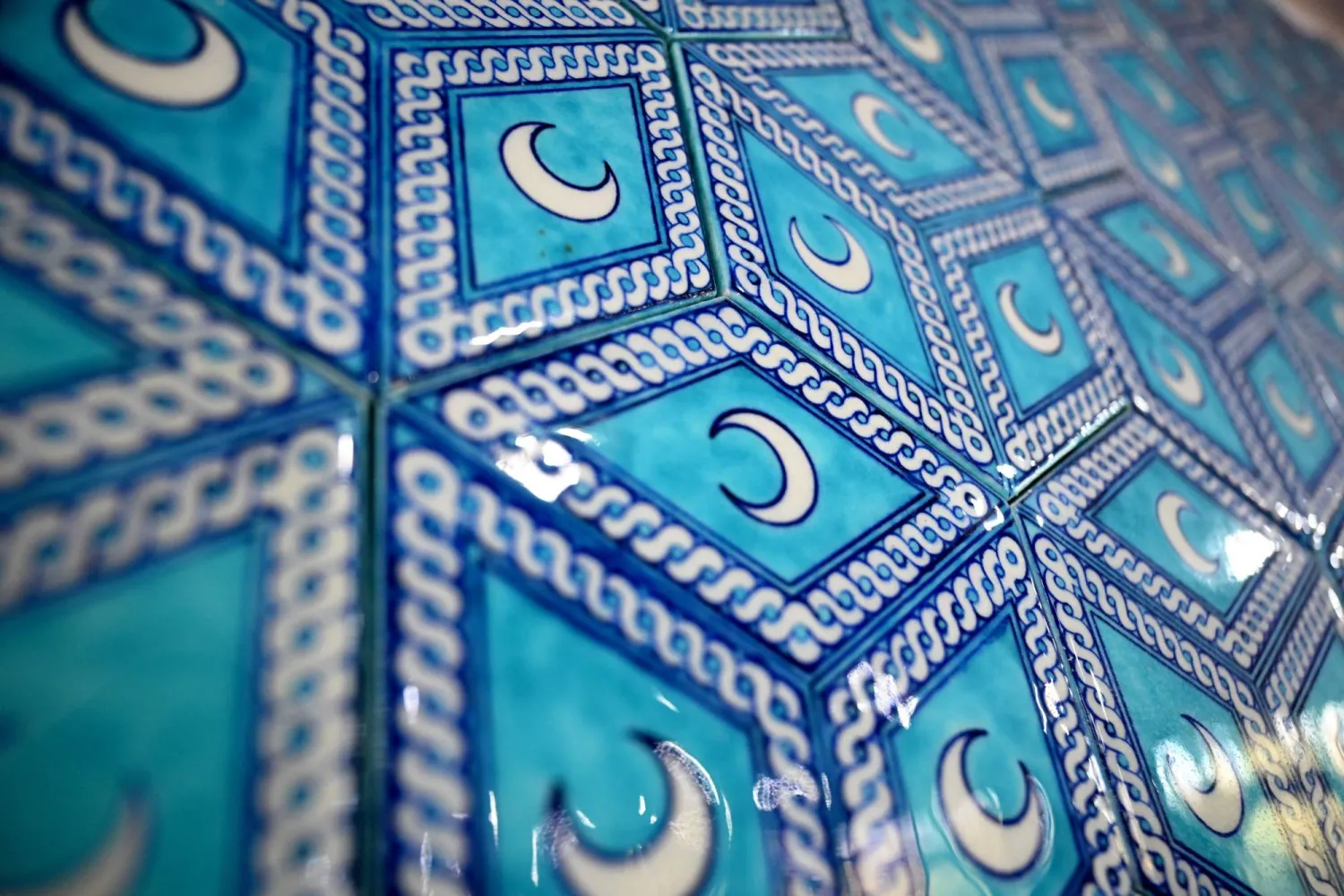
This photograph shows traditional Turkish patterns painted on tile in Iznik on October 31, 2025. (AFP)
TT

Rediscovering Iznik’s Lost Art of Vibrant Ottoman Tilemaking 

This photograph shows traditional Turkish patterns painted on tile in Iznik on October 31, 2025. (AFP)

For over 300 years, the closely-guarded secrets of the Ottoman Empire's luminous tilework was lost, but its rediscovery has revived a key part of Türkiye's cultural heritage.

Renowned for intricate designs and lustrous colors, Iznik tiles are considered the pinnacle of Ottoman art, gracing monuments such as Istanbul's Blue Mosque and Topkapi Palace.

The tiles come from Iznik, a small town near Istanbul with a ceramics tradition spanning two millennia also known as Nicaea, which hosted a landmark Christian gathering in 325 AD that Pope Leo will celebrate when he visits this month.

Under the patronage of the Ottoman Empire, Iznik's artisans flourished, obtaining "remarkable achievements" by the mid-16th century, said Professor Ezgi Yalcinkaya, head of traditional Turkish arts at Usak University.

They developed a high-quartz stonepaste, known as fritware, yielding a bright white background ideal for decorating, transparent glazes and vibrant colors, including a "coral red" for floral designs which "created a distinctive new style", she told AFP.

But when the Ottoman Empire began to decline in the 17th century, the workshops started to close and the artisans, mainly Greeks and Armenians who knew the formula for the stonepaste, the colors and glazes, died off.

"Knowledge was passed entirely through master-apprentice relationships. The specific formulas -- especially for the coral red and fritware composition -- were oral secrets," she said.

"Without documentation, the expertise died with the last masters. By the 18th-19th centuries, the technical knowledge was largely lost."

Centuries later, an economics professor called Isil Akbaygil with a passion for Ottoman art set up the Iznik Foundation in 1993.

Her research project brought together experts and academics to rediscover the lost secrets of Iznik's prized ceramics.

"What was forgotten about isn't so much the raw materials themselves as how they're combined... the firing temperatures and methods to achieve the distinctive coral red," said Kerim Akbaygil, a foundation board member and one of her sons.

"The foundation spent almost two years trying to get the right recipe, working with different universities like MIT, Princeton and Istanbul Technical University," he said.

"It was trial and error, but we finally got it right," he told AFP at the foundation's headquarters, a rustic red-tiled building set in lush gardens lined with richly-colored tile paths.

"Iznik tiles are the only tiles in the world that use up to 85 percent quartz which we use in the raw material along with clay and silica," he said.

They are underglazed with a high ratio of quartz giving them a "brightness and depth that are characteristic of Iznik tiles," he said.

Decorated with metal oxides whose colors are rendered vivid through the firing process, they are then coated with a quartz-based glaze known as "sur" -- Turkish for "secret".

Jars of colors -- from vibrant cobalt blues and emerald greens to coral reds -- line the shelves inside a large upper room where a dozen women sit painting tiles or transferring designs onto plain white tableware.

Many are painting an enormous mural for a train station -- one of the foundation's trademark commissions, its stunning tile facades a distinctive feature of the Istanbul metro and beyond.

Adding shadow to a giant fig leaf, Yasemin Sahin, 42, admits she's captivated by the transformation that occurs with firing.

"I'm painting this, but I don't know what it will look like when it comes out of the kiln after it's glazed. It's always a surprise, that's the beauty of it," she told AFP.

Three decades on and Iznik tiles are now seen on buildings across Türkiye, from colleges to coffee shops, with the foundation's international reach spreading form Japan to Canada.

"Back in the day, Iznik tiles were sponsored by the palace, so the only place you could see them was inside the palaces or mosques. Now that taboo is broken," Akbaygil says.

Yalcinkaya said the collective significance of rediscovering the lost formulas was "tremendous" and the result of extensive research by many academics and scholars.

"These efforts revived a living tradition," she told AFP.

"Ottoman ceramicists continuously innovated from the 14th-20th centuries. Today's work continues this spirit, ensuring the tradition remains alive and relevant, which is the most authentic way to preserve cultural heritage."



Jazan Culture House Highlights the Role of Translation in Promoting Saudi Literature Globally

The meeting reviewed the state of Saudi literary translation, past and present, highlighting the challenges facing translators and publishers - SPA
TT

Jazan Culture House Highlights the Role of Translation in Promoting Saudi Literature Globally

The meeting reviewed the state of Saudi literary translation, past and present, highlighting the challenges facing translators and publishers - SPA

The Cultural House in Jazan held a cultural meeting yesterday evening titled “The Importance of Translating Saudi Literature.” Participants discussed the role of translation in introducing Saudi literature to local and international audiences, and its impact on strengthening its presence and highlighting the richness and diversity of Saudi creative expression, SPA reported.

The meeting reviewed the state of Saudi literary translation, past and present, highlighting the challenges facing translators and publishers.

Speakers emphasized the importance of adhering to professional and ethical standards when translating literary works into other languages.

The discussion also underscored the role of translation in enabling local literature to reach a global readership, thereby fostering cultural exchange and showcasing the Kingdom’s literary identity on the international stage.

This meeting is part of a series of cultural programs designed to enrich the literary scene, raise awareness of translation-related issues, and create platforms for dialogue among intellectuals and those interested in cultural affairs.


Royal Commission for AlUla Discovers Rare Fossils Dating Back 465 Million Years

The fossils date to the Middle Ordovician period - SPA
TT

Royal Commission for AlUla Discovers Rare Fossils Dating Back 465 Million Years

The fossils date to the Middle Ordovician period - SPA

The Royal Commission for AlUla (RCU) has announced the documentation and international publication of a scientific discovery of rare horseshoe crab fossils dating back approximately 465 million years, as part of a peer-reviewed study published in Gondwana Research, a leading international journal specialising in geological sciences.

This unique fossil discovery has been published globally for the first time, reinforcing AlUla’s position as a world-class center for geological and scientific research related to Earth’s history and biodiversity. The fossils were discovered in AlGharameel Nature Reserve in AlUla, adding a significant scientific dimension to the understanding of the region’s natural history, SPA reported.

The fossils date to the Middle Ordovician period, approximately 485–444 million years ago, making them among the oldest known horseshoe crab fossils worldwide. They are distinguished by their exceptionally large size compared to other specimens from the same period. All fossils were found preserved upside down, a mode of preservation not previously recorded, alongside trace fossils indicating attempts by the organisms to return to their natural position. This provides rare evidence of ancient behavioural patterns and enables their interpretation in light of contemporary biological knowledge, supporting advanced scientific research.

According to SPA, geological stratigraphic analysis indicated the recurrence of intense seasonal storms during that period, suggesting that these organisms congregated in shallow coastal environments affected by such events, which contributed to their preservation within sedimentary deposits.

These findings offer a clear picture of AlUla’s ancient coastal environment and add a new scientific perspective to understanding its geological and environmental history. They also highlight the commission’s capacity to provide accurate data that supports scientific research and innovation in the study of AlUla’s natural heritage.

The discovery also represents a previously unclassified species, investigated through two research phases in collaboration with a team led by Dr Russell Bicknell, an academic at Flinders University in Adelaide. The second phase, scheduled for the first half of 2026, will include the collection of additional samples and further study of the new species in preparation for its formal scientific classification. The fossil specimens have been preserved within RCU’s museum collections to support future research and public engagement.

The findings reflect the Royal Commission for AlUla’s commitment to advancing scientific transformation, strengthening AlUla’s position as a global destination for scientific discovery and geological research, enabling international partnerships, and developing research and educational programmes related to natural heritage.


Levant Pavilion at Makkah Global Village Showcases Rich Cultural Heritage

The pavilion also presents interactive showcases highlighting the region’s history and civilizational legacy, blending entertainment with knowledge - SPA
TT

Levant Pavilion at Makkah Global Village Showcases Rich Cultural Heritage

The pavilion also presents interactive showcases highlighting the region’s history and civilizational legacy, blending entertainment with knowledge - SPA

The Levant pavilion at the Global Village, part of the Makkah winter events, is offering an integrated experience that reflects the depth of Levantine civilization and the richness of its cultural, artistic, and social heritage.

The pavilion takes visitors on a rich journey through authentic customs and traditions, featuring live performances and scenes that recreate details of traditional Levantine life, alongside displays of folk costumes and traditional handicrafts that express the region’s identity and historical continuity, SPA reported.

It also includes a diverse collection of handmade products, traditional accessories, and artistic pieces, set within an atmosphere that evokes the spirit of old marketplaces.

The pavilion also presents interactive showcases highlighting the region’s history and civilizational legacy, blending entertainment with knowledge.

The pavilion is part of the village’s vision to enhance cultural exchange and highlight the civilizations of different peoples, in line with the objectives of the Makkah winter events to offer diverse tourism and cultural content that enriches visitors’ experiences and reflects Makkah’s status as a destination that blends authenticity and culture.