


Lebanon: Fadel Shaker’s Tuesday Trial Seen as Test of Legal Cases

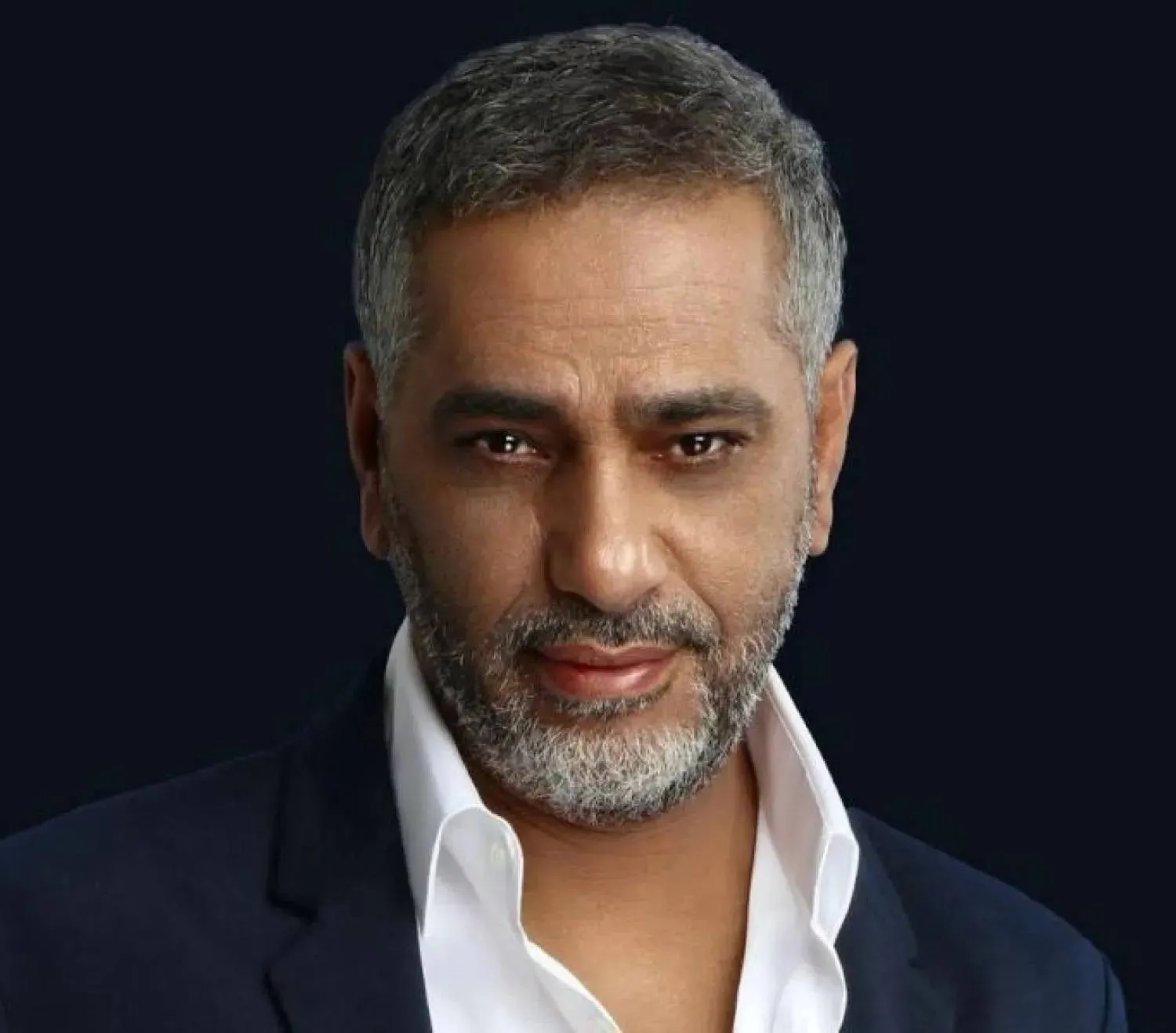
Lebanese singer Fadel Shaker - Instagram
TT

Lebanon: Fadel Shaker’s Tuesday Trial Seen as Test of Legal Cases

Lebanese singer Fadel Shaker - Instagram

Lebanese singer Fadel Shaker is set to appear before the military court next Tuesday to face trial in four separate security cases, “belonging to an armed group, financing the group, possessing unlicensed weapons, and undermining state authority and prestige,” sources familiar with the matter told Asharq Al-Awsat.

The sources said the head of the military court, Brig. Gen. Wassim Fayyad, “allocated Tuesday for questioning Shaker, without placing any other cases on the agenda, given the lengthy time his interrogation is expected to take.”

Security measures will be tight, the sources added, with the Lebanese army deployed around and inside the military court.

The trial will be attended by Shaker, his defense team, and a representative of the military public prosecutor. It is not yet clear whether the court will allow media coverage, with attendance possibly limited to journalists accredited to the military court.

The session is seen as a practical test for Shaker and his legal team in preparing for the trial and challenging the charges.

The sources noted that “during the first session, the court presidency will question Shaker and confront him with the evidence underlying previous absentia rulings. The military public prosecutor will also pose questions, reinforcing the seriousness of the case built against Shaker since 2013, following the Abra clashes between the Lebanese army and supporters of Sheikh Ahmed Al-Assir.”

Shaker voluntarily surrendered to Lebanese army intelligence at the entrance of Ain al-Hilweh camp on October 4, after spending more than 12 years there. At the time, he described the surrender as a judicial settlement to close his cases, though delays in scheduling the military court trial have fueled doubts.

Meanwhile, Shaker’s defense lawyers have prepared thoroughly for the session. A source close to the defense told Asharq Al-Awsat that the team “insists on proceeding with the trial without interruption or delay.”

The source said, “There is no legal justification for postponement. Shaker is the sole defendant, and with his lawyers and the military public prosecutor present, the case is complete and questioning must begin. Any delay would be unjustified.”

The source added that after Shaker’s interrogation, the court is expected to summon numerous witnesses, including Ahmed Al-Asir and others involved in the Abra events, particularly those with close knowledge of Shaker and his relationship with Al-Asir at the time.

Second Trial Scheduled

Shaker is also due to face a second trial in mid-December before the Beirut Criminal Court, presided over by Judge Bilal Dannaoui. The case, filed by Hilal Hammoud, a leader of the “Saraya al-Muqawama” group in Sidon, accuses Shaker, Al-Assir, and others of inciting his attempted killing.

The court president has already conducted a preliminary questioning of Shaker in preparation for the mid-December session.

The first military court session is expected to offer insights into the direction of the case, based on Shaker’s defense of his innocence and the position of the military public prosecutor.

It will also serve as a test of the Lebanese military judiciary’s ability to handle sensitive cases impartially, amid lingering questions over the harsh absentia sentences previously issued against Shaker.



One Dead as Israeli Forces Open Fire on West Bank Stone-Throwers

Israeli troops during a military operation in the Palestinian village of Qabatiya, near the West Bank city of Jenin, 27 December 2025. (EPA)
TT

One Dead as Israeli Forces Open Fire on West Bank Stone-Throwers

Israeli troops during a military operation in the Palestinian village of Qabatiya, near the West Bank city of Jenin, 27 December 2025. (EPA)

The Israeli military said its forces killed a Palestinian in the occupied West Bank in the early hours on Thursday as they opened fire on people who were throwing stones at soldiers.

Two other people were hit on a main ‌road near the ‌village of Luban ‌al-Sharqiya ⁠in Nablus, ‌the military statement added. It described the people as militants and said the stone-throwing was part of an ambush.

Palestinian authorities in the West Bank said ⁠a 26-year-old man they named as ‌Khattab Al Sarhan was ‍killed and ‍another person wounded.

Israeli forces had ‍closed the main entrance to the village of Luban al-Sharqiya, in Nablus, and blocked several secondary roads on Wednesday, the Palestinian Authority's official news agency WAFA reported.

More ⁠than a thousand Palestinians were killed in the West Bank between October 2023 and October 2025, mostly in operations by security forces and some by settler violence, the UN has said.

Over the same period, 57 Israelis were killed ‌in Palestinian attacks.


UN Chief Condemns Israeli Law Blocking Electricity, Water for UNRWA Facilities

A girl stands in the courtyard of a building of the United Nations Relief and Works Agency for Palestine Refugees (UNRWA) in the Askar camp for Palestinian refugees, east of Nablus in the Israeli-occupied West Bank, on December 31, 2025. (AFP)
TT

UN Chief Condemns Israeli Law Blocking Electricity, Water for UNRWA Facilities

A girl stands in the courtyard of a building of the United Nations Relief and Works Agency for Palestine Refugees (UNRWA) in the Askar camp for Palestinian refugees, east of Nablus in the Israeli-occupied West Bank, on December 31, 2025. (AFP)

United Nations Secretary-General Antonio Guterres condemned on Wednesday a move by Israel to ban electricity or water to facilities owned by the UN Palestinian refugee agency, a UN spokesperson said.

The spokesperson said the move would "further impede" the agency's ability to operate and carry out activities.

"The Convention on the Privileges and Immunities of the United Nations remains applicable to UNRWA (United Nations Relief and Works Agency for Palestine Refugees in the Near East), its property and assets, and to its officials and other personnel. Property used ‌by UNRWA ‌is inviolable," Stephane Dujarric, spokesman for the ‌secretary-general, ⁠said while ‌adding that UNRWA is an "integral" part of the world body.

UNRWA Commissioner General Phillipe Lazzarini also condemned the move, saying that it was part of an ongoing " systematic campaign to discredit UNRWA and thereby obstruct" the role it plays in providing assistance to Palestinian refugees.

In 2024, the Israeli parliament passed a law banning the agency from operating in ⁠the country and prohibiting officials from having contact with the agency.

As a ‌result, UNRWA operates in East Jerusalem, ‍which the UN considers territory occupied ‍by Israel. Israel considers all Jerusalem to be part ‍of the country.

The agency provides education, health and aid to millions of Palestinians in Gaza, the West Bank, Jordan, Lebanon and Syria. It has long had tense relations with Israel, but ties have deteriorated sharply since the start of the war in Gaza and Israel has called repeatedly for UNRWA to ⁠be disbanded, with its responsibilities transferred to other UN agencies.

The prohibition of basic utilities to the UN agency came as Israel also suspended of dozens of international non-governmental organizations working in Gaza due to a failure to meet new rules to vet those groups.

In a joint statement, Canada, Denmark, Finland, France, Iceland, Japan, Norway, Sweden, Switzerland and the United Kingdom said on Tuesday such a move would have a severe impact on the access of essential services, including healthcare. They said one in ‌three healthcare facilities in Gaza would close if international NGO operations stopped.


Israel Says It ‘Will Enforce’ Ban on 37 NGOs in Gaza

The sun sets behind the ruins of destroyed buildings in the Nuseirat refugee camp in the central Gaza Strip on December 31, 2025. (AFP)
TT

Israel Says It ‘Will Enforce’ Ban on 37 NGOs in Gaza

The sun sets behind the ruins of destroyed buildings in the Nuseirat refugee camp in the central Gaza Strip on December 31, 2025. (AFP)

Israel said on Thursday that 37 international NGOs operating in Gaza had not complied with a deadline to meet "security and transparency standards," in particular disclosing information on their Palestinian staff, and that it "will enforce" a ban on their activities. 

The groups will now be required to cease their operations by March 1, which the United Nations has warned will exacerbate the humanitarian crisis in the war-ravaged Palestinian territory. 

"Organizations that have failed to meet required security and transparency standards will have their licenses suspended," the Ministry of Diaspora Affairs and Combating Antisemitism said in a statement on Thursday. 

Several NGOS have said the requirements contravene international humanitarian law or endanger their independence, while Israel has faced international criticism in the run-up to the deadline. 

Israel says the new regulation aims to prevent bodies it accuses of supporting terrorism from operating in the Palestinian territories. 

"The primary failure identified was the refusal to provide complete and verifiable information regarding their employees, a critical requirement designed to prevent the infiltration of terrorist operatives into humanitarian structures," the ministry said. 

In March, Israel gave a ten-month deadline to NGOs to comply with the new rules, which demand the "full disclosure of personnel, funding sources, and operational structures." 

The deadline expired on Wednesday. 

The 37 NGOs "were formally notified that their licenses would be revoked as of January 1, 2026, and that they must complete the cessation of their activities by March 1, 2026," the ministry said Thursday. 

- 'Weaponization of bureaucracy' - 

Minister of Diaspora Affairs and Combating Antisemitism Amichai Chikli said: "The message is clear: humanitarian assistance is welcome - the exploitation of humanitarian frameworks for terrorism is not." 

Numerous prominent humanitarian organizations have been hit by the ban, including Doctors Without Borders (MSF), World Vision International and Oxfam, according to the list provided by the ministry. 

In the case of MSF, Israel accused it of having two employees who were members of Palestinian groups Islamic Jihad and Hamas. 

MSF said earlier this week that the request to share a list of its staff "may be in violation of Israel's obligations under international humanitarian law" and said it "would never knowingly employ people engaging in military activity". 

On Thursday, 18 Israel-based left-wing NGOs denounced the decision to ban their international peers, saying "the new registration framework violates core humanitarian principles of independence and neutrality." 

"This weaponization of bureaucracy institutionalizes barriers to aid and forces vital organizations to suspend operations," they said. 

On Wednesday, United Nations rights chief Volker Turk described Israel's decision as "outrageous", calling on states to urgently insist Israel shift course. 

"Such arbitrary suspensions make an already intolerable situation even worse for the people of Gaza," he said. 

UN Palestinian refugee agency chief Philippe Lazzarini said the move sets a "dangerous precedent". 

"Failing to push back against attempts to control the work of aid organizations will further undermine the basic humanitarian principles of neutrality, independence, impartiality and humanity underpinning aid work across the world," he said on X. 

- 'Catastrophic' - 

On Tuesday, the foreign ministers of 10 countries, including France and the United Kingdom, urged Israel to "guarantee access" to aid in the Gaza Strip, where they said the humanitarian situation remains "catastrophic". 

A fragile ceasefire has been in place in Gaza since October, following a deadly war waged by Israel in response to Hamas's unprecedented attack on Israeli territory on October 7, 2023. 

Conditions for the civilian population in the Gaza Strip remain dire, with nearly 80 percent of buildings destroyed or damaged by the war, according to UN data. 

About 1.5 million of Gaza's more than two million residents have lost their homes, said Amjad Al-Shawa, director of the Palestinian NGO Network in Gaza.
