
What to Know About this Weekend's G20 Summit in South Africa that Trump is Boycotting

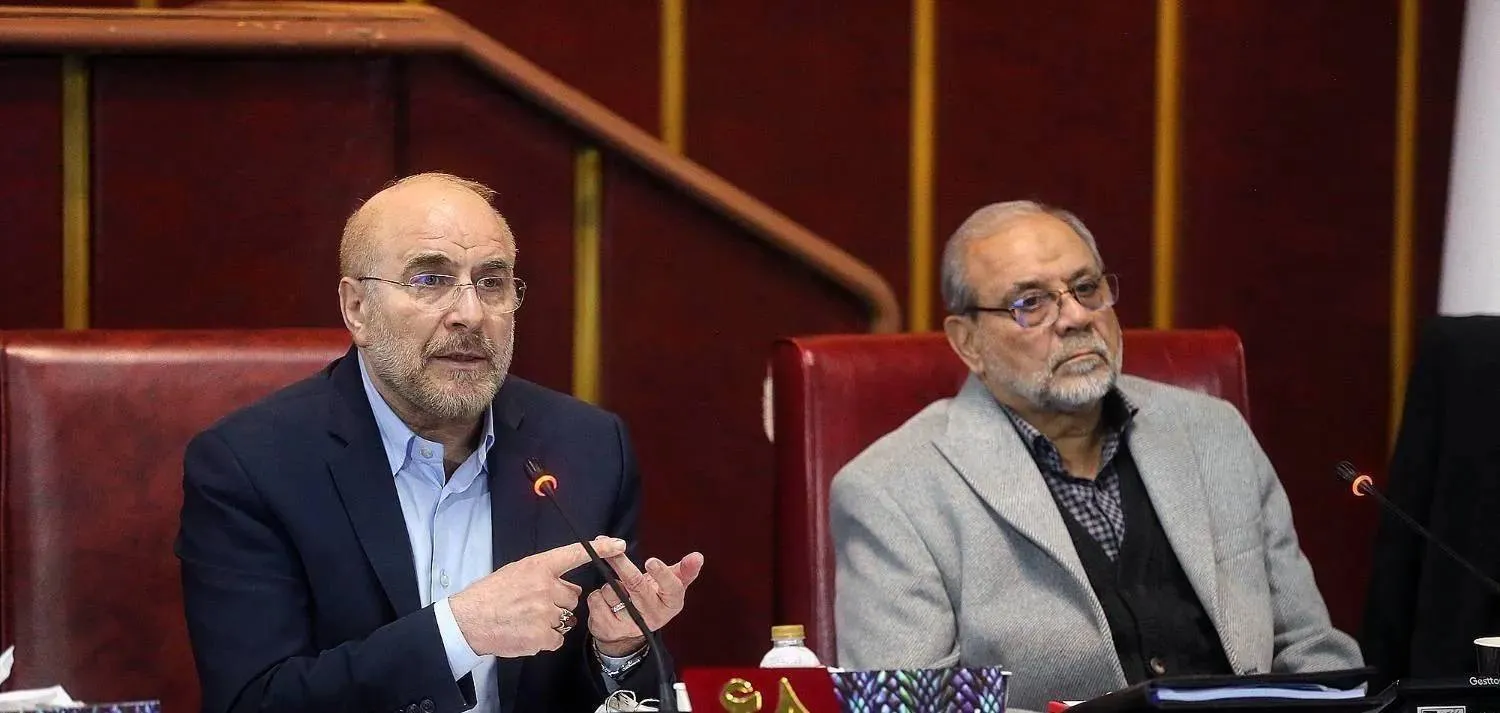
A general view of the G20 South Africa 2025 logo ahead of the G20 leaders summit at the Nasrec Expo Center in Johannesburg on November 18, 2025. (Photo by EMMANUEL CROSET / AFP)
TT

What to Know About this Weekend's G20 Summit in South Africa that Trump is Boycotting

A general view of the G20 South Africa 2025 logo ahead of the G20 leaders summit at the Nasrec Expo Center in Johannesburg on November 18, 2025. (Photo by EMMANUEL CROSET / AFP)

Leaders from the Group of 20 countries will meet for a summit in South Africa this weekend without any US representatives after President Donald Trump announced a boycott over his widely rejected claims that the host country is persecuting its Afrikaner white minority.

Trump's decision to pull the United States — and himself — out of the talks in Johannesburg is likely to undermine the first G20 leaders' meeting in Africa, as well as South Africa's aim to push for progress on issues affecting poor countries, such as the impact of climate change, the cost of green energy transition and spiraling sovereign debt levels, reported The Associated Press.

Chinese leader Xi Jinping also won't attend as he cuts back on international travel, meaning the heads of the world's two biggest economies will skip a meeting meant to bring developed and developing countries together to tackle pressing global issues.

A bridge between rich and developing nations

The G20 is a group of 19 countries that includes the richest but also the top developing economies in the world. The European Union and the African Union, which joined in 2023, are also members, making it now a group of 21.

It was formed in 1999 and unlike the Group of Seven, which only includes the richest democracies, it offers some developing countries a forum to raise their problems.

Its focus is the global economy and international development, though it has no charter or permanent secretariat — unlike organizations such as the United Nations. It also doesn't issue binding decisions and critics say there's no meaningful mechanism for it to put words into action.

The G20 often struggles to reach real consensus because of the different interests of the big powers like the US, China and Russia, as well as those of Western European nations.

The leaders of the United Nations, the World Bank and the International Monetary Fund typically attend G20 summits as guests.

The US boycott

Trump has claimed that white Afrikaner farmers in South Africa are being killed and that their land is being seized, calling it a disgrace that South Africa is hosting the summit and saying it should be thrown out of the G20.

The South African government and others, including some Afrikaners themselves, have rejected Trump's claims of racial persecution as misinformation.

South Africa has been a target for Trump since he returned to office at the start of the year, with his administration casting the country as anti-American because of its diplomatic ties with China, Russia and Iran.

The US will take over the rotating presidency of the G20 from South Africa and while the world's biggest economy will boycott the talks, a representative from the US Embassy in South Africa will attend a formal handover ceremony at the end of the summit, a White House official said.

The main issues

The country holding the G20 presidency gets to set the agenda for the annual summit.

South Africa wants climate change and disaster relief, financing green energy transition, easing debt levels for poor countries and addressing global inequality to be priorities for the two-day meeting.

It says climatic disasters such as drought, floods and cyclones are having a devastating effect on countries that cannot afford to rebuild and is calling for more help from the global community.

South Africa has proposed that G20 leaders set up an independent international panel on global wealth inequality, similar to the UN-appointed Intergovernmental Panel on Climate Change.

That followed a report commissioned by South Africa for the summit and led by Nobel Prize-winning American economist Joseph Stiglitz that concluded the world is facing an "inequality emergency."

G20 summits have traditionally attracted protests, and a counter summit was organized this week in another part of Johannesburg by groups critical of the G20 and what they called “a global economic system rigged in favor of elites and billionaires.”

The summit also is an opportunity for closed-door bilateral meetings. New trade deals are likely to figure in the discussions in the wake of the Trump administration's tariffs that have impacted the global economy.

Absent leaders Trump and Xi are the highest profile absentees, although China has sent a government delegation led by Premier Li Qiang.

Russian President Vladimir Putin also is not attending but Russia will be represented by a low-level delegation led by Maxim Oreshkin, deputy chief of staff of the Russian presidential executive office. Putin faces an arrest warrant by the International Criminal Court over Russia’s war in Ukraine that obliges South Africa, a signatory to the Rome Statute that established the court, to arrest him if he sets foot on its territory.

Argentina's President Javier Milei is also to skip the summit in solidarity with his ally Trump.

“If you boycott an event or a process, you are the greatest loser because the show will go on,” Ramaphosa said of Trump's decision not to attend.

French President Emmanuel Macron, German Chancellor Friedrich Merz and British Prime Minister Keir Starmer say they will attend the summit.

Deal or Strike: Is Military Action Against Iran Drawing Closer?

Military equipment, including helicopters, on board the aircraft carrier Abraham Lincoln (AP)
TT

Deal or Strike: Is Military Action Against Iran Drawing Closer?

Military equipment, including helicopters, on board the aircraft carrier Abraham Lincoln (AP)

Despite reports of mediation and back-channel exchanges between Washington and Tehran, what is being described as “negotiations” so far looks more like a bid to keep tensions from boiling over than a diplomatic process.

Signals emerging from Western officials and media indicate the two sides have yet to engage in direct, substantive talks, with the dispute over the very terms of entry itself carrying a political message.

US President Donald Trump’s administration is pressing for an agreement that encompasses Iran’s nuclear program, ballistic missiles, and regional influence. At the same time, Tehran insists that any dialogue be confined strictly to the nuclear file.

That gap has reinforced suspicions in Tehran that Trump’s offer of a deal is little more than a tactical feint, masking serious preparations for military action. This scenario would echo the US strikes on Iranian nuclear facilities in June 2025.

As Trump sharpens his rhetoric, the stalemate revives a central question: Is diplomacy becoming a pretext for war, or a narrowing window to avert it?

A different escalation

The key difference this time lies in the scale and nature of the military posture.

It is not a mere show of force, but a combined offensive-defensive package signaling readiness for multiple scenarios, following the arrival of the aircraft carrier Abraham Lincoln and its strike group in the US Central Command area of operations, enabling support for strikes or protection of allies against retaliatory attacks.

This has been accompanied by strengthened air defenses, including Patriot and THAAD systems, as well as air drills focused on deployment, operations, and sortie generation under challenging conditions, according to US Central Command.

Such a pattern is typically associated with raising readiness for potential reciprocal responses.

At the same time, Washington is aware that any operation against Iran would not be a “precision operation” like what occurred in Venezuela, where the US previously amassed large forces in the Caribbean in a campaign that ended with the arrest of President Nicolas Maduro in early January 2026.

Iran’s geography is more complex, and its missile capabilities and layered defenses make a “decisive strike” more complicated, even if the US enjoys overwhelming superiority.

Trump’s options

Earlier leaks pointed to the end of this month as a possible date for a US strike, though this remains unconfirmed publicly.

The danger in circulating such reports lies in the political-military dynamic they create. When a force of this size is mobilized, internal and external pressure on the White House grows to justify the cost by achieving some result, even if limited.

At the same time, the leaks may be part of psychological warfare aimed at forcing Tehran to make concessions before the window for de-escalation “closes.”

Accordingly, the practical rule is that absent a clear political decision, the scenario remains open to three graduated possibilities: a limited strike to impose new rules of engagement; a broader campaign targeting nuclear and missile infrastructure and security nodes; or continued military pressure as a negotiating lever without opening fire.

According to the Financial Times, Trump’s options, should he decide to carry out military action, range from a limited punitive strike targeting missile sites, drones, or facilities linked to the Revolutionary Guard, aimed at raising the cost of Iranian refusal without seeking regime change.

Another option would expand the target bank to include nuclear facilities that are being hardened and rebuilt, particularly after Western talk of Iranian attempts to resume work at deeper underground sites.

There is also a set of non-traditional pressure options, such as tightening a maritime blockade or striking state infrastructure as a political message.

These options carry higher risks, as they raise the likelihood of retaliation outside established rules of engagement.

The decisive issue, however, is the “endgame.”

The US administration itself implicitly acknowledges that removing the regime's head does not guarantee its collapse, and that the question of “who comes next” has no ready answer.

This explains repeated warnings in assessments leaked to the media and in statements by US officials that the regime is weaker than ever, but that a decisive blow is not guaranteed.

How might Iran respond?

Tehran has warned in advance that any attack would mark the start of a war, and that retaliation could extend to Israel, particularly Tel Aviv, as well as anyone who supports the aggressor.

Operationally, Iran has a ladder of response, starting with strikes on US bases in the region using missiles or drones, moving through the activation of regional proxies, and culminating in threats to shipping in the Strait of Hormuz, the scenario with the most severe global impact.

The latter possibility may be among the main reasons regional states have sought to avoid war and continue diplomatic efforts while stressing neutrality.

This stance could increase US logistical demands in any large-scale operation and heighten reliance on distant naval platforms.

Markets, however, have already issued an early warning. Oil prices have risen for three consecutive sessions amid fears of supply disruptions, with Brent crude nearing the $ 70-a-barrel threshold and a rise in the geopolitical risk premium, while gold has climbed as a safe-haven asset.

If a strike does occur, the potential fallout would be threefold. Economically, a spike in oil prices, pressure on shipping and insurance, and volatility in Gulf markets. Security-wise, an expansion of theaters of engagement to include Iraq, Syria, the Gulf, and Israel, with heightened risks of miscalculation.

Politically, a narrowing of prospects for any near-term negotiations, or conversely, a limited strike used to force talks under harsher terms.


Unmentioned but Present, Trump is a Common Denominator in Efforts to Strengthen Asia-Europe Ties

US President Donald Trump waves as he walks upon arrival on the South Lawn of the White House in Washington, US, January 27, 2026. REUTERS/Annabelle Gordon
TT

Unmentioned but Present, Trump is a Common Denominator in Efforts to Strengthen Asia-Europe Ties

US President Donald Trump waves as he walks upon arrival on the South Lawn of the White House in Washington, US, January 27, 2026. REUTERS/Annabelle Gordon

Stability. Consistency. Ever-changing complexity.

With language like that, deployed in separate meetings in three Asian capitals this week, government leaders forged closer ties driven in part by a figure halfway around the world: the president of the United States. And much of the time, they didn't even mention Donald Trump's name.

IN BEIJING: The UK and Chinese leaders called Thursday for a “long-term, stable, and comprehensive strategic partnership” between their two countries. The important words are long-term and stable. The two countries committed a decade ago to building a comprehensive strategic partnership but progress has been halting at best.

IN HANOI: About 1,100 kilometers (700 miles) to the south, Vietnam and the European Union used the same phrasing on the same day. They upgraded ties to a comprehensive strategic partnership. The agreement places Vietnam on the same diplomatic footing with the EU as the United States, China and Russia.

IN NEW DELHI: Two days earlier, the EU and India reached a major free trade accord that had been mired in negotiations for years. It covers everything from textiles to medicines and will bring down India's high tariffs on European wine and cars.

Trump was not the only factor behind the agreements, but his shaking up of the global order is worrying friends and foes and driving them closer. From a purely economic perspective, his import tariffs have sent countries seeking new markets to reduce their dependency on the American consumer.

More broadly, all the agreements have been accompanied by words from the leaders referring to the uncertainty that Trump has introduced to global affairs, though mostly without mentioning his name. The systems they have relied on to manage the world since the end of the Cold War and, in some cases since World War II, appear at risk.

British Prime Minister Keir Starmer called for working with China on global stability “during challenging times for the world." Chinese leader Xi Jinping described the international situation as “complex and ever-changing.” In New Delhi, Prime Minister Narendra Modi said the partnership with the EU “will strengthen stability in the international system” at a time of ”turmoil in the global order.”

European Council President António Costa summed up the sentiment Thursday in the Vietnamese capital: “At a moment when the international rules-based order is under threat from multiple sides, we need to stand side by side as reliable and predictable partners.”


‘Too Dangerous to Go to Hospital’: A Glimpse into Iran’s Protest Crackdown

Iranians walk along a street in Tehran, Iran, 27 January 2026. (EPA)
TT

‘Too Dangerous to Go to Hospital’: A Glimpse into Iran’s Protest Crackdown

Iranians walk along a street in Tehran, Iran, 27 January 2026. (EPA)

Young protesters shot in the back, shotgun pellets fired in a doctor's face, wounded people afraid to go to hospital: "Every family has been affected" by the deadly crackdown on Iran's recent wave of demonstrations, said one protester.

Speaking to AFP in Istanbul, this 45-year-old engineer who asked to be identified as Farhad -- not his real name -- was caught up in the mass protests that swept his home city of one million people just outside Tehran.

With Iran still largely under an internet blackout after weeks of unrest, eyewitness testimony is key for understanding how the events unfolded.

Angry demonstrations over economic hardship began late last year and exploded into the biggest anti-government protests since the 1979 revolution.

"On the first day, there were so many people in the streets that the security forces just kept their distance," he told AFP.

"But on the second day, they understood that without shooting, the people were not going to disperse."

As the protests grew, the security forces began a major crackdown under the cover of a communications blackout that began on January 8.

In an interview on the European side of Istanbul, this quietly-spoken oil industry worker said he was in his car with his sister on the night when the shooting began.

"We saw about 20 military people jumping from cars and start shooting at young people about 100 meters away. I saw people running but they were shooting at their backs" with rifles and shotguns, he told AFP.

"In front of my eyes, I saw a friend of ours, a doctor, being hit in the face by shotgun pellets," Farhad said. He does not know what happened to him.

Both Amnesty International and Human Rights Watch have accused the security forces of firing rifles and shotguns loaded with metal pellets directly at protesters' heads and torsos.

"I saw two people being carried, they were very badly injured, maybe dead," Farhad said.

A lot of people also died "in their cars because the bullets were coming out of nowhere".

- 'Afraid to go to hospital' -

The scale of the crackdown is only slowly emerging.

Despite great difficulty accessing information, the Norway-based NGO Iran Human Rights says it has verified the deaths of 3,428 protesters killed by the security forces, but warned the final toll risks reaching 25,000.

Those who were injured were often too afraid to go to hospital, Farhad said.

"People can't go to the hospital because the authorities and the police are there. Anyone with injuries from bullets or shotgun (pellets) they detain and interrogate," he said.

"Doctors have been going to people's houses to give them medical assistance."

He himself was beaten with a baton by two people on a motorbike and thought his arm was broken, but did not go to hospital because it was "too dangerous".

Many "opened their homes to let the demonstrators inside and give them first aid", including his sister and her friend who took in "around 50 boys, and gave them tea and cake".

There were a lot of very young people on the streets and "a lot of girls and women", he told AFP, saying he had seen children of "six or seven" shouting slogans against Iran's supreme leader Ali Khamenei.

The security forces were also staging spot checks for anyone with protest-related injuries or footage on their phones, he said.

"It's so dangerous because they randomly check phones. If they see anything related to this revolution, you are finished. They are also making people lift their shirts to look for signs of bullet or shotgun injuries.

"If they see that, they are taken for interrogation."

Speaking just before he flew back to Iran -- "because I have a job to go to" -- he insisted he was "absolutely not afraid".

Despite everything, people were still ready to protest "because they are so angry", he explained.

He is convinced US President Donald Trump will soon make good on his pledge to intervene, pointing to recent reports of US warships arriving in the region.

"The system cannot survive -- in Iran everybody is just overwhelmed with this dictatorship. We have had enough of them."