
A series of Israeli military statements reporting the killing or capture of members of Hamas’s Izz al Din al Qassam Brigades inside Rafah’s tunnel network has sharpened scrutiny of who these fighters were and how long they had remained hidden underground.
The operations targeted men who had spent months beneath a city Israel moved to occupy in May 2024 and later brought under full control.
For more than a month, indirect contacts had sought to arrange the fighters’ safe withdrawal from the tunnels unarmed, an effort that helped expedite the handover of the body of Israeli officer Hadar Goldin on November 9.
But Israel later backed away from informal understandings with the United States, which had been engaging on the issue with Türkiye, over allowing the fighters to exit safely.
As weeks passed, Israel began hunting them down, killing and capturing them in groups through airstrikes or direct pursuit once they emerged from tunnels or ambush positions.
The pressure mounted as the fighters became confined to the last pockets of tunnels in Rafah’s eastern al-Jneina neighborhood.
Eight months in tunnels and ambush positions
Field sources from Hamas told Asharq Al-Awsat that the fighters had spent most of the two year war inside the city’s tunnels despite the presence of Israeli forces above ground and despite Israel’s entry into many of the passageways.
The sources said the tunnels had been built in ways that made them difficult for Israel to uncover fully even now.
They said that during the first truce which lasted seven days in November 2023, the fighters surfaced, then returned underground when the fighting resumed.
They alternated between staying in the tunnels and emerging into ambush positions above ground. Communication with their commanders continued until a second truce was reached in January of this year which lasted until March 18.
One source said that before the fighting resumed, and despite Israel’s deployment in Rafah, the fighters managed to emerge above ground, reach Khan Yunis, meet their commanders and take part in the handover of Israeli captives.
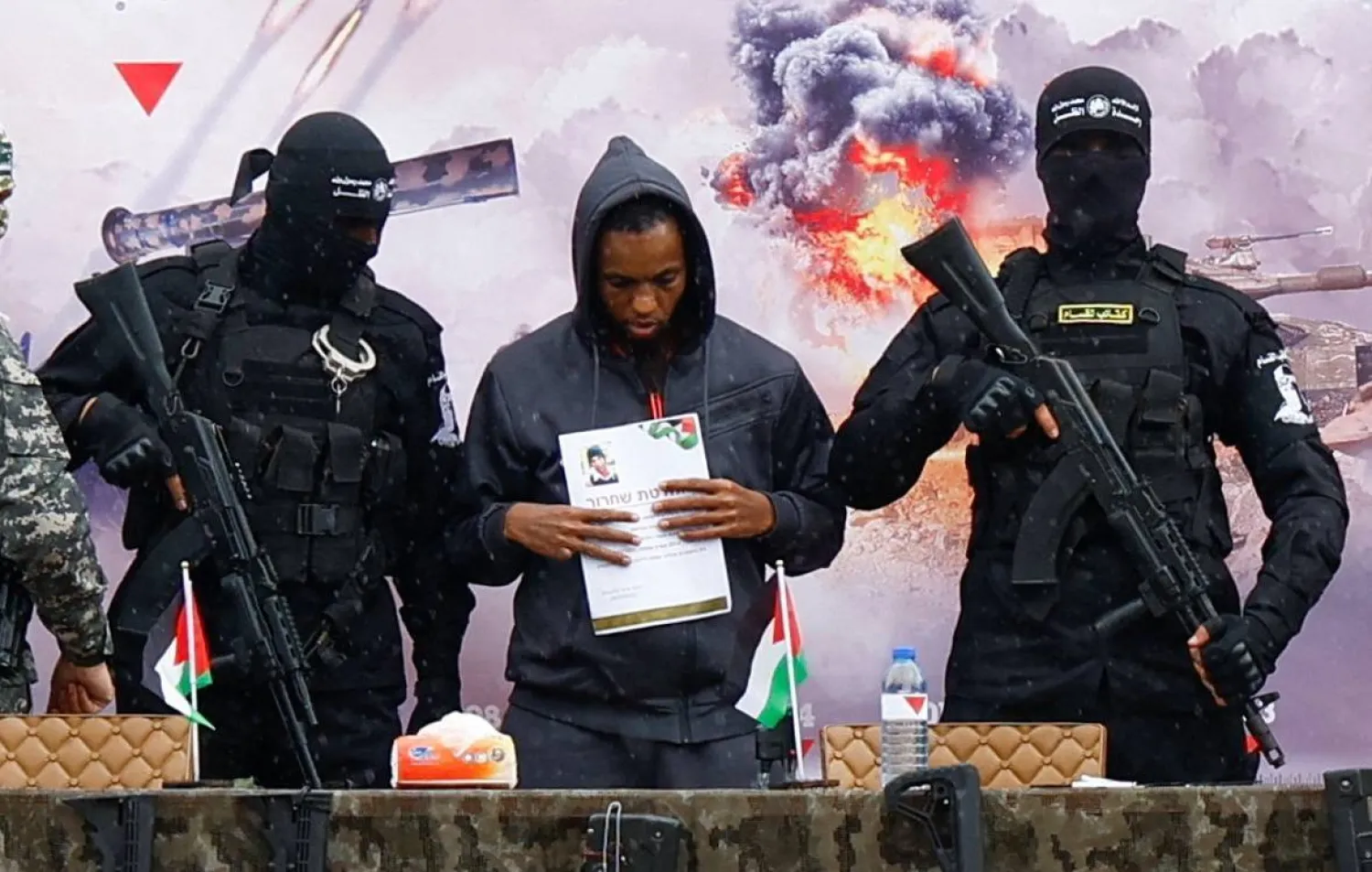
Some participated in the February release of Avera Mengistu, who had been held in Gaza since the 2014 war.
After the war resumed and diplomatic efforts to halt it failed, Qassam fighters returned to Rafah through the tunnels and resumed their ambush positions above ground.
From late March until August, the fighters remained in touch with their command and carried out a string of attacks that inflicted casualties on Israeli forces even after Israel declared it had brought Rafah under full control.
The Qassam Brigades at the time launched a series of attacks named Gates of Hell that killed about six Israeli soldiers.
The attacks involved detonating military vehicles, booby trapped houses and tunnel openings. In one incident in May, Qassam fighters attempted to seize an Israeli soldier.
Hamas, which was then engaged in negotiations to halt the war, sought through these operations to show that the Rafah Brigade remained active at a time when Israeli military sources were claiming the brigade had been dismantled after its battalions were destroyed.
According to information obtained by Asharq Al-Awsat, Rafah fighters and their immediate commanders spent more than eight months inside tunnels and in above ground ambush positions.
How did they obtain food and water
Field sources in the factions told Asharq Al-Awsat that the tunnels had been stocked with limited supplies of food and water.
One source who had experienced a similar shortage in a previous Gaza war said the fighters had likely relied on whatever food they could find.
This included leftover supplies from Israeli soldiers in some of the houses they had occupied or food in homes of residents that had not been destroyed.
The source cited social media posts from months earlier showing handwritten notes left by Hamas and Islamic Jihad fighters apologizing to homeowners for taking food.
The sources said duties differed inside the Qassam Brigades. Some fighters handled logistics, others manned ambush positions and others moved between units while maintaining direct coordination with field commanders.
Senior commanders
Among those whose photos Israeli media circulated after they were killed were the commander of Rafah’s eastern battalion, Mohammad al-Bawab, and his deputy, Ismail Abu Labda. Al-Bawab was married to Abu Labda’s sister.
Another senior figure killed was Tawfiq Salem, commander of the battalion’s elite company, according to the sources.
Abu Labda appeared in the February handover of Mengistu and was in direct contact with the International Committee of the Red Cross during the transfer. The sources said al-Bawab monitored the process from a distance but did not take part directly.
The sources added that al-Bawab and Abu Labda were among those who oversaw the capture of Israeli officer Hadar Goldin during the 2014 war.
Israel also killed Abdullah Hamad, the son of senior Hamas political bureau member Ghazi Hamad and a member of the movement’s negotiating delegation.
Field sources said the younger Hamad had been active in the Qassam Brigades and had graduated from the Rabat Military College run by the Hamas government before the war, later becoming an instructor.
He was killed alongside his cousin Ahmed Saeed Hamad, the son of Ghazi Hamad’s brother, while they were in a tunnel with Qassam commanders and other fighters.
The sources said Saeed Hamad had lost three daughters in Israeli strikes on their homes. The daughters were killed after their husbands took part in the October 7, 2023 attack and in other operations during the war.