General Assembly Adopts Resolution Asking Israel to Withdraw from Golanhttps://english.aawsat.com/arab-world/5215502-general-assembly-adopts-resolution-asking-israel-withdraw-golan
General Assembly Adopts Resolution Asking Israel to Withdraw from Golan
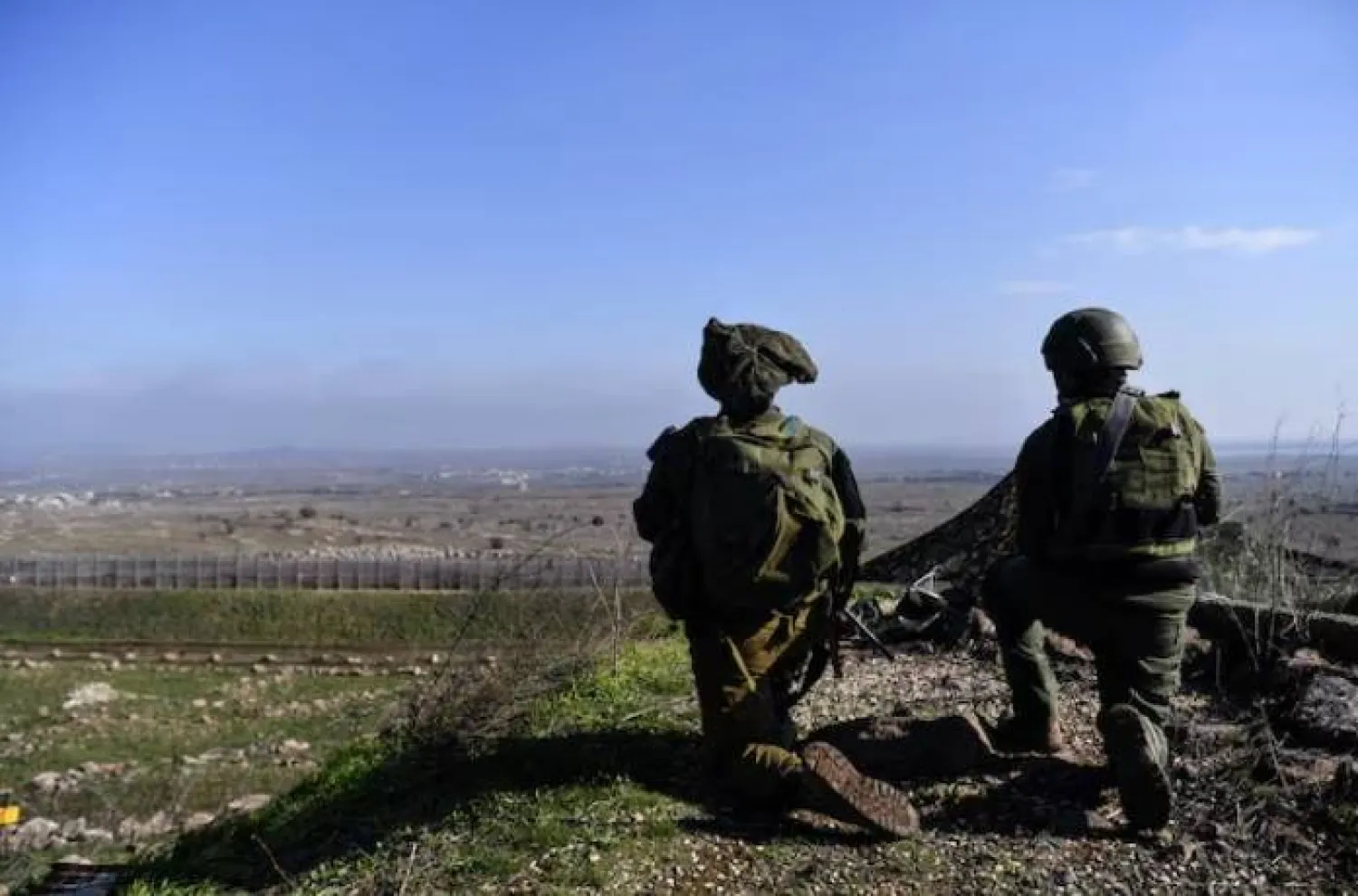
Israeli soldiers operate in the Israeli-occupied Golan Heights near the border with Syria, December 28, 2023. REUTERS/Gil Eliyahu/ File Photo
The UN General Assembly has adopted a resolution calling on Israel to withdraw from the Golan Heights.
The resolution, titled “The Syrian Golan,” was adopted on Tuesday by a recorded vote of 123 in favor to seven against (Federated States of Micronesia, Israel, Palau, Papua New Guinea, Paraguay, Tonga, United States), with 41 abstentions.
By its terms, the Assembly declared that Israel’s December 14, 1981 decision to impose its laws, jurisdiction and administration on the occupied Syrian Golan “is null and void and called for its rescission.”
The Assembly also called on Israel to resume talks on the Syrian and Lebanese tracks and to respect the commitments and undertakings reached previously.
It also demanded that Israel withdraw from the occupied Syrian Golan to the line of June 4, 1967.
General Assembly resolutions are not binding but carry political weight.
Israel's Ambassador to the UN Danny Danon said the “General Assembly once again proves how disconnected it is from reality.”
“Instead of addressing the crimes of the Iranian axis and the dangerous activities of militias in Syria, it demands that Israel withdraw from the Golan Heights - a vital defense line that protects our citizens. Israel will not return to the 1967 lines and will not abandon the Golan. Not now, not ever,” he added on X.
17,000 Strikes on Houthis Since Launch of Operation Dawn of Yemenhttps://english.aawsat.com/arab-world/5330369-17000-strikes-houthis-launch-operation-dawn-yemen
17,000 Strikes on Houthis Since Launch of Operation Dawn of Yemen
Fighters loyal to Yemen’s government on one of the front lines against the Houthis (AP)
Yemen’s armed forces said air and ground strikes carried out with support from the Coalition to Support Legitimacy had topped 17,000 since the launch of Operation Dawn of Yemen, as government forces repelled fierce Houthi attacks in Taiz and Lahj.
More than 1,250 strikes were carried out in the past 24 hours, neutralizing about 700 Houthi fighters and destroying or disabling more than 150 vehicles and pieces of military equipment, the armed forces said.
The heaviest fighting centered on western Taiz, where government forces said they repelled a Houthi assault that lasted about 12 hours, along with attacks in Al-Dhabab, Al-Aqrud and Al-Shaqab. Clashes also erupted on the Al-Mudaraba and Al-Wazi’iya fronts in Lahj province.
Colonel Majid al-Nuzaili, spokesman for Yemen’s armed forces, said operations over the past day targeted positions, fortifications, trenches, firing points, observation and reconnaissance posts, forward command-and-control centers, and Houthi assembly and supply areas.
He said the strikes were aimed at weakening the group’s defensive lines and limiting its ability to launch attacks, with a particular focus on the Taiz fronts.
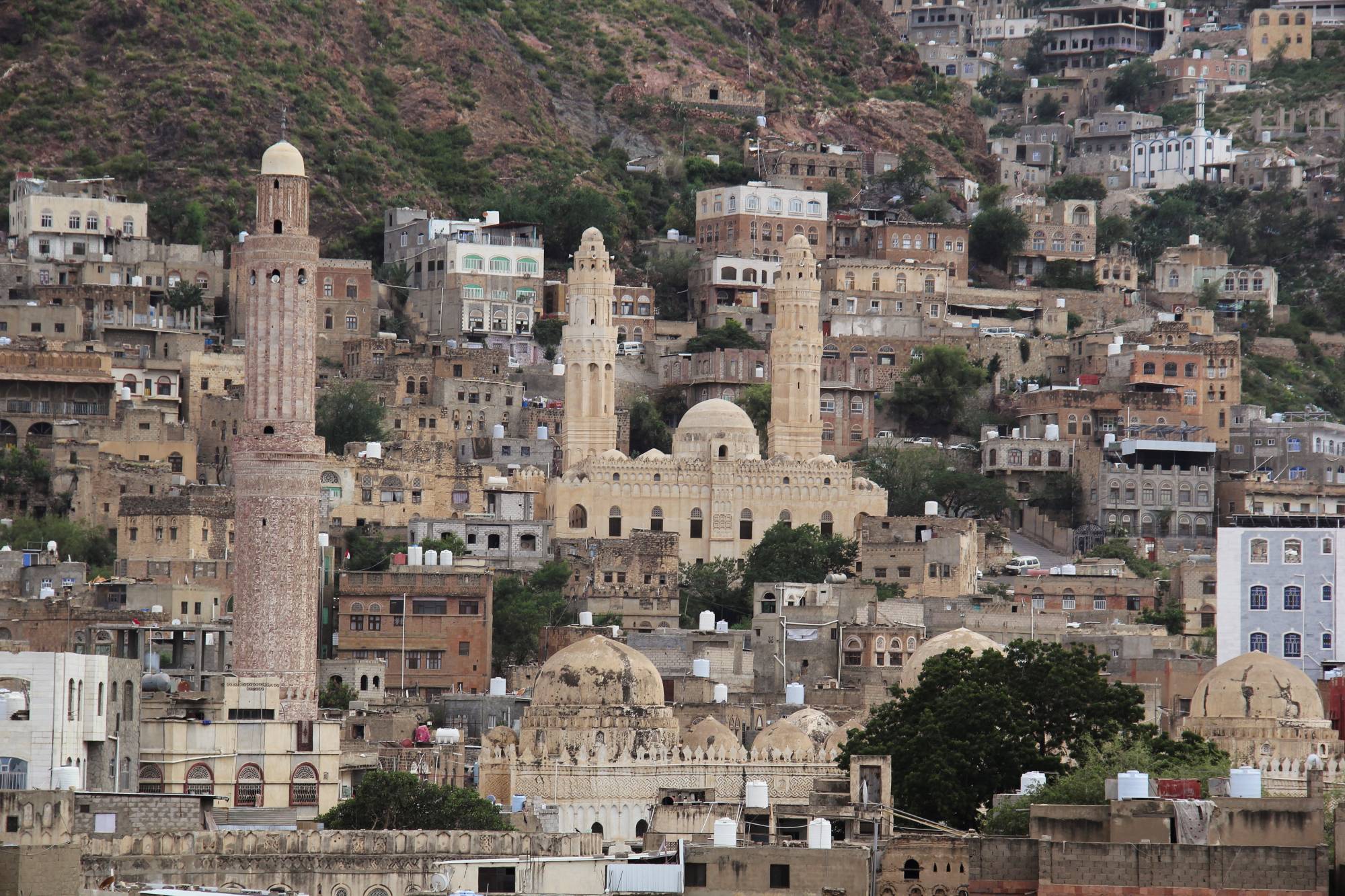
Buildings stand in the southwestern city of Taiz, Yemen, October 15, 2026. REUTERS/Anees Mahyoub
Heavy fighting broke out west of Taiz city after a large-scale Houthi attack around Jabal Han that lasted about 12 hours, according to field accounts from government forces.
The forces said they repelled the assault and forced the attackers to withdraw from positions they had tried to seize.
Clashes spread to the old airport area, Ghurab and Bir Basha, with heavy and medium weapons, artillery and rockets used in the fighting. Confrontations also continued around the Republican Palace east of the city, amid reports of Houthi shelling of residential neighborhoods in the old airport area.
Government forces said they held their positions at Jabal Han and recaptured sites infiltrated by the attackers.
In southern Taiz province, government forces repelled Houthi attacks on the Al-Aqrud and Al-Shaqab fronts, while airstrikes hit a convoy of tanks and military vehicles in the Ras al-Najd area of Al-Misrakh district.
Other strikes targeted Houthi positions on Sofitel Hill east of Taiz city, as well as a tank and a military vehicle on the Al-Dhabab front to the west.
Government forces said the clashes and airstrikes killed or wounded dozens of Houthis. No independent casualty figures were available.
Reinforcements and attrition in Lahj
In western Lahj province, along the border with Taiz, the Southern Giants Brigades, led by Presidential Leadership Council member Abdulrahman al-Muharrami, sent reinforcements from the 6th Infantry Division and support units to the Al-Mudaraba front.
The deployment was aimed at reinforcing forces in the area and countering Houthi infiltration attempts.
The Giants Brigades said they destroyed Houthi military vehicles and equipment while repelling infiltration attempts.
Their media outlets also said the last company of the group’s 11th Reserve Brigade had been eliminated, describing it as part of the losses suffered by Houthi formations during the fighting.
The moves came as fighting continued on the Al-Wazi’iya front west of Taiz, where government forces are seeking to thwart attacks and prevent the Houthis from making gains toward areas bordering Lahj province.
The forces are also seeking to prevent the Houthis from outflanking government troops at Bab al-Mandab in an effort to break the siege of Houthi pockets.
Alongside the ground fighting, local authorities in Marib said the Houthis fired nine ballistic missiles and seven other projectiles at residential neighborhoods in the city on Thursday evening.
The authorities warned against continued attacks on populated areas and called on the international community and the United Nations to act to halt them.
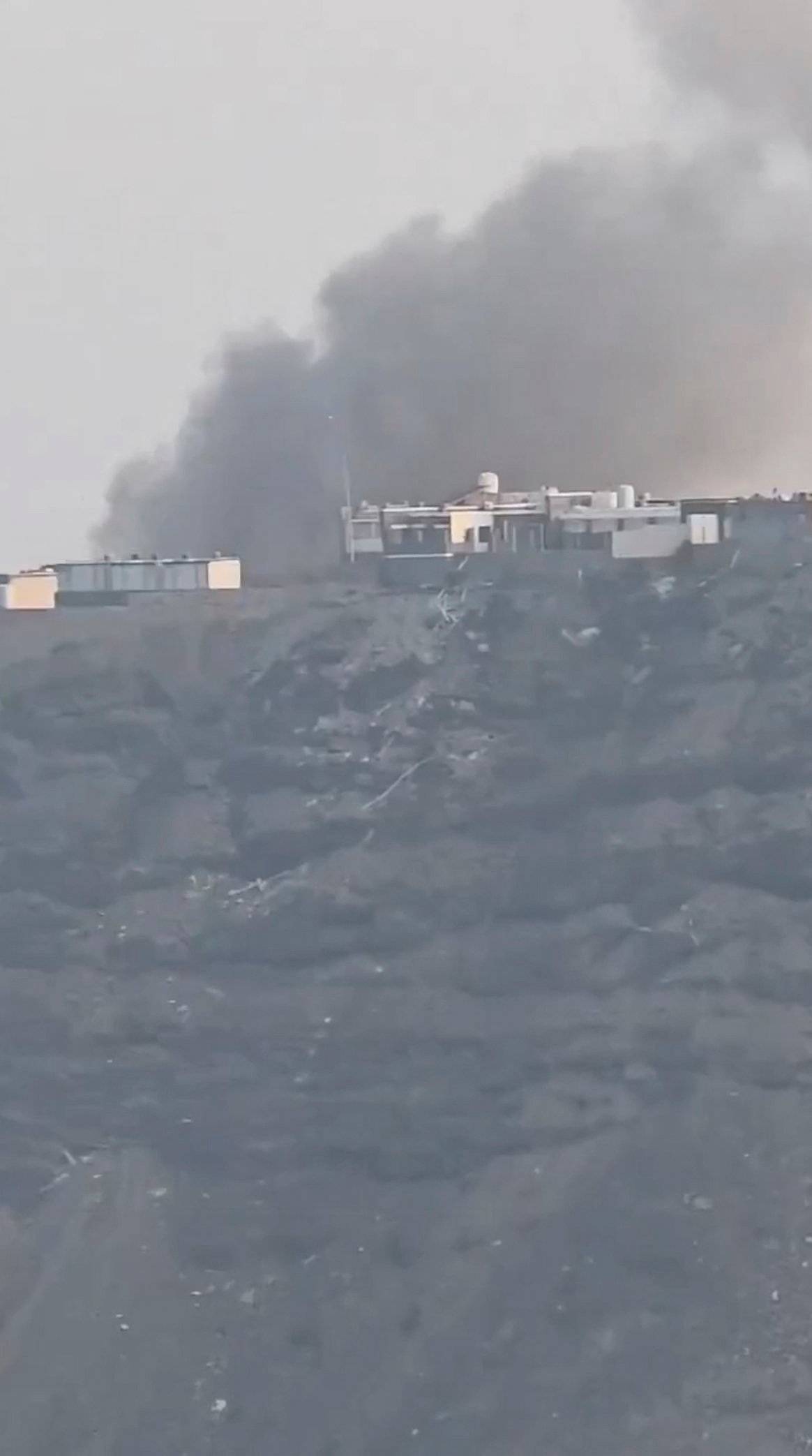
In Aden, the death toll from a missile attack targeting the presidential Maashiq Palace and the Al-Buraiqa area west of the city rose to five, with 16 wounded, according to Public Health and Population Minister Qasem Buhaibeh.
He said the casualties included security personnel and civilian employees.
Smoke billows from the presidential palace complex following an attack by Yemen's Houthis, according to government officials, in Aden, Yemen, October 15, 2026, in this screen grab obtained from a social media video. Social Media/via REUTERS
Operation continues
Chairman of Yemen’s Presidential Leadership Council Rashad al-Alimi reviewed developments in Operation Dawn of Yemen and fighting across the various fronts during briefings from senior military and local officials.
The briefings were delivered by Defense Minister Lieutenant General Taher al-Aqili, Chief of the General Staff and Commander of Joint Operations Lieutenant General Sagheer bin Aziz, Commander of the Fourth Military Region Major General Hamdi Shukri, and the governors of Taiz and Lahj.
According to the briefings, the armed forces, with support from the Coalition to Support Legitimacy, had carried out more than 17,000 air and ground strikes since the operation began, targeting Houthi positions, concentrations and military capabilities across multiple fronts.
Al-Alimi praised the performance of the armed forces, military formations and popular resistance forces, and commended Saudi Arabia’s support and the role of the Coalition to Support Legitimacy in backing the Yemeni state and its armed forces.
He said the operation would continue in line with its stated objectives of restoring state institutions and extending state authority across all Yemeni territory, ultimately reaching the capital, Sanaa.
The briefings also covered humanitarian and public service conditions in Taiz and Lahj, including measures to respond to waves of displacement and secure basic services and supply routes amid the military escalation.
Al-Alimi accused the Houthis of imposing coercive measures in areas they had infiltrated in Taiz province, including forced recruitment, ideological mobilization and attempts to alter the identity of educational and community institutions.
He warned of the consequences of such practices and said the state was responsible for protecting citizens and holding those involved in violations accountable.
Iraq Says it Lost $60Bn Due to Mideast Warhttps://english.aawsat.com/arab-world/5330272-iraq-says-it-lost-60bn-due-mideast-war
Commuters drive past Baghdad's Shorja market on October 13, 2026. (Photo by AHMAD AL-RUBAYE / AFP)
Iraq has lost around $60 billion during the Middle East war, Foreign Minister Fuad Hussein said on Thursday, with Iran blockading the Strait of Hormuz that is crucial to global energy flows, AFP reported.
Iraq was producing about four million barrels of oil per day before the conflict, exporting about 3.5 million bpd -- mostly shipped from the country's south via the strait.
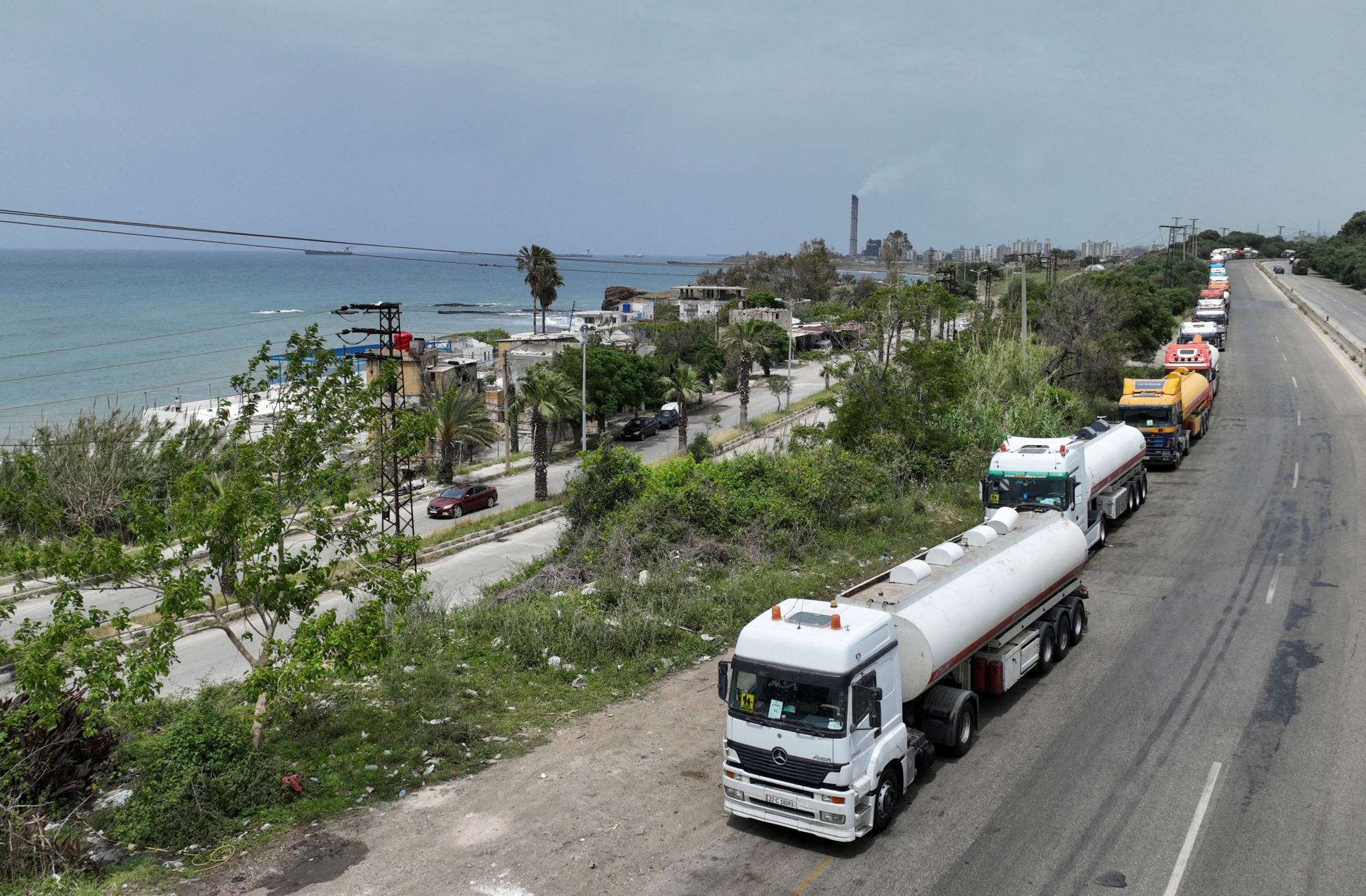
But Iran's stranglehold on the waterway forced Iraq, lacking storage capacity, to halt most production and fall back on limited exports via Syria and Türkiye, by truck and pipeline respectively.
FILE PHOTO: Oil trucks from Iraq on their way to the Baniyas oil terminal, Syria, May 14, 2026. REUTERS/Mahmoud Hassano/File Photo
"Iraq has suffered losses estimated at around 60 billion dollars during the recent war between the United States and the Islamic Republic of Iran," Hussein told his Italian counterpart in Rome, according to a statement from the Iraqi foreign ministry.
After a heavy drop in production, Iraqi oil exports, which provide about 90 percent of the country's revenues, recovered modestly last month, reaching 2.6 million barrels per day between September 1 and 21, according to the oil ministry.
But at the same time, Iraq's foreign currency reserves have shrunk by 20 billion dollars and consumer prices have risen sharply, plunging it into economic crisis.
To try to contain the fallout, the Central Bank of Iraq last week devalued the dinar against the dollar for the first time in more than three years.
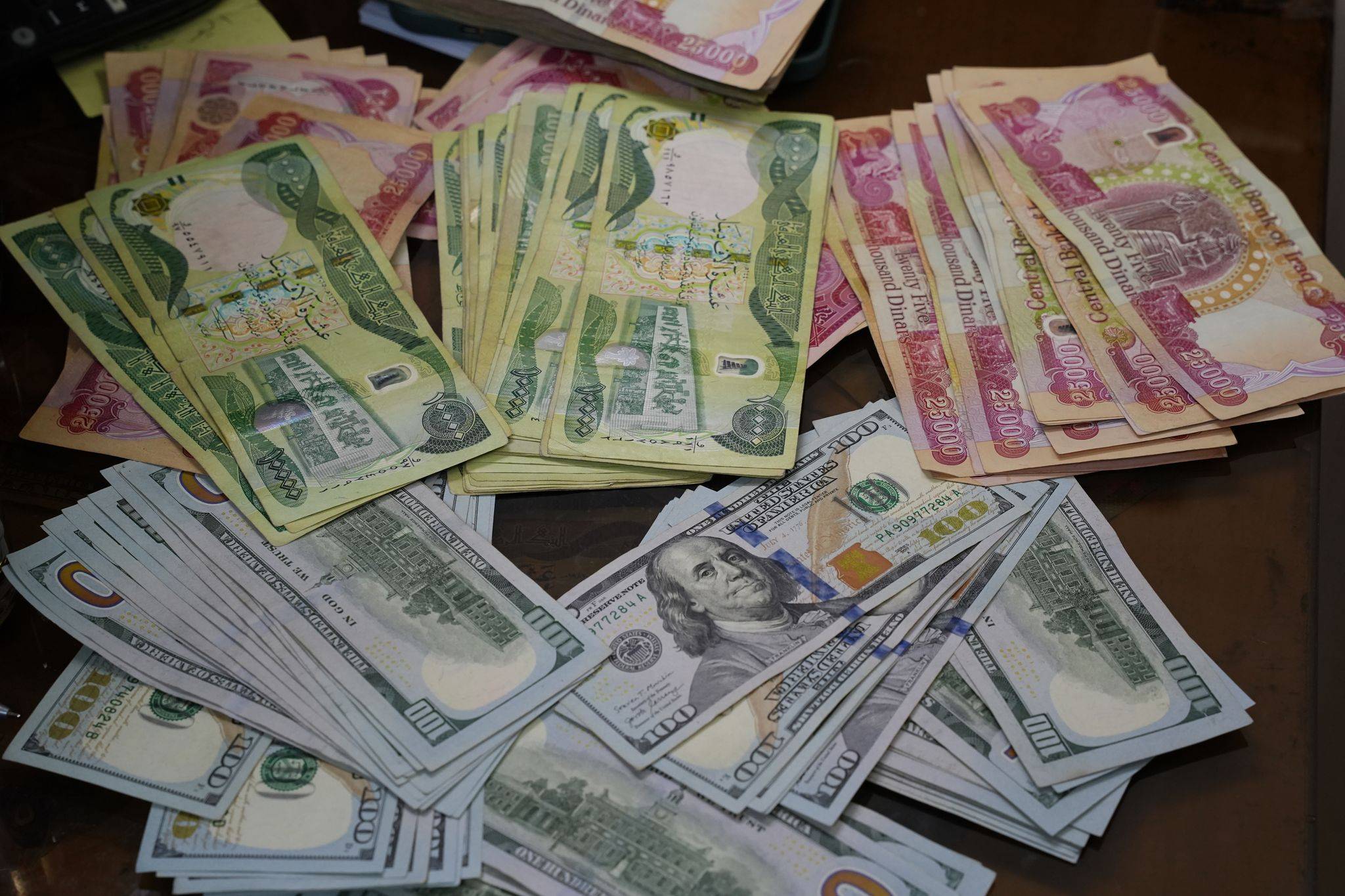
07 October 2026, Iraq, Duhok: Iraqi dinar and US dollar banknotes are displayed at a currency exchange shop in Duhok in Iraq's Kurdistan region. Photo: Ismael Adnan/dpa
Iraq relies heavily on foreign currency generated by oil sales to finance imports, stabilize the dinar, and pay the salaries of public sector employees and retirees.
According to the authorities, Iraq is seeking to diversify its economic resources and raise non-oil revenues from 10 percent to 45 percent by 2037.
Hezbollah’s Support Base Dismayed Over Limited Compensationhttps://english.aawsat.com/arab-world/5330248-hezbollah%E2%80%99s-support-base-dismayed-over-limited-compensation
Hezbollah’s Support Base Dismayed Over Limited Compensation
A Lebanese soldier inspects destruction in the city of Nabatieh caused by Israeli airstrikes in southern Lebanon on June 21, 2026 (Reuters)
The financial assistance Hezbollah said it would provide to people displaced from southern Lebanon and Beirut’s southern suburbs because of the war with Israel has sparked dismay within its southern support base, with some describing the sums as “meager” and saying they “do not even cover six months’ rent.”
Others have criticized the payments as “unfair” and said they reinforce disparities between residents of the southern suburbs and those of southern Lebanon.
Ali Damoush, head of Hezbollah’s Executive Council, announced on Tuesday a housing assistance program for displaced people and for those whose homes have been destroyed or severely damaged by Israel and are no longer habitable. He set the maximum assistance at $14,000 for housing units in Beirut and its southern suburbs, and $12,000 for homes outside those areas.
Damoush said the money would be paid in four installments, with each payment amounting to $3,500 for displaced residents in Beirut and the southern suburbs and $3,000 for those in other areas.
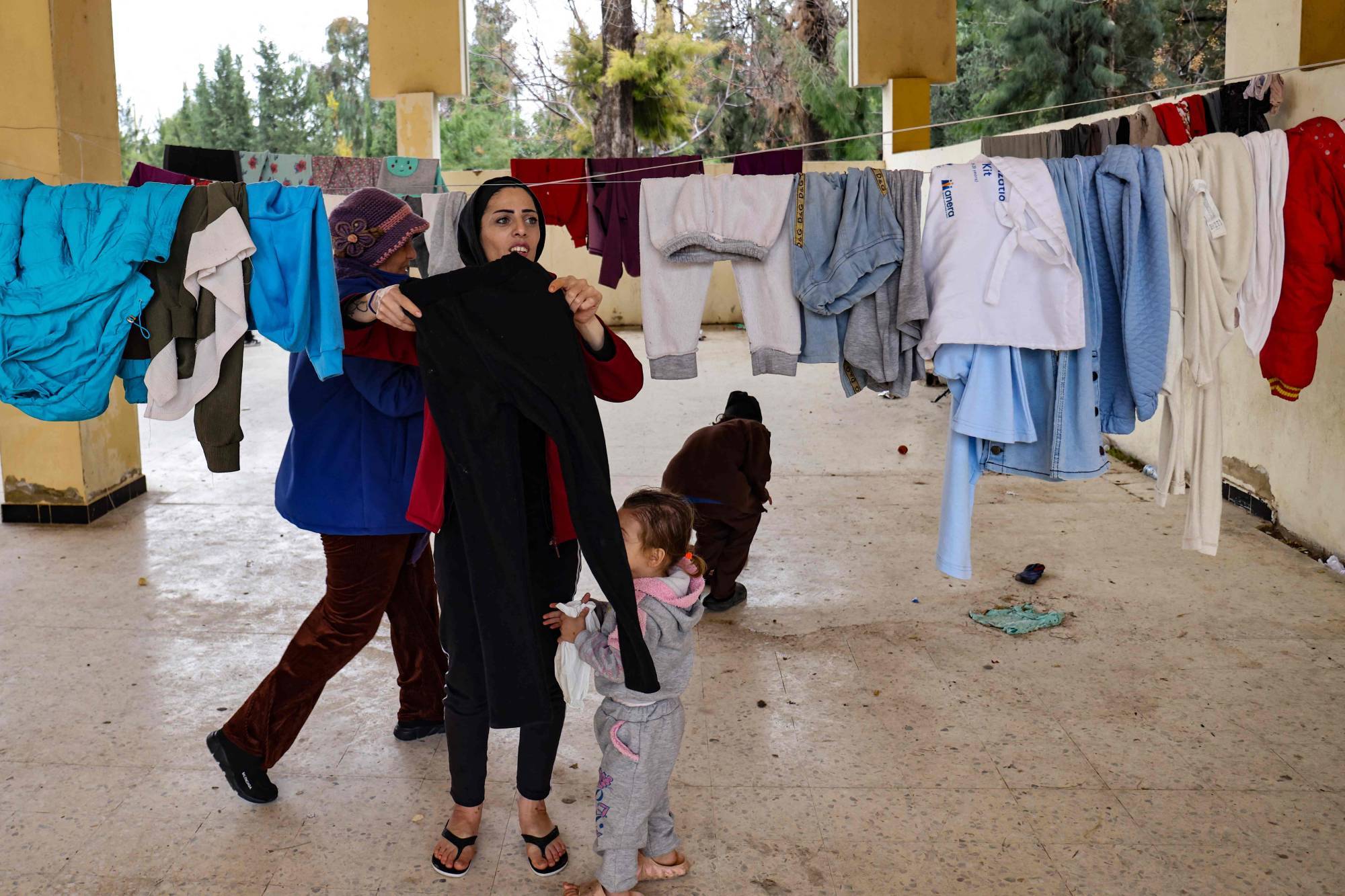
A girl displaced from southern Lebanon at a school in the city of Tyre that was converted into a shelter for displaced people (File photo - AFP)
Rent Payments Fall Short
No sooner had Damoush announced the payments than discontent spread among residents of southern Lebanon, who described the amounts as “unfair.”
A local source in Nabatieh told Asharq Al-Awsat that the money would “barely cover six months of monthly rent.”
“At the very lowest estimate, rent for a house outside the city is $500 a month, while anyone wishing to rent in the city will have to pay $800,” the source said. “Is this amount enough to cover rent?”
“We waited six months. The state paid nothing and paid no attention to us, while Hezbollah has now announced meager payments that would not even be enough to buy a bed or a refrigerator,” the source added, describing the announced assistance as essentially pointless.
The United Nations Development Programme estimates that around 17,900 housing units have been completely destroyed in southern Lebanon, while approximately 5,200 buildings have been damaged by the war.
Heavy Losses
The same source in Nabatieh said war-related losses were “extremely heavy,” ranging from destroyed buildings and rental costs to businesses and livelihoods brought to a halt. This comes on top of six months during which residents have had to pay rent out of their own pockets without receiving assistance.
“The initiative undertaken by Hezbollah cannot be relied upon because the amount is extremely small and does not take into account people’s suffering and needs,” said the source, who requested anonymity.
The frustration extends to residents currently living in the city of Tyre after being displaced from occupied and destroyed border villages, particularly Naqoura, Aita al-Shaab, Marwahin, Umm al-Tout and Tayr Harfa.
One displaced resident living in Tyre told Asharq Al-Awsat that they have been paying rent for nearly three years, “and now we will receive a payment that does not even cover three months’ rent in the city,” where average residential rents stand at around $700.
“Hezbollah is applying double standards to displaced people,” he said. “We live in a city, and residents of the southern suburbs live in a city too. Why are they receiving $3,500 while people from the south are receiving $3,000?”
He described the proposed payments as “meager,” saying they appeared to represent “an attempt to shirk responsibility while promoting assistance that falls short of people’s growing needs.”
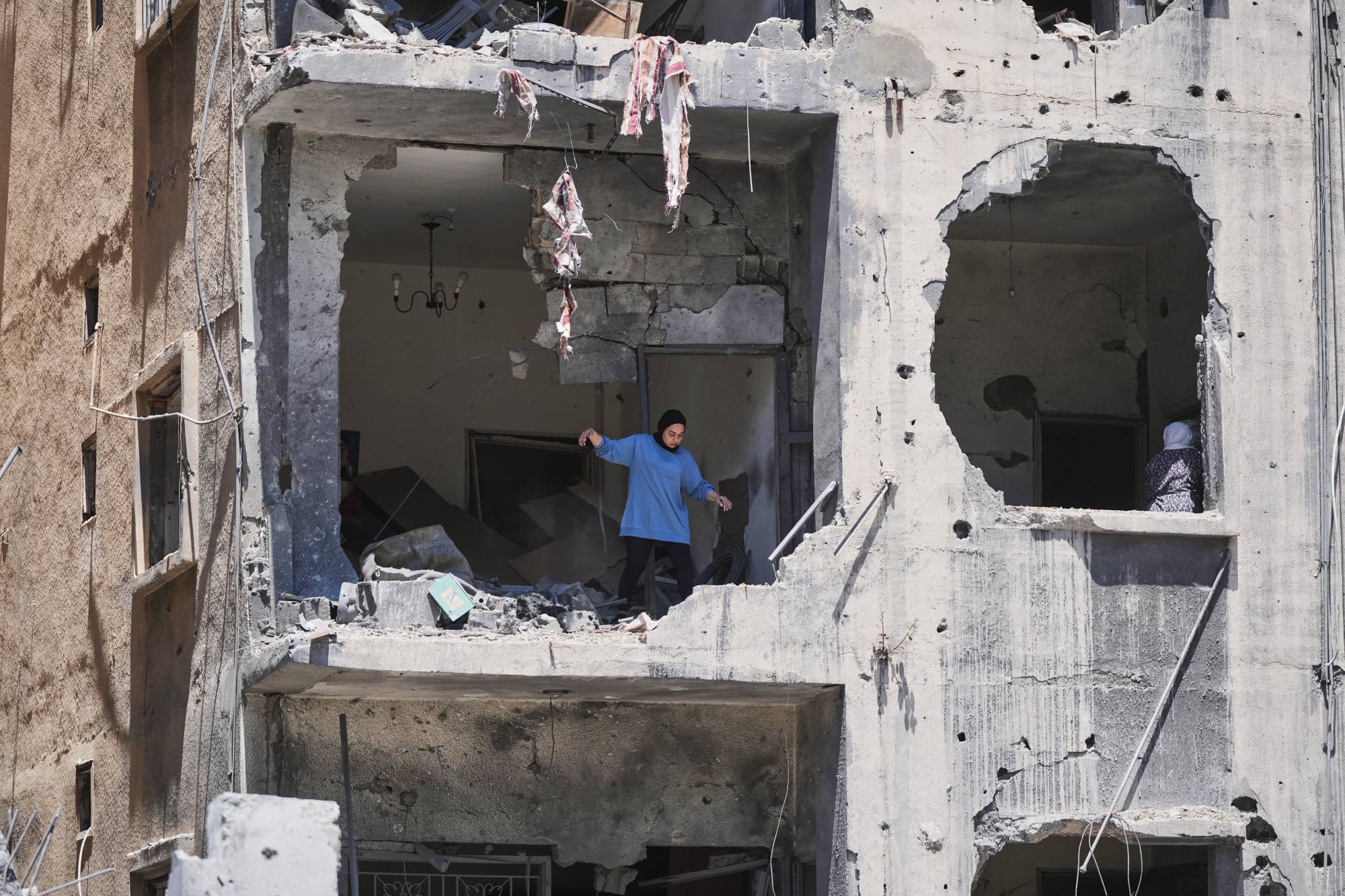
A woman walks through her apartment, which was damaged by Israeli airstrikes in the southern Lebanese city of Tyre on June 17, 2026 (AP)
No Compensation for Repairs
Hezbollah is facing financial difficulties as a result of restrictions imposed on the flow of funds from Iran. Its supporters, however, say the group “is doing what it can under the current circumstances,” noting that the money to be distributed now is only a first payment and that additional payments will follow.
That has done little to dispel the frustration repeatedly expressed by displaced southerners.
Their dissatisfaction is not limited to the modest sums involved or what they describe as “discrimination between the south and the southern suburbs.” It also extends to thousands of people whose homes were damaged in the war but who will receive no money from Hezbollah to repair them.
A resident of a village in the Tyre area told Asharq Al-Awsat: “For four months, I kept plastic sheeting over the windows, hoping Hezbollah would provide repair assistance so I could install glass windows, but that did not happen. With winter approaching, I will have to borrow $1,000 to install glass windows to replace those shattered during the war.”
“It seems Hezbollah has its priorities, and those of us whose homes were damaged by the war are at the bottom of its list,” the source added. “If money is being provided to people displaced from their homes, why is there no money for those whose homes have been damaged?”
Discontent in Beirut’s Southern Suburbs as Well
Despite the frustration in southern Lebanon, residents of Beirut’s southern suburbs also appear dissatisfied. A significant number of buildings surrounding those that were destroyed have themselves sustained heavy damage, yet Hezbollah will not provide any financial assistance to their residents, unlike what happened following the 2024 war.
Residents of the southern suburbs say Hezbollah has not provided any payments, preventing hundreds of families from returning to their damaged homes. Other families have been forced to pay for repairs out of their own pockets, while some have opted to cover shattered windows with plastic sheeting and carry out only “the bare minimum of repairs needed to allow us to return home.”
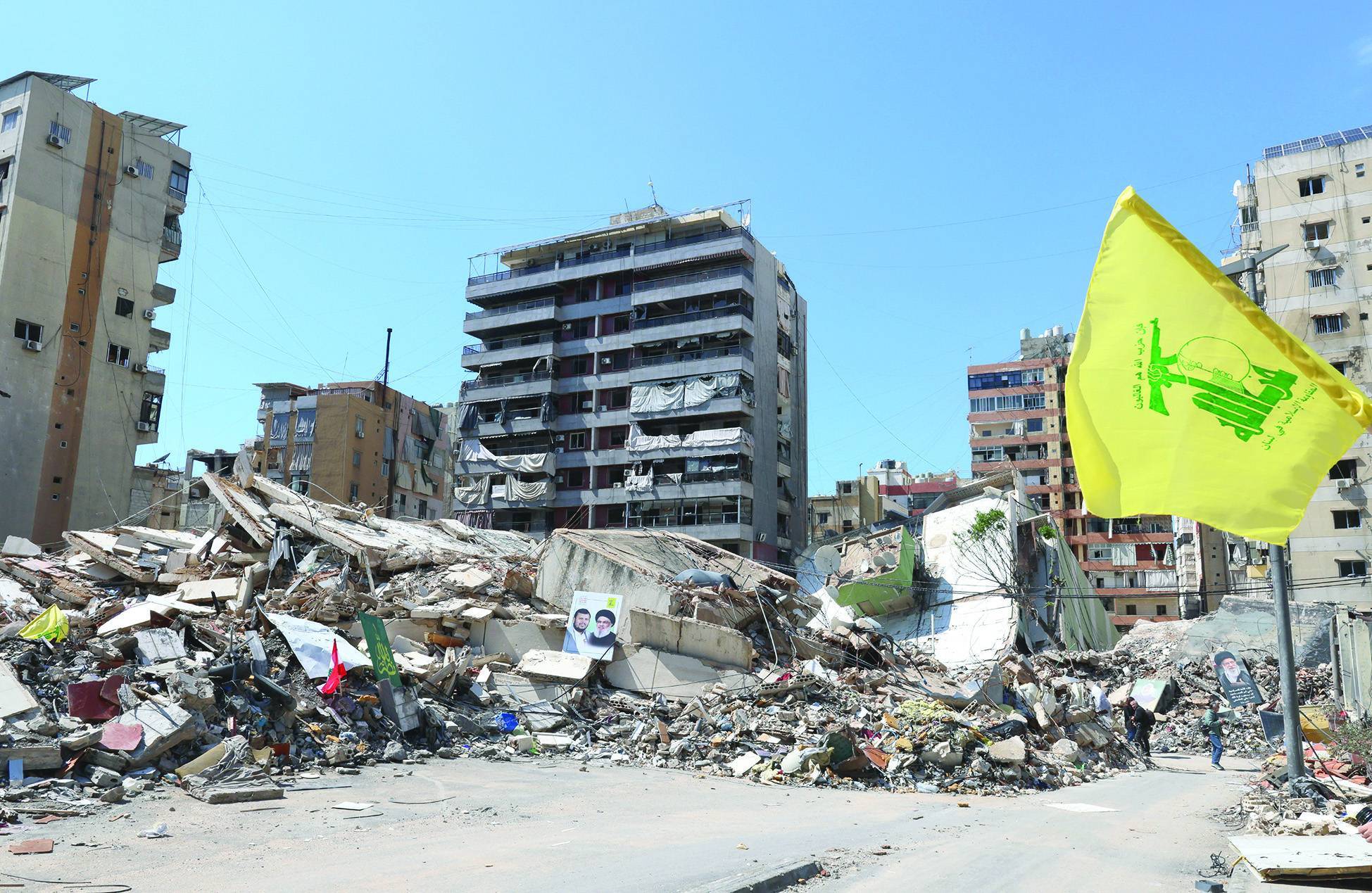
Buildings destroyed by Israeli bombardment in Beirut’s southern suburbs, where a Hezbollah flag flies, on May 6, 2026 (EPA)
A study conducted by the United Nations Development Programme in coordination with Lebanon’s National Council for Scientific Research, and in cooperation with the Lebanese Army and the United Nations Department of Safety and Security, found that 146 buildings were completely destroyed in the Beirut and Mount Lebanon governorates, while 264 buildings were partially damaged.
At the housing-unit level, the study recorded the complete destruction of 3,168 residential units, while another 4,437 units sustained partial damage.
لم تشترك بعد
انشئ حساباً خاصاً بك لتحصل على أخبار مخصصة لك ولتتمتع بخاصية حفظ المقالات وتتلقى نشراتنا البريدية المتنوعة