


Albudaiwi: GCC is a Global Investment Magnet, Driven by Stability and Economic Strength

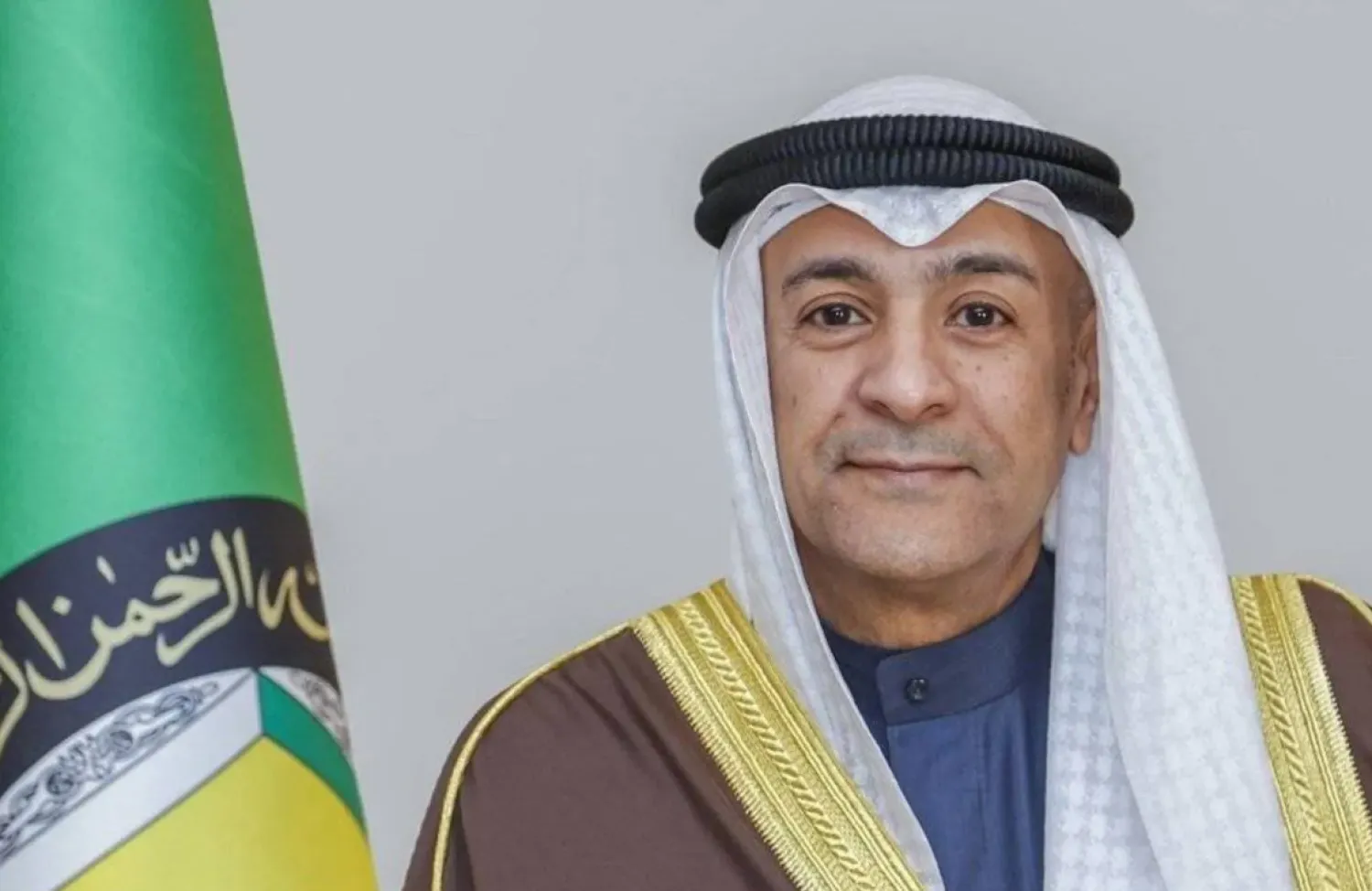
Secretary General of the Gulf Cooperation Council Jasem Mohamed Albudaiwi. GCC
TT

Albudaiwi: GCC is a Global Investment Magnet, Driven by Stability and Economic Strength

Secretary General of the Gulf Cooperation Council Jasem Mohamed Albudaiwi. GCC

Secretary-General of the Gulf Cooperation Council (GCC) Jasem Albudaiwi stated that the strategic geographical location, political stability, and strong economic foundations of the Gulf states, coupled with the acceleration of Gulf integration projects, make the GCC a global destination attractive for investment and a key platform for international partnerships.

These factors, he added, enhance the status of the council states as a major player in shaping the future of the global economy, reported the Saudi Press Agency on Thursday.

The secretary-general's remarks were made during his participation in the opening session of the seventh Milken Institute Middle East and Africa Summit, held in Abu Dhabi, United Arab Emirates.

Reviewing global economic transformations, Albudaiwi emphasized that the Gulf economy is undergoing a strong and sustainable phase, reflecting the success of economic reforms and strategic investments in future sectors.

He said that the Gross Domestic Product (GDP) of the GCC states reached approximately $2.3 trillion in 2024, positioning the council states in ninth place globally and accounting for 63% of the total Arab economy. He added that the contribution of non-oil sectors exceeded 76% of the GDP, an indicator reflecting the success of economic diversification policies.

Albudaiwi also pointed to the strength and stability of the GCC financial sector, which boasts a market value exceeding $4.2 trillion, banking assets amounting to $3.5 trillion, and reserves approaching $800 billion. This is in addition to sovereign wealth funds exceeding $4.8 trillion, a fact that solidifies the council states' position as a key player in enhancing global economic stability, he stressed.

The secretary-general revealed that the GCC states are negotiating free trade agreements (FTAs) with numerous international partners, including the United Kingdom, China, Türkiye, Japan, Indonesia, New Zealand, Pakistan, and Korea. These negotiations aim to enhance trade and investment flows, diversify income sources, and open new markets for Gulf products, thereby elevating competitiveness and reducing consumer prices within the GCC states.

Regarding artificial intelligence, he confirmed that the GCC states treat AI as a fundamental pillar for economic and social transformation.

The General Secretariat has adopted several regulatory frameworks and guiding principles, including the Guiding Framework for AI Ethics (2024), the General Framework for AI Applications in Public Services (October 2025), and the General Framework for Climate Forecasting and Disaster Management using AI (October 2025). Furthermore, the comprehensive Gulf Strategy for Artificial Intelligence is set to be adopted in December 2025.



President of Yemeni Presidential Leadership Council Nullifies Joint Defense Agreement with UAE

Dr. Rashad Al-Alimi during his interview with Asharq Al-Awsat (Yemeni Presidency)
TT

President of Yemeni Presidential Leadership Council Nullifies Joint Defense Agreement with UAE

Dr. Rashad Al-Alimi during his interview with Asharq Al-Awsat (Yemeni Presidency)

President of the Presidential Leadership Council of the Republic of Yemen Dr. Rashad Mohammed Al-Alimi issued a presidential decree on Tuesday nullifying the joint defense agreement with the United Arab Emirates, based on the Constitution of the Republic of Yemen, the Gulf Cooperation Council Initiative and its implementation mechanism, the decision on the transfer of power, the formation of the Presidential Leadership Council, and the powers granted to it under the constitution, according to the Yemen News Agency (Saba).

Article Two of the decree mandates that all UAE forces and personnel withdraw from Yemeni territory within 24 hours, according to SPA.

Article Three instructs the Homeland Shield forces to assume control of all military camps in Hadramout and Al-Mahara governorates.


Yemeni Government Commends Saudi Historic Stance and Its Leadership of the Coalition to Restore Legitimacy

File photo of the Saudi flag/AAWSAT
TT

Yemeni Government Commends Saudi Historic Stance and Its Leadership of the Coalition to Restore Legitimacy

File photo of the Saudi flag/AAWSAT

The Yemeni government commended the Kingdom of Saudi Arabia's historic and steadfast stances, highlighting its crucial role in ensuring Yemen's security and stability.

The government acknowledged Saudi Arabia's leadership of the Coalition to Restore Legitimacy and its ongoing commitment to protecting civilians, de-escalating tensions, and preventing the eastern governorates from being drawn into conflicts that serve hostile agendas, SPA reported.

In an official statement, the government called on the Southern Transitional Council to withdraw immediately and unconditionally from the governorates of Hadramout and Al-Mahara. It urged the council to hand over all locations and camps to the Homeland Shield Forces and local authorities in these governorates, to adhere to the terms of reference of the transitional phase, and to cease all military or escalatory actions that threaten local security and undermine de-escalation efforts.

The statement, which was reported by the Yemen News Agency (Saba), expressed the government's full support for the decisions made by President of the Presidential Leadership Council of the Republic of Yemen Dr. Rashad Mohammed Al-Alimi, who is also Supreme Commander of the Armed Forces.

This includes declaring a state of emergency across Yemen and taking necessary sovereign measures to protect local security, preserve the unity and sovereignty of the state, and maintain its legal status in light of the dangerous developments in Yemen's eastern governorates.

The government stated: "The declaration of a state of emergency is grounded in the constitution and the references of the transitional phase, based on the recommendations of the National Defense Council.

It is a legitimate constitutional measure necessitated by our national duty to confront armed rebellion, protect civil peace, and prevent a descent into chaos that could undermine state institutions."


Custodian of the Two Holy Mosques Receives Written Message from Russian President

Russian Ambassador to the Kingdom Sergey Kozlov and Saudi Vice Minister of Foreign Affairs Waleed Elkhereiji meet in Riyadh on Tuesday. (SPA)
TT

Custodian of the Two Holy Mosques Receives Written Message from Russian President

Russian Ambassador to the Kingdom Sergey Kozlov and Saudi Vice Minister of Foreign Affairs Waleed Elkhereiji meet in Riyadh on Tuesday. (SPA)

Custodian of the Two Holy Mosques King Salman bin Abdulaziz Al Saud received on Tuesday a written message from Russian President Vladimir Putin on bilateral ties between their countries.

Russian Ambassador to the Kingdom Sergey Kozlov delivered the message to Vice Minister of Foreign Affairs Waleed Elkhereiji at the ministry’s headquarters in Riyadh.

The officials reviewed the strong relations between Saudi Arabia and Russia and discussed the latest regional and international developments, as well as efforts exerted to address them.