


Saudi Fashion Commission Concludes 'Building a Fashion Brand' Program in Partnership with Fondazione Sozzani

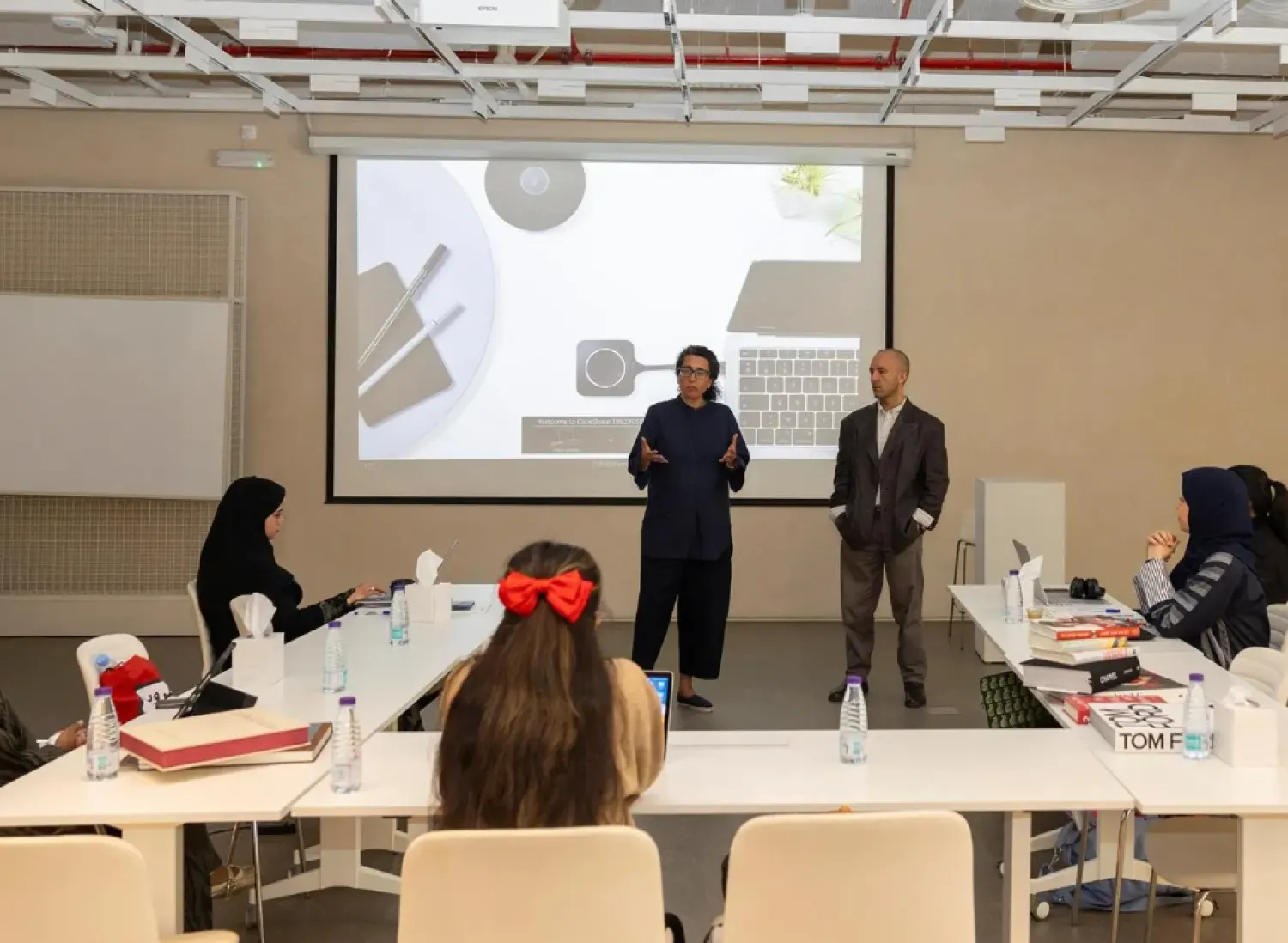
 The program concluded with an official ceremony at the Future Creative Residence, where participants received certificates of completion - SPA
The program concluded with an official ceremony at the Future Creative Residence, where participants received certificates of completion - SPA
TT

Saudi Fashion Commission Concludes 'Building a Fashion Brand' Program in Partnership with Fondazione Sozzani

 The program concluded with an official ceremony at the Future Creative Residence, where participants received certificates of completion - SPA
The program concluded with an official ceremony at the Future Creative Residence, where participants received certificates of completion - SPA

Saudi Arabia's Fashion Commission successfully concluded its five-day intensive program titled “Building a Fashion Brand,” held at the Future Creative Residence (FCR) in Riyadh.

According to a press release issued by the commission today, the program aimed to empower ambitious Saudi talents and equip beginner designers with essential knowledge, strategic tools, and practical guidance to support the development and launch of their own fashion brands. It was delivered in partnership with Fondazione Sozzani, an international institution dedicated to preserving culture and creativity and promoting sustainable fashion.

The program highlighted the intersection between fashion, visual culture, and sustainability. Participants engaged in a rich week of lectures, workshops, one-on-one sessions, and brand development activities led by international experts, SPA reported.

The program was supervised by Creative Director of Fondazione Sozzani Sara Sozzani Maino, one of the world's most prominent advocates of responsible fashion known for her work with Vogue Italia and Vogue Talents, alongside Riccardo Terzo, stylist, editor, and creative director of DUST China, who has extensive experience in talent scouting and the history of fashion imagery.

The two experts presented an integrated curriculum covering brand identity, storytelling, visual language, portfolio development, responsible fashion practices, and the evolving landscape of global fashion culture.

Participants were offered a continuous creative journey, exploring the foundations of defining personal and brand identity, developing integrated visual and written narratives, understanding contemporary fashion imagery and communication methods, and building a design approach rooted in sustainability, responsibility, and professional ethics.

They also enhanced their ability to develop strategies through research and moodboards, explore collaboration opportunities, and build integrated creative ecosystems, in addition to benefiting from individual mentoring sessions focused on refining vision, strategy, and identity.
The release added that their perspectives were further broadened through documentary screenings, open discussions, and analytical studies of global brands such as Jacquemus, Wales Bonner, and the Fashion Revolution movement, contributing to strengthened awareness of contemporary international trends.

On the final day, participants presented their developed brand concepts before a panel of experts, showcasing identity statements, visual visions, and strategic foundations for each brand. The program concluded with an official ceremony at the Future Creative Residence, where participants received certificates of completion.

The “Building a Fashion Brand” program reflects the Fashion Commission’s commitment to empowering the new generation of Saudi designers, enhancing global creative exchange, and building a sustainable fashion ecosystem that meets future needs within the Kingdom.

Through its strategic partnerships with leading international institutions such as Fondazione Sozzani, the commission continues to develop specialized programs that support emerging talents and elevate the fashion scene in Saudi Arabia.

In this context, the Sozzani Foundation is preparing to launch another program under the supervision of the Fashion Commission titled “Content Creation in Fashion,” scheduled for December 15, 2025, in Milan. A group of Saudi designers has been selected to participate, including one designer nominated from the previous program to ensure continuity of learning and deepening of acquired skills.


A Nonprofit in France Is Fighting Fast-Fashion Waste, One Sneaker at a Time

 Mohamed Boukhatem, co-founder and director of SneakCoeurZ, a nonprofit organization giving used footwear a second life, poses in Champs-sur-Marne, east of Paris, Wednesday, March 25, 2026. (AP)
Mohamed Boukhatem, co-founder and director of SneakCoeurZ, a nonprofit organization giving used footwear a second life, poses in Champs-sur-Marne, east of Paris, Wednesday, March 25, 2026. (AP)
TT

A Nonprofit in France Is Fighting Fast-Fashion Waste, One Sneaker at a Time

 Mohamed Boukhatem, co-founder and director of SneakCoeurZ, a nonprofit organization giving used footwear a second life, poses in Champs-sur-Marne, east of Paris, Wednesday, March 25, 2026. (AP)
Mohamed Boukhatem, co-founder and director of SneakCoeurZ, a nonprofit organization giving used footwear a second life, poses in Champs-sur-Marne, east of Paris, Wednesday, March 25, 2026. (AP)

Hundreds of used sneakers arrive each week at a workshop east of Paris, where workers inspect them and ask a simple question: Can a shoe be saved?

The nonprofit SneakCœurZ is in the business of sorting the shoes to check which ones can be resold or redistributed, and which have to be rejected. It says it collected 30,000 pairs of used sneakers last year and resold 2,000 pairs, and wants to scale up that process.

“Today, there is no project of this scale in the sneaker sector,” said Mohamed Boukhatem, the organization's director general and co-founder. “We are the only ones able to industrialize both the processes and the collection of sneakers for reuse.”

The group's work underscores a growing waste problem in France, where the capital Paris is long one of the world’s fashion and luxury hubs.

The stakes are huge: the textile industry is among the world’s most polluting, and the fashion and textiles sector accounts for up to 8% of global greenhouse gas emissions, according to the United Nations. The European Parliament has said textiles were the third-largest source of water degradation and land use in the European Union in 2020.

Refashion, the French government-approved eco-organization for clothing, household linen and footwear, says 259 million pairs of shoes were sold in France in 2024.

It says only about a third of used textiles and footwear are separately collected, with much of the rest left in cupboards or thrown away with household waste.

At its workshop in Champs-sur-Marne, workers for SneakCœurZ inspect the used shoes and check which can be salvaged.

“The structural elements of the shoe are what determine whether we can refurbish it or not,” workshop manager Paul Defawes Abadie said.

“A damaged Velcro strap isn’t a deal breaker. A lace isn’t a deal breaker. Dirt is never a deal breaker,” he said. “What really matters is the wear of the structural materials, especially the outsole.”

Pairs that make the cut are cleaned from the sole upward, disinfected inside and, in some cases, whitened under UV light before being put back into circulation.

The nonprofit says it redistributed more than 7,000 pairs to people in need and helped create 19 jobs.

“Over the next three years, the goal is to triple or even quadruple these volumes and move to an industrial scale,” Boukhatem said.

France has tried to respond to the issue of fast-fashion waste with law, as well as rhetoric.

Its 2020 anti-waste law requires unsold nonfood goods to be reused, donated or recycled instead of destroyed.

Authorities introduced a state-backed repair bonus for clothing and shoes in November 2023. Separately, lawmakers are still working on a bill aimed at reducing the textile industry’s environmental impact.

The bill passed the National Assembly in March 2024 and the Senate in June 2025, and the government said in February that it was still aiming for a joint parliamentary committee this spring.


H&M's Q1 Profit Grows More Than Expected, Sees March Sales Up 1%

FILE PHOTO: A Swedish flag hangs outside a business on a street of the old city of Stockholm, Sweden, February 24, 2024. REUTERS/Tom Little/File Photo
TT

H&M's Q1 Profit Grows More Than Expected, Sees March Sales Up 1%

FILE PHOTO: A Swedish flag hangs outside a business on a street of the old city of Stockholm, Sweden, February 24, 2024. REUTERS/Tom Little/File Photo

Swedish fashion retailer H&M reported on Thursday a slightly bigger rise than expected in December-February operating profit, and predicted March sales would be up 1% in local currencies.

"Towards the end of the quarter our well-received spring collections contributed to a positive sales trend, which also continued into March," CEO Daniel Erver said in a statement.

Operating profit in H&M's fiscal first quarter, ⁠which includes the key ⁠Christmas shopping period, rose for a third consecutive quarter to 1.51 billion crowns ($162 million) from a year-earlier 1.20 billion and a mean forecast in an LSEG poll of analysts of 1.39 billion, on an organic sales decrease of 1%.

The rival ⁠to Inditex in January flagged that local-currency sales in the first two months of the quarter were down 2%.

According to Reuters, H&M said it is closely monitoring developments in the Middle East and the implications for global trade.

"With good flexibility in the supply chain and a low proportion of air freight, there are opportunities to adapt the flow of goods to changed conditions," it said. "Middle Eastern markets account for a ⁠small portion ⁠of the company’s total sales and the markets are operated through franchise partners."

On February 28, the United States and Israel launched coordinated strikes against Iran. Iran has in response launched strikes against Israel, US bases and Gulf states.

It has attacked vessels and infrastructure throughout the Gulf region and effectively closed the Strait of Hormuz, hitting global supply chains and causing soaring energy costs, raising concern over war-driven inflation and potential impact on consumer demand.


Next Says UK Sales Have Held Up Since Iran War Started

Women tour a popular outdoor shopping mall in Beijing, China, Sunday, March 8, 2026. (AP Photo/Andy Wong)
TT

Next Says UK Sales Have Held Up Since Iran War Started

Women tour a popular outdoor shopping mall in Beijing, China, Sunday, March 8, 2026. (AP Photo/Andy Wong)

British clothing retailer Next has not seen a noticeable drop off in UK sales since the US-Israeli war on Iran started at the end of February, its boss said on Thursday.

"Eight weeks, ⁠including the war ⁠weeks, have been good in the UK," CEO Simon Wolfson told Reuters after Next published full-year ⁠results.

He said sales in the Middle East, which account for about 6% of the group's annual turnover, fell "dramatically" in the first few days of the war and demand remains "suppressed.”

Wolfson said if ⁠Next ⁠did have to raise prices around June or July to make up for higher costs caused by the war, the increases would only be 1% to 2%.