


Prada to Launch $930 ‘Made in India’ Sandals after Backlash

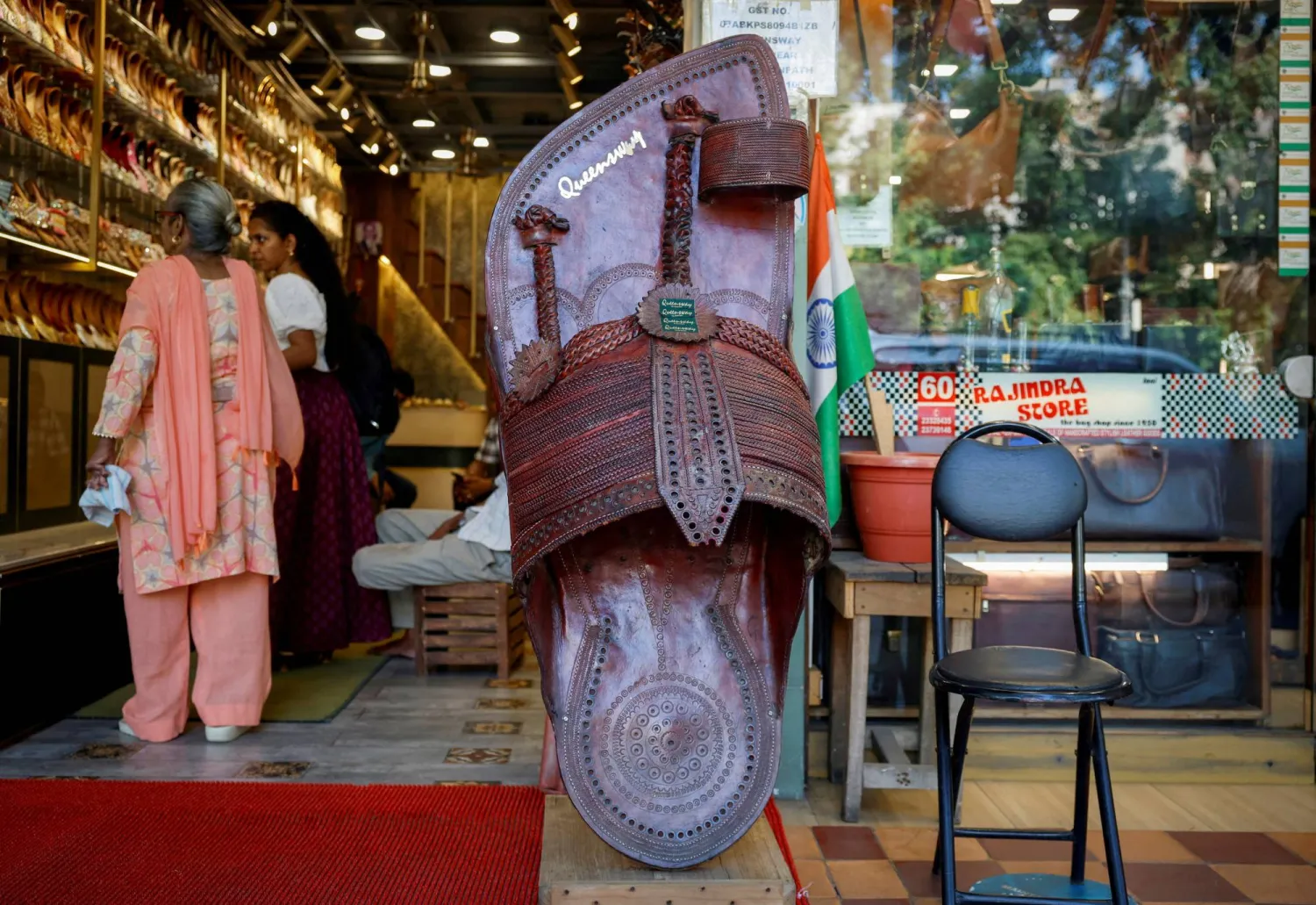
FILE PHOTO: Customers shop for 'Kolhapuri' sandals, an Indian ethnic footwear, at a store in New Delhi, India, June 27, 2025. REUTERS/Adnan Abidi/File Photo
TT

Prada to Launch $930 ‘Made in India’ Sandals after Backlash

FILE PHOTO: Customers shop for 'Kolhapuri' sandals, an Indian ethnic footwear, at a store in New Delhi, India, June 27, 2025. REUTERS/Adnan Abidi/File Photo

Prada will make a limited-edition collection of sandals in India inspired by the country's traditional footwear, selling each pair at around 800 euros ($930), Prada senior executive Lorenzo Bertelli told Reuters, turning a backlash over cultural appropriation into a collaboration with Indian artisans.

The Italian luxury group plans to make 2,000 pairs of the sandals in the regions of Maharashtra and Karnataka under a deal with two state-backed bodies, blending local Indian craftsmanship with Italian technology and know-how.

"We'll mix the original manufacturer's standard capabilities with our manufacturing techniques", Bertelli, who is chief marketing officer and head of corporate social responsibility, told Reuters in an interview.

The collection will go on sale in February 2026 across 40 Prada stores worldwide and online, the company said. Prada faced criticism six months ago after showing sandals resembling 12th-century Indian footwear, known as Kolhapuri chappals, at a Milan show.

Photos went viral, prompting outrage from Indian artisans and politicians. Prada later admitted its design drew from ancient Indian styles and began talks with artisan groups for collaboration.

It has now signed an agreement with Sant Rohidas Leather Industries and Charmakar Development Corporation (LIDCOM) and Dr Babu Jagjivan Ram Leather Industries Development Corporation (LIDKAR), which promote India’s leather heritage.

"We want to be a multiplier of awareness for these chappals," said Bertelli, who is the eldest son of Prada founders Miuccia Prada and Patrizio Bertelli.

A three-year partnership, whose details are still being finalized, will be set up to train local artisans. The initiative will include training programs in India and opportunities to spend short periods at Prada’s Academy in Italy.

Chappals originated in Maharashtra and Karnataka and are handcrafted by people from marginalized communities. Artisans hope the collaboration will raise incomes, attract younger generations to the trade and preserve heritage threatened by cheap imitations and declining demand.

"Once Prada endorses this craft as a luxury product, definitely the domino effect will work and result in increasing demand for the craft," said Prerna Deshbhratar, LIDCOM managing director.

Bertelli said the project and training program would cost "several million euros", adding that artisans would be fairly remunerated.


Burberry Shows Embroidered Trench Coats and Flowery Skirt Suits for Summer 2027

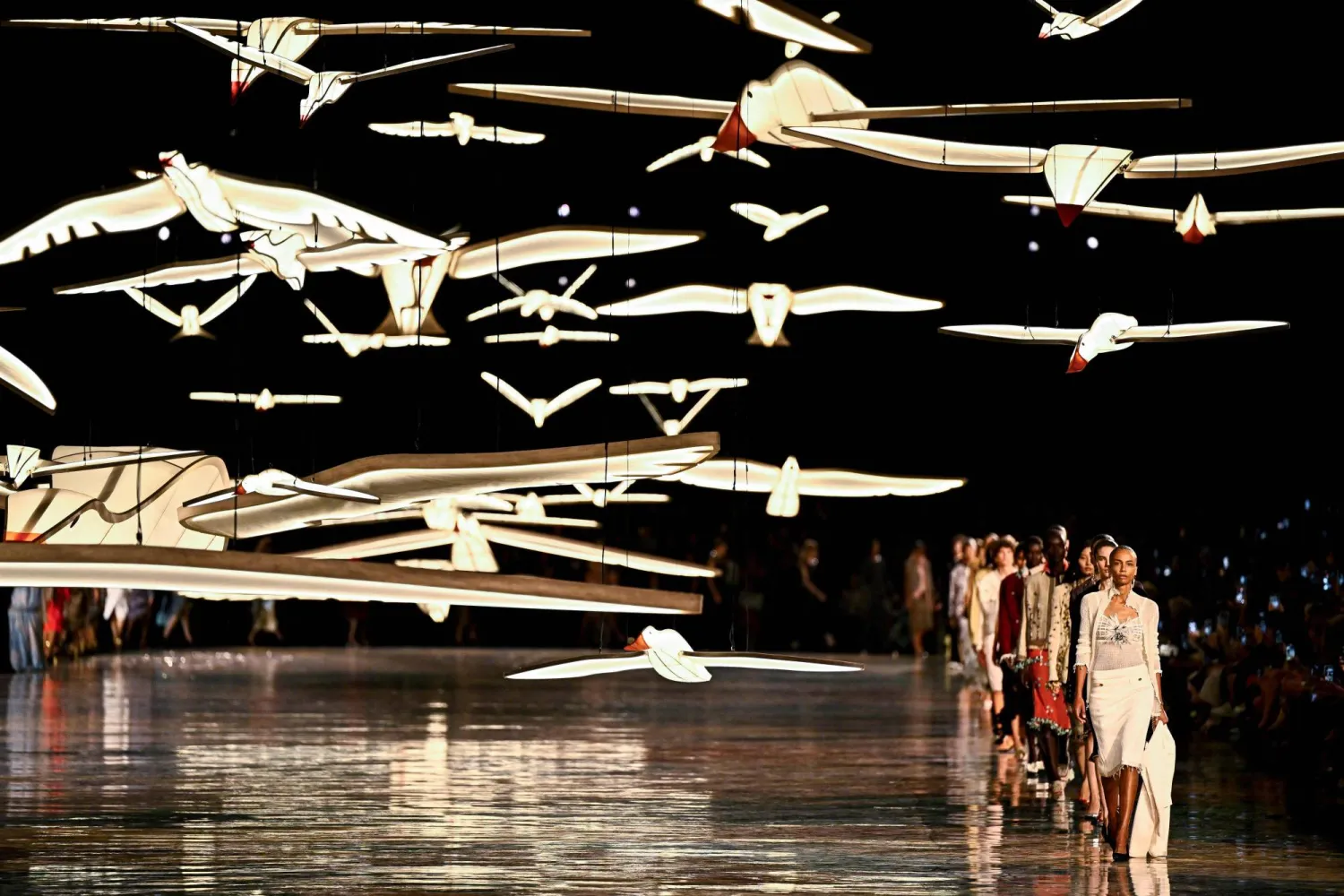
 A model presents a creation at the Burberry Spring/Summer 2027 collection show during London Fashion Week, in London, Britain, September 21, 2026. (Reuters)
A model presents a creation at the Burberry Spring/Summer 2027 collection show during London Fashion Week, in London, Britain, September 21, 2026. (Reuters)
TT

Burberry Shows Embroidered Trench Coats and Flowery Skirt Suits for Summer 2027

 A model presents a creation at the Burberry Spring/Summer 2027 collection show during London Fashion Week, in London, Britain, September 21, 2026. (Reuters)
A model presents a creation at the Burberry Spring/Summer 2027 collection show during London Fashion Week, in London, Britain, September 21, 2026. (Reuters)

‌Burberry creative director Daniel Lee showed bright floral trench coats and checked short suits in his summer 2027 collection for the British luxury brand.

The show at Chelsea College of Arts in London took place in a minimalist bright white cube, with guests including actors Jason Statham and Chiwetel Ejiofor, rappers Skepta and ‌Kano, and Mayor ‌of London Sadiq Khan watching ‌from ⁠wooden seats printed with ⁠Burberry's check.

Women wore skirt suits in windowpane check fabric overlaid with intricately embroidered mimosa and lavender flowers, a motif repeated on matching pumps.

The bright florals also featured on checked short suits ⁠for men, and on fluid, sheer ‌trench coats ‌in pastel blue and aubergine worn over striped dresses.

Patterns ‌ranged from muted, ditsy florals ‌to clashing stripes and face prints, with bright yellow, pink, and green looks cutting through a palette of greys and beiges.

Skirts covered ‌in sequins or bright red pompoms were worn with short airy ⁠jackets ⁠with epaulettes.

Lee's show notes emphasized wearability. "There's an intentional imperfection: the idea of owning a piece, living in it," he wrote.

The men's looks were inspired by street wear, featuring trouser chains and denim, but paired with flowery shirts giving them a 1970s feel.

Rapper Central Cee made his Burberry runway debut in the show, wearing low-slung jeans and a jacket with the hood up.


UK Retailer Debenhams Announces Return of McDonald as New Chair

FILE PHOTO: Debenhams logo is seen on smartphone in front of a displayed Boohoo logo in this illustration taken January 25, 2021. REUTERS/Dado Ruvic/Illustration/File Photo
TT

UK Retailer Debenhams Announces Return of McDonald as New Chair

FILE PHOTO: Debenhams logo is seen on smartphone in front of a displayed Boohoo logo in this illustration taken January 25, 2021. REUTERS/Dado Ruvic/Illustration/File Photo

British fashion retailer Debenhams said on Friday Iain McDonald has returned to its board as chair, replacing Tim Morris, as the company looks to focus on rebuilding its equity value after completing the initial stage of its turnaround.

Here are some details:

McDonald stepped down in February after Debenhams launched an equity raise, in which McDonald and his fund Belerion Capital invested about $5 million, making him ⁠the ninth largest ⁠investor in the group, per LSEG data.

McDonald, who had served as a non-executive director since June 2017, stepped down to facilitate his fund's participation in the funding earlier this year.

McDonald ⁠is currently chair and investor at London-listed cosmetics group Revolution Beauty, whose shares have soared over 60% so far this year.

Debenhams, formerly known as Boohoo, has seen its shares rise 8.6% so far this year.

Debenhams on Thursday reported a 13.9% rise in first-half adjusted core profit, driven by a return to growth at ⁠major brands ⁠including PrettyLittleThing, boohoo and Karen Millen.

Morris is stepping down with immediate effect after serving as chair for nearly two years and oversaw the group's new strategy, which was led by CEO Dan Finley.

As part of Friday's changes, Debenhams also appointed Michael Stewart and Stephen Rothwell as independent non-executive directors, bringing expertise in capital markets, investment management, technology and AI-enabled consumer platforms.


Next Nudges Up Profit Guidance but Sees UK Headwinds

Shoppers walk past a NEXT retail store in London, Britain, January 2, 2025. REUTERS/Hollie Adams/File Photo
TT

Next Nudges Up Profit Guidance but Sees UK Headwinds

Shoppers walk past a NEXT retail store in London, Britain, January 2, 2025. REUTERS/Hollie Adams/File Photo

British clothing retailer Next edged up its annual forecast on Thursday, as it reported a 10.5% profit rise for its first half, but expects sales growth to slow in its second half and warned of headwinds in its core UK market.

The group, which trades from more than 800 stores in the UK and Ireland, including Reiss, Joules and FatFace outlets, and has an online ⁠operation serving the ⁠UK and overseas markets, said full price sales were 7.7% higher in the six months to August 1, helped by a hot summer in Britain.

But it said full price sales growth would slow to 5.8% in its second half, and moderated its second half sales growth expectations for the UK to 2.0% from 2.8%, flagging concerns in its ⁠home market which accounts for about three quarters of sales.

"Our primary concerns are rising inflation, higher mortgage interest costs and a weak employment market. These worries will only be compounded if they are accompanied by tax increases," it said in reference to new finance minister John Healey's first budget on October 28.

"It seems likely that it (the government) will have to increase taxes in order to fund its expenditure,” Reuters quoted it as saying.

British households will see their energy bills rise in October, inflation ticked up on Wednesday, and, last week, Next rival John Lewis highlighted a tough UK ⁠trading environment, saying ⁠consumers were holding back on bigger ticket items.

Rival Primark said trading in continental Europe remained challenging, though Zara owner Inditex reported a strong start to autumn trading.

Next made a profit before tax of £569 million ($762 million) in its first half. It said its international business had made an encouraging start to the season, and raised its second half sales growth guidance to 20.5%.

The retailer, whose shares have increased by a quarter over the last year, raised its profit before tax guidance for its year to January 2027 by £12 million ($16 million) to £1.255 billion, reflecting the small upgrade in sales expectations and some additional cost savings, mainly in warehousing. It made £1.158 billion in 2025/26.