Deal to Export Oil from Kurdish Region to Continue with No Issues, Kurdish Rudaw Reports

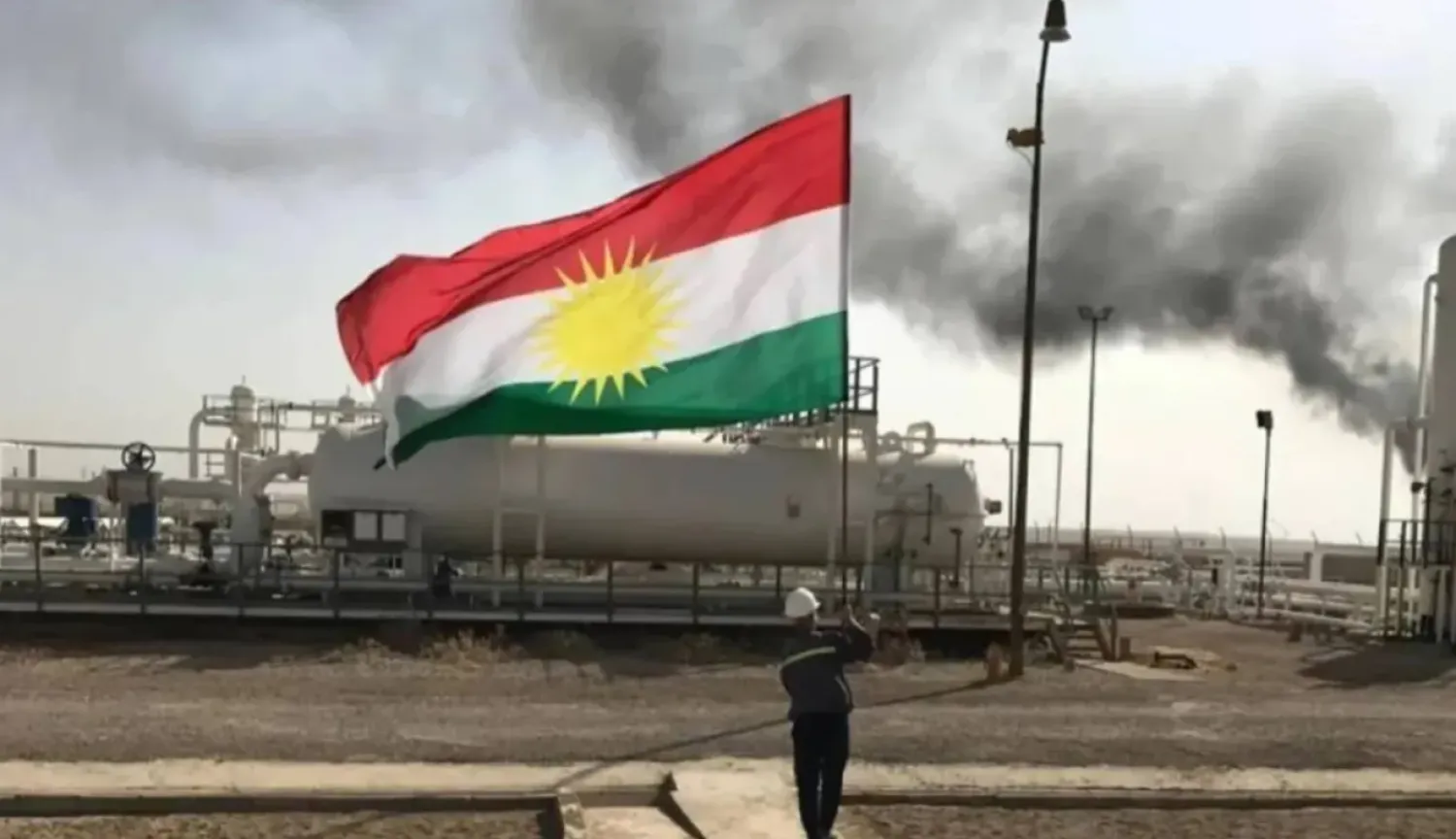
A staff at an oilfield holds the flag of Kurdistan. (X)
TT

Deal to Export Oil from Kurdish Region to Continue with No Issues, Kurdish Rudaw Reports

A staff at an oilfield holds the flag of Kurdistan. (X)

Kurdistan broadcaster Rudaw quoted the ​vice president of Iraq's state oil company SOMO as saying ‌on Saturday that ‌the ‌oil ⁠export ​deal ‌between Baghdad and Erbil is set to be renewed with ⁠out issues, Reuters reported.

In September, ‌Iraq restarted ‍the ‍export of ‍oil from its Kurdish region to Türkiye after ​an interruption of more ⁠than two years following a deal between Baghdad and the Kurdish regional government.


Iran War and Rising Fuel Costs Could Boost Panama Canal Traffic, Administrator Says

A cargo ship sails under Las Americas bridge through the Panama Canal, in Panama City, Thursday, March 12, 2026. (AP)
TT

Iran War and Rising Fuel Costs Could Boost Panama Canal Traffic, Administrator Says

A cargo ship sails under Las Americas bridge through the Panama Canal, in Panama City, Thursday, March 12, 2026. (AP)

Panama Canal Administrator Ricaurte Vásquez said Thursday that the conflict in the Middle East and rising fuel costs could ultimately benefit the interoceanic waterway as global shippers adjust routes.

In an interview with The Associated Press, Vásquez said that higher energy, fuel and navigation costs could make the Panama Canal a more attractive option for commercial traffic.

“When costs increase, in general when the price of marine fuel rises, the Panama Canal becomes a more attractive route,” Vásquez said.

Oil prices have risen amid the war in the Middle East, which has led to the temporary closure of the Strait of Hormuz by Iran in response to US and Israeli attacks. About one-fifth of the world’s oil passes through the waterway at the mouth of the Gulf.

If higher energy costs persist, routing cargo through Panama can cut voyages by between three and 15 days, depending on the route, while reducing fuel consumption, he said.

Vásquez said higher fuel costs are expected to affect container ships, bulk carriers and tankers transporting liquefied natural gas. If Middle Eastern supplies are disrupted, shipments may be replaced by other sources, including the United States, which could redirect some LNG cargo from Europe to Asia via Panama.

Gerardo Bósquez, an executive with the Panama Maritime Chamber, said a prolonged conflict could reshape global trade routes, with gas transport among the segments likely to benefit.

Vásquez cautioned that any changes will not be immediate and will depend on how long cargo operators expect the conflict and instability in the Gulf last.


ONS Data: UK Economy Lost Steam Unexpectedly at Start of 2026

FILE PHOTO: A direction sign is seen near the Bank of England building in London, Britain, February 3, 2025.  REUTERS/Toby Melville//File Photo
FILE PHOTO: A direction sign is seen near the Bank of England building in London, Britain, February 3, 2025. REUTERS/Toby Melville//File Photo
TT

ONS Data: UK Economy Lost Steam Unexpectedly at Start of 2026

FILE PHOTO: A direction sign is seen near the Bank of England building in London, Britain, February 3, 2025.  REUTERS/Toby Melville//File Photo
FILE PHOTO: A direction sign is seen near the Bank of England building in London, Britain, February 3, 2025. REUTERS/Toby Melville//File Photo

Britain's economy stagnated unexpectedly in January and expanded weakly in preceding months, according to official data on Friday that showed only tepid growth during the lead-up to the US-Israeli war in Iran.

The figures mean British gross domestic product has been essentially flat since June, ending January at the same level as six months earlier.

GDP rose during the three months to January by 0.2%, the Office for National Statistics ⁠said, against expectations ⁠in a Reuters poll of economists for a 0.3% increase.

The flat reading for January alone also dashed the median prediction for a 0.2% month-on-month increase.

Sterling slipped against the US dollar on the back of the figures, which showed no ⁠growth in the dominant services sector in January, against modest upticks in manufacturing and construction output.

Last month, the Bank of England said it expected the economy to grow 0.3% in the first quarter as a whole and 0.9% over 2026 as a whole - although that was before the conflict in Iran kicked off, prompting a surge in oil prices.

Earlier this week, finance minister Rachel Reeves ⁠said ⁠it was too soon to say how soaring energy prices would affect Britain's economy.

But investors see it as more exposed than other Western European economies due to its weak public finances, reliance on natural gas for electricity generation, and already high rates of inflation.

Financial markets no longer believe the Bank of England is likely to cut interest rates this year, and investors will be watching the central bank's communications carefully at next Thursday's interest rate announcement.


Air Freight Rates Soar as Middle East Conflict Blocks Trade Routes

Shipping containers are pictured at the UK's largest freight port, in Felixstowe on the East coast of England, on March 12, 2026. (AFP)
TT

Air Freight Rates Soar as Middle East Conflict Blocks Trade Routes

Shipping containers are pictured at the UK's largest freight port, in Felixstowe on the East coast of England, on March 12, 2026. (AFP)

Air freight rates have risen by as much as 70% on some routes since the start of the US-Israeli war on Iran, data shows, as the conflict limits flights, blocks some ocean shipments and pushes up jet fuel costs.

Rates on routes between South Asia and Europe have been the most affected by Middle Eastern airspace closures and security issues, industry experts said, after the conflict has stranded more than 100 container ships in the area around the critical Strait of Hormuz oil export corridor.

Products like inexpensive generic medicines from India destined for the European Union, Africa and some Arab countries like Saudi Arabia and the United Arab Emirates typically move on container ships through the strait, said pharmaceutical supply chain expert Prashant Yadav.

"The main shift I’ve heard about involves companies moving generic ‌medicines from ocean ‌freight to air cargo," said Yadav, a senior fellow at the Council on ‌Foreign ⁠Relations.

The shift to ⁠air cargo is significant because air freight handles about one-third of global trade by value, making rate spikes a potential inflationary pressure on goods ranging from fresh food to pharmaceuticals and electronics.

"Customers are shifting freight from ocean to air, however it is extremely expensive - typically 5x to 10x higher - and those costs are climbing as capacity tightens," said Steve Blough, chief supply chain strategist at logistics software firm Infios. "More often, shippers are moving a limited quantity by air to bridge a gap."

JET FUEL PRICE DOUBLES

The jet fuel price has doubled since the start of the conflict, and Danish container ⁠shipping giant Maersk said this week its own air cargo service is now applying ‌fuel surcharges and war risk levies.

The airspace closures have also cut ‌cargo capacity in freighters and passenger planes as airlines take longer routes to avoid the conflict zone, further pressuring rates.

Dubai and ‌Doha are normally among the world's busiest air cargo hubs, but operations at those airports have been ‌severely limited by the Middle Eastern conflict.

Niall van de Wouw, chief air freight officer at transportation pricing platform Xeneta, attributed higher air cargo rates to a "dramatic reduction" in capacity at key Middle East transshipment hubs more than higher fuel prices.

Ronald Lam, the CEO of Hong Kong's Cathay Pacific Airways, said many of its freighter flights to Europe normally stop in Dubai to refuel ‌and pick up more cargo.

"But because of the situation in Dubai, we're now skipping that stopover and we are flying direct from Hong Kong to ⁠Europe with some payload restriction, ⁠because we couldn't uplift fuel in between," he said on an earnings call on Wednesday.

According to an air freight index from freight booking and payments platform Freightos, off-contract spot rates from South Asia to Europe have soared 70% to $4.37 per kg from $2.57 per kg just before the war began.

South Asia-North America rates are up 58% to $6.41 per kg, and Europe-Middle East rates have risen 55% to $2.79 per kg.

A significant share of air cargo exports from South Asia usually travels through Gulf hubs and some has had to reroute through East Asia, said Judah Levine, Freightos' head of research.

"That being said, we have seen the price increases on many of these lanes slow, level off or even decline slightly in the last couple days," he said.

"These trends may reflect Asian and European carriers adding capacity to these long-haul lanes to make up for the missing Gulf capacity, and they may also reflect some of the Gulf carriers - most importantly Emirates - having restarted operations and increasing the number of flights that are now leaving and arriving at these important Gulf hubs."