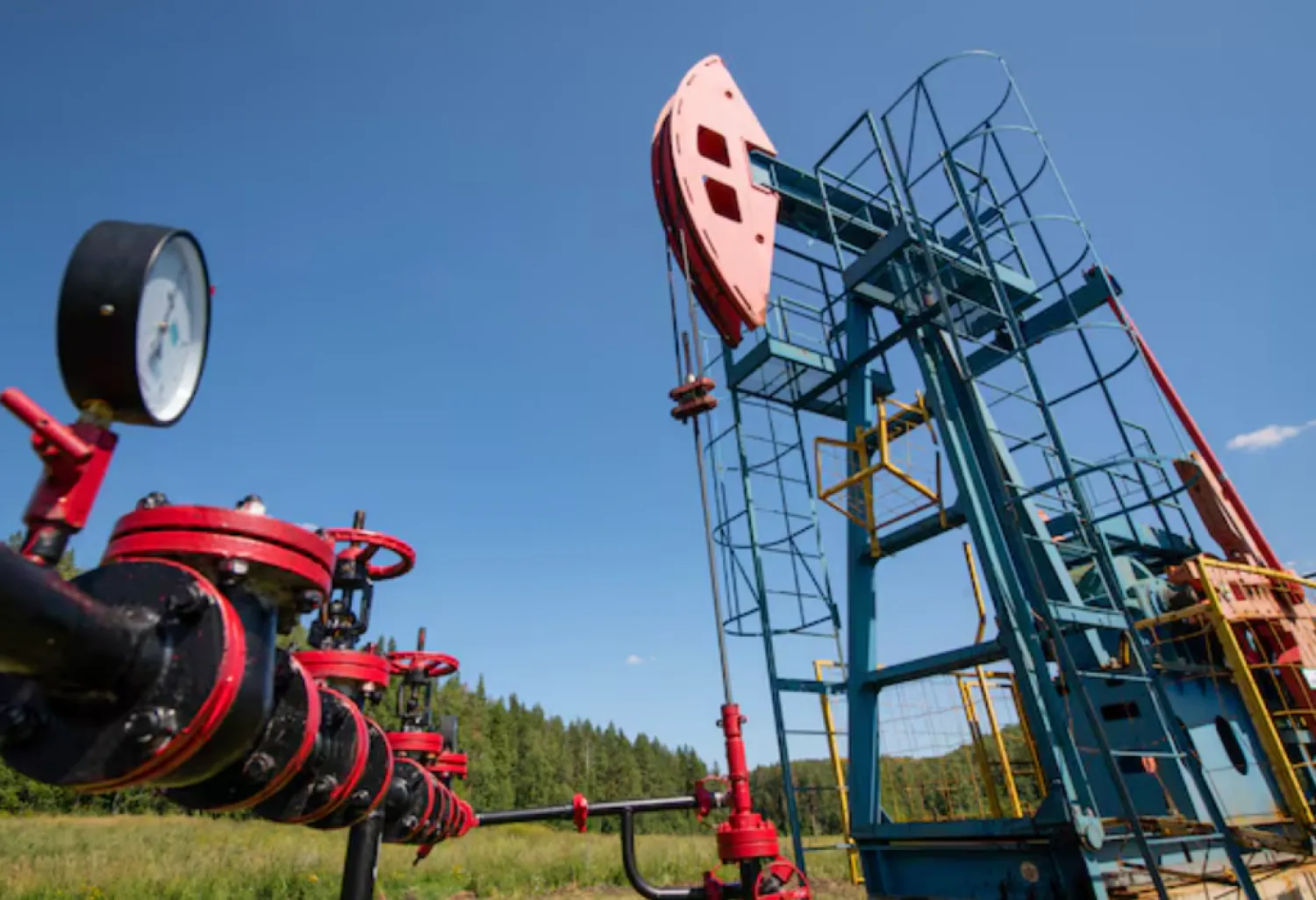
Iraqi oil fields once alive with the buzz of workers are nearly deserted. Ports that pulsed with the churn of cargo have fallen still, the din of commerce replaced by the soft rhythm of waves.
A month after the war in Iran started, workers at ports and oil fields in the province of Basra, where almost all of Iraq's crude is produced and exported, have grown accustomed to rockets streaking across the sky, aimed at US air bases and other strategic facilities, The Associated Press said.
The war, which began with US-Israeli strikes, is dealing a heavy blow to Iraq's economy. Iraq relies on oil revenues for roughly 90% of its budget, and most of its oil is exported through the Strait of Hormuz, the narrow mouth of the Arabian Gulf where Iran has effectively stopped cargo traffic during the conflict. The war also has led to a sharp reduction in the volume of imported goods reaching southern Iraq's ports, while attacks have halted traffic at the border it shares with Iran.
Unlike other countries in the Middle East touched by the war, Iraq hosts both entrenched Iran-aligned forces and significant US interests, leaving it exposed to attacks from both sides. Since the war started, oil production in southern Iraq, where Basra is located, has fallen by more than 70% and the volume of imported goods reaching the country's ports has been cut in half. Drone and missile attacks have targeted American companies and military bases. Iran's allied Iraqi militias also have struck oil fields and energy infrastructure. Many foreign workers have left.
The Iraqi government should have enough funds to get through mid-May without new oil sales, according to experts, but then it will have to borrow money.
“After that, the government would resort to issuing bonds,” said Ahmed Tabaqchali, an expert in Iraq’s economy. “But not without consequences.”
Oil production suspended
Across southern Iraq, the closure of the Strait of Hormuz has prompted oil fields to scale back production and focus on domestic needs, while oil prices around the globe have risen. Basra’s Zubair oil field, once producing around 400,000 barrels per day, has seen output drop to roughly 250,000, officials said.
Iran has offered assurances that Iraqi crude can safely transit the strait, said Bassem Abdul Karim, the head of the state-run Basra Oil Company, which oversees production in the province. However, because Iraq lacks its own tanker fleet and depends on chartered vessels, shipments ultimately hinge on whether tanker owners are willing to accept the heightened risks of making the journey. Most are not.
At a degassing station in Zubair, where crude is processed, production has also slowed dramatically. “It’s quiet now because of the reductions,” said chief engineer Ammar Hashim. “Of course we are worried.”
The downturn in Zubair reflects a broader decline in Basra. Output has dropped from 3.1 million barrels per day to roughly 900,000 across the province, according to Abdul Karim.
“Exports are currently completely halted. At the moment, we are considering alternative loading areas, but none are fully operational,” he told The Associated Press.
That morning, a drone crashed in the Majnoon oil field north of Basra without detonating. A security official said it's an increasingly common occurrence, adding that the drone was likely headed toward US bases in Kuwait. Production at the field has been suspended due to the frequency of these events. The official spoke on condition of anonymity because he was not permitted to speak to news media.
Hundreds of employees from American, British, Italian, French and other international oil companies have left Iraq due to the war. The departures accelerated after a March 6 drone strike hit the Burjisiya complex in Basra, a key logistics hub for Iraq’s oil industry used by numerous companies. The attack targeted US oil services company KBR, striking its chemical storage facility.
Another drone struck the British-Petroleum operated Rumaila oil field, prompting some foreign workers there to leave, said Abdul Karim. The field is still operating, he said. On Wednesday, multiple drones attacked a fuel warehouse linked to BP in northern Iraq.
Efforts to reroute Iraq's oil face major constraints: The country doesn't have the capacity to boost exports via its northern pipeline, and trucking through Jordan and Syria is costly and inefficient, said Abdul Karim.
Shipping lanes closed Umm Qasr, Iraq’s primary deep-water port, was once so noisy with imported cargo that it could give you a headache, workers there said.
Now, with the Strait of Hormuz closed, large mother ships bringing shipments to Iraq can no longer get to the port. Instead, they dock in the United Arab Emirates, where the cargo is carried by trucks and then smaller ships to get to Umm Qasr, a costly workaround.
The port’s jetties are running well below their former capacity, with volumes halved by the war, according to port director Mohammed Tahir Fadhil.
When the AP visited, just one cargo ship from the U.A.E. had docked.
The threat to shipping lanes escalated after Iran destroyed two tankers on March 11 in Iraqi waters, the Marshall Islands-flagged Safesea Vishnu and the Malta-flagged Zefyros.
“Today, our only gateway for goods is the United Arab Emirates,” said Farhan Fartousi, director of the Iraqi Ports Company.
Trade disrupted
On Sunday morning, Haidar Abdul-Samad, deputy director of Basra’s Shalamcha border crossing with Iran, was on the phone with an Iranian official, complaining about electricity cuts that had halted trade, urging a quick resolution. The power cuts followed an airstrike that hit the Iranian side of the crossing.
Such disruptions, local officials say, have become routine.
Before the war, the crossing saw constant movement, reflecting strong familial and commercial ties between Iranians and Iraqis in the area. It is also a key transit point for traders and pilgrims heading to Shiite holy sites in central Iraq.
That morning, trucks were backed up for miles.
“Priority is given to food supplies to prevent price increases,” Abdul-Samad said. “Passenger movement is not at the same level as before; activity has declined due to the war in Iran.”
Once electricity was restored, 30-year-old Iranian trader Atefa Al-Fatlawi arrived with her husband and young son. She buys goods at lower prices in Basra to sell back home.
“We are scared because of the bombings,” she said. “Shalamcha was targeted. Today, there were no transport vehicles at the garage because of the attack.”