Riyadh Air Launches ‘Employment First’ Overseas Aviation Training Scholarship Programhttps://english.aawsat.com/business/5223148-riyadh-air-launches-%E2%80%98employment-first%E2%80%99-overseas-aviation-training-scholarship
Riyadh Air Launches ‘Employment First’ Overseas Aviation Training Scholarship Program
Riyadh Air has announced its ‘Employment-First’ Overseas Scholarship Program, which aims to launch several scholarship tracks, starting with two specialized paths for engineers in Australia, followed by a pilot training program in the United States.
The initiative falls under ‘Promising Path’, one of the tracks within the Custodian of the Two Holy Mosques Scholarship Program, in collaboration with the Ministry of Education, the Ministry of Transport and Logistic Services, and the General Authority of Civil Aviation (GACA).
This strategic step aims to build national competencies and train a new generation of specialists in the aviation sector, SPA reported.
According to a recent press release from Riyadh Air, the program will introduce several global training pathways, with the initial phase focusing on sending scholarship students to Australia to study towards Bachelor’s degrees in Aircraft Maintenance Engineering, covering both Mechanical Engineering and Avionics (Electronics). Next month, Riyadh Air will launch a Commercial Aviation training program in the United States.
In line with Riyadh Air’s commitment to supporting students' career progression, participants will be employed before commencing their scholarships. This ensures that their years of experience are registered with the General Organization for Social Insurance, enhancing their professional readiness from day one.
The program's launch is part of Riyadh Air’s continuous efforts to empower national talent and provide the Kingdom’s young and vibrant workforce with essential skills and knowledge, representing an even greater long-term investment in the future of the Kingdom's aviation industry.
Vice President of Talent Acquisition and Business Partners at Riyadh Air Nahar Aljahani stated: "The 'Employment-First' Scholarship Program is a part of our commitment to developing national human capital and enabling Saudi youth - both men and women - to access world-class education.
Its impact will reflect positively on the development of the aviation sector in the Kingdom, contributing to the company's goal of creating over 200,000 direct and indirect jobs."
With these programs, Riyadh Air continues to play a part in building a promising future for Saudi citizens and enhancing the competitiveness of our graduates in the global aviation industry.
Saudi Professionals Poised to Lead Major Projects in the Kingdomhttps://english.aawsat.com/business/5308896-saudi-professionals-poised-lead-major-projects-kingdom
Saudi Professionals Poised to Lead Major Projects in the Kingdom
Saudi engineers inspect a project in Saudi Arabia. (SPA)
Saudi Arabia is pushing ahead with plans to deepen national participation in key sectors, shifting from “numerical Saudization” to a more sustainable, skills-based model.
A decision to raise the Saudization rate in private-sector project management jobs to 70% by February 2027 is expected to reshape the labor market, placing Saudi professionals in leading roles across major infrastructure, housing, tourism and construction projects.
The decision, issued by the Ministry of Human Resources and Social Development in partnership with the Ministry of Municipalities and Housing, applies to establishments employing three or more workers in project management roles, including managers, engineers and project management specialists.
The move comes as construction, infrastructure, housing and tourism expand rapidly across the Kingdom.
The ministry has also published an implementation guide detailing the jobs covered, enforcement mechanisms, how Saudization rates will be calculated and compliance requirements. The timeline gives private-sector companies room to reorganize their staffing structures and plan for future workforce needs before the rules take effect.
Stronger labor market ahead of rollout
The decision comes against a backdrop of improving labor market indicators.
Unemployment among Saudis fell to 6.8% in the first quarter of this year, while data from the Qiwa platform showed more than 258,000 new Saudi workers entered the market in the second quarter.
More than 419,000 employment contracts were documented during the same period.
Qiwa also processed more than 3 million services in the quarter, issued over 163,000 salary certificates and more than 63,000 experience certificates for Saudi nationals.
On Saudization specifically, the platform issued more than 72,000 certificates to establishments that met localization requirements, as part of efforts to monitor compliance with measures to increase the participation of Saudi talent.
Saudization beyond headcount
Badr al-Anazi, a board member of the Saudi Human Resources Association, described the decision as important and mature, particularly as major projects expand across Saudi Arabia and national talent develops under gradual, carefully planned replacement programs.
He told Asharq Al-Awsat that Saudi professionals were well placed to meet demand, but said the real challenge was not the number of available workers. It was experience.
Project management requires practical expertise in planning and in managing risk, costs and time, he stressed.
Al-Anazi said the decision should be seen as a move toward qualitative Saudization and knowledge transfer, rather than simply replacing a non-Saudi employee with a Saudi national. That requires sustained follow-up until Saudi professionals can independently lead major projects.
Competition for talent and wages
Al-Anazi explained the main challenge would not be the Saudization requirement itself, but whether the market can move from headcount-driven localization to sustainable, skills-based Saudization.
He expects demand for Saudi professionals to rise, intensifying competition over wages, particularly in major sectors and large projects, which could force companies to reassess their organizational and salary structures to retain staff and compete for talent in the Saudi market.
“Numerical Saudization” focuses on meeting a set percentage of Saudi employees. “Qualitative Saudization” goes further, focusing on the competence, experience and ability of Saudi professionals to perform their roles and lead operations effectively.
A market set for change
For Al-Anazi, success will not be measured by hitting 70% on paper. It will depend on whether the Saudi project managers and specialists who make up that share are genuinely capable of leading projects.
He said the impact could extend far beyond creating more jobs for Saudis and could reshape the project management market itself.
The Ministry of Human Resources has previously introduced Saudization requirements for project management jobs in phases, reflecting a broader drive to localize high-value, pivotal roles.
Al-Anazi expects the policy to support private sector productivity over the long term and strengthen its ability to absorb specialized Saudi talent as nationals take on a larger role in project management across engineering, administrative and technical professions.
Economic impact goes beyond hiring
Financial and economic adviser Dr. Hussein al-Attas said the decision was more strategic than employment-driven.
Project management, he told Asharq Al-Awsat, sits at the heart of delivering Saudi Vision 2030 targets across construction, infrastructure, tourism, housing and logistics.
Its economic impact will go beyond adding Saudi employees. It is expected to increase demand for specialized national talent and create higher-value jobs, he added.
In the short term, however, companies that rely heavily on specialized foreign labor could face higher hiring costs, pushing them to restructure teams and invest earlier in training.
Investing in human capital
Al-Attas said he did not expect the decision to become a major obstacle to local or foreign investment, pointing to the implementation period running until February 2027, giving companies time to adjust.
Instead, the measure could spur investment in human capital, training and professional certifications, he went on to say.
Companies will effectively face two choices: recruit qualified Saudi professionals or invest in developing their own workforce, he remarked. For foreign investors, clarity and stability in Saudization rules matter more than the percentage itself.
Three levels of impact
Al-Attas identified three stages for maximizing the decision’s local economic value: hiring and training Saudi professionals; transferring knowledge and expertise from international companies; and building a generation of Saudi project managers able to lead major projects at home and abroad.
Like Al-Anazi, he said success should not be judged by whether the 70% target is achieved on paper.
The real test will be whether Saudi professionals can manage projects to global standards on cost, time, quality and risk.
The central challenge remains the gap between academic qualifications and practical, on-the-ground experience, he noted.
Arab Gulf Readies Infrastructure to Attract Long-Term Capitalhttps://english.aawsat.com/business/5308884-arab-gulf-readies-infrastructure-attract-long-term-capital
Arab Gulf Readies Infrastructure to Attract Long-Term Capital
A solar power project in northern Saudi Arabia. (SPA)
Saudi Arabia and other Gulf countries are reshaping how they finance the next wave of infrastructure, moving beyond government spending to tap private and institutional capital for projects spanning energy, water, and the digital economy.
The shift marks a broader change in the Gulf’s investment model, as governments, development banks, sovereign investors, and private capital increasingly share the cost of turning large-scale projects into long-term investable assets.
What is changing in the Gulf is not simply the scale of infrastructure spending. The financing model itself is being reshaped.
As projects expand across energy, water, transport and the digital economy, government funding alone is no longer enough to meet rising investment needs. Pension funds, insurers and asset managers, meanwhile, control vast pools of long-term capital that are well suited to infrastructure assets capable of generating steady cash flows over many years.
The region is therefore moving toward financing structures designed to share risks more effectively, strengthen project creditworthiness and turn government-backed investments into opportunities that can draw in private and institutional capital.
Speaking to Asharq Al-Awsat, Saud Alsayyari, Asian Infrastructure Investment Bank (AIIB) Senior Investment Officer for the Middle East and North Africa, said the “fundamentals are strong” in Saudi Arabia and across the Gulf.
Population growth, urbanization and economic transformation programs are creating a broad pipeline of opportunities in renewable energy, digital infrastructure, water and healthcare, he explained.
The bigger challenge is no longer finding opportunities. It is structuring the risks and mobilizing enough capital to deliver them, he stressed.
Multilateral development institutions can play a central role by making projects more bankable, reducing risks for investors and catalyzing capital flows far beyond the size of their own direct commitments, he added.
Renewable energy and digital infrastructure lead opportunities
Alsayyari noted that the strongest investment opportunities over the next five years are likely to emerge where economic growth meets climate and sustainability goals.
Large-scale renewable energy projects, backed by storage technologies, will be a key pillar of the region’s energy transition, he went on to say.
He pointed to the financing of Oman’s 500-megawatt Ibri II solar power plant as an example.
Technology-enabled infrastructure will also play an increasingly important role.
From nationwide fiber-optic networks to smart logistics, such infrastructure “multiplies the value of every other asset class,” Alsayyari said.
Social infrastructure, particularly healthcare and education, is also expected to expand alongside population growth and urbanization.
“Disciplined structuring and strong environmental and social standards are what turn opportunity into sustainable, long-term value,” Alsayyari remarked.
Development banks can turn plans into bankable projects
Alsayyari said multilateral development banks can help transform government infrastructure plans into projects that lenders and investors are willing to finance. Their role includes sharing risks and providing the technical expertise needed to make projects viable.
He cited recent financing with the Saudi Water Authority, structured with the National Infrastructure Fund and commercial lenders to modernize major desalination facilities.
Projects of that scale become investable when a multilateral development institution can absorb risks that commercial lenders are unwilling to take, he added.
Such institutions can also carry out environmental and social due diligence and provide the technical expertise needed to structure deals in line with international standards.
“That is the model: multilateral development institutions turn ambition into bankable projects through disciplined preparation, blended finance and credit enhancement,” he stressed.
AIIB’s involvement also “reassures the market, reduces perceived risk and catalyzes private capital far beyond the size of our direct commitment,” he said.
The key issue is who carries the risk
For private investors, the problem is not risk itself, Alsayyari said. It is how that risk is distributed.
Infrastructure risk cannot be eliminated, but it can be allocated more effectively among the parties involved, he remarked.
Problems arise when investors are asked to shoulder risks they cannot easily price, such as regulatory uncertainty, early-stage construction risk or revenue models without a clear track record.
“Our role as a multilateral development bank is to correct that risk allocation,” Alsayyari said.
AIIB does this through non-sovereign financing that reduces pressure on public budgets, as well as guarantees and first-loss structures that can make commercial investment tranches more attractive to institutional investors.
Those tools can also increase confidence in how projects will be delivered and operated, he explained.
Clear visibility over future projects is equally important.
Alsayyari said the investment program AIIB is developing with Saudi Arabia gives investors a clearer view of a structured pipeline of opportunities rather than leaving them to assess isolated deals one by one.
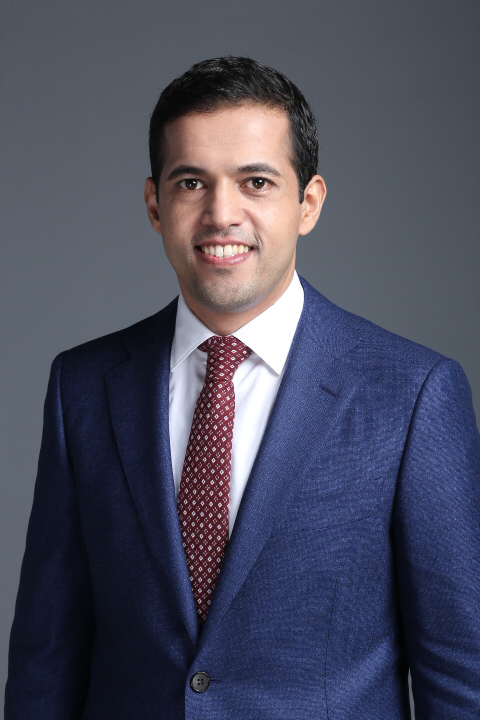
Saud Alsayyari, Asian Infrastructure Investment Bank (AIIB) Senior Investment Officer for the Middle East and North Africa. (AIIB)
Four conditions could unlock institutional capital
Alsayyari said pension funds and insurers hold enormous amounts of long-term capital, yet infrastructure still accounts for only a limited share of their portfolios. That is despite a natural fit between the two.
Infrastructure assets can offer predictable, inflation-linked cash flows, making them well-suited to the long-term liabilities of institutional investors, he added.
Alsayyari identified four conditions needed to attract more of that capital: stable legal and regulatory frameworks, including clear public-private partnership rules; standardized project documents, procurement processes and structures; credit-enhancement tools; and reliable environmental, social and governance performance.
“Many global investors are subject to net-zero commitments, so they are looking for assets aligned with the goals of the Paris Agreement,” he noted. “When those conditions are in place, Gulf infrastructure can become a core asset class for institutional investors, and the capital will follow.”
Regional funds can multiply investment
Alsayyari described regional funds as one of the Gulf’s most effective tools for mobilizing private capital for infrastructure.
A direct loan finances one project. A well-structured investment platform can finance an entire portfolio, spread risk and build a broader investment ecosystem around it, he said.
He pointed to AIIB commitments to Gulf infrastructure funds, including Rakiza and Aberdeen Standard Investcorp Infrastructure Partners.
The funds target sustainable core infrastructure in healthcare, education, water, mobility and digital networks, with backing from investors including Saudi Arabia’s Public Investment Fund and the Oman Investment Authority.
AIIB’s participation adds more than capital, Alsayyari said.
Projects financed through the funds are assessed against the bank’s standards, ineligible activities are excluded and governance requirements are written into contracts.
The combination of “scale, discipline and local expertise” is crucial to steering institutional capital toward the region’s infrastructure needs, he said.
Gulf states look beyond new construction
Alsayyari said Gulf countries have made significant progress in building an infrastructure system that balances economic growth, environmental goals and long-term financing needs.
Sustainability has become embedded in national strategies, from net-zero commitments to renewable energy targets, he stated. One of the most striking developments, however, is the growing focus on upgrading existing assets rather than simply building new ones.
Alsayyari cited the modernization of desalination plants in Saudi Arabia.
Switching from thermal desalination to reverse osmosis will reduce energy consumption and emissions while increasing production capacity and extending asset life, he said.
“Growth and environmental performance are advancing together,” he told Asharq Al-Awsat.
The region’s financing system is also evolving quickly, with more structures combining multilateral, national and commercial institutions.
Alsayyari said the partnership with the National Infrastructure Fund offered a model that could be replicated elsewhere.
Every AIIB-approved financing aligns with the goals of the Paris Agreement, he said. “The direction of the region is clear, and we are proud to support that path.”
Energy, water and green hydrogen seen as the next growth areas
Over the next decade, Saudi Arabia and other Gulf states are likely to stand out in several infrastructure sectors, Alsayyari said.
Renewable energy and storage systems are expected to lead, alongside the emerging green hydrogen economy, technology-enabled infrastructure and climate-resilient water systems.
The region already has advanced investments in connectivity, data center capacity and digital infrastructure, he noted.
Water security will remain a strategic priority because of the region’s geography and its future needs.
The bigger transformation may be in how projects are financed
Alsayyari said the most important infrastructure change over the next decade may not be what the Gulf builds, but how it pays for it.
The region is gradually moving away from models driven mainly by government funding toward more complex partnerships bringing together governments, development institutions, sovereign investors and private capital.
That shift sits at the heart of the role the Asian Infrastructure Investment Bank was created to support, Alsayyari said.
AIIB’s 11th annual meeting, to be hosted by Doha, will mark an important milestone as the bank enters its second decade.
Alsayyari said Saudi Arabia and other Gulf countries could lead several global trends in renewable energy, digital infrastructure and water systems in the years ahead.
Europe Can’t Afford to Miss AI Revolution, Says ECB Chiefhttps://english.aawsat.com/business/5308696-europe-can%E2%80%99t-afford-miss-ai-revolution-says-ecb-chief
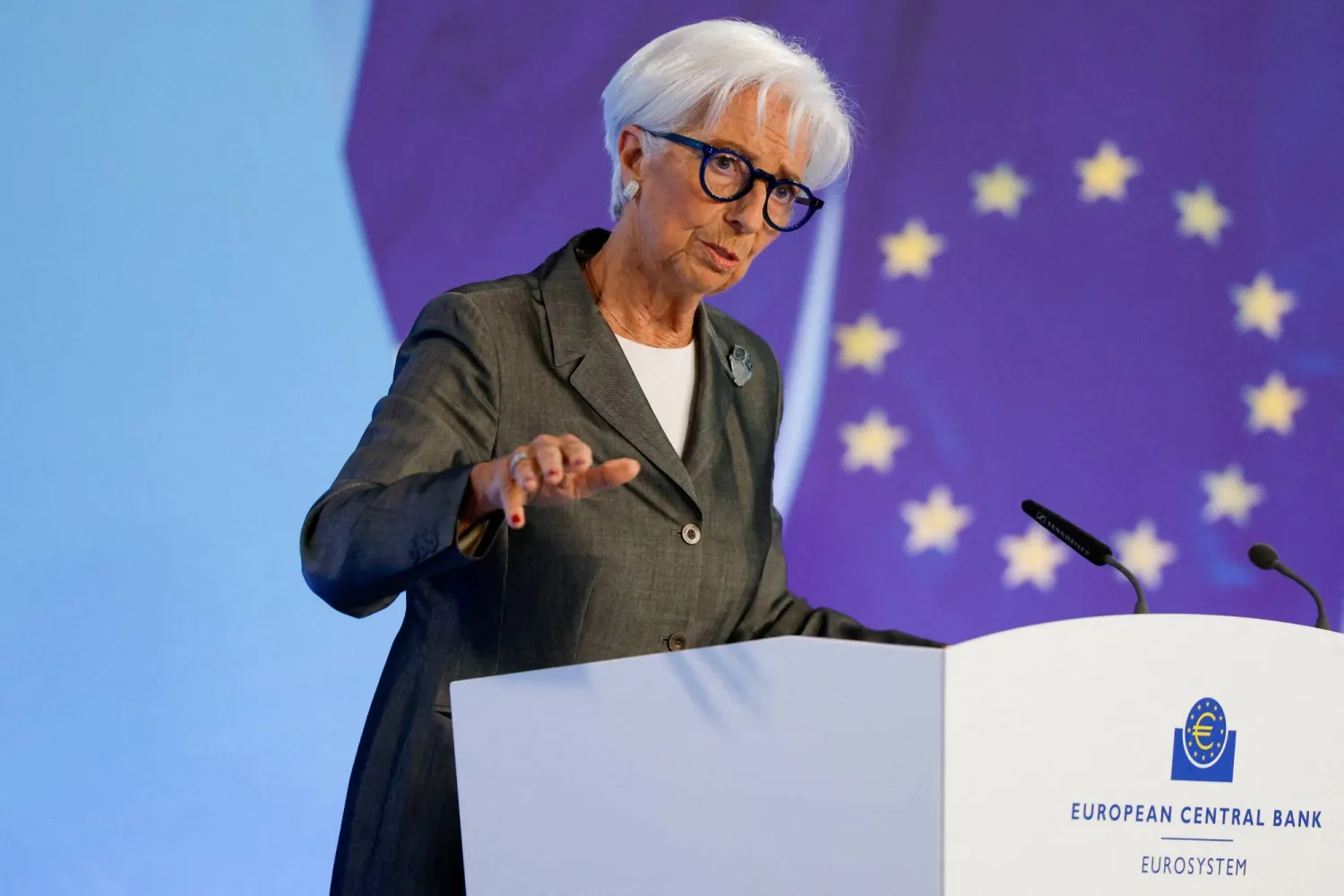
European Central Bank President Christine Lagarde addresses a press conference following the ECB Governing Council meeting at the ECB headquarters in Frankfurt, Germany, July 23, 2026. (Reuters)
TT
TT
Europe Can’t Afford to Miss AI Revolution, Says ECB Chief
European Central Bank President Christine Lagarde addresses a press conference following the ECB Governing Council meeting at the ECB headquarters in Frankfurt, Germany, July 23, 2026. (Reuters)
European Central Bank chief Christine Lagarde said Wednesday that the continent could not afford to miss out on the artificial intelligence revolution as the continent's growth model comes under increasing pressure.
The United States and China are seen leading the AI race, with their companies producing the most advanced large language models and rapidly building vast new data centers.
"Europe largely missed out on the first digital revolution, as the commercial gains from the spread of information and communication technologies were captured disproportionately elsewhere," Lagarde said at a World Economic Forum event in Geneva.
"We cannot afford to repeat that experience with artificial intelligence, the second digital revolution," she said.
While European companies are investing heavily in AI, barriers in the eurozone are hindering them from scaling up their operations, she said.
The "fragmentation" of EU markets means firms are not competing enough across the whole eurozone and also struggled to raise funds, particular when compared to US peers, Lagarde said.
"The result is fewer firms growing to global size and slower diffusion of new technologies across the economy."
She added that scale is particularly important for Europe to be able to compete in AI and other new technologies at a time when Europe's post-war growth model faces major challenges.
She noted that Europe had long benefitted from "three pillars" -- a rules-based global order underpinned by US security guarantees, cheap energy and expanding global trade.
"All three are weakening as the international environment changes," she said.
"These shifts suggest that Europe's post-war growth model is eroding. And it is unlikely to return to the form we once knew."
The return of US President Donald Trump to the White House, in particular, has shaken relations between the United States and Europe.
He has imposed hefty tariffs on European Union imports and questioned long-standing US commitments to the continent's security.
لم تشترك بعد
انشئ حساباً خاصاً بك لتحصل على أخبار مخصصة لك ولتتمتع بخاصية حفظ المقالات وتتلقى نشراتنا البريدية المتنوعة