


Lebanon Signs Deal to Purchase Natural Gas from Egypt

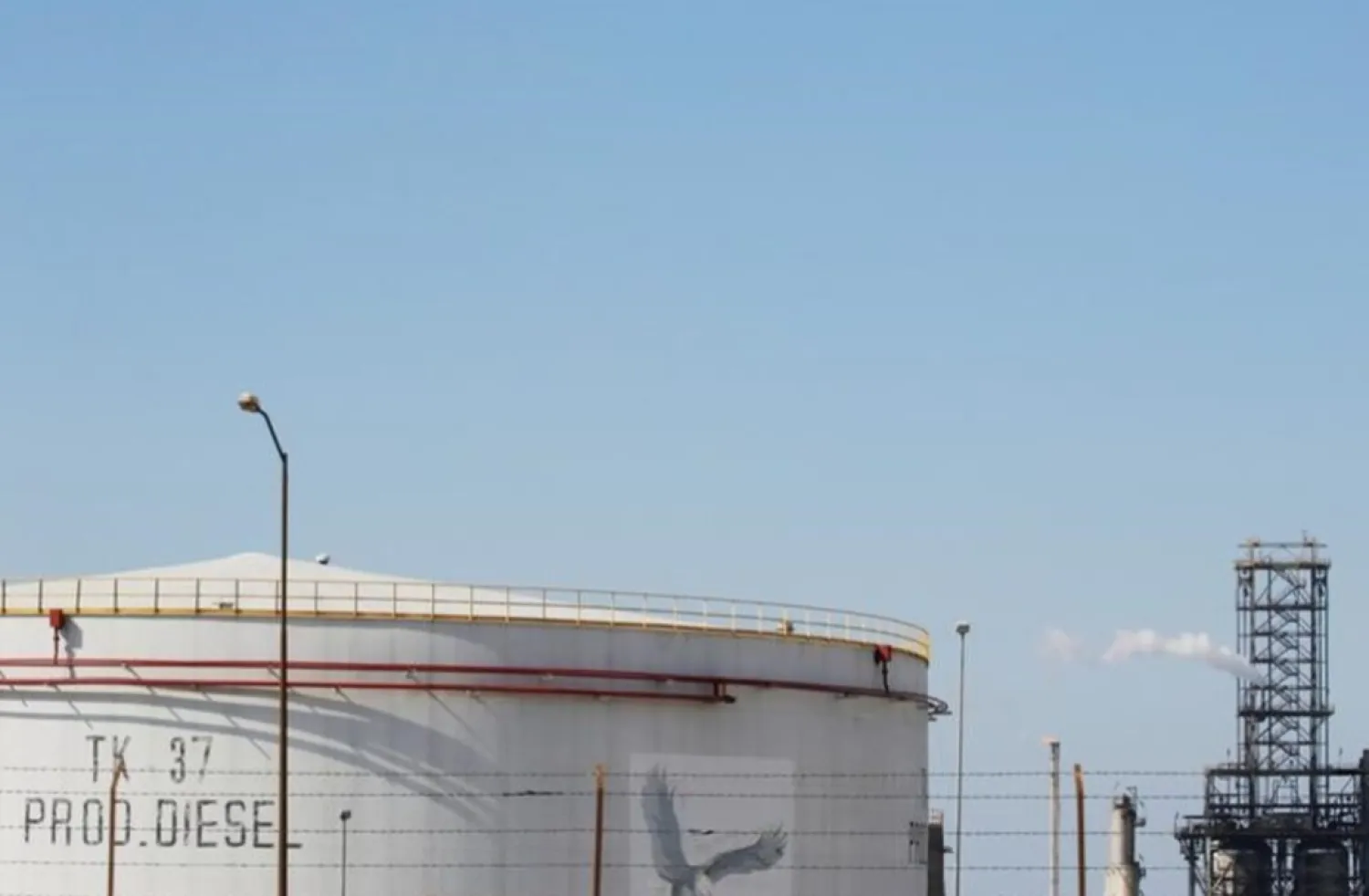
A diesel storage tank is seen at the Middle East Oil Refinery Company (MIDOR) in Alexandria, Egypt, November 7, 2018. REUTERS/Amr Abdallah Dalsh
TT

Lebanon Signs Deal to Purchase Natural Gas from Egypt

A diesel storage tank is seen at the Middle East Oil Refinery Company (MIDOR) in Alexandria, Egypt, November 7, 2018. REUTERS/Amr Abdallah Dalsh

Lebanon said Monday it plans to purchase natural gas from Egypt, seeking to reduce its reliance on fuel oil for its ageing power plants in a country hamstrung by regular electricity cuts.

The electricity sector has cost Lebanon more than $40 billion since the end of its 1975-1990 civil war, and successive governments have failed to reduce losses, repair crumbling infrastructure or even guarantee regular power bill collections.

Residents rely on expensive private generators and solar panels to supplement the unreliable state supply.

Prime Minister Nawaf Salam's office said in a statement that the memorandum of understanding between Lebanon and Egypt sought "to meet Lebanon's needs for natural gas allocated for electricity generation".

It was signed by Lebanese Energy Minister Joe Saddi and Egyptian Petroleum Minister Karim Badawi, according to AFP.

"Lebanon's strategy is first to transition to the use of natural gas, and second, to diversify gas sources," Saddi said, adding that "the process will take time because pipelines need rehabilitation".

Lebanon will "contact donor agencies to see how they can help finance the rehabilitation" of the Lebanese section of the gas pipelines, he said, adding that repair work would take several months.

President Joseph Aoun said the memorandum of understanding was "a practical and essential step that will enable Lebanon to increase its electricity production".

A statement from Cairo's petroleum and mineral resources ministry said that "Egypt is fulfilling its role in supplying Lebanon with natural gas, with the aim of supporting energy security for Arab countries".

In 2022, Lebanon signed a deal to import natural gas from Egypt and Jordan via Syria to boost power supply, but the contracts were never implemented due to financing issues and US sanctions on Syria.

Washington recently lifted it Syria measures following the fall of longtime ruler Bashar al-Assad last year.

In April, Lebanon signed a $250 million agreement with the World Bank to modernise its electricity sector.



World Food Prices Rose in March as Iran War Lifted Energy Costs, FAO Says

 A farmer carries harvested rice at a paddy field in Samahani, Aceh province on April 2, 2026. (AFP)
A farmer carries harvested rice at a paddy field in Samahani, Aceh province on April 2, 2026. (AFP)
TT

World Food Prices Rose in March as Iran War Lifted Energy Costs, FAO Says

 A farmer carries harvested rice at a paddy field in Samahani, Aceh province on April 2, 2026. (AFP)
A farmer carries harvested rice at a paddy field in Samahani, Aceh province on April 2, 2026. (AFP)

World food prices climbed in March, due largely to higher energy costs linked to the escalating conflict in the Middle East, the United Nations Food and Agriculture Organization said on ‌Friday.

The FAO ‌Food Price Index, ‌which ⁠measures changes in ⁠a basket of globally traded food commodities, averaged 128.5 points in March, up 2.4% from its revised February level.

"Price rises ⁠since the conflict ‌began ‌have been modest, driven mainly by ‌higher oil prices and ‌cushioned by ample global cereal supplies," FAO Chief Economist Maximo Torero said in ‌a statement.

But if the conflict lasts over 40 days ⁠and ⁠input costs remain high, farmers may reduce inputs, plant less, or switch crops, leading to lower future yields and affecting food supply and prices for the rest of this year and next, he said.


Turkish Inflation Near 2% Monthly in March, Below Forecasts

A full moon rises behind Galata Tower, in Istanbul, Türkiye, Thursday, April 2, 2026. (AP)
TT

Turkish Inflation Near 2% Monthly in March, Below Forecasts

A full moon rises behind Galata Tower, in Istanbul, Türkiye, Thursday, April 2, 2026. (AP)

Turkish consumer price inflation was 1.94% month-on-month in March, while the annual figure fell to 30.87%, data from the Turkish Statistical Institute showed ‌on Friday.

In ‌a Reuters ‌poll, ⁠monthly inflation was ⁠forecast to be 2.32%, with the annual rate seen at 31.4%, driven by ⁠a rise in ‌fuel prices ‌and weather-related pressures ‌on food inflation.

In ‌February, consumer prices rose 2.96% month-on-month and 31.53% year-on-year, broadly in ‌line with estimates and reinforcing expectations that ⁠the ⁠disinflation process may be stalling.

The data also showed the domestic producer index rose 2.30% month-on-month in March for an annual increase of 28.08%.


Oil Prices Surge While Asian Share Prices Rise Moderately

FILE - Workers walk in an area at a degassing station in Zubair oil field, whose operations have being reduced due to the Mideast war triggered by the US and Israeli attacks on Iran, near Basra, Iraq, March 28, 2026. (AP Photo/Leo Correa, File)
TT

Oil Prices Surge While Asian Share Prices Rise Moderately

FILE - Workers walk in an area at a degassing station in Zubair oil field, whose operations have being reduced due to the Mideast war triggered by the US and Israeli attacks on Iran, near Basra, Iraq, March 28, 2026. (AP Photo/Leo Correa, File)

Oil prices continued to surge on worries of a prolonged Iran war but the Asian markets that were open Friday rose moderately in cautious trading, while others were closed for the Good Friday holidays.

Benchmark US crude rose 11.4% to $111.54 a barrel. The price of Brent crude, the international standard, jumped 7.8% to $109.03 per barrel, The Associated Press said.

“A more extended conflict raises the threat to physical infrastructure, extends disruptions through the Strait of Hormuz, and will entail a longer post-war recovery period, with price impacts spilling over later into the year,” according to a report from BMI, a unit of Fitch Solutions.

The US only relies on the Arabian Gulf for a fraction of the oil it imports, but oil is a commodity and prices are set in a global market.

The situation is very different in Asia. Japan, for example, relies on access to the Strait of Hormuz for much of the nation’s oil import needs and would need to rely on alternative routes. But some analysts say Japan and other nations are counting on an agreement with Iran to allow transports.

Japan’s benchmark Nikkei 225 gained 0.9% in Friday morning trading to 52,938.62. South Korea’s Kospi jumped 2.1% to 5,344.41. The Shanghai Composite sank 0.5% to 3,899.57. Trading was closed in Hong Kong, Singapore, Australia, New Zealand, the Philippines, Indonesia and India.

Wall Street, where trading is closed Friday, finished its first winning week since the start of the Iran war, although trading started out with a decline driven by a surge in oil prices.

That came after US President Donald Trump late Wednesday vowed the US will continue to attack Iran and failed to offer a clear timetable for ending the conflict in the Middle East.

The S&P 500 rose 7.37 points, or 0.1%, to 6,582.69. Several days of solid gains this week helped the benchmark index notch a 3.4% gain for the week. The Dow Jones Industrial Average fell 61.07 points, or 0.1%, to 46,504.67. The Nasdaq composite rose 38.23 points, or 0.2%, to 21,879.18. Both indexes also notched weekly gains.

Treasury yields remained relatively steady in the bond market. The yield on the 10-year Treasury fell to to 4.30% from 4.32%.

In currency trading, the US dollar edged up to 159.66 Japanese yen from 159.53 yen. The euro cost $1.1535, inching down from $1.1537.