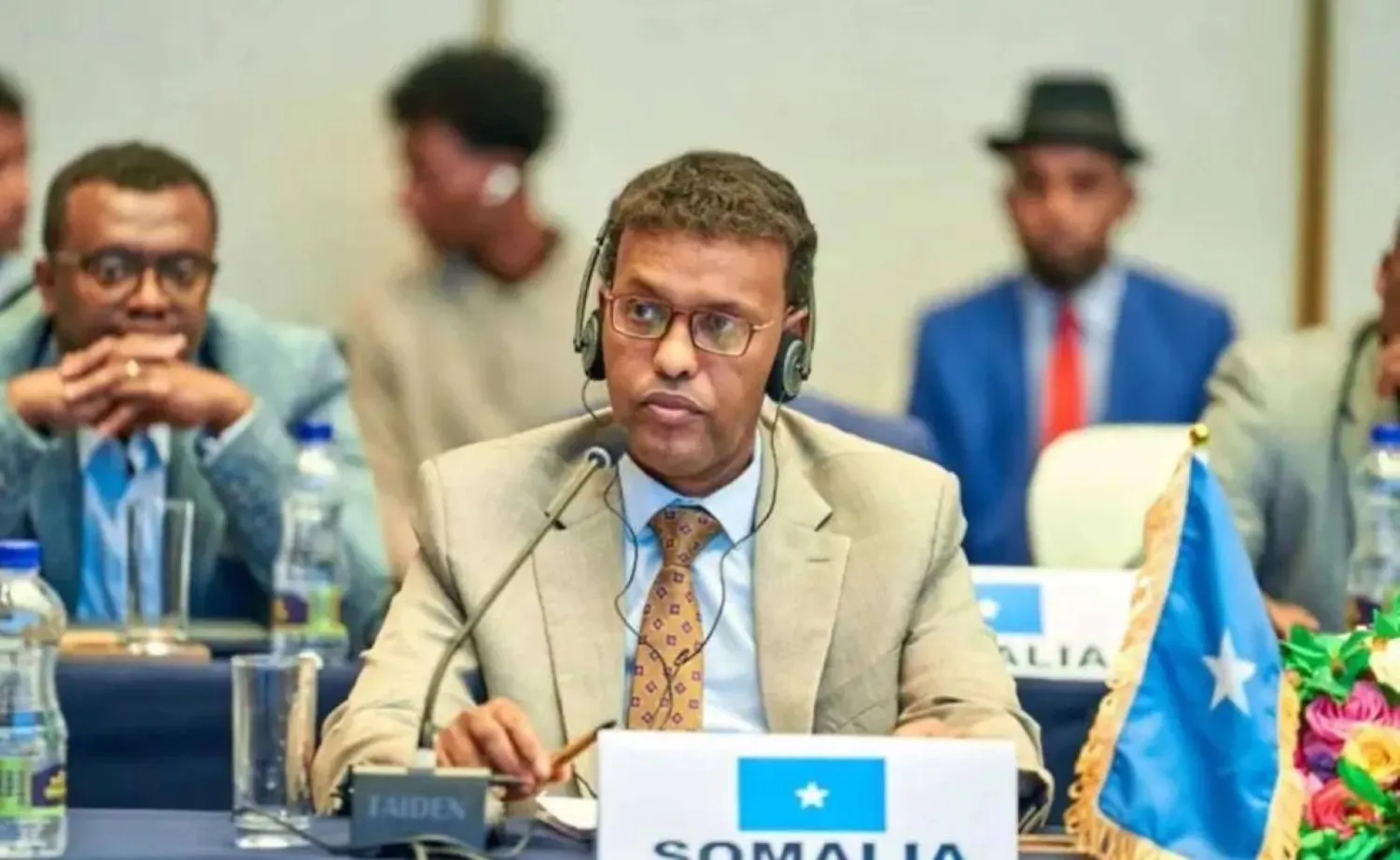

Somalia is weighing options to defend its unity and sovereignty and is consulting strategic allies and partners in the region and beyond to determine the best course of action, its ambassador to Ethiopia and the African Union said on Tuesday.
Abdullahi Warfa told Asharq Al-Awsat that the consultations aim to “choose the best ways to defend the country’s sovereignty and unity,” following an announcement by Israeli Prime Minister Benjamin Netanyahu that Israel had officially recognized “the Republic of Somaliland as an independent, sovereign state.”
The Israeli move drew condemnation from Arab, Islamic and African countries. Several Arab and Muslim states, the Arab League, the Gulf Cooperation Council and the African Union Commission issued statements rejecting the step.
Somali President Hassan Sheikh Mohamud rejected the recognition and told an emergency meeting of Arab League envoys on Sunday that Mogadishu has “the right to legitimate self-defense of its territory.”
Asked whether Somalia might pursue legal action against Somaliland’s separatist leader, Abdirahman Mohamed Abdullahi Irro, or whether military action was being considered, Warfa said several options were under review and would be discussed.
Somalia, he stressed, is consulting strategic allies and partners before choosing “the best option to defend Somalia, its unity and its sovereignty.”
Warfa said Israel’s recognition of northern Somalia’s breakaway region was “categorically rejected and unacceptable,” calling it “a blatant assault on the unity and sovereignty of the Somali people” and a violation of international law, international legitimacy and diplomatic norms.
The move “cannot be accepted by any political or legal logic”, he went on to say, adding that Israel, which he described as lacking international legitimacy, “cannot grant legitimacy to others.”
On the diplomatic front, Warfa noted that the Arab League, the African Union, the Organization of Islamic Cooperation and the Gulf Cooperation Council had all stood by Somalia against what he called the Israeli violation.
“The international community as a whole has almost entirely stood with international legitimacy,” he remarked, adding that blame lay with Israel, which he described as internationally isolated, for a gamble that would yield no results.
Warfa noted that the United Nations Security Council met on Monday at Somalia’s request and that all 15 members voted in support of Somalia, backing its rejection of Israel’s steps.
As for Israel’s motives, Warfa said the “reckless attempt” aimed to establish Israeli military bases to control the strategic Bab al-Mandab strait, a key artery for global shipping.
He warned that “even more dangerous” was what he described as an Israeli plan to use its presence in the area to relocate more than 1.8 million Palestinians from Palestinian territories to Somalia, stressing that Somalia’s unity is “sacred and untouchable,” and that any infringement is a red line.
On Somali public opinion, Warfa stressed that rejection of the Israeli move was unanimous across the country, in central, northern and southern regions alike. Residents of the breakaway region had also rejected their leader's action, pointing to large demonstrations in several areas.
Last week, Israeli Foreign Minister Gideon Saar announced that Israel had signed an agreement on mutual recognition and the establishment of full diplomatic relations with Somaliland. He added that he had spoken by phone with Somaliland’s leader, describing the day as “important for both sides.”