


Saudi Development Projects Fuel Growth in the Heart of Yemen

Saudi Arabia’s efforts through the SDRPY have emerged as a practical model for supporting Yemen’s path toward development and stability. (SPA)
TT

Saudi Development Projects Fuel Growth in the Heart of Yemen

Saudi Arabia’s efforts through the SDRPY have emerged as a practical model for supporting Yemen’s path toward development and stability. (SPA)

Saudi Arabia has provided Yemen with wide-ranging development and humanitarian support since the 1970s. The Kingdom has spared no effort to back Yemen's stability and prosperity, reflecting the fraternal ties, shared history, family bonds, and geographic proximity between the two neighbors, reported the Saudi Press Agency on Tuesday.

Building on that long-standing support, the Saudi Development and Reconstruction Program for Yemen (SDRPY) was established in mid-2018 by royal decree of Custodian of the Two Holy Mosques King Salman bin Abdulaziz Al Saud.

The SDRPY was launched with a strategic vision aimed at meeting Yemen’s development needs and aligning with the UN Sustainable Development Goals. The vision aims to apply global best practices in development and reconstruction to boost planning efficiency, improve implementation, and ensure sustainable impact.

The program’s development projects and initiatives complement Saudi Arabia's historical support for Yemen and follow a strategy focused on improving the efficiency and effectiveness of assistance through local, regional, and international partnerships.

These efforts are intended to support Yemen’s government and state institutions in achieving peace, stability, and reconstruction, improving living standards for the Yemeni people, and promoting sustainable development across the country.

The SDRPY incorporates sustainability principles into its development interventions, including building the capacity of Yemeni professionals across multiple sectors, deploying renewable energy technologies, and boosting effective community engagement to support stability and link development efforts with peacebuilding.

To date, the program has delivered 268 development projects and initiatives across eight key sectors: education, health, water, energy, transportation, agriculture and fisheries, government capacity-building, and development programs, covering 16 Yemeni governorates.

Health initiatives have boosted the sector’s capacities, benefiting around 4 million people, including the King Salman Medical and Educational City project in Al-Mahra. This project is among the largest efforts supporting Yemen’s health and education sectors, spanning one million square meters and including a fully integrated 110-bed hospital.

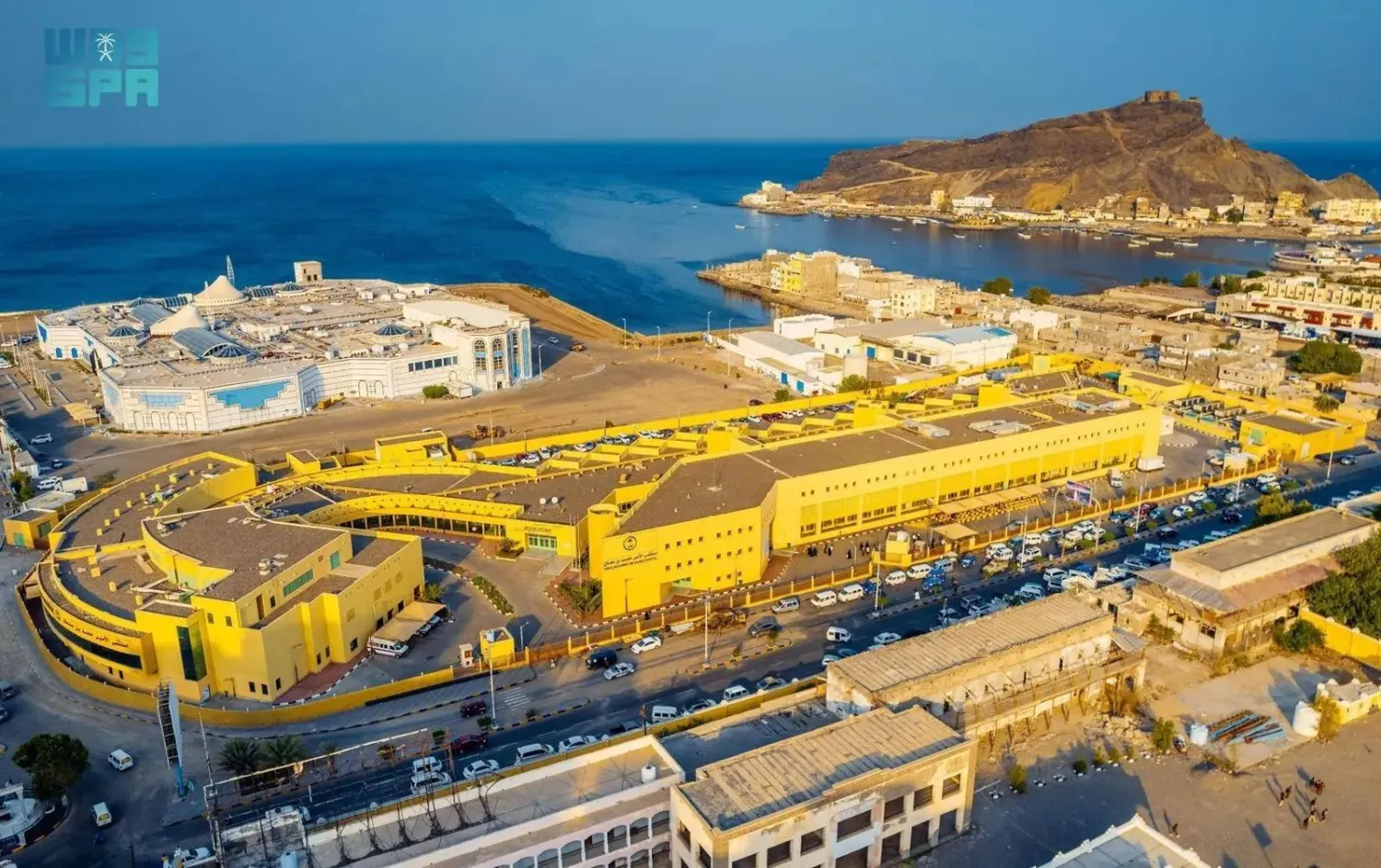
Another flagship project, Prince Mohammed bin Salman Hospital in the interim capital Aden, has a capacity of 270 beds and has delivered more than 3 million medical services since opening, in addition to specialized centers for cardiac care, dialysis, and maternal and child health.

In education, SDRPY has supported projects in 11 governorates, including Taiz, Aden, Socotra, Al-Mahra, Marib, Hadhramaut, Hajjah, Lahj, Abyan, Shabwah, and Al-Dhaleh.

Initiatives span general and higher education, as well as technical and vocational training. These include a development package for the University of Aden, the construction and equipping of medical, pharmacy, and nursing colleges at Taiz University, and the expansion of the University of Saba Region in Marib.

The SDRPY’s projects and initiatives have also strengthened water security and improved the efficiency of water distribution and management, with full coverage of water needs in Al-Ghaydah, 50% coverage in Socotra, and 10% coverage in Aden.

Transport-sector initiatives have benefited 14 million people. These include the rehabilitation of 150 kilometers of roads, such as the Al Abr Road, upgrades to border crossings including Al-Wadiah, rehabilitation of airports such as Aden International Airport and Al-Ghaydah International Airport, and expanded capacity at ports including Nashtoon and Socotra.

These projects have boosted connectivity, improved daily life, and supported commercial and economic activity by facilitating movement by land, sea, and air.

The SDRPY has also launched pioneering initiatives to support livelihoods, strengthen rural resilience, empower women and youth economically, revive and preserve heritage, restore historic buildings, build capacity in the cultural sector, and deliver targeted initiatives that further advance the development process.

Among these projects is the restoration of the historic Seiyun Palace to preserve it as a landmark and cultural center, while strengthening the capacity of Yemen’s government institutions as a key step toward enhancing stability and stimulating economic growth.

Overall, the SDRPY’s projects and initiatives are designed to meet citizens’ basic needs, support infrastructure across multiple sectors, and empower local communities, contributing to sustainable development and strengthening economic and social resilience across the governorates.

The program operates in coordination with the Yemeni government and local authorities, and in partnership with civil society organizations, international and UN agencies, the private sector, and local, regional, and international partners. It maintains five executive offices in Yemen to oversee project implementation on the ground.


World Defense Show Opens in Riyadh with Expanded Int’l Participation

The exhibition includes a fully integrated airport with a 2,700-meter runway, four aircraft taxiways, and extensive display areas (Asharq Al-Awsat)
TT

World Defense Show Opens in Riyadh with Expanded Int’l Participation

The exhibition includes a fully integrated airport with a 2,700-meter runway, four aircraft taxiways, and extensive display areas (Asharq Al-Awsat)

The World Defense Show opened in Riyadh on Sunday, bringing together defense and military companies from around the globe to showcase advanced technologies, as Saudi Arabia accelerates efforts to localize its military industries and strengthen domestic supply chains.

The third edition of the exhibition is being held under the patronage of King Salman bin Abdulaziz Al Saud and organized by the General Authority for Military Industries from Feb. 8 to Feb. 12.

It features official delegations, government entities, and international firms operating in the defense and security sectors.

The event comes as part of Saudi Vision 2030, which aims to build a comprehensive national defense industry and localize more than 50 percent of military spending, while boosting operational readiness and strategic autonomy.

Ahmad Al-Ohali, governor of the General Authority for Military Industries and chairman of the exhibition’s supervisory committee, said the show reflects the Kingdom’s commitment to innovation, localization, and the development of an integrated defense ecosystem.

He said the exhibition includes live air and ground demonstrations, static displays, and newly introduced zones designed to enhance cooperation between government bodies and major national and international defense companies.

Andrew Pearcey, chief executive of the World Defense Show, said the event would feature a comprehensive program starting with an official delegations initiative linking senior officials with investors and industry leaders to support international industrial and technological cooperation.

Pearcey said the “Defense Industry Lab” would highlight emerging technologies and applied research, while dedicated zones would focus on naval systems and Saudi supply chains, connecting local manufacturers and small and medium-sized enterprises with global firms.

The program also includes meetings between Saudi government entities and industry representatives to discuss operational requirements and investment opportunities.

He added that the venue includes a fully integrated airport with a 2,700-meter runway, four aircraft taxiways, and large display areas, allowing the exhibition to host integrated air, land, and maritime demonstrations.

Participation in the 2026 edition is expected to exceed previous shows, reflecting growing international interest in Saudi Arabia’s defense market.

South Korea’s air force aerobatic team, the Black Eagles, will take part in the exhibition for the first time in the Middle East. The South Korean Air Force said it would deploy 9 T-50 fighter jets, including 1 reserve aircraft, 4 C-130 transport planes, and about 120 personnel.


Saudi Arabia Condemns RSF Attacks on Civilians and Aid Convoys in Sudan

 An elderly man picks up his food aid ration at the Umdulu Camp, in Engpung County, Sudan, January 30, 2026. (Karl Schembri/Norweigan Refugee Council/Handout via Reuters)
An elderly man picks up his food aid ration at the Umdulu Camp, in Engpung County, Sudan, January 30, 2026. (Karl Schembri/Norweigan Refugee Council/Handout via Reuters)
TT

Saudi Arabia Condemns RSF Attacks on Civilians and Aid Convoys in Sudan

 An elderly man picks up his food aid ration at the Umdulu Camp, in Engpung County, Sudan, January 30, 2026. (Karl Schembri/Norweigan Refugee Council/Handout via Reuters)
An elderly man picks up his food aid ration at the Umdulu Camp, in Engpung County, Sudan, January 30, 2026. (Karl Schembri/Norweigan Refugee Council/Handout via Reuters)

Saudi Arabia strongly condemned on Saturday the Rapid Support Forces’ attack against a humanitarian aid convoy in Sudan’s Kordofan.

A Foreign Ministry statement said the Kingdom expressed its strong condemnation of the attack against Al-Kuweik Military Hospital, a humanitarian aid convoy affiliated with the World Food Program, and a vehicle transporting displaced civilians.

“These acts are unjustifiable under any circumstances and are flagrant violations of all humanitarian norms and relevant international agreements,” it stressed.

“The Kingdom called on the RSF to immediately cease these violations and to fulfill their moral and humanitarian obligations by ensuring the safe and unhindered delivery of humanitarian assistance to those in need, in accordance with international humanitarian law and the Jeddah Declaration signed on May 11, 2023,” it added.

The Kingdom reiterated its firm position in support of Sudan’s unity, security, and stability, the need to preserve its legitimate institutions.

It voiced its rejection of “foreign interference and the continued actions of certain parties in supplying illicit weapons, mercenaries, and foreign fighters, despite their stated support for a political solution,” saying such “conduct is a primary factor in prolonging the conflict and exacerbating the suffering of the Sudanese people.”

A drone attack by the RSF hit a vehicle carrying displaced families in central Sudan Saturday, killing at least 24 people, including eight children, a doctors’ group said, a day after a World Food Program aid convoy was targeted.

The attack occurred close to the city of Rahad in North Kordofan province, said the Sudan Doctors Network, which tracks the country’s ongoing war. The vehicle was transporting displaced people who fled fighting in the Dubeiker area, the group said in a statement. Among the dead children were two infants.


OIC Condemns Terrorist Bombing of Mosque in Islamabad

A Pakistani man reacts as people attend a protest against the suicide bomb blast that killed dozens of people, in Peshawar, Pakistan, 07 February 2026. (EPA)
TT

OIC Condemns Terrorist Bombing of Mosque in Islamabad

A Pakistani man reacts as people attend a protest against the suicide bomb blast that killed dozens of people, in Peshawar, Pakistan, 07 February 2026. (EPA)

The Organization of Islamic Cooperation (OIC) General Secretariat strongly condemned on Saturday the terrorist bombing that targeted a mosque in Islamabad.

The secretariat stressed its categorical rejection of terrorism in all its forms, especially those targeting places of worship.

It underlined its firm stance in condemning these criminal acts, which are contrary to human values and religious principles.

The OIC offered its sincere condolences to the government and people of Pakistan and to the families of the victims.

It also reiterated its full solidarity with Pakistan in its efforts to combat terrorism and boost its security and stability.

At least 30 people killed in a suicide bombing at a Muslim mosque during Friday prayers.