


US Will Exit Dozens of International Organizations as it Further Retreats from Global Cooperation

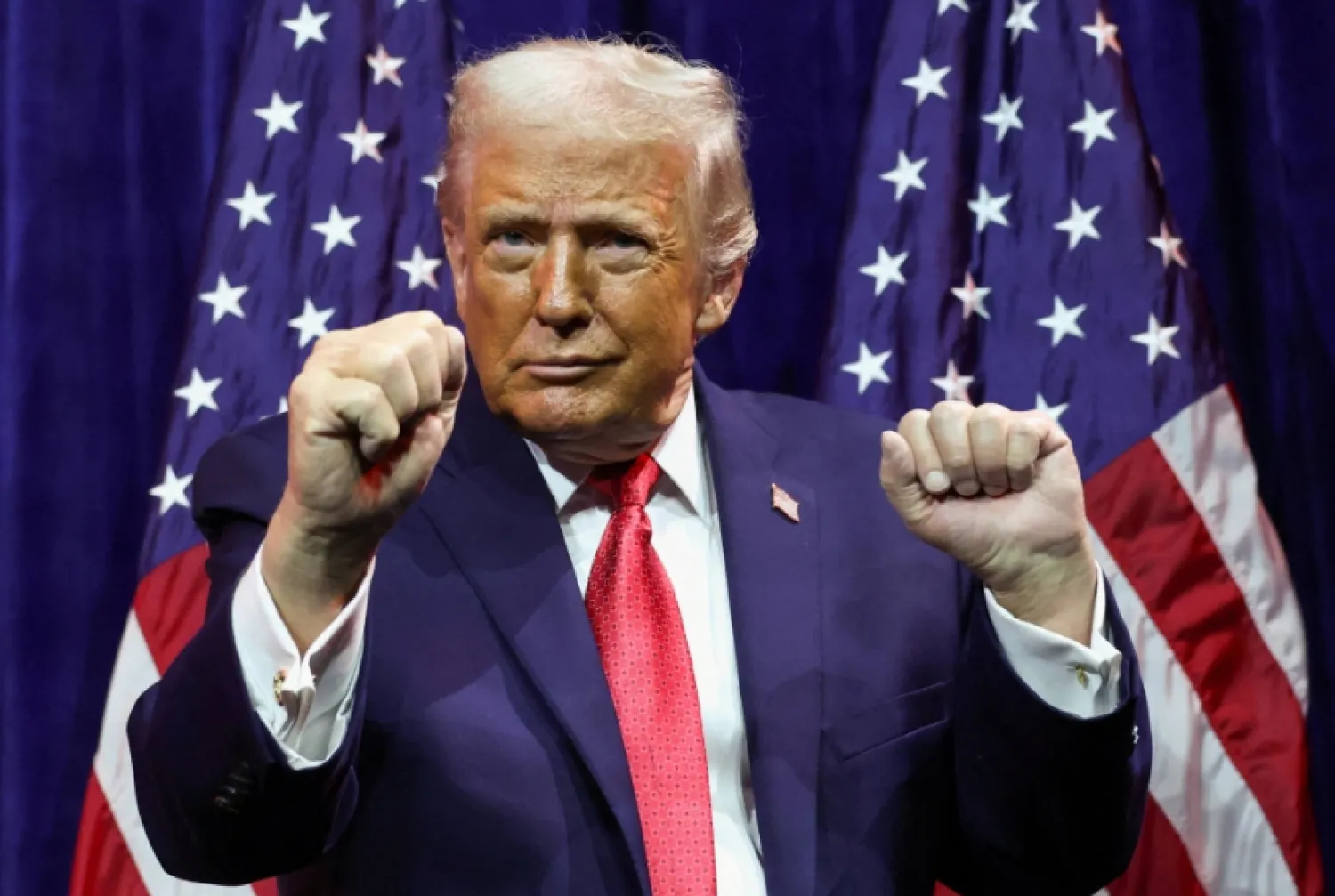
 FILE PHOTO: US President Donald Trump gestures as he addresses House Republicans at their annual issues conference retreat, at the Kennedy Center, renamed the Trump-Kennedy Center by the Trump-appointed board of directors, in Washington, D.C., US, January 6, 2026. REUTERS/Kevin Lamarque/File Photofu.
FILE PHOTO: US President Donald Trump gestures as he addresses House Republicans at their annual issues conference retreat, at the Kennedy Center, renamed the Trump-Kennedy Center by the Trump-appointed board of directors, in Washington, D.C., US, January 6, 2026. REUTERS/Kevin Lamarque/File Photofu.
TT

US Will Exit Dozens of International Organizations as it Further Retreats from Global Cooperation

 FILE PHOTO: US President Donald Trump gestures as he addresses House Republicans at their annual issues conference retreat, at the Kennedy Center, renamed the Trump-Kennedy Center by the Trump-appointed board of directors, in Washington, D.C., US, January 6, 2026. REUTERS/Kevin Lamarque/File Photofu.
FILE PHOTO: US President Donald Trump gestures as he addresses House Republicans at their annual issues conference retreat, at the Kennedy Center, renamed the Trump-Kennedy Center by the Trump-appointed board of directors, in Washington, D.C., US, January 6, 2026. REUTERS/Kevin Lamarque/File Photofu.

The Trump administration will withdraw from dozens of international organizations, including the UN's population agency and the UN treaty that establishes international climate negotiations, as the US further retreats from global cooperation.

President Donald Trump on Wednesday signed an executive order suspending US support for 66 organizations, agencies and commissions following his instructions for his administration to review participation in and funding for all international organizations, including those affiliated with the United Nations, according to a White House statement on social media.

Most of the targets are UN-related agencies, commissions and advisory panels that focus on climate, labor and other issues that the Trump administration has categorized as catering to diversity and “woke” initiatives, according to a partial list obtained by The Associated Press.

“The Trump Administration has found these institutions to be redundant in their scope, mismanaged, unnecessary, wasteful, poorly run, captured by the interests of actors advancing their own agendas contrary to our own, or a threat to our nation’s sovereignty, freedoms, and general prosperity,” the State Department said in a statement.

Trump's decision to withdraw from organizations that foster cooperation among nations to address global challenges comes as his administration has launched military efforts or issued threats that have rattled allies and adversaries alike, including capturing autocratic Venezuelan leader Nicolás Maduro and indicating an intention to take over Greenland.

This is the latest US withdrawal from global agencies The administration previously suspended support from agencies like the World Health Organization, the UN for Palestinian refugees known as UNRWA, the UN Human Rights Council and the UN cultural agency UNESCO as it has taken a larger, a-la-carte approach to paying its dues to the world body, picking which operations and agencies they believe align with Trump’s agenda and those which no longer serve US interests.

“I think what we’re seeing is the crystallization of the US approach to multilateralism, which is ‘my way or the highway,’” said Daniel Forti, head of UN affairs at the International Crisis Group. “It's a very clear vision of wanting international cooperation on Washington’s own terms.”

It has marked a major shift from how previous administrations — both Republican and Democratic — have dealt with the UN, and it has forced the world body, already undergoing its own internal reckoning, to respond with a series of staffing and program cuts.

Many independent nongovernmental agencies — some that work with the United Nations — have cited many project closures because of the US administration’s decision last year to slash foreign assistance through the US Agency for International Development, or USAID.

Despite the massive shift, the US officials, including Trump himself, say they have seen the potential of the UN and want to instead focus taxpayer money on expanding American influence in many of the standard-setting UN initiatives where there is competition with China, like the International Telecommunications Union, the International Maritime Organization and the International Labor Organization.

The global organizations from which the US is departing The withdrawal from the UN Framework Convention on Climate Change, or UNFCCC, is the latest effort by Trump and his allies to distance the US from international organizations focused on climate and addressing climate change.

UNFCC, the 1992 agreement between 198 countries to financially support climate change activities in developing countries, is the underlying treaty for the landmark Paris climate agreement. Trump — who calls climate change a hoax — withdrew from that agreement soon after reclaiming the White House.

Mainstream scientists say climate change is behind increasing instances of deadly and costly extreme weather, including flooding, droughts, wildfires, intense rainfall events and dangerous heat.

The US withdrawal could hinder global efforts to curb greenhouse gases because it “gives other nations the excuse to delay their own actions and commitments,” said Stanford University climate scientist Rob Jackson, who chairs the Global Carbon Project, a group of scientists that tracks countries’ carbon dioxide emissions.

It also will be difficult to achieve meaningful progress on climate change without cooperation from the US, one of the world’s largest emitters and economies, experts said.

The UN's population agency, which provides sexual and reproductive health across the world, has long been a lightning rod for Republican opposition and Trump himself cut funding for the agency during his first term in office. He and other GOP officials have accused the agency of participating in “coercive abortion practices” in countries like China.

When President Joe Biden took office in January 2021, he restored funding for the agency. A State Department review conducted the following year found no evidence to support these claims.

Other organizations and agencies that the US will quit include the Carbon Free Energy Compact, the United Nations University, the International Cotton Advisory Committee, the International Tropical Timber Organization, the Partnership for Atlantic Cooperation, the Pan-American Institute for Geography and History, the International Federation of Arts Councils and Culture Agencies and the International Lead and Zinc Study Group.

The State Department said additional reviews are ongoing.


Human Remains Found on Thai Ship Attacked in Hormuz Strait

A cargo ship in the Gulf, near the Strait of Hormuz, as seen from northern Ras al-Khaimah, near the border with Oman’s Musandam governance, amid the US-Israeli conflict with Iran, in United Arab Emirates, March 11, 2026. (Reuters)
TT

Human Remains Found on Thai Ship Attacked in Hormuz Strait

A cargo ship in the Gulf, near the Strait of Hormuz, as seen from northern Ras al-Khaimah, near the border with Oman’s Musandam governance, amid the US-Israeli conflict with Iran, in United Arab Emirates, March 11, 2026. (Reuters)

Human remains have been found aboard a cargo ship struck by Iran while transiting the Strait of Hormuz last month, the vessel's owner said Friday, after three crew members were reported missing following the attack.

US-Israeli strikes on Iran late February prompted Tehran to respond by effectively closing the Strait of Hormuz, a crucial artery for global oil supplies.

The Thai-flagged Mayuree Naree was struck in March while travelling through the strait after departing Khalifa port in the United Arab Emirates.

"Certain human remains were found within the affected area of the vessel," a statement from transport company Precious Shipping said Friday, adding it could not yet confirm the identities or the number of individuals.

Twenty Thai crew members returned home in mid-March, while three of their colleagues were missing and presumed trapped in the damaged engine compartment.

A search was carried out under "challenging conditions" as the vessel's engine room had been flooded and damaged by fire, the company said.

Thailand's foreign ministry said it was "saddened" by the development and that families of the missing crew had been informed.

Iran's Revolutionary Guards said in March they had struck the Mayuree Naree, as well as a Liberia-flagged vessel, in the strait because the ships had ignored "warnings".


Iran’s Former Top Diplomat Urges Deal with US to End War

 A newly constructed bridge struck by US airstrikes Thursday is seen in Karaj, west of Tehran, Iran, Friday, April 3, 2026. (AP)
A newly constructed bridge struck by US airstrikes Thursday is seen in Karaj, west of Tehran, Iran, Friday, April 3, 2026. (AP)
TT

Iran’s Former Top Diplomat Urges Deal with US to End War

 A newly constructed bridge struck by US airstrikes Thursday is seen in Karaj, west of Tehran, Iran, Friday, April 3, 2026. (AP)
A newly constructed bridge struck by US airstrikes Thursday is seen in Karaj, west of Tehran, Iran, Friday, April 3, 2026. (AP)

Iran should make a deal with the United States to end the war by offering to curb its nuclear program and reopen the Strait of Hormuz in exchange for sanctions relief, a former Iranian foreign minister said.

Mohammad Javad Zarif, who served as foreign minister from 2013-2021, claimed in an op-ed for American journal Foreign Affairs that Tehran had the "upper hand" in the conflict against the US and Israel, but argued Iran needed to stop the war to prevent the loss of more civilian lives and damage to infrastructure.

"Iran should use its upper hand not to keep fighting but to declare victory and make a deal that both ends this conflict and prevents the next one," Zarif said in the piece published late Thursday.

"It should offer to place limits on its nuclear program and to reopen the Strait of Hormuz in exchange for an end to all sanctions -- a deal Washington wouldn't take before but might accept now," he added.

Iran should also be prepared to accept a mutual "nonaggression pact" with the United States, as well as economic relations, he said. Tehran and Washington have had no diplomatic ties since shortly after the 1979 revolution.

Zarif, one of the architects of the now moribund 2015 deal over the Iranian nuclear program, is seen as a relative moderate within the regime’s elite, but has no official post in the current government.

However, this is one of the first times during this conflict that a high-profile figure in Iran has called for a deal and an end to the war, with top military and political officials urging daily for fighting to continue until the US is defeated.

US President Donald Trump has evoked ongoing talks with Tehran without giving details but also threatened to send the country "back to the stone ages" if it fails to agree terms.

"As an Iranian, outraged by Donald Trump's reckless aggression and crude insults, yet proud of our armed forces and resilient people, I am torn about publishing this peace-plan in Foreign Affairs," Zarif wrote in English on X Friday.

"Yet I'm convinced that war must end on terms consistent with Iran's national interests," he added.

Zarif in the Foreign Affairs piece warned that "although continuing to fight the United States and Israel might be psychologically satisfying, it will lead only to the further destruction of civilian lives and infrastructure".


China Says Peace Talks Advance Between Afghanistan, Pakistan

 Local residents look at a damaged area of a police station after an overnight deadly bombing in the Bannu district of northwestern Pakistan, Friday, April 3, 2026. (AP)
Local residents look at a damaged area of a police station after an overnight deadly bombing in the Bannu district of northwestern Pakistan, Friday, April 3, 2026. (AP)
TT

China Says Peace Talks Advance Between Afghanistan, Pakistan

 Local residents look at a damaged area of a police station after an overnight deadly bombing in the Bannu district of northwestern Pakistan, Friday, April 3, 2026. (AP)
Local residents look at a damaged area of a police station after an overnight deadly bombing in the Bannu district of northwestern Pakistan, Friday, April 3, 2026. (AP)

Negotiations ‌between Afghanistan and Pakistan are advancing steadily, China said on Friday following reports that the South Asian neighbors were meeting there to try to end their worst conflict since the Taliban returned to power in 2021.

China, which shares a western border with both nations, has been trying to mediate between the allies ‌turned foes, ‌holding telephone calls with their ‌foreign ⁠ministers and sending ⁠a special envoy on visits in March.

"Both Pakistan and Afghanistan attach importance to, and welcome, China's mediation, and are willing to sit down for talks again, which is a positive development," ⁠foreign ministry spokesperson Mao Ning told ‌a daily press ‌conference.

Mao did not say where the ‌talks were being held, though the neighbors ‌have previously said they were in the northwestern city of Urumqi.

China has been mediating and promoting talks, in close communication with both ‌sides to build suitable conditions and provide a platform, Mao ⁠said, ⁠adding that the three countries would issue further information in due course.

The fighting between Pakistan and Afghanistan that started in October has killed scores of people on both sides, with Afghans taking the brunt.

Islamabad accuses the Afghan Taliban of harboring militants who launch attacks in Pakistan, although Kabul denies this calling the militancy its neighbor's domestic problem.
