

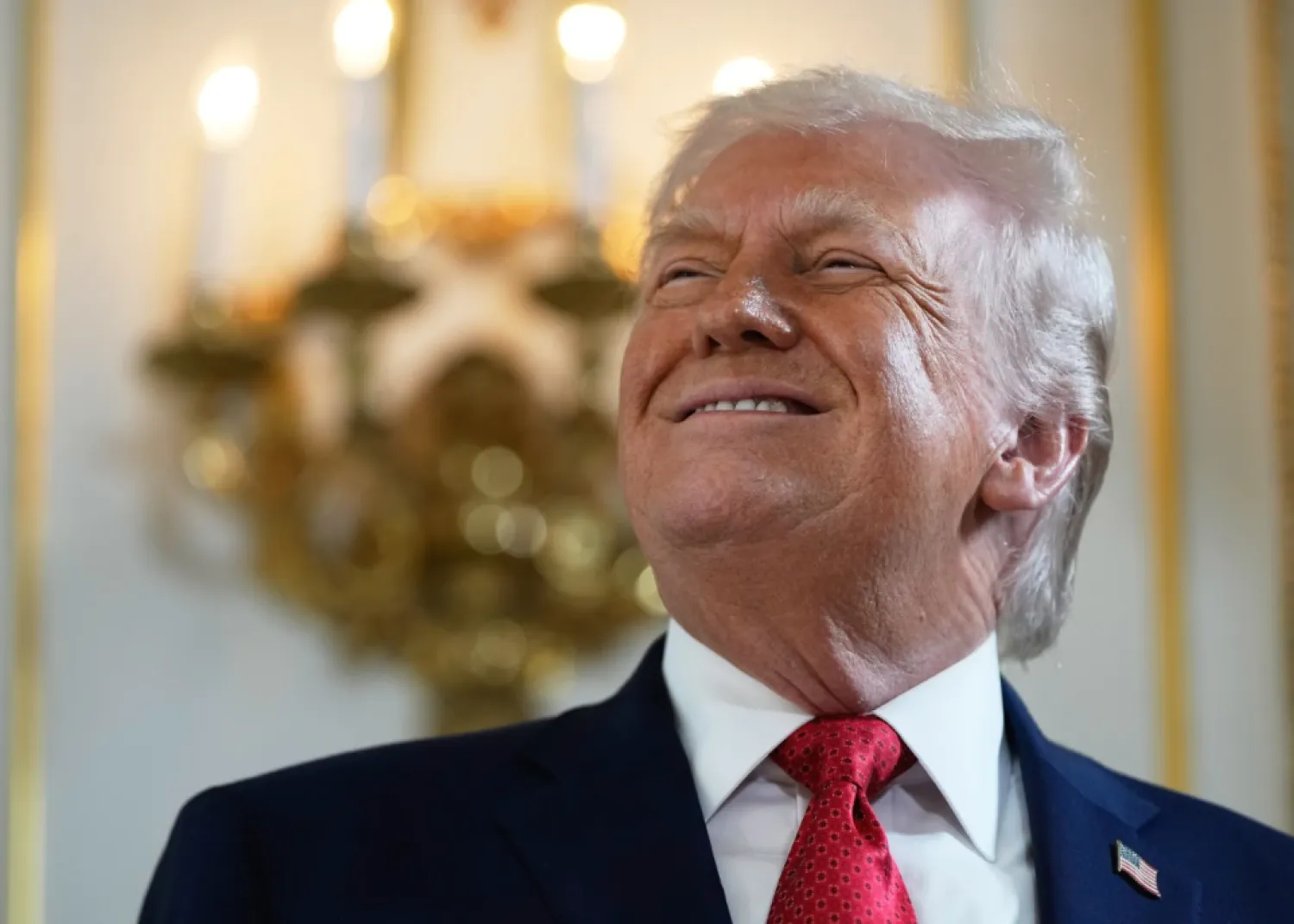

EU Executive Arm, Russia and Thailand Asked to Join Trump's Board of Peace for Gaza

US President Donald Trump - The AP news.
TT

EU Executive Arm, Russia and Thailand Asked to Join Trump's Board of Peace for Gaza

US President Donald Trump - The AP news.

The European Union's executive arm, Russia and Thailand on Monday were the latest to be asked to join US President Donald Trump's new Board of Peace that will supervise the next phase of the Gaza peace plan, as a top Israeli official said the initiative is “bad for Israel” and should be scrapped, The AP news reported.

Kremlin spokesman Dmitry Peskov said Russian President Vladimir Putin received the invitation and that the Kremlin is now "studying the details" and would seek clarity of “all the nuances” in contacts with the US. The Thai Foreign Ministry said it was also invited and that it was reviewing the details.

European Commission spokesperson Olof Gill confirmed that Ursula von der Leyen, the president of the commission, received an invitation and would be speaking to other EU leaders about Gaza. Gill didn't say whether the invitation has been accepted, but that the commission wants "to contribute to a comprehensive plan to end the Gaza conflict.”

It's unclear how many leaders have been invited to join the board. But a Trump reference in the invitation letters that the body would “embark on a bold new approach to resolving global conflict" suggested it could act as a rival to the UN Security Council, the most powerful body of the global organization created in the wake of World War II.

Israeli far-right Finance Minister Bezalel Smotrich on Monday dismissed the Board of Peace as a raw deal for Israel and called for its dissolution.

“It is time to explain to the president that his plan is bad for the State of Israel and to cancel it," Smotrich said at a ceremony inaugurating the new Yatziv settlement in the occupied West Bank. "Gaza is ours, its future will affect our future more than anyone else’s. We will take responsibility for what happens there, impose military administration, and complete the mission.”

Smotrich even suggested that Israel renew a full-scale offensive on Gaza to destroy Hamas if it doesn't abide by a “short ultimatum for real disarmament and exile.”

On Saturday, the office of Israeli Prime Minister Benjamin Netanyahu said the formation of the committee wasn’t coordinated with the Israeli government and “is contrary to its policy.”

The US is expected to announce its official list of members in the coming days, likely during the World Economic Forum meeting in Davos, Switzerland.

Board members will oversee an executive committee that will be in charge of implementing the tough second phase of the Gaza peace plan that includes the deployment of an international security force, disarmament of Hamas and reconstruction of the war-devastated territory.

A $1 billion contribution secures permanent membership on the board with the money going to rebuild Gaza, according to a US official who spoke on condition of anonymity about the charter, which hasn't been made public. A three-year appointment has no contribution requirement.

But details of how this will also work remain murky. British Prime Minister Keir Starmer said Monday the UK is talking to allies about the Board of Peace. Although the UK hasn't said whether Starmer has been formally invited to join, he said it's necessary to proceed with the Gaza peace plan's second phase and that his country has "indicated willingness, to play our part, and we will.”

Running Gaza Egypt’s top diplomat on Monday met with the leader of the newly appointed committee of Palestinian technocrats who will be running Gaza’s day-to-day affairs during the second phase of the peace plan.

Foreign Minister Bader Abdelatty met with Ali Shaath, a Palestinian engineer and former official with the Western-backed Palestinian Authority, who was named last week as chief commissioner of the National Committee for the Administration of Gaza

Abdelatty expressed the Egyptian government’s “complete support” to the committee and affirmed its role in running Gaza’s daily affairs until the Palestinian Authority takes over the territory, a statement from the Egyptian ministry said following the meeting.

He also underscored “the importance of preserving the unity of the Palestinian territories, ensuring geographical and administrative continuity between the Gaza Strip and the West Bank.”

More aid getting through but situation still fragile The UN World Food Program on Monday said it has “significantly expanded” its operations across Gaza 100 days into the ceasefire, reaching more than a million people each month with hot meals, bread bundles and food parcels. But it warned the situation remains “extremely fragile” even as critical progress has been made in pushing back famine.

It noted that malnutrition has been prevented for 200,000 pregnant and breastfeeding women, as well as children under 5, while school snacks are reaching 235,000 children in 250 temporary schools.

Still, the most recent Integrated Food Security Phase Classification (IPC) analysis in December indicates that 77% the population is facing crisis levels food insecurity with over 100,000 people experiencing catastrophic levels of hunger.

The WFP said access to nutritious food such as fresh fruit, vegetables and dairy is limited with most families still can't afford more commercial goods entering Gaza.

Palestinian teen shot dead Israeli forces killed a Palestinian teenager in southern Gaza, hospital authorities said Monday.

Hussein Tawfiq Abu Sabalah, 17, was shot in the Muwasi area of Rafah Monday morning, according to Nasser Hospital. It wasn’t immediately clear whether he crossed into or came close to an Israeli-controlled area.

More than 460 people have been killed by Israeli fire and their bodies brought to hospitals since the ceasefire went into effect, according to Gaza's Health Ministry. The ministry, which is part of Hamas-led government, maintains detailed casualty records that are seen as generally reliable by UN agencies and independent experts.


Dutch Authorities Seek 2 Suspects in Blast Outside Amsterdam Jewish School

Policemen stand at the scene following an overnight explosion at a Jewish school on Zeelandstraat in the Buitenveldert district of Amsterdam, the Netherlands, 14 March 2026. EPA/MICHEL VAN BERGEN
TT

Dutch Authorities Seek 2 Suspects in Blast Outside Amsterdam Jewish School

Policemen stand at the scene following an overnight explosion at a Jewish school on Zeelandstraat in the Buitenveldert district of Amsterdam, the Netherlands, 14 March 2026. EPA/MICHEL VAN BERGEN

Dutch authorities were hunting Saturday for two people suspected of setting off an explosion outside a Jewish school in Amsterdam. The mayor denounced the attack as a cowardly act of aggression against the city's Jewish community.

A City Hall statement said the overnight blast against the outer wall of the school in the Dutch capital’s Buitenveldert district caused only limited damage.

According to The Associated Press, a police statement said investigators established that the two suspects arrived on a motor scooter. One placed an object against the wall and then ran back to the scooter, with the detonation following as they sped away.

Mayor Femke Halsema said that Amsterdam’s Jewish residents feel “fear and anger” and are increasingly being targeted by antisemitism.

"That is unacceptable. A school must be a place where children can learn safely.

Amsterdam must be a place where Jews can live safely," she said.

Security around Jewish schools and other sites was reinforced after an explosion near a synagogue in Liege, Belgium, and a blast that caused a small fire at the entrance of a synagogue in the Dutch port city of Rotterdam on Friday.

“Two nights in a row, a cowardly attack with an explosive at a Jewish building. First in Rotterdam, now in Amsterdam," the Dutch justice and security minister, David van Weel, posted on X.

“The safety of Jewish institutions has our full attention. An investigation into the perpetrators is underway.”


Trump Urges Other Nations to Send Ships to Secure Hormuz

FILE PHOTO: A map showing the Strait of Hormuz and Iran is seen in this illustration taken June 22, 2025. REUTERS/Dado Ruvic/Illustration/File Photo
TT

Trump Urges Other Nations to Send Ships to Secure Hormuz

FILE PHOTO: A map showing the Strait of Hormuz and Iran is seen in this illustration taken June 22, 2025. REUTERS/Dado Ruvic/Illustration/File Photo

US President Donald Trump on Saturday urged other nations to send ships to help secure the Strait of Hormuz, the critical chokepoint for global oil supplies disrupted by the Mideast war.

Trump, who has said the United States will soon start escorting tankers through the strait, posted on Truth Social that "Many countries, especially those who are affected by Iran's attempted closure of the Hormuz Strait, will be sending War Ships, in conjunction with the United States of America, to keep the Strait open and safe."

The US president added: "Hopefully China, France, Japan, South Korea, the UK, and others, that are affected by this artificial constraint, will send Ships to the area."

Iranian strikes have all but halted maritime traffic in the strait, through which a fifth of global crude oil and liquefied natural gas normally pass. It is just 54 kilometers (34 miles) wide at its narrowest point.

With oil prices spiking, Trump was asked Friday when the US Navy would begin escorting tankers through the Strait of Hormuz. "It'll happen soon, very soon," he said.

In his post on Saturday, Trump asserted that Iran's military capability had been eliminated but he conceded that it was still able to attack the strait.

"We have already destroyed 100% of Iran's Military capability, but it's easy for them to send a drone or two, drop a mine, or deliver a close range missile somewhere along, or in, this Waterway, no matter how badly defeated they are," he wrote.

As he urged nations to send ships to the strait, he added that "the United States will be bombing the hell out of the shoreline, and continually shooting Iranian Boats and Ships out of the water. One way or the other, we will soon get the Hormuz Strait OPEN, SAFE, and FREE!"


Israeli Defense Minister Says War with Iran Entering 'Decisive Phase'

Smoke rises following an explosion during a protest marking the annual al-Quds Day (Jerusalem Day) on the last Friday of the holy month of Ramadan, amid the US-Israeli conflict with Iran, in Tehran, Iran, March 13, 2026. Elahe Asiabai/Fars News/WANA (West Asia News Agency) via REUTERS
TT

Israeli Defense Minister Says War with Iran Entering 'Decisive Phase'

Smoke rises following an explosion during a protest marking the annual al-Quds Day (Jerusalem Day) on the last Friday of the holy month of Ramadan, amid the US-Israeli conflict with Iran, in Tehran, Iran, March 13, 2026. Elahe Asiabai/Fars News/WANA (West Asia News Agency) via REUTERS

Israel said the war against Iran was entering its "decisive phase" on Saturday, as explosions rocked cities across the Middle East, with strikes on the US embassy in Baghdad and a major Emirati energy facility.

Washington's embassy in Iraq was hit by a drone, security sources told AFP, the second time it has been targeted since February 28, when the United States and Israel attacked Iran and plunged the Gulf into a conflict that has sent shockwaves through the global economy.

Millions have been displaced by waves of drone, missile and aerial bombing, while more than 1,200 people have reportedly been killed in Iran, with little sign of the conflict slowing as it entered its third week.

Oil prices have surged by 40 percent as Iran chokes off the vital Strait of Hormuz with threats to shipping and strikes on Gulf energy facilities.

Clouds of black smoke rose Saturday over Fujairah, home to a major Emirati oil storage and export terminal, shortly after Iran's military warned UAE civilians to avoid port areas.

President Donald Trump said Friday that US forces had struck Iran's Kharg Island, its biggest oil export hub, and "obliterated every MILITARY target", though sparing its energy facilities.

Iranian media confirmed the island's oil facilities were unaffected. Iran had threatened US-linked oil and energy firms would be "turned into a pile of ashes" if they were hit.

The strike could be a "turning point" with both sides escalating in a bid to force a surrender, said analyst Vali Nasr of John Hopkins University in a social media post. "The end will likely not be Iranian backing off but inflaming the Gulf."

Trump said the US Navy would start escorting tankers through the Strait of Hormuz "very soon", but governments around the world fear a prolonged blow to their economies.

Israel's Defense Minister Israel Katz said the strikes on Kharg showed the war was entering a "decisive phase", though he cautioned it would "continue as long as necessary".

Yet, despite facing superior US and Israeli firepower, Iran appears determined to fight on.

Blasts were heard by AFP journalists over Jerusalem on Saturday after the army detected missiles fired from Iran.

Iran has launched missile and drone attacks against at least 10 of its neighbors.

The Palestinian Islamist movement Hamas urged Iran to refrain from targeting Gulf neighbors.

Qatar said it intercepted two missiles over the capital's downtown area on Saturday and evacuated key areas after blasts were heard by AFP journalists in Doha.

Strikes continue in Iran, with heavy blasts shaking Tehran late Friday and local media reporting strikes in several provinces through Saturday.

Israel's army warned people in an industrial zone of Tabriz in northern Iran to evacuate, signalling an imminent attack.

Iran's health ministry says more than 1,200 people have been killed by US and Israeli attacks, numbers that could not be independently verified.

Up to 3.2 million people have been displaced inside Iran, according to the UN refugee agency.

Trump described Iran as "totally defeated" and in search of a deal he was unwilling to consider.

More than 15,000 targets in Iran have been hit by the US and Israel in two weeks, the Pentagon said.

A report this week said the first six days alone cost the US $11.3 billion and it has lost 13 military personnel.

US media raised the possibility of a ground invasion, with the New York Times and Wall Street Journal reporting the Pentagon had dispatched the Japan-based amphibious assault ship USS Tripoli to the region with some 2,500 Marines.

Iran's rulers appear intent on showing they will survive the war and maintain control, despite their supreme leader Ali Khamenei being killed on day one.

Khamenei's son Mojtaba Khamenei was named the new supreme leader, but has been absent from public view and is reportedly wounded.

Reza Pahlavi, the US-based son of Iran's last shah, said on social media Saturday that he was ready to lead a transition "as soon as the Islamic Republic falls".

But Iran's Revolutionary Guards have threatened a heavy crackdown on any anti-government protests. Thousands were killed in mass demonstrations in January, and a near-total internet blackout has been imposed since since the war began.
