


Cuba Confirms 'Communications' with US, But Says No Negotiations Yet

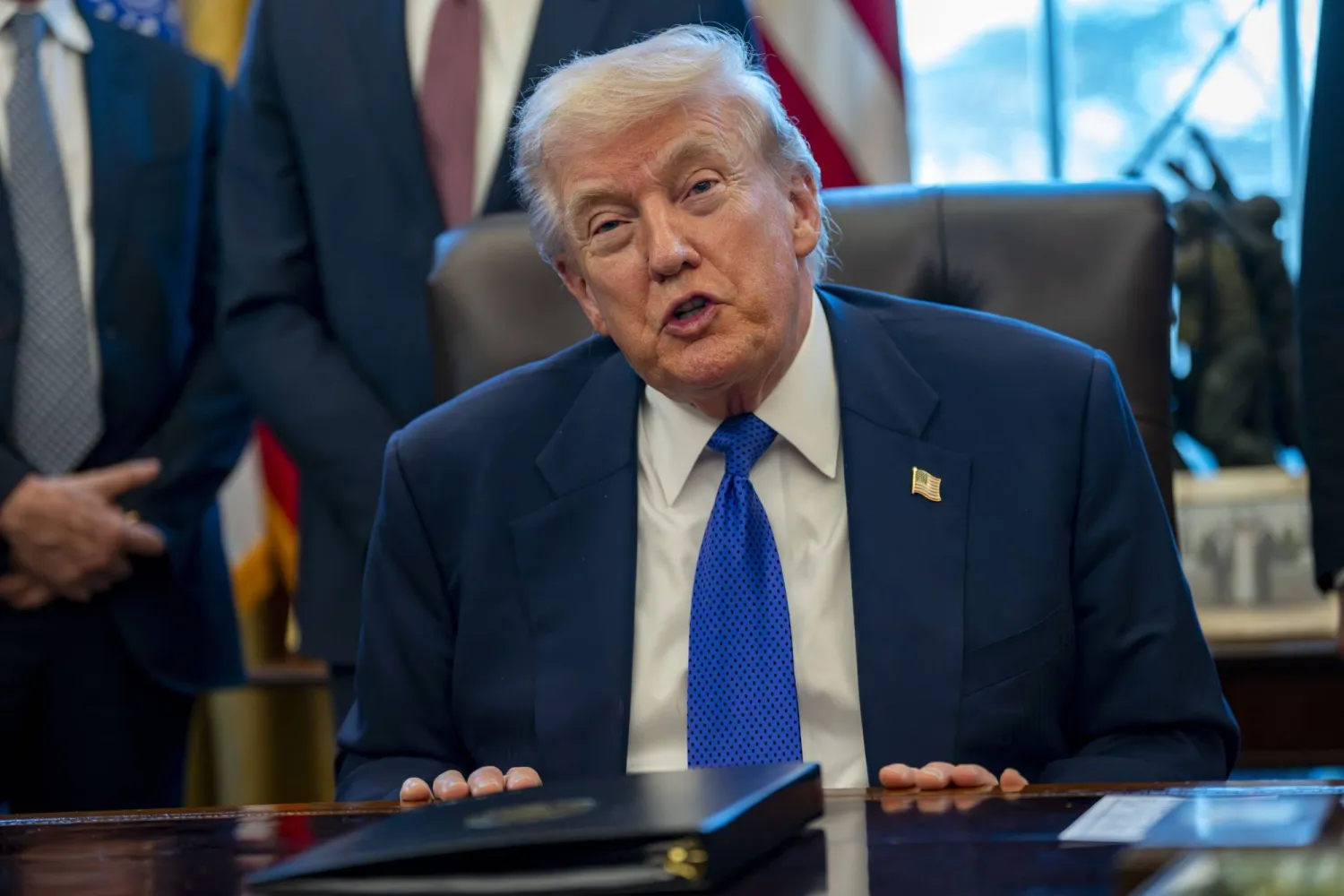
US President Donald Trump (EPA)
TT

Cuba Confirms 'Communications' with US, But Says No Negotiations Yet

US President Donald Trump (EPA)

Cuba's government on Monday told AFP that it was in "communication" with US President Donald Trump's administration but not yet in formal talks on a deal to end Washington's pressure campaign on the island.

"Today we cannot talk about having dialogue with the United States, but it is true that there have been communications between the two governments," deputy foreign minister Carlos Fernandez de Cossio said in an interview.

Trump on Sunday claimed the United States was in talks with "the highest people" in communist Cuba and that he expected to "make a deal" with its leadership, without saying what a deal might look like.

De Cossio repeated that Cuba was "open to dialogue" with the United States amid calls from Cubans for the government to negotiate to avert a humanitarian crisis.

Trump has been ratcheting up pressure on Havana since the January 3 capture by US special forces of Venezuelan leader Nicolas Maduro, a top Cuba ally and financial backer.

Pressured by Washington, Venezuela's new administration has cut crude shipments to Cuba.

Trump said Monday that Cuba's other main supplier, Mexico, would also "cease sending them oil" after he threatened tariff hikes on any country that allowed Cuba to circumvent the de-facto blockade.

There was no immediate response from Mexico.

The United States' largest trade partner had incurred Trump's ire by sending oil to Cuba to make up for a sharp decline in Venezuela's output under Maduro.

As recently as December, Mexico was still sending crude to Cuba.

President Claudia Sheinbaum had been loathe to cut the lifeline to Cuba, warning of a "far-reaching humanitarian crisis directly affecting hospitals, food supplies, and other basic services for the Cuban people."

But she also admitted last week: "We don't want to put our country at risk in terms of tariffs."

A decree signed by Trump last week effectively forced her and other Cuban partners to choose.

- 'The highest people' -

The pressure tactics threaten to plunge Cuba into complete darkness, with its power plants already struggling to keep the lights on due to fuel shortages.

Jorge Grosso, a 23-year-old student who spent nearly 24 hours last week queueing at a petrol station to fill up his Lada, told AFP he backed talks "to see what conditions are imposed (by Trump) because in the end they're strangling us."

For months Cubans have been forced to cope with power outages lasting up to 20 hours a day in rural areas.

On Monday, Trump repeated his claim that Cuba, which is limping through its worst economic crisis in decades, is a "failed nation."

He added he believed "we are pretty close (to a deal), but we are dealing with the Cuban leaders right now."

His pressure on Sheinbaum comes as the United States and its southern neighbor begin talks on a review of a tripartite free-trade deal with Canada which is crucial to Mexico's economy.

Over the past year, Sheinbaum has been scrambling to stave off the kind of tariffs pain Trump has imposed on other allies.

In a move widely seen as an attempt to appease him, Mexico in January imposed stiff tariffs on imports from China.



Moscow: Russian Soldiers Helped to Repel Niger Airport Attack

A drone picture shows the main street of a suburb following the attack on the international airport in Niamey, Niger January 30, 2026. REUTERS/ Mahamadou Hamidou
TT

Moscow: Russian Soldiers Helped to Repel Niger Airport Attack

A drone picture shows the main street of a suburb following the attack on the international airport in Niamey, Niger January 30, 2026. REUTERS/ Mahamadou Hamidou

Russian soldiers helped to repel an attack on Niger's main airport in the capital Niamey last week which was claimed by the ISIS group, Moscow said on Monday.

Niger's ruling junta earlier said "Russian partners" helped to fend off the rare assault on the capital, which saw 20 attackers killed and four army soldiers wounded, AFP.

"The attack was repelled through the joint efforts of the Russian Ministry of Defense's African Corps and the Nigerien armed forces," the Russian Foreign Ministry said.

"Moscow strongly condemns this latest extremist attack," it added.

ISIS said it staged the attack and released a video of events through its propaganda agency Amaq. The video shows several dozen attackers with assault rifles firing near a hangar and setting ablaze one plane before leaving on motorbikes.

Niger's junta accused Benin, France and Ivory Coast of sponsoring the attack on the airport, which also houses a military base.

Junta chief Abdourahamane Tiani visited the Russian military base to express "personal gratitude for a high level of professionalism", the ministry said.

Russia rarely comments on its military activity in the Sahel region, where Moscow has been increasing its influence in a region that has seen a series of coups.

Facing isolation since its invasion of Ukraine, Russia has tried to build new military and political partnerships in Africa.

Apart from Niger, Russian troops or military instructors have been reported to be deployed in Burkina Faso, Equatorial Guinea, the Central African Republic and Libya.

Russia's African Corps has taken over from the Wagner paramilitary group across the continent.

According to Moscow, the corps helps "fighting terrorists" and "strengthening regional stability" in the Sahel.

Niger's authorities have been fighting the Al-Qaeda-linked Group and the Islamic State in the Sahel (EIS) for the past decade.


Shamkhani: Iran Does Not Seek Nuclear Weapons

Ali Shamkhani, advisor to Iranian Supreme Leader Ali Khamenei (AFP)
TT

Shamkhani: Iran Does Not Seek Nuclear Weapons

Ali Shamkhani, advisor to Iranian Supreme Leader Ali Khamenei (AFP)

Ali Shamkhani, adviser to Iran's Supreme Leader Ali Khamenei, spoke on the nuclear issue late Monday saying that Iran does not seek nuclear weapons and suggesting that if the talks with the US happened, they would be indirect at the beginning, then moving to direct talks if a deal appeared to be attainable.

The pan-Arab satellite channel Al Mayadeen, which is politically allied with the Iranian-backed Lebanese militant group Hezbollah, aired the interview with Shamkhani.

He also said that the US “must offer something in return” if Iran were to reduce the level of enrichment.

Shamkhani, who now sits on the country’s Supreme National Security Council and who in the 1980s led Iran's navy, wore a naval uniform as he spoke.

He suggested if the talks happened, they would be indirect at the beginning, then moving to direct talks if a deal appeared to be attainable.

Direct talks with the US long have been a highly charged political issue within Iran's theocracy, with reformists like President Masoud Pezeshkian pushing for them and hard-liners dismissing them.

The talks would solely focus on nuclear issues, he added.

Asked about whether Russia could take Iran's enriched uranium like it did in Tehran's 2015 nuclear deal with world powers, Shamkhani dismissed the idea, saying there was “no reason” to do so. Kremlin spokesperson Dmitry Peskov on Monday said Russia had “long offered these services as a possible option that would alleviate certain irritants for a number of countries.”

“Iran does not seek nuclear weapons, will not seek a nuclear weapon and will never stockpile nuclear weapons, but the other side must pay a price in return for this," he said.

Iran had been enriching uranium up to 60% purity, a short, technical step away from weapons-grade levels. The International Atomic Energy Agency had said Iran was the only country in the world to enrich to that level that wasn't armed with the bomb.

Iran has been refusing requests by the IAEA to inspect the sites bombed in the June war.

“The quantity of enriched uranium remains unknown, because part of the stockpile is under rubble, and there is no initiative yet to extract it, as it is extremely dangerous," Shamkhani said.


Almost 140 Foreigners Arrested in Central Iran over Protests

Iranians walk in a street in Tehran, Iran, 02 February 2026. EPA/ABEDIN TAHERKENAREH
TT

Almost 140 Foreigners Arrested in Central Iran over Protests

Iranians walk in a street in Tehran, Iran, 02 February 2026. EPA/ABEDIN TAHERKENAREH

Iranian authorities arrested 139 foreign nationals in central parts of the country during recent anti-government protests, local media reported Tuesday.

Iran's Tasnim news agency quoted the police chief in the city of Yazd as saying those arrested were involved "in organizing, inciting and directing riotous actions, and in some cases were in contact with networks outside the country".

The nationalities of those held were not specified, AFP reported.

"During the review of cases related to the recent rioters, it was determined that 139 of those arrested in these disturbances were foreign nationals," police chief Ahmad Negahban said.

Protests against the rising cost of living broke out in Iran on December 28 before morphing into nationwide anti-government demonstrations.

Tehran has acknowledged that more than 3,000 deaths occurred during the unrest, but insists that most were members of the security forces and innocent bystanders, attributing the violence to "terrorist acts".

The Human Rights Activists News Agency, a US-based NGO, says it has confirmed 6,854 deaths, mostly protesters killed by security forces, with other rights groups warning the figure is likely far higher.

Iranian authorities have said the rallies began as peaceful demonstrations before turning into "riots" involving killings and vandalism that were inflamed by arch-foes the United States and Israel.