

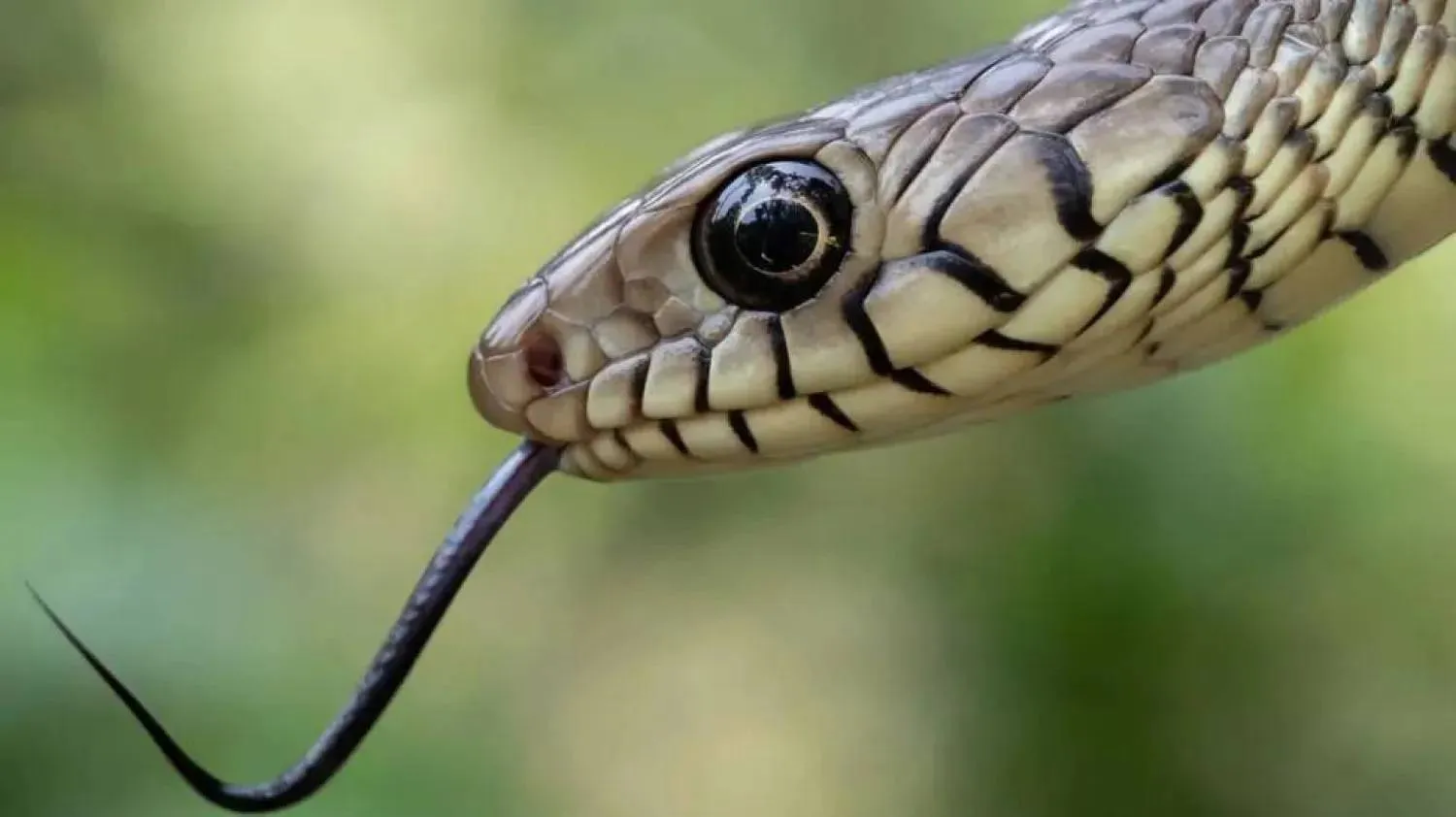

Snakebites Kill 50,000 People Every Year in India

Healthcare workers in India face challenges administering antivenom - the life-saving antibodies that neutralize toxins in venom. (Getty Images)
TT

Snakebites Kill 50,000 People Every Year in India

Healthcare workers in India face challenges administering antivenom - the life-saving antibodies that neutralize toxins in venom. (Getty Images)

Devendra, who was a farmer in India, still remembers the moment a snake sank its fangs into his leg while he was picking mulberry leaves.

“I went to the hospital four days after I was bitten, when the pain became unbearable. But the delay cost me my leg,” he said in a short film released by Global Snakebite Taskforce (GST), an initiative working to reduce deaths and injuries by snakebites, reported the BBC.

But Devendra is still among the lucky few to have survived.

According to the federal government, around 50,000 Indians are killed by snakebites each year - roughly half of all deaths worldwide. Some estimates suggest the toll could be even higher: between 2000 and 2019, India may have seen as many as 1.2 million deaths, an average of 58,000 per year, a 2020 study said.

Now, a new report by GST has found that 99% of healthcare workers in India face challenges administering antivenom - the life-saving antibodies that neutralize toxins in venom.

Researchers surveyed 904 medical professionals across India, Brazil, Indonesia and Nigeria, the countries most affected by snakebites, and found similar barriers: poor infrastructure, limited access to antivenom and insufficient training.

In 2017, the World Health Organization (WHO) formally listed snakebite envenoming or poisoning as a “highest priority neglected tropical disease” because of the high number of deaths caused by it. An estimated 5.4 million people worldwide are bitten by snakes each year and more than 100,000 die from annually, according to the WHO.

It also states that snakebites disproportionately affect poor rural communities in low and middle-income countries.

In India, a high concentration of snakebite deaths and injuries are reported in the central and eastern regions, said Dr. Yogesh Jain, a GST member and practitioner in the central Chhattisgarh state. He added that people working in farms, including those from poor tribal communities, remain most vulnerable.

In 2024, India launched the National Action Plan for Prevention and Control of Snakebite Envenoming (NAPSE) with the aim to halve snakebite deaths by 2030. The plan focuses on better surveillance, improved antivenom availability and research, enhanced medical capacity and public awareness campaigns.

Experts agree it is a step in the right direction, but implementation has been inconsistent.

“In India, snakebites are seen as a poor person's problem,” Jain said. “That's why there isn't enough outrage or action over these completely avoidable deaths. When it comes to treating snakebites, every second counts.”



Spain to Ban Social Media Access for Children Under 16

FILE PHOTO: Instagram, TikTok, Snapchat, Kick, YouTube, Facebook, Twitch, Reddit, Threads and X applications are displayed on a mobile phone ahead of new law banning social media for users under 16 in Australia, in this picture illustration taken on December 9, 2025. REUTERS/Hollie Adams/Illustration/File Photo
TT

Spain to Ban Social Media Access for Children Under 16

FILE PHOTO: Instagram, TikTok, Snapchat, Kick, YouTube, Facebook, Twitch, Reddit, Threads and X applications are displayed on a mobile phone ahead of new law banning social media for users under 16 in Australia, in this picture illustration taken on December 9, 2025. REUTERS/Hollie Adams/Illustration/File Photo

Spain will ban access to social media for minors under 16 and platforms will be required to implement ‌age verification ‌systems, Prime ‌Minister ⁠Pedro Sanchez said ‌on Tuesday at the World Government Summit in Dubai.

"Our children are exposed to a space they were never meant to navigate ⁠alone... We will no longer ‌accept that," Sanchez said. "We ‍will protect ‍them from the digital ‍Wild West."

He added that his government would also introduce a new bill next week to hold social media executives accountable for illegal and ⁠hateful content.

Australia in December became the first country to ban social media for children under 16.

It's a move being closely watched by other countries considering similar age-based measures, such as Britain and France.


Saudi Media Ministry and SDAIA Launch Key Initiatives at Saudi Media Forum

Officials are seen at the fifth Saudi Media Forum in Riyadh on Monday. (SPA)
TT

Saudi Media Ministry and SDAIA Launch Key Initiatives at Saudi Media Forum

Officials are seen at the fifth Saudi Media Forum in Riyadh on Monday. (SPA)

The Saudi Ministry of Media, in partnership with the Saudi Data and AI Authority (SDAIA), launched on Monday two key initiatives at the fifth Saudi Media Forum in Riyadh.

The Media Innovation Bootcamp (Saudi MIB) and the AI principles in media document were announced by Minister of Media Salman Al-Dossary and SDAIA President Abdullah Alghamdi.

The initiatives aim to enhance the national media ecosystem and integrate artificial intelligence technologies into content creation.

The bootcamp trains a new generation of journalists and content creators in smart journalism tools, emphasizing automated data collection and deepfake detection for accurate reporting.

The AI track enables participants to collaborate with software engineers to create digital characters that mimic human behavior, facilitating 24/7 multilingual broadcasts with real-time audience interaction.

The AI principles in media document provides guidelines for responsible AI use in the media lifecycle. Developed with SDAIA, the Saudi Broadcasting Authority, and the General Authority for Media Regulation, it aims to ensure content integrity, address challenges posed by misleading content and deepfake technologies, and boost efficiency by leveraging AI to accelerate content production and deliver personalized user experiences.

The initiatives represent a partnership between the Ministry of Media and SDAIA to empower national talent and promote responsible technology use, aligned with Saudi Vision 2030.


New Tempest Threatens Portugal, One Week After Storm Kristin

A car is smashed due to storm Kristin, in Leiria, Portugal, February 2, 2026. (Reuters)
TT

New Tempest Threatens Portugal, One Week After Storm Kristin

A car is smashed due to storm Kristin, in Leiria, Portugal, February 2, 2026. (Reuters)

Portugal is bracing for a new storm that authorities warn could trigger floods and further devastation, as the country ​still struggles with the aftermath of Storm Kristin.

The Portuguese Institute of the Sea and the Atmosphere (IPMA) said late Monday that the new storm, named Leonardo, is expected to begin impacting mainland Portugal from Tuesday afternoon through Saturday.

The Iberian Peninsula ‌has experienced a ‌succession of storms bringing ‌heavy ⁠rain, ​thunder, snow ‌and strong gales in the last few months, with southern Spain facing what some residents describe as its wettest winter in 40 years.

IPMA said Leonardo may bring persistent and at times heavy rain, with wind gusts ⁠reaching up to 75 km/h (47 mph) along the coast ‌south of Cabo Mondego in ‍the country's central ‍region, and 95 km/h in the highlands.

The ‍gusts, however, should be less intense than those exceeding 200 km/h unleashed by Storm Kristin, which battered central mainland Portugal from early last Wednesday, ​killing at least six people and leaving a trail of destruction across homes, ⁠factories and critical infrastructure.

Daniela Fraga, deputy commander of national emergency and civil protection authority ANEPC, told reporters late on Monday that heavy rain in the coming days could lead to floods and inundations, mainly in the regions that were affected by Storm Kristin.

Nearly 134,000 households were still without electricity, around 95,000 of them in the Leiria region in ‌the center of the country, power distribution company E-Redes said.