


Organizers Say New Civilian-led Aid Flotilla with over 100 Boats will Sail to Gaza in March

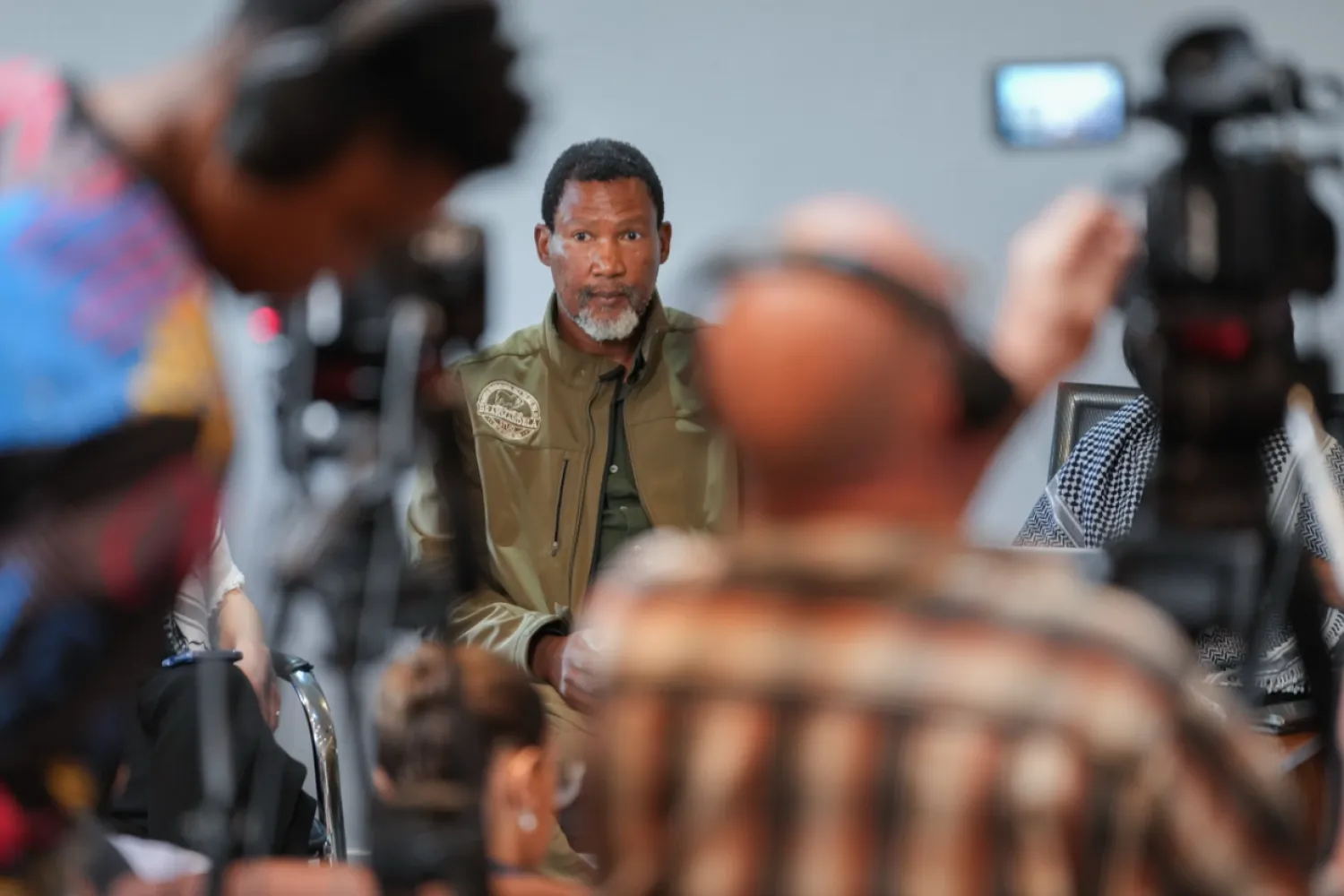
South African member of parliament and Nelson Mandela's grandson Mandla Mandela joins a press conference held by the Global Sumud Flotilla about its upcoming Spring 2026 mission Thursday, Feb. 5, 2026, at the Nelson Mandela Foundation in Johannesburg, South Africa. (AP Photo/Jerome Delay)
TT

Organizers Say New Civilian-led Aid Flotilla with over 100 Boats will Sail to Gaza in March

South African member of parliament and Nelson Mandela's grandson Mandla Mandela joins a press conference held by the Global Sumud Flotilla about its upcoming Spring 2026 mission Thursday, Feb. 5, 2026, at the Nelson Mandela Foundation in Johannesburg, South Africa. (AP Photo/Jerome Delay)

Organizers of an international flotilla of boats carrying humanitarian aid to Gaza on Thursday announced plans for another mission with more than 100 boats in March.

Campaigners, who organized a similar aid flotilla last year, described the upcoming mission as the biggest civilian-led mobilization against Israel's actions in Gaza. They called on the international community to prevent Israeli forces from intercepting the operation.

The announcement was made at the Nelson Mandela Foundation in South Africa and speakers included Mandla Mandela, grandson of the late former South African president, The AP news reported.

The United Nations said that hundreds of thousands of pallets of humanitarian supplies have been offloaded and collected at various crossings into Gaza since a fragile ceasefire was announced in October.

But Israel has suspended more than two dozen humanitarian organizations from operating in the Gaza Strip for failing to comply with new registration rules, and the territory's population of over 2 million Palestinians still face a humanitarian crisis.

Mandela was part of the flotilla that embarked on a mission to Gaza last year and was detained along with other activists when their boat was intercepted by Israeli forces before they could reach Gaza shores.

According to organizers, more than 1,000 activists including medical doctors, war crimes investigators and engineers will form part of the new flotilla. It will be supported by a land convoy that is expected to attract thousands more activists across countries including Tunisia and Egypt.

The boats are expected to sail from Spain, Tunisia and Italy toward Gaza.

“This time around we expect hundreds and thousands to sign up and to mobilize entry through Egypt, through Lebanon, through Jordan and every other border that is feasible for us to get into occupied Palestine and to Gaza," Mandela said. “We want to mobilize the entire global community to join forces with us."

Activists said they were aware that they might be confronted by Israeli forces but that they were protected by international law.

“The International Court of Justice in the provisional ruling in the case opened by South Africa against the genocide state of Israel, states very clearly that Israel or any other nation are prohibited to hinder any type of humanitarian mission on the way to Gaza," said Thiago Avila, a Brazilian activist who is part of the steering committee.

Mandela said they had chosen to host the briefing at the Nelson Mandela Foundation to highlight Nelson Mandela's support for the Palestinian cause. They also welcomed the country's decision to expel Israel's deputy ambassador to South Africa.

Last year's mission mobilized about 50 vessels and 500 activists. Organizers said Israeli vessels approached the boats while they sailed in international waters, spraying some with water canons.

An estimated 443 participants were detained, including Mandela, activist Greta Thunberg and European Parliament member Rima Hassan.

Israel Targets Gaza Militants Linked to Israeli Abductions

A Palestinian woman reacts during the funeral of Islamic Jihad leader Ali al-Razaina in Deir al-Balah in the central Gaza Strip on Thursday (Reuters)
TT

Israel Targets Gaza Militants Linked to Israeli Abductions

A Palestinian woman reacts during the funeral of Islamic Jihad leader Ali al-Razaina in Deir al-Balah in the central Gaza Strip on Thursday (Reuters)

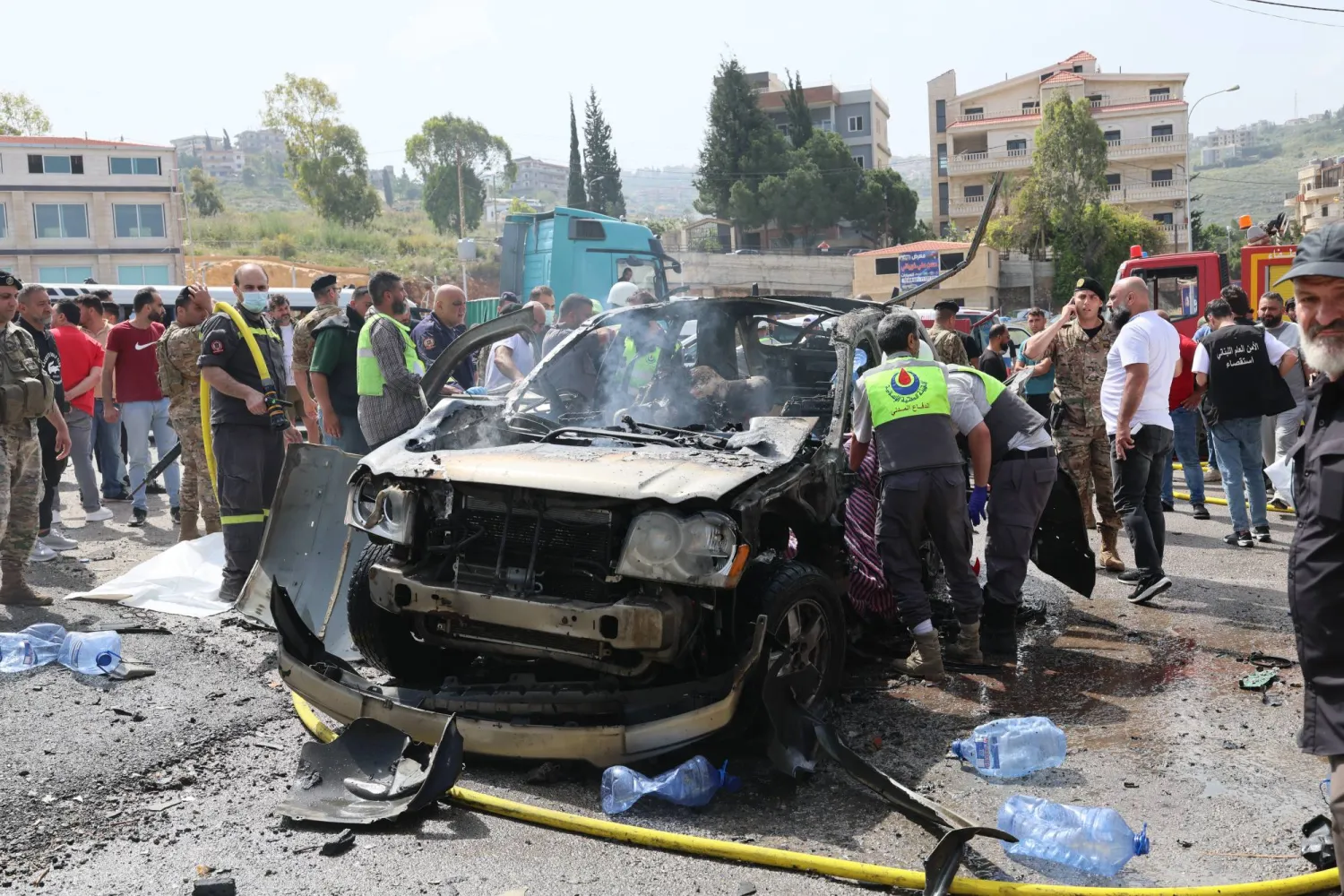
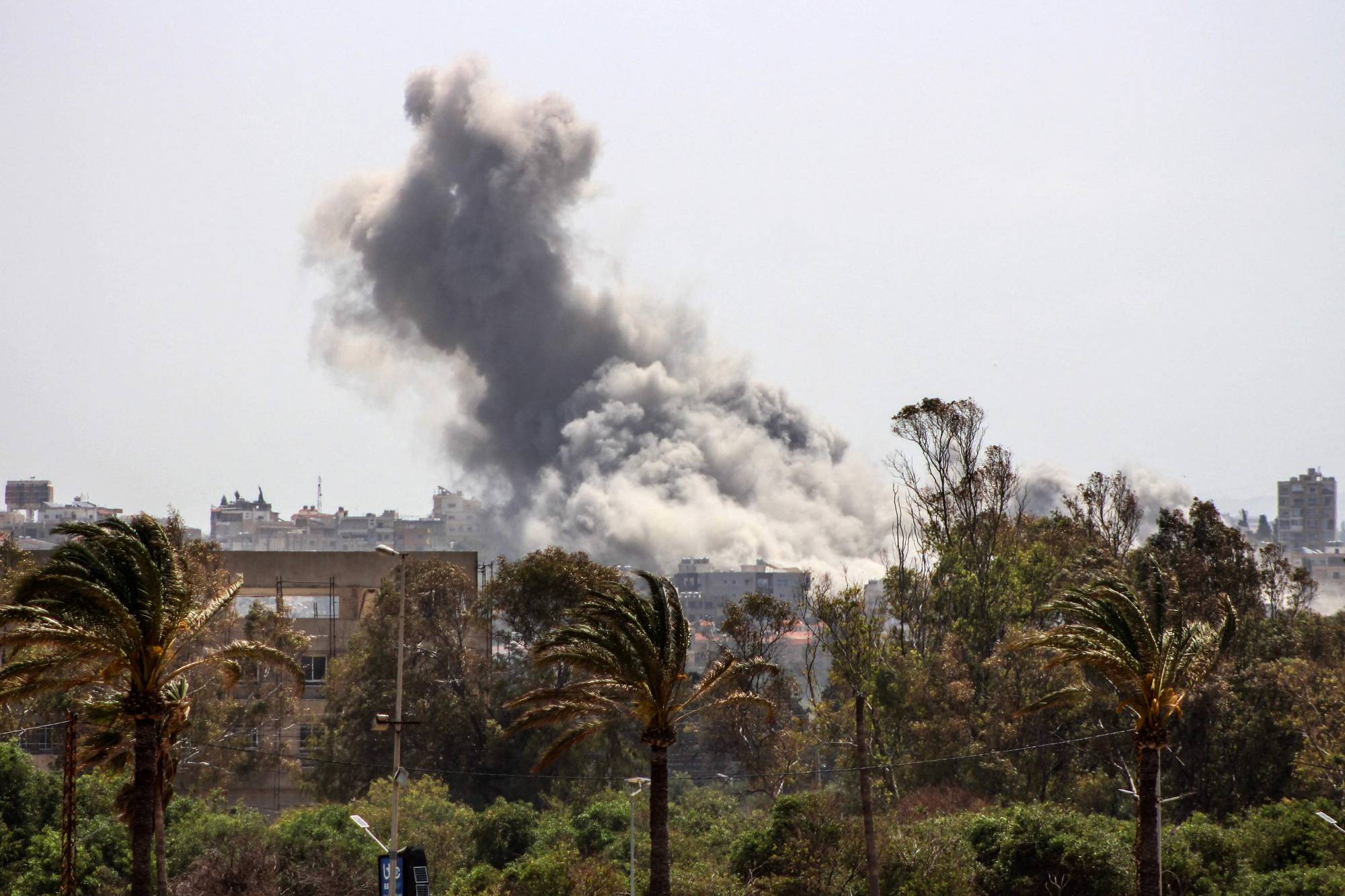
Israeli military statements issued on Wednesday said its forces had targeted senior militants in the armed wings of Hamas and Islamic Jihad, accusing them of involvement in the abduction and detention of Israeli captives, both alive and dead, following the Oct. 7, 2023, attack.

Israel has continued pursuing those it says took part in the attack, as well as those involved in holding Israeli captives or the bodies of those killed. Palestinians describe the campaign as retaliatory, saying it has at times extended to the families of those involved.

The Israeli army said it had targeted Bilal Abu Assi, a commander of an elite company in Hamas’ armed wing, the Izz el-Din al-Qassam Brigades, in Khan Younis in southern Gaza.

Sources told Asharq Al-Awsat that Abu Assi survived the assassination attempt, which killed two girls and a paramedic after a tent was struck in the Mawasi area of Khan Younis. The sources said Abu Assi had survived more than eight assassination attempts during the war.

The Israeli military accused Abu Assi of leading his unit in an assault on Kibbutz Nir Oz, east of Khan Younis, and of being responsible for abducting and holding the bodies of Israelis taken during the Oct. 7 attack.

In a separate statement, the Israeli army said it had killed Ali al-Razaina, the commander of Islamic Jihad’s northern Gaza brigade, in an air strike that hit a tent in Deir al-Balah in central Gaza. Sources within the movement confirmed that Razaina was killed alongside his daughter Ghada, the only remaining member of his immediate family after two of his children and his wife were killed in earlier strikes he had survived.

The sources said Razaina was responsible for a series of attacks against Israeli forces during the war, had been wounded several times, and had previously evaded arrest attempts by Israeli forces while operating in northern Gaza.

The Israeli army accused Razaina of abducting and holding Israeli captives, leading multiple attacks, and recently working to rebuild the group’s infrastructure.

Sources told Asharq Al-Awsat that Razaina had succeeded in transferring several Israeli captives from northern Gaza to the south during the war and had sought to keep many of them alive to hand them over in prisoner exchanges with Israel.

The Israeli military also announced the killing of Mohammed al-Habil, a commander in Hamas’ Beach Battalion, accusing him of abducting an Israeli female soldier from the Nahal Oz military site east of Gaza City and later killing her. Her body was later found near the Shifa medical complex, according to the Israeli statement.

Sources said al-Habil had survived two previous assassination attempts, one of them near his family home in the Beach refugee camp in western Gaza, where he was eventually killed.

Field sources told Asharq Al-Awsat that leaders of the armed factions believe Israel will continue targeting their operatives on such grounds, describing this as a clear breach of the ceasefire reached in October 2025. The sources said the situation could derail the agreement, even though the factions are not seeking such an outcome.

Palestinian concerns over a collapse of the agreement stem from fears that Israel could assassinate senior figures such as Izz el-Din al-Haddad, a commander in the Qassam Brigades, or others of similar rank who are seen as having led the Oct. 7 attack.

The sources said there are other leaders and operatives linked to the attack and to the detention or handover of Israeli captives, both alive and dead, who remain alive, and that Israel appears determined to settle scores with them.

“If Israel insists on acting this way, that means we are facing a series of escalations that will not stop, and this could lead to another explosion in the situation,” the sources said.

This appears to align with a report published by Israel’s Haaretz newspaper last Friday, which said the Israeli government’s policy in Gaza currently rests on a single hope: that US efforts in the coming months to impose a new security and political reality in the enclave will collapse.

At that point, the report said, US President Donald Trump could give Israeli Prime Minister Benjamin Netanyahu the green light to attempt to regain military control of Gaza.


Hezbollah’s Selective Turn to State Exposes Paralysis

Hezbollah parliamentary bloc head Mohammed Raad meets Lebanese President Joseph Aoun (Lebanese Presidency)
TT

Hezbollah’s Selective Turn to State Exposes Paralysis

Hezbollah parliamentary bloc head Mohammed Raad meets Lebanese President Joseph Aoun (Lebanese Presidency)

Since the ceasefire reached with Israel in November 2024, Hezbollah has shown a striking shift in its political conduct, particularly in how it deals with Lebanese state institutions.

A group long used to operating outside official channels is now, despite its escalatory rhetoric, shifting responsibility to the state on issues ranging from Lebanese prisoners held by Israel and postwar reconstruction to indirect negotiations with Tel Aviv.

Since the ceasefire, Hezbollah has also refrained from responding militarily to Israel, with no direct action recorded, in clear contrast to its traditional discourse built around retaliation and deterrence.

At the same time, the group continues to reject any discussion of handing over its weapons. It has launched a campaign against officials who have spoken about restricting arms to the state north of the Litani River.

This was evident in remarks by Mohammed Raad, head of Hezbollah’s parliamentary bloc, following his meeting with Lebanese President Joseph Aoun on Wednesday, after tensions had surfaced between the two sides over recent statements by the president urging the group to act with restraint.

While Raad did not address the issue of weapons during his remarks at the presidential palace, he reiterated Hezbollah’s stance of placing responsibility on the state regarding liberation, prisoners, and reconstruction.

He said the group was committed to understanding and cooperation to achieve the goals of all Lebanese, starting with ending the occupation, securing the release of prisoners, strengthening stability, enabling residents to return to their homes and villages, launching reconstruction efforts, and having the state assume responsibility for protecting sovereignty, with Hezbollah supporting it when necessary, while rejecting all forms of intervention and tutelage.

This approach is also reflected in Hezbollah’s meetings with Aoun and Prime Minister Nawaf Salam to hand over lists of Lebanese prisoners and explicitly call on the state to take full responsibility for the issue. This practice was not typical of the group in previous phases.

Contradiction and confusion

Sources close to the presidency declined to comment on Raad’s remarks or assess the meeting with Aoun, telling Asharq Al-Awsat that there was an apparent contradiction and confusion in Hezbollah’s behavior and positions. At the same time, everyone awaited the outcome of US-Iranian negotiations.

They said what was happening amounted to buying time, and that the state was not a menu from which responsibilities could be selectively chosen.

They said Hezbollah wanted the state to shoulder responsibility for all outstanding issues, which was indeed the state’s duty, even though the group had launched its support front without consulting it and continued to reject the implementation of state decisions. They described Hezbollah officials as lacking clarity in defining their objectives.

Clear incapacity

Opposition political analyst Ali al-Amin described Hezbollah’s behavior, combining escalatory rhetoric with rejection of disarmament while demanding the state resolve outstanding issues, as a clear expression of its inability to respond to repeated Israeli strikes, including killings and destruction.

Amin told Asharq Al-Awsat that Hezbollah was also attempting to transfer the consequences of the war to the state, channeling the complaints of displaced and affected citizens toward state institutions, as if to say the matter was the state’s responsibility, while ignoring what was required of it in terms of handing over its weapons.

He said that when the discussion turns to the role of the state, weapons are framed in terms of dignity and honor, but when it comes to bearing burdens, citizens are told the state is responsible.

Despite this, Amin said Hezbollah had succeeded to some extent in shifting these burdens, noting that it had not paid housing compensation, issued checks that were not honored, and that citizens were now being told the state would pay instead.

At the same time, the group had not carried out any response against Israel, raising a question it avoided answering: whether it no longer wanted to fight Israel.

Confusion and mutual benefit

Amin said Hezbollah was seeking to reduce the cost of confrontation and transfer the burden to the state without abandoning its tools or strategic options.

He said the group wanted to preserve the current situation, with ongoing Israeli attacks used to justify retaining weapons. At the same time, Israel benefits from their continued presence to strengthen its leverage and impose conditions on Lebanon later.

He added that Lebanon was facing a state of confusion: no fighting, no resistance, no liberation, only a continued insistence on retaining arms whose remaining function was unclear, except as an Israeli pretext for further attacks and for weakening the Lebanese state.


UK Sanctions Sudanese Army and RSF Leaders

Sacks of crops are stacked at the El Obeid crops market, in El Obeid, North Kordofan State, Sudan, January 14, 2026. REUTERS/El Tayeb Siddig
TT

UK Sanctions Sudanese Army and RSF Leaders

Sacks of crops are stacked at the El Obeid crops market, in El Obeid, North Kordofan State, Sudan, January 14, 2026. REUTERS/El Tayeb Siddig

Britain sanctioned six individuals suspected of committing atrocities in Sudan's war or of fueling the conflict through the supply of mercenaries and military equipment, the government said on Thursday.

The measures targeted senior commanders in both the Rapid Support Forces (RSF) and the Sudanese Armed Forces, the government said.

The conflict between ⁠the two forces has displaced millions, drawn in regional powers and caused a vast humanitarian crisis since it broke out in April 2023.

"We urgently need a ceasefire, and safe access for humanitarian relief agencies ⁠to reach all those in need," British foreign minister Yvette Cooper, who visited the Sudan-Chad border this week, said in the statement.

"Through these sanctions, we will seek to dismantle the war machine of those who perpetrate or profit from the brutal violence in Sudan," Cooper added.

The British government also sanctioned three individuals - Alvaro ⁠Andres Quijano, Mateo Andres Duque Botero, and Claudia Viviana Oliveros Forero - suspected of recruiting foreign fighters for the conflict or facilitating the purchase of military equipment.

Others sanctioned include Abu Aqla Mohamed Kaikal, a former RSF Commander and current head of the Sudan Shied Forces, RSF Field Commander Hussein Barsham, and RSF Financial Advisor Mustafa Ibrahim Abdel Nabi Mohamed.
