
Egypt has stepped up regional and international efforts to break the deadlock in negotiations between the United States and Iran, as Cairo welcomed a preliminary agreement to hold a joint meeting between the two sides.
Egyptian Foreign Minister Badr Abdelatty said on Thursday it was of paramount importance for Washington and Tehran to reach a “peaceful, consensual settlement” that addresses the concerns of all parties on the basis of mutual respect and shared interests, and helps spare the region the specter of war.
The Egyptian position was conveyed over the past two days through Abdelatty's talks with Qatar’s Prime Minister and Foreign Minister Sheikh Mohammed bin Abdulrahman Al Thani, Omani Foreign Minister Badr bin Hamad Al Busaidi, Iranian Foreign Minister Abbas Araghchi, and US Special Envoy for the Middle East Steve Witkoff.
According to a statement by Egypt’s Foreign Ministry on Thursday, the discussions focused on efforts to de-escalate tensions and contain rising regional strain, as well as developments related to a planned meeting between the United States and Iran in Oman.
Abdelatty welcomed the preliminary agreement to hold the meeting, describing it as a development Egypt has long sought, achieved by creating conducive conditions through sustained diplomatic engagement and a series of intensive talks over recent weeks, in line with directives from President Abdel Fattah el-Sisi.
He stressed the importance of overcoming any differences at this critical stage in a way that preserves regional security and serves the aspirations of the region’s peoples for stability and development.
Risks of escalation
Ali El-Hefny, former assistant foreign minister and secretary general of the Egyptian Council for Foreign Affairs, said Egypt continues its efforts between Iran and the United States because it fully recognizes the risks that could result from escalation between Washington, alongside Israel, and Tehran, noting that such a scenario would have serious repercussions for the region.
He told Asharq Al-Awsat that Egypt has, for decades, played a role in resolving regional and international disputes through peaceful means and away from military escalation, succeeding at times and falling short at others due to the involvement of multiple overlapping parties.
According to Hefny, the Egyptian efforts reflect Cairo’s determination to prevent escalation and promote regional stability.
He added that Egypt, along with other countries, is encouraging Washington and Tehran to resume negotiations, set aside procedural disputes, and engage with substantive differences to bridge gaps and prevent a war that could escalate into a wider regional conflict beyond what anyone might imagine.
Israeli affairs expert Ahmed Fouad Anwar said Egypt has long experience and communication channels with all parties, forming the basis for the Foreign Ministry’s role, as well as several direct contacts made by Sisi on the issue.
He said this provided solid ground for sustained Egyptian efforts to advance dialogue.
Anwar said the core dispute lies in Washington’s desire to conduct negotiations under military pressure rather than focusing solely on the nuclear file, warning that such an approach threatens regional stability given the capabilities and armaments of Iran’s allies.
Diplomatic solutions
US President Donald Trump warned Tehran late last month that it would face the harshest measures if it did not return to the negotiating table over its nuclear program.
On Thursday, Abdelatty expressed hope that the US-Iran meeting would help reduce tensions and escalation in the region and advance diplomatic and political solutions, in line with President Sisi’s view that there are no military solutions to the region’s crises and challenges, and that security and stability can only be achieved through political and diplomatic tracks and by avoiding a slide into insecurity.
He said Egypt would continue its intensive talks and sincere efforts with regional partners and both the American and Iranian sides to push for diplomatic and political solutions.
Cairo agreement
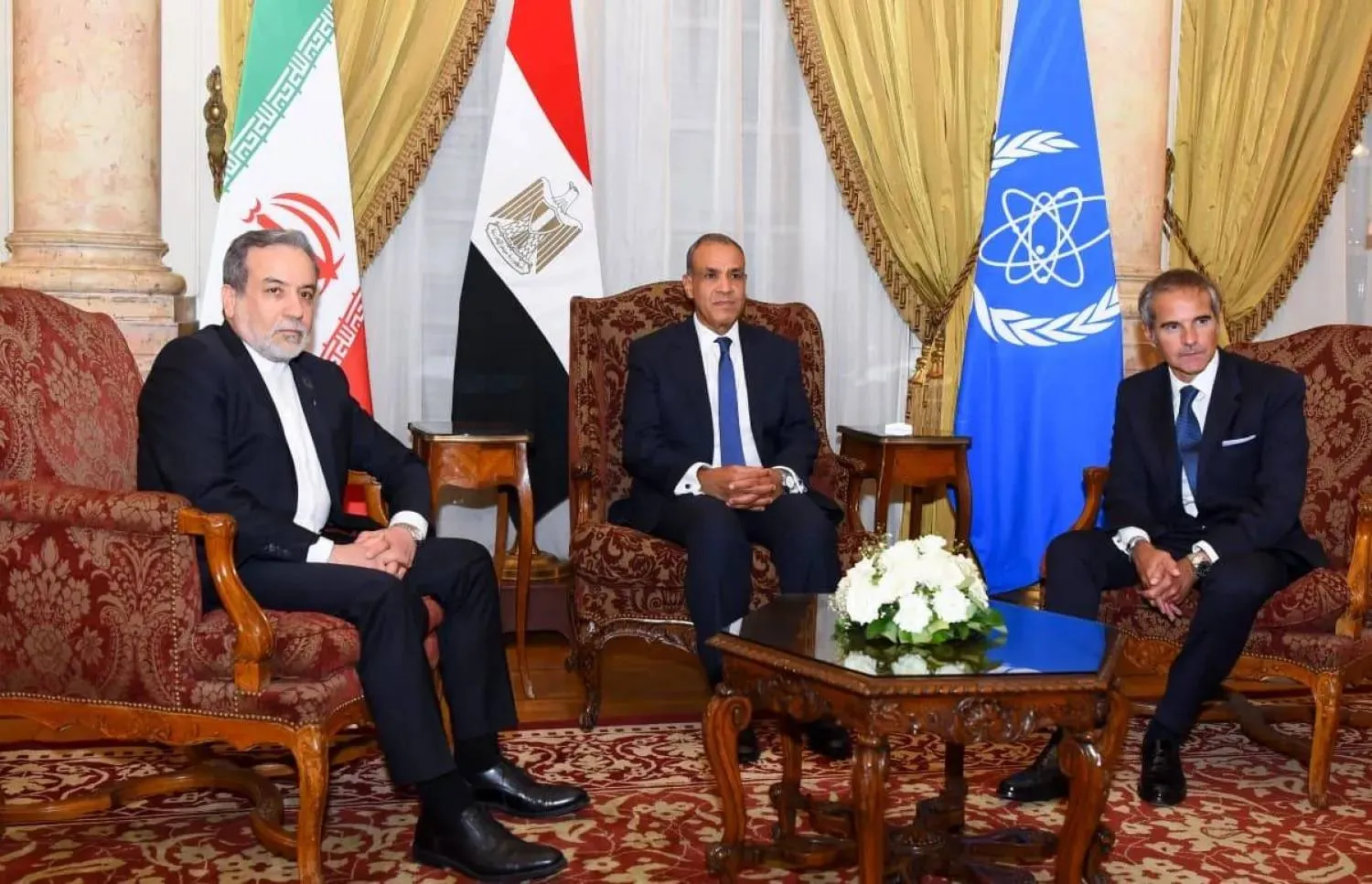
Last year, Egypt brokered mediation between Iran and the International Atomic Energy Agency, culminating in an agreement signed in Cairo on September 9 by Iran’s foreign minister and IAEA Director General Rafael Grossi.
The deal provided for the resumption of cooperation, including renewed inspections of Iranian nuclear facilities, before Tehran announced a freeze of the agreement in November.
Hefny said there is a preliminary understanding on a meeting between US and Iranian delegations, with references to possible involvement by other parties to help ease the current crisis.
He stressed the importance of maintaining dialogue, avoiding threats of force, and giving diplomacy a chance, without procrastination or using time pressure to weaken the other side’s resolve.
Anwar said both sides are engaging in trial balloons, alternating between threats and conciliatory signals.
He noted that Trump has said Washington does not want nuclear weapons in Iran. At the same time, Tehran insists it does not seek such weapons or pose a threat to others, adding that dialogue is essential given the airspace closures and losses suffered by countries during previous confrontations.
At the end of last month, Abdelatty held talks with his Iranian, Omani, Qatari, and Turkish counterparts, as well as with Witkoff, stressing the need to pursue peaceful solutions through diplomacy and dialogue.
A different Middle East
Former assistant foreign minister Hussein Haridy said that only Washington and Tehran can ultimately resolve their dispute, noting that analyses often focus on immediate developments while US-Iran relations are long-standing.
He told Asharq Al-Awsat that the region is entering a Middle East different from that of the past four decades in terms of power balances, and that both the United States and Iran are aware of this reality. He said current developments reflect discussions over Iran’s role in the future Middle East as understood between Washington and Tehran.