


Gaza Factions Tighten Security with Safe Movement, Tracking Collaborators

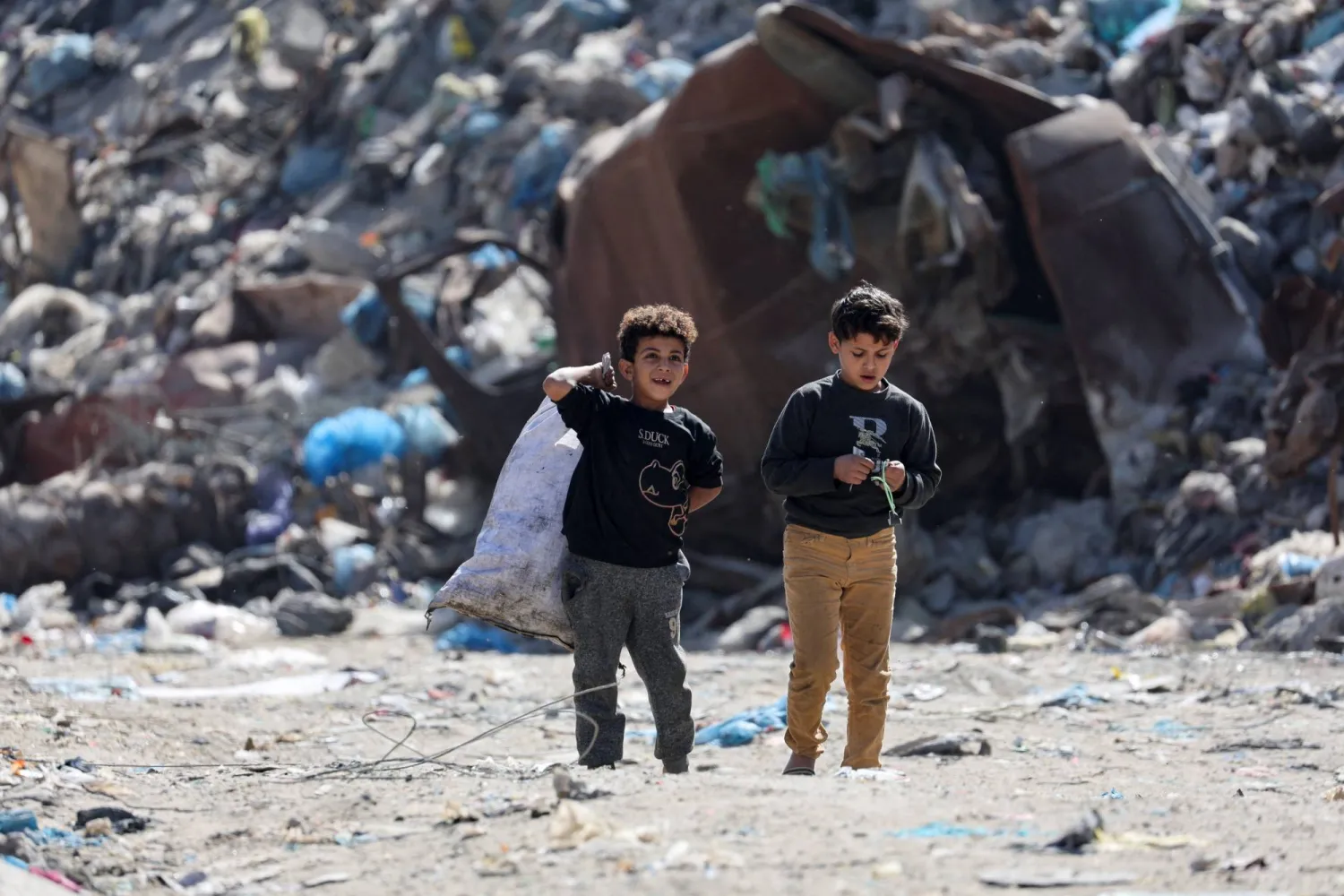
Palestinian boys walk near a landfill, in Gaza City, February 11, 2026. REUTERS/Dawoud Abu Alkas
TT

Gaza Factions Tighten Security with Safe Movement, Tracking Collaborators

Palestinian boys walk near a landfill, in Gaza City, February 11, 2026. REUTERS/Dawoud Abu Alkas

Palestinian armed factions in Gaza have gone on heightened alert as Israel presses ahead with targeted killings of field commanders and prominent operatives from Hamas and Islamic Jihad, field sources told Asharq Al-Awsat, saying tightened security measures have thwarted several planned assassinations in recent weeks.

The sources said security measures had foiled a series of assassination attempts planned by the Israeli army in recent days and weeks.

The Israeli military has frequently cited security incidents against its forces as justification for carrying out a string of strikes inside the enclave after a ceasefire took effect. Israeli violations have killed more than 500 Palestinians in Gaza since the agreement to halt the war was announced.

Field sources also told Asharq Al-Awsat that after the killing of prominent leaders and activists, strict instructions were issued by senior commanders of the armed wings to field operatives to adopt measures similar to those in place during the two-year war.

One source said the directives included “secure movement” from one place to another, meaning movement without carrying mobile phones or other technological devices to avoid detection by Israel's artificial intelligence. He added that members had been advised to remain concealed in specific locations for extended periods, without moving, even for days or weeks.

Failed targeting operations

Another source familiar with internal communications within an armed faction in Gaza said that “thanks to the new precautions in recent days and weeks, new assassination operations have failed.”

He cited instances of Israeli strikes on targets such as tents and other sites that did not host any of the wanted individuals or others, on several occasions.

“The Israeli forces bombed two targets hours after the Rafah incident that took place last Monday, one on the same evening and the other on Tuesday afternoon, indicating an inability to identify new targets as had happened previously,” the source said.

The factional source concluded that “the number of casualties has become much lower during the current round of escalation compared with previous violations.”

Israeli airstrikes on Monday and Tuesday killed prominent field activists in the Izz al-Din al-Qassam Brigades and the Al-Quds Brigades in two assassination operations.

The first targeted three activists in the Beit Hanoun Battalion of the Izz al-Din al-Qassam Brigades, who had overseen a series of operations, including the sniper killing of several soldiers, resulting in the deaths of seven, according to an Israeli military statement during battles in the town.

They were also said to have participated in the Oct. 7, 2023, attack. A commander of the elite unit of the Al-Quds Brigades in central Gaza was also killed.

Night checkpoints to track collaborators

Asked whether other measures had been adopted to secure their members, another field source said some steps included deploying checkpoints by security forces affiliated with the Hamas-run government, as well as field operatives from the Izz al-Din al-Qassam Brigades and the Al-Quds Brigades, particularly at night, across all areas of Gaza.

The source said the night checkpoints had reduced the movement of collaborators with Israel, as well as individuals working with armed gangs that provide intelligence on the whereabouts of certain activists after tracking and monitoring them, which he said had again weakened Israeli intelligence.

“There is other discreet activity during daylight hours carried out by the factions to pursue any suspicious movements and monitor individuals suspected of cooperating with Israeli intelligence,” the source added.

He said several suspects had been detained and interrogated, and information had been extracted about personalities being tracked. The data was then passed on to the intended targets so they could change their locations, move to safe places, and abandon the technological devices they had been using.

These security measures coincided with an announcement by the “Al-Hares” platform, affiliated with the security apparatus of armed factions in Gaza, calling on residents to “assist security in strengthening the internal front by reporting any suspicious activity or movement in their vicinity.”

It added that “any unusual behavior, attempts to gather information, or movements suspected of links to collaborator gangs constitute a key element in thwarting hostile plans and supporting the resilience of our internal front.”



MSF Suspends Some Work at Gaza's Nasser Hospital due to Presence of Armed Men

A Palestinian war-wounded man waits at the entrance, hoping to receive medical treatment, at a clinic run by medical charity Medecins Sans Frontieres (MSF), amid shortages of medical supplies, in Khan Younis, southern Gaza Strip, December 31, 2025. REUTERS/Ramadan Abed
TT

MSF Suspends Some Work at Gaza's Nasser Hospital due to Presence of Armed Men

A Palestinian war-wounded man waits at the entrance, hoping to receive medical treatment, at a clinic run by medical charity Medecins Sans Frontieres (MSF), amid shortages of medical supplies, in Khan Younis, southern Gaza Strip, December 31, 2025. REUTERS/Ramadan Abed

Doctors Without Borders has announced the suspension of some operations at one of Gaza 's largest functioning hospitals after patients and staff reported seeing armed, masked men roaming parts of the building.

Nasser Hospital in Khan Younis is one of the territory's few functioning hospitals. Hundreds of patients and war-wounded have been treated there daily, and it was a hub for Palestinian prisoners released by Israel in exchange for Israeli hostages as part of the current ceasefire deal.

The comments by the aid group, which is also known by its acronym MSF, are a rare announcement by an international organization about the presence of armed men in or near medical facilities in Gaza since the war began over two years ago.

MSF said in a statement all its noncritical medical operations at Nasser Hospital were suspended due to security breaches that posed “serious security threats to our teams and patients."

“MSF teams have reported a pattern of unacceptable acts including the presence of armed men, intimidation, arbitrary arrests of patients and a recent situation of suspicion of movement of weapons,” it said.

While the suspension occurred in January, it was first disclosed in MSF’s “frequently asked questions” section on its website. It's unclear when the post was made, but the site said it was updated Feb. 11.

MSF said it made the difficult decision after an increase of patients and staff seeing armed men in parts of the hospital compound since the US-brokered October ceasefire was reached. The gunmen were seen in areas where the group didn’t operate.

Attacks on health facilities MSF said it wasn’t able to indicate the armed men's affiliation. It said it had expressed concern to the “relevant” authorities, without elaborating, stressing that hospitals must remain neutral, civilian spaces. It said its concerns were heightened by previous, deliberate Israeli attacks on health facilities.

Throughout the war, which began with the Hamas-led attack on Israel on Oct. 7, 2023, Israel has repeatedly struck hospitals, including Nasser, accusing the militant group of operating in or around them. Hamas security men often have been seen inside hospitals, blocking access to some areas.

Some hostages released from Gaza have said they spent time during captivity in a hospital.

While Hamas remains the dominant force in areas not under Israeli control, including Nasser Hospital, other armed groups have mushroomed across Gaza as a result of the war, including groups backed by Israel’s army in the Israeli-controlled part of the strip.

Nasser Hospital staff say that in recent months it has been repeatedly attacked by masked, armed men and militias, despite police presence there.

The Hamas-run interior ministry, which oversees police in Gaza, said officers would be deployed to secure hospitals and rid them of armed presence. It said it would take legal action against violators and was implementing stricter measures to ensure patients’ safety.

While international law gives hospitals special protections during war, they can lose this immunity if combatants use them to hide fighters or store weapons, according to the International Committee of the Red Cross. Still, there must be plenty of warning to allow the evacuation of staff and patients before any operations take place. If harm to civilians from an attack is disproportionate to the military objective, it is illegal under international law.

Aid groups and rights organizations say Israel has decimated Gaza's health system, forcing most of its hospitals to shut down while heavily damaging others. During the war, Israeli forces raided a number of hospitals, detaining hundreds of staff.

Israel also has targeted the police in Gaza.

A weakened medical system MSF said it will continue supporting critical services at Nasser Hospital, including inpatient and surgical departments for patients with traumatic or burn injuries. However, it is ending support to the pediatrics and maternity wards, including the neonatal intensive care unit. It has also indefinitely suspended its outpatient consultations for 3D burn screening and mental health, as well as other services.

Zaher al-Waheidi, head of the records department at Gaza's health ministry, said MSF's suspension would have a significant impact as hundreds of patients are admitted to the maternity and burn wards daily. He said the ministry would take over maternity patient care, but said burn victims won't have many options.

Israel has been cracking down on aid groups operating in Gaza and the occupied West Bank, including MSF. The group is one of more than three dozen that Israel has banned from operating in the strip for failing to comply with new registration rules.

MSF says Israel's decision will have a catastrophic impact on its work in Gaza, where it provides funding and international staff for six hospitals and operates two field hospitals and eight primary health centers, clinics and medical points. It also runs two of Gaza’s five stabilization centers, helping children with severe malnutrition.

The toll of war While the heaviest fighting has subsided, the fragile ceasefire has been seen almost daily Israeli fire. Israeli forces have carried out repeated airstrikes and frequently fire on Palestinians near military-held zones, killing 591 Palestinians since the ceasefire took effect, according to Gaza health officials.

The ministry said the overall Palestinian death toll from the war is at least 72,051.

The ministry, part of the Hamas-led government, maintains detailed casualty records that are seen as generally reliable by UN agencies and independent experts. It does not give a breakdown of civilians and militants. Militants have carried out shooting attacks on troops, and Israel says its strikes are in response to that and other violations. Four Israeli soldiers have been killed.


US Military Says Struck More than 30 ISIS Targets in Syria

US soldiers patrol the countryside of Rumaylan in Syria's northeastern Hasakeh province on June 7, 2023. (AFP)
TT

US Military Says Struck More than 30 ISIS Targets in Syria

US soldiers patrol the countryside of Rumaylan in Syria's northeastern Hasakeh province on June 7, 2023. (AFP)

The US military said Saturday that its forces had struck more than 30 ISIS group targets in Syria this month, maintaining pressure on the militants after a deadly attack on US troops last year.

The strikes also came as the United States Central Command (CENTCOM) in recent weeks transferred thousands of ISIS detainees from Syria to Iraq, after they had been held in prisons run for years by Kurdish-led forces, AFP reported.

US forces "conducted 10 strikes against more than 30 ISIS targets in Syria... to sustain relentless military pressure on remnants from the terrorist network," a CENTCOM statement said.

The airstrikes, carried out between February 3 and February 12, hit ISIS "infrastructure and weapons storage targets", it said.

The forces additionally conducted "five strikes against an ISIS communication site, critical logistics node, and weapons storage facilities" between January 27 and February 2, the statement said.

Washington has blamed an ISIS militant for ambushing and killing two US soldiers and a US civilian interpreter in Palmyra on December 13.

Syria's interior ministry has said the ISIS gunman was a member of the security forces who had been set to be fired for extremism.

The US launched Operation Hawkeye Strike in response to the attack.

"More than 50 ISIS terrorists have been killed or captured and over 100 ISIS infrastructure targets have been struck with hundreds of precision munitions during two months of targeted operations," the CENTCOM statement added.

On Friday, CENTCOM said it had completed the transfer of more than 5,700 detained ISIS suspects, from 61 countries, from Syria to Iraq.

The operation began last month as Damascus's capture of territory surrounding the prisons from Kurdish-led forces sparked questions over the fate of the ISIS prisoners, prompting Washington to step in.

Alongside the US-led anti-ISIS coalition, the Kurdish-led Syrian Democratic Forces spearheaded the battle that led to the militant group's territorial defeat in Syria in 2019.

Washington has however drawn close to Syria's new authorities, recently saying the purpose of its alliance with the Kurdish forces was largely over.

As Damascus seeks to extend its control over all of Syria, US forces confirmed on Thursday their withdrawal from Al-Tanf base near Syria's border with Jordan and Iraq.


Abbas Urges Removal of Israeli 'Obstacles' on Gaza Ceasefire

A photograph shows tents and makeshift shelters at a camp for displaced Palestinians in Khan Yunis, in the southern Gaza Strip, on a foggy day on February 14, 2026. (Photo by Bashar Taleb / AFP)
TT

Abbas Urges Removal of Israeli 'Obstacles' on Gaza Ceasefire

A photograph shows tents and makeshift shelters at a camp for displaced Palestinians in Khan Yunis, in the southern Gaza Strip, on a foggy day on February 14, 2026. (Photo by Bashar Taleb / AFP)

Palestinian president Mahmoud Abbas called on Saturday for the removal of "all obstacles" he said Israel has imposed on the implementation of the second phase of the Gaza ceasefire, in a speech at an African Union summit in Ethiopia.

"We emphasize the need to lift all obstacles imposed by the Israeli occupation on the implementation of the provisions related to the second phase of the agreement," Abbas said.

This included the work of a technocratic committee established to oversee the day-to-day governance of Gaza, he added in a speech read by his prime minister Mohammed Mustafa.

Israel and Hamas agreed to a ceasefire in October as part of a US plan to end the war in Gaza. Both sides have repeatedly accused each other of violations.

According to Gaza's Health Ministry, more than 590 Palestinians have been killed by Israeli troops in the territory since the ceasefire began.