

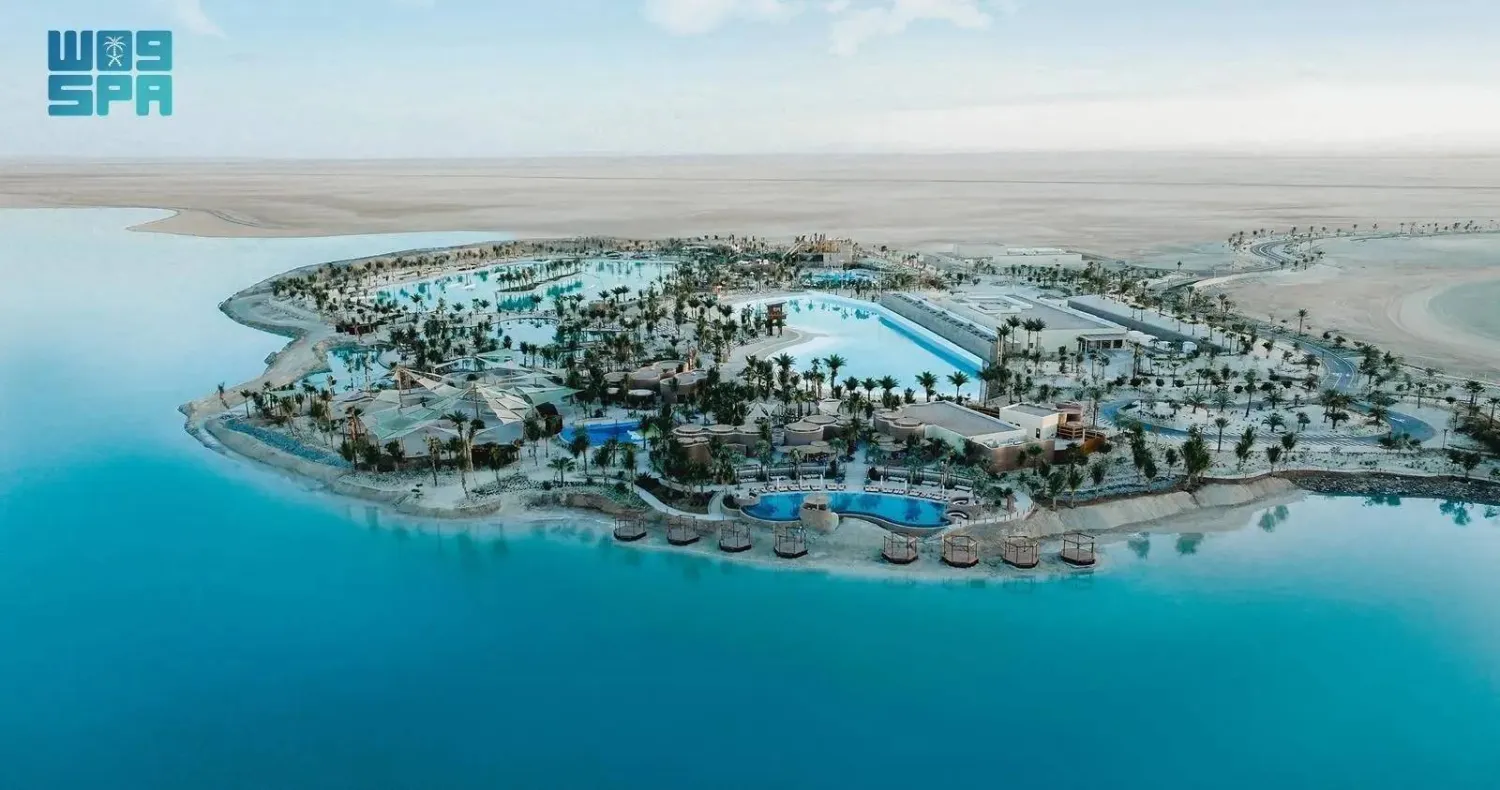

Red Sea Global Launches ‘Adrena,’ a New Adventure and Leisure Zone in Saudi Arabia

Adrena is strategically located a short drive from Shura Island. (SPA)
TT

Red Sea Global Launches ‘Adrena,’ a New Adventure and Leisure Zone in Saudi Arabia

Adrena is strategically located a short drive from Shura Island. (SPA)

Red Sea Global, the developer of regenerative tourism destinations, unveiled on Sunday “Adrena,” a contemporary adventure and leisure zone in Saudi Arabia that sets new benchmarks for excitement and exploration. The zone is scheduled to open to the public on March 1, following an invitation-only soft launch beginning February 15.

Adrena is strategically located a short drive from Shura Island and has been designed to serve visitors to The Red Sea destination as well as guests from outside the destination.

The zone offers a diverse range of activities and experiences, including surfing, water skiing, cliff jumping, and skateboarding, positioning it as a major attraction for thrill seekers.

Adrena boosts the Kingdom’s position on the global adventure tourism map, representing a qualitative addition to The Red Sea’s tourism ecosystem. Alongside luxury resort experiences in the surrounding area, the zone provides a social space catering to new generations and those seeking immersive experiences, allowing them to explore the beauty of sea and land from a different perspective.

Chief Executive Officer of Red Sea Global John Pagano said: “We wanted to create a space where adrenaline merges with the beauty of the natural environment, while fully preserving that environment. Sustainability has been placed at the heart of every experience within ‘Adrena,’ in line with our commitment to people and nature, to offer our guests exceptional moments that remain long in memory.”

The zone will be managed and operated by Red Sea Sports and Entertainment Company, leveraging the expertise of its affiliated brands WAMA for water sports, Galaxea for exploration diving, and Akun for land-based adventures.

Adrena features pioneering facilities, most notably a 215-meter seawater wave pool, described as the largest in the Kingdom upon opening. It is designed to simulate natural wave motion with heights reaching up to 2.1 meters and is equipped with advanced technologies suitable for all skill levels, from beginners to professionals.

The destination also includes a water-skiing lagoon, dedicated snorkeling routes, a six-meter-deep diving pool, a family water-play zone, a floating obstacle challenge area, a skate plaza, a BMX track, beach sports courts, a zipline over water, and aerial sliding and flying experiences at a height of 10 meters.

The design of Adrena reflects Red Sea Global’s commitment to responsible development through the adoption of sustainable operating systems, including seawater treatment and recycling technologies within facilities and the exclusive use of freshwater for irrigation to reduce environmental footprint and preserve natural resources.

The Red Sea destination began welcoming guests in 2023 and currently hosts a number of resorts in operation, in addition to the private Thuwal Resort. Red Sea International Airport serves as the main gateway to the destination, with regular flights from Riyadh, Jeddah, Dubai, and Doha, as well as international flights from selected cities such as Milan.



Prince William Shares a Post Remembering His Late Mother Princess Diana on UK Mother’s Day

The prince, 43, posted a photo showing Diana with a 2-year-old William in a field of flowers that was taken at the family’s main home at Highgrove, Gloucestershire, in 1984. (Kensington Royal/X)
TT

Prince William Shares a Post Remembering His Late Mother Princess Diana on UK Mother’s Day

The prince, 43, posted a photo showing Diana with a 2-year-old William in a field of flowers that was taken at the family’s main home at Highgrove, Gloucestershire, in 1984. (Kensington Royal/X)

Prince William said Sunday he remembers his late mother Princess Diana “today and every day” as he shared a photo of them together on social media to mark Mother's Day in the UK.

“Remembering my mother, today and every day. Thinking of all those who are remembering someone they love today. Happy Mother’s Day,” the royal wrote on Instagram, signing off with “W.”

The prince, 43, posted a photo showing Diana with a 2-year-old William in a field of flowers that was taken at the family’s main home at Highgrove, Gloucestershire, in 1984.

Diana was killed in a car crash in Paris in August 1997, when William was 15 and his brother Prince Harry was 12. She was 36.

The royal family also posted other photos on social media to mark Mothering Sunday, which is celebrated in the UK on the fourth Sunday of Lent.

They included a black-and-white photo from 1953 of the late Queen Elizabeth II sitting on a garden bench with King Charles III and his sister Anne, the Princess Royal — both still young children at the time — at Balmoral in Scotland.


Australian Government Deploys Military to Assist Flood-Hit Northern Territory

 Australian Prime Minister Anthony Albanese addresses a press conference at Parliament House in Canberra, Australia, Tuesday, March 10, 2026. (Mick Tsikas/AAP Image via AP)
Australian Prime Minister Anthony Albanese addresses a press conference at Parliament House in Canberra, Australia, Tuesday, March 10, 2026. (Mick Tsikas/AAP Image via AP)
TT

Australian Government Deploys Military to Assist Flood-Hit Northern Territory

 Australian Prime Minister Anthony Albanese addresses a press conference at Parliament House in Canberra, Australia, Tuesday, March 10, 2026. (Mick Tsikas/AAP Image via AP)
Australian Prime Minister Anthony Albanese addresses a press conference at Parliament House in Canberra, Australia, Tuesday, March 10, 2026. (Mick Tsikas/AAP Image via AP)

Australia's Prime Minister Anthony Albanese said on Sunday that troops would be deployed to help communities hit by a days-long flood emergency in the country's north.

Albanese said the center-left government had approved deployment of Australian Defense Force personnel to ‌help communities around the ‌flood-hit Northern Territory ‌town ⁠of Katherine, about 264km (164 ⁠miles) south of territory capital Darwin.

"To everyone doing it tough right now, know we are with you through the response and through the ⁠recovery," Albanese said on social ‌media ‌platform X.

Emergency Services Minister Kristy McBain ‌said in televised remarks that ‌the troops would be deployed for up to 14 days.

Authorities, grappling with floods sparked by ‌heavy rain in the Northern Territory and neighboring Queensland ⁠state, ⁠said this week they recovered two bodies in a search for two Chinese backpackers who went missing in floods in Queensland's Gympie region.

Climate change is causing heavy short-term rainfall events to become more intense in Australia, the country’s science agency has previously said.


The Environment, Another Casualty of War in the Mideast

Experts say that war harms the climate and pollutes the air, water and soil.  AFP
Experts say that war harms the climate and pollutes the air, water and soil. AFP
TT

The Environment, Another Casualty of War in the Mideast

Experts say that war harms the climate and pollutes the air, water and soil.  AFP
Experts say that war harms the climate and pollutes the air, water and soil. AFP

From the jet fuel used in bombing raids to acrid smoke from burning oil depots, the conflict in the Middle East is inflicting a significant toll on nature and the climate.

AFP interviewed experts about the environmental cost of war that often goes under the radar:

- Bombers and warships -

US and Israeli aircraft use a considerable amount of fuel reaching the Gulf and flying sorties over Iran, said Benjamin Neimark at the Queen Mary University of London.

Deploying stealth bombers and fighter jets around the clock adds a significant amount of planet-warming greenhouse gas emissions into the atmosphere.

"The US Navy also has a significant fleet which will be operating remotely for some time," Neimark told AFP.

"That is a significant number of US troops that need to be fed, housed, and working around the clock. These floating cities all need energy."

This is provided in part by polluting diesel generators, even if most larger aircraft carriers are nuclear powered, an energy source that produces far less emissions than fossil fuels.

But many experts take into account everything from the manufacture of weapons and explosives to post-war reconstruction efforts when estimating the total environmental impact of conflict.

According to one study published in the peer-reviewed journal One Earth, the Gaza conflict generated some 33 million tons of carbon dioxide equivalent -- an amount comparable to 7.6 million gasoline-powered cars, or the annual emissions of a small country like Jordan.

And by one estimate, the war in Ukraine has caused more than 300 million tons of additional emissions -- equivalent to France's annual output.

This estimate, by the Initiative on GHG Accounting of War, takes into account military operations and reconstruction efforts, forest fires, and longer flight routes.

- Climate cost -

This conflict is playing out on the Strait of Hormuz, a crucial artery for the passage of oil and gas supplies to global markets dependent on energy from the Gulf.

Ships transporting these highly flammable fuels through the narrow waterway -- along with the region's oil and gas refineries and storage facilities -- were "all a target" in this war, said Neimark.

"Clearly this conflict is different," he said.

"We have already seen a significant amount of refineries targeted. These toxic flames are deadly and have a severe climate cost."

The oil wells set ablaze in Kuwait in the 1990s during the first Gulf War took months to extinguish and released an estimated 130 to 400 million tons of CO2 equivalent.

- Ripple effect -

Since erupting on February 28, the conflict has sent oil prices soaring and focused fresh attention on the global transition to cleaner, more climate-friendly forms of energy.

Andreas Rudinger, from the Institute for Sustainable Development and International Relations, said the economic knock-on effects of the war had put policy makers "under pressure to reduce the burden on prices over climate action".

Brussels has faced pressure to relax its emissions trading rules in response to surging energy prices, while other governments have taken steps to help motorists fill up at the pump.

But there's also a "glass half-full perspective", said Rudinger.

"From a purely economic standpoint... rising fossil fuel prices make decarbonization and electrification solutions more attractive," he said.

He pointed to the rise in popularity of heat pumps in the aftermath of Russia's invasion of Ukraine, which caused energy prices in Europe to rise sharply.

In general, the increase in energy costs stemming from the war in the Middle East should temper demand in what economists call price elasticity.

- Pollution risks -

Apart from climate concerns, strikes on energy infrastructure, oil tankers and military targets pollute the surrounding air and water and spread highly toxic chemicals far and wide, experts say.

In Tehran, attacks on fuel depots last weekend plunged the capital into darkness as poisonous black clouds rose from burning oil facilities.

Mathilde Jourde, from the Institute for International and Strategic Relations (IRIS), said targeting nuclear, military and energy sites had "extremely polluting" consequences for air, water and soil.

"We're just scratching the surface but can already see that there are hundreds of damaged facilities in Iran and neighboring countries that pose pollution risks to people and the environment," Doug Weir, director of the Conflict and Environment Observatory (CEOBS), told AFP.

"We have particular concerns around damaged oil infrastructure, military facilities and the sensitive marine environment of the Arabian Gulf."