


French Designer Threads a Path in London Fashion Week

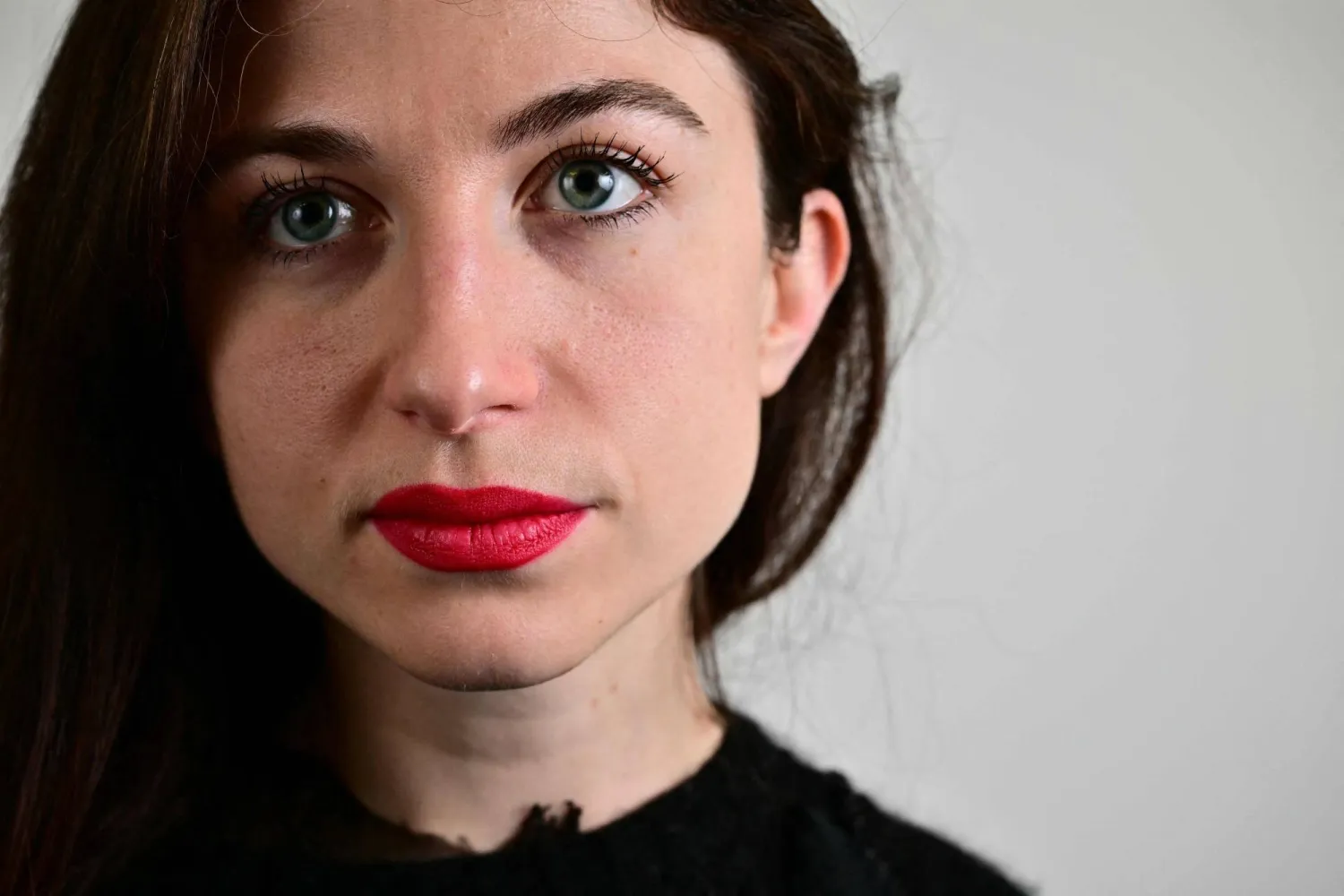
This photo taken on February 6, 2026 shows French fashion designer Pauline Dujancourt posing for a photograph in her studio in south London. (Photo by Ben STANSALL / AFP)
TT

French Designer Threads a Path in London Fashion Week

This photo taken on February 6, 2026 shows French fashion designer Pauline Dujancourt posing for a photograph in her studio in south London. (Photo by Ben STANSALL / AFP)

Just days before her third runway show, French designer Pauline Dujancourt was riding a wave of excitement and nerves.

The 31-year-old admitted she had begun having strange, nightmarish dreams ahead of her big moment at London Fashion Week on Sunday.

The British capital will once again host its Autumn/Winter fashion week from Thursday to Monday, after New York's bonanza and before the catwalk carousel moves to Milan and Paris.

London, known for its raw creative energy and rising talents, is where Dujancourt launched her label in April 2022 after training at the renowned arts and design school Ecole Duperre in Paris, and fashion hub Central Saint Martins in London.

She and her team began work in November on her autumn-winter 2026/27 collection to be unveiled before some 450 guests -- journalists, buyers and VIP clients.

For designers, everything comes down to those few precious minutes on the catwalk. It's no wonder nervousness mixes with the creative buzz.

"I go through every emotion," Dujancourt told AFP with a smile. "Some days I'm super excited, full of ideas, and others I'm like: why did I pick this color, this fabric?"

The questions and worries snowball: "Will everyone be on time? Will there be last-minute hitches on the day?"

In recent weeks, she has been running her daily schedule with military precision.
Dujancourt works year-round with four assistant designers, but the team swells to around 50 people ahead of the show.

And she works with a community of knitters in Lima, Peru, with handknitting -- "something that my grandmother taught me as a child" -- being a hallmark of her garments.

"She was so skillful and so humble about it. And no one really realized how much work it takes and how much technique it takes," she said.

Known for her sensual, airy knitwear, Dujancourt was a finalist for the LVMH Prize, won Elle UK's young talent award, and is supported by the British Fashion Council.

Her clients span the globe from Japan to the United States, France and the UK, with regular requests for wedding dresses.

Her new collection pays tribute to women persecuted during historical witch hunts.

"I really want to celebrate the fact that there are so many women around the world who are working so humbly on domestic skills ... like sewing, hand knitting," she said.

Two weeks before the show, young seamstresses were crocheting floral motifs in mohair and Japanese metallic thread at a south London studio overlooking the Thames river and Big Ben.

Workers were hunched over their desks pouring over designs, with the looks still "in pieces".

Then comes the moment when everything is assembled. "It's the magical stage, when the clothes start to come alive," she said, her blue eyes lighting up her face framed by long dark hair.

Less than a week before the show, fittings begin with an in-house model, followed by the castings to find the right models.

On the eve of the show come final fittings, hair and make-up tests. And finally, on Sunday morning, the full rehearsal.

Show day always brings surprises. At Dujancourt's last catwalk in September, several models arrived extremely late, held up by another show.

"They turned up still wearing the other show's make-up. We had to dress them and redo everything ... I nearly died," she recalled.

What is her worst nightmare? A model tripping or garments ripping in front of the cameras.

"I once dreamt I'd forgotten to get dressed before coming out to greet the audience -- that would be a bit embarrassing," she joked.

Around 25 outfits will strut the catwalk on Sunday, a moment that "goes by in a flash".
Afterwards comes the crash.

"We barely see it happening ... because we are backstage in the madness and the chaos of it," she said.

But then it's finished "and there's a bit of baby blues afterwards," as she comes down off the adrenaline rush.

Dujancourt heads to Paris after London Fashion Week to meet buyers, before work begins again for her next show, in September.

Lululemon Slides as Bleak Forecasts Deepen Turnaround Worries

FILE PHOTO: A logo is displayed inside a Lululemon outlet retail store at Bicester Village in Oxfordshire, Britain, August 21, 2024. REUTERS/Hollie Adams/File Photo
TT

Lululemon Slides as Bleak Forecasts Deepen Turnaround Worries

FILE PHOTO: A logo is displayed inside a Lululemon outlet retail store at Bicester Village in Oxfordshire, Britain, August 21, 2024. REUTERS/Hollie Adams/File Photo

Lululemon Athletica shares dropped 12% in ‌premarket trade on Friday after bleak quarterly and annual profit outlooks deepened concerns over the yoga apparel maker's turnaround amid slowing US demand, competition and tariff costs.

The stock is on track to lose more than $1.7 billion from its market value of $14.44 billion if losses hold.

The weak forecasts intensified pressure on the stock, which has lost nearly 63% of its value in the last 12 months, as investors question how quickly Lululemon can revive product momentum in its ‌key US market, ‌while competing with newcomers like Alo Yoga ‌and ⁠Vuori.

"Lulu has just ⁠entered the 'trap' phase, where fundamentals are deteriorating as competition in all categories remains stiff and pricing power is fleeting for its core franchises," Barclays analysts said.

Lululemon, known for its pricey leggings and athleisure wear, has joined peers in feeling the pinch from muted spending on higher-margin products. Waning brand ⁠appeal in North America, design missteps and a ‌lack of fresh styles ‌have also added to the pressure amid a leadership transition.

Investors are ‌watching whether incoming CEO Heidi O'Neill, a former executive ‌at struggling Nike, can revive sales after she takes over in September, a task eased by the May resolution of a months-long proxy fight with founder Chip Wilson that had weighed on ‌the stock.

"A full strategic reset under the new CEO is required," Jefferies analysts said.

NEGATIVE BRAND ⁠BUZZ ADDS ⁠WORRIES

Meghan Frank, interim co-CEO and chief financial officer, said its yoga campaign rolled out to win back shoppers "hasn't had the expected halo effect on other areas of our assortment" and cited "negative commentary" as a headwind.

The spike in negative brand sentiment across media and social channels was evident in key markets, Barclays said, including the United States and China, and was primarily related to recent concerns about material composition and product safety.

The company's forward price-to-earnings multiple is 10.06, compared with 22.85 for Nike and 15.10 for Adidas , according to LSEG data.


Designer Gabriela Hearst Still Believes in 'Brilliance of Humanity' Despite AI

Uruguayan-US fashion designer Gabriela Hearst gestures during an interview after presenting the official suits for Uruguay's national football team ahead of the 2026 FIFA World Cup at the Centenario Stadium in Montevideo, on June 2, 2026. (Photo by Eitan ABRAMOVICH / AFP)
TT

Designer Gabriela Hearst Still Believes in 'Brilliance of Humanity' Despite AI

Uruguayan-US fashion designer Gabriela Hearst gestures during an interview after presenting the official suits for Uruguay's national football team ahead of the 2026 FIFA World Cup at the Centenario Stadium in Montevideo, on June 2, 2026. (Photo by Eitan ABRAMOVICH / AFP)

The "brilliance of humanity" will matter more, not less, in an AI world, Uruguayan designer Gabriela Hearst told AFP in an interview.

Natural materials and handmade craftsmanship are the hallmarks of Hearst's luxury brand, whose commitment to environmentally friendly fashion has secured her status as a sustainable style icon.

With celebrities including Kate Middleton, Julia Roberts and former US first lady Jill Biden wearing her personal brand, Hearst was also the first Latin American woman to lead the French fashion house Chloe from 2020 to 2023.

In a world threatened by climate crisis and the emergence of artificial intelligence, "there will be a genuine need for handmade creation," Hearst told AFP during a recent trip to Montevideo to present World Cup uniforms to the Uruguayan team.

"The human part, the part of our brain that is unique to us, the part that represents the brilliance of humanity, is going to matter more and more," she said.

The designer on the cusp of 50 prizes quality over quantity, and obstinately opposes fast fashion fads.

"There are so many clothes in the world," she said. "There's always a way to have a small amount, but of good quality."

Now based in New York, Hearst said she owes her intimate knowledge of quality, sustainability and "true beauty" to her native Uruguay.

"When I was little, I wanted to go travel, to see the world," she said.

"After traveling," she continued, "I was able to appreciate what it means to grow up with those star-filled skies, the nature, eating food from the land, the quality, the natural luxury that surrounded me."

"Clothes were passed down" in Hearst's community, she said, recalling picking through her mother's wardrobe filled with garments made by the family seamstress.

In her native country of 3.4 million people, hundreds of weavers work for Manos del Uruguay, a network of cooperatives that produces handcrafted garments for Hearst's brand.

The finished products end up on runways, Vogue magazine covers and even on-screen in "Sex and the City" movie sequel, where a multi-colored blanket designed by Hearst appears draped over Sarah Jessica Parker's legs.

"It's incredible that our craftsmanship reaches so far," said 60-year-old weaver Mabel Bargas, who works in one of the Manos del Uruguay workshops.

Hearst wants to leave a legacy of positive social impact by creating jobs and doing her bit for the environment.

"We can't afford to lose our human connection," she said, adding that people with privilege "have a responsibility to help others."


France Hits Shein with 22 Mn Euros in New Fines Over Consumer Violations

FILE PHOTO: Clothes from fast-fashion brand Shein hang at their office in Sao Paulo, Brazil, December 15, 2025. REUTERS/Jorge Silva/File Photo
TT

France Hits Shein with 22 Mn Euros in New Fines Over Consumer Violations

FILE PHOTO: Clothes from fast-fashion brand Shein hang at their office in Sao Paulo, Brazil, December 15, 2025. REUTERS/Jorge Silva/File Photo

French authorities said Wednesday that they had imposed two fines on Shein totaling more than 22 million euros ($25.5 million), citing problems with product traceability, environmental labelling and delivery times.

The new penalties bring the total fines imposed by France against the Asian fashion giant to more than 210 million euros, AFP reported.

The latest fines were imposed by the government's consumer protection agency DGCCRF following a wide-ranging investigation targeting several e-commerce platforms, primarily based outside Europe, including Shein.

The first fine of 5.77 million euros targets Infinite Style Ecommerce Co Ltd (ISEL), which handles sales for Shein.

The DGCCRF accuses Shein of failing to comply with a 14-day period required for consumers to be able to reconsider certain purchases.

The watchdog also accuses the company of omitting mandatory traceability information, such as the countries where its clothing is woven, dyed and manufactured, and of failing to disclose the presence of microplastics in its fabrics.

Microplastics, primarily found in polyester, are released into the water with every machine wash, posing a serious environmental threat.

In addition, the agency imposed a fine of 16.73 million euros on Shein's subsidiary ISSL (Infinite Styles Services Limited), accusing it of violations of consumer law.

Shein has been under fire since it established operations in France.

It is widely criticized by campaign groups and politicians for generating environmental pollution, practicing unfair competition, selling goods that fail to comply with basic regulations and imposing poor working conditions in its Chinese factories.