


US Strikes on Iran Could Target Individual Leaders, Officials Say

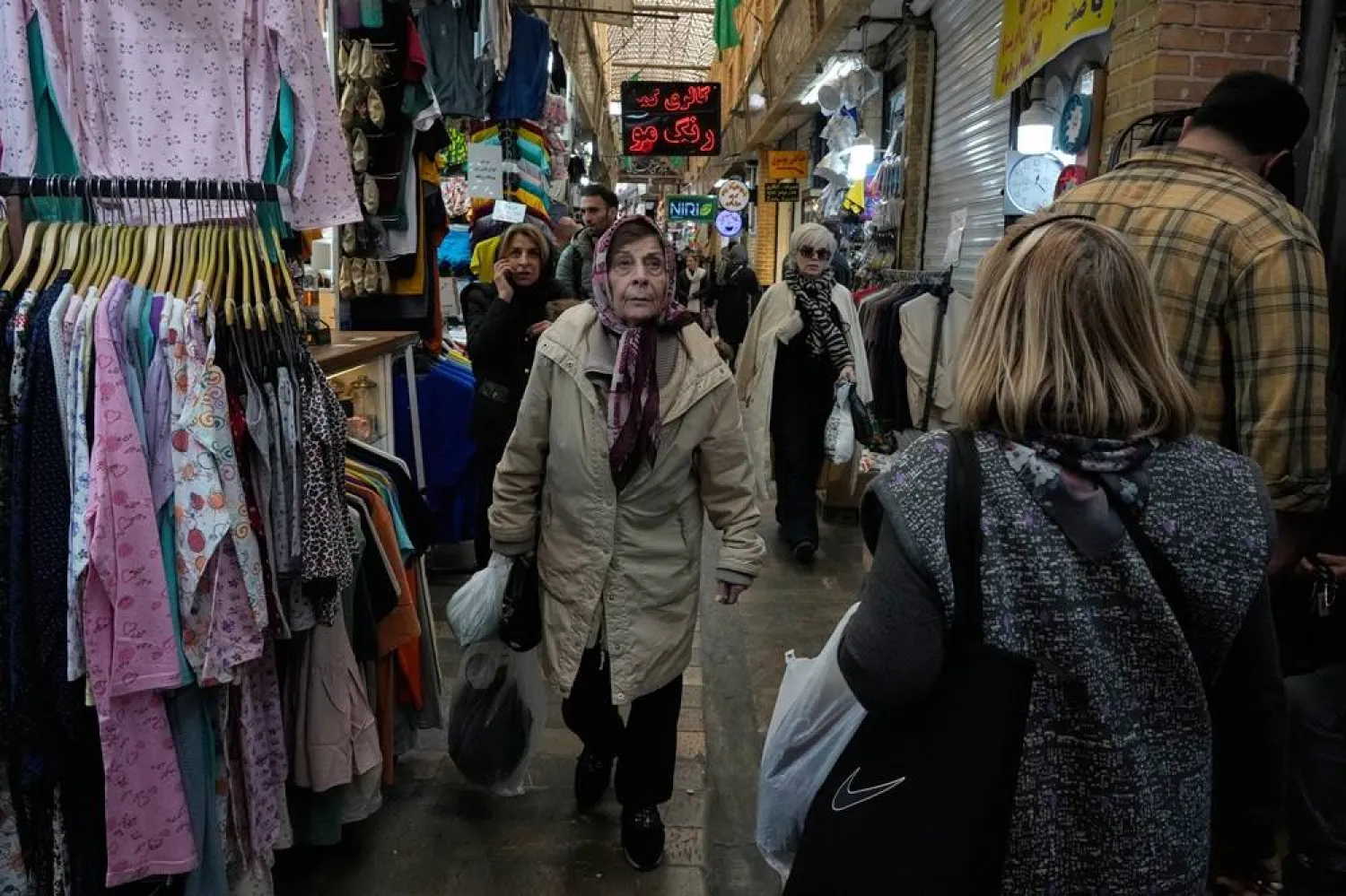
 People walk at Tajrish traditional bazaar in northern Tehran, Iran, Thursday, Feb. 19, 2026. (AP)
People walk at Tajrish traditional bazaar in northern Tehran, Iran, Thursday, Feb. 19, 2026. (AP)
TT

US Strikes on Iran Could Target Individual Leaders, Officials Say

 People walk at Tajrish traditional bazaar in northern Tehran, Iran, Thursday, Feb. 19, 2026. (AP)
People walk at Tajrish traditional bazaar in northern Tehran, Iran, Thursday, Feb. 19, 2026. (AP)

US military planning on Iran has reached an advanced stage with options including targeting individuals as part of an attack and even pursuing regime change in Tehran, if ordered by President Donald Trump, two US officials told Reuters.

The military options are the latest signs that the United States is preparing for a serious conflict with Iran should diplomatic efforts fail. Reuters first reported last week that the US military is preparing for a sustained, weeks-long operation against Iran that could include striking Iranian security facilities as well as nuclear infrastructure.

The latest revelations suggest more granular, ambitious planning ahead of a decision by Trump, who has in recent days publicly floated the idea of regime change in the country.

The US officials, who spoke on condition of anonymity due to the sensitive nature of the planning, did not offer further details on which individuals could be targeted or how the US military could attempt to carry out regime change without a large ground force.

Pursuing regime change would mark another shift away from Trump's vows during the presidential campaign to abandon what he has called the failed policies of past administrations, which included military efforts to topple governments in Afghanistan and Iraq.

Trump has assembled a massive amount of firepower in the Middle East, but most of the combat ‌capabilities are aboard warships ‌and fighter aircraft. Any major bombing campaign could also count on support from US-based bombers.

In his first term, ‌Trump ⁠showed a willingness ⁠to carry out targeted killings by approving a 2020 attack on Iran's top general, Qassem Soleimani, who led the foreign espionage and paramilitary arm of Iran's Revolutionary Guard Corps, known as the Quds Force.

The Trump administration formally labeled the IRGC a foreign terrorist organization in 2019, the first time Washington had applied the designation to another nation’s military.

One of the US officials noted Israel's success targeting Iranian leaders during its 12-day war with Iran last year. At the time, regional sources told Reuters at least 20 senior commanders were killed, including the armed forces chief of staff, Major General Mohammad Bagheri.

"The 12-day war and Israeli strikes against individual targets really showed the utility of that approach," the US official said, adding that the focus was on those involved in command and control of IRGC forces.

Still, the official cautioned that targeting individuals requires additional intelligence ⁠resources. Killing a particular military commander would mean knowing their exact location and understanding who else might be harmed in ‌the operation.

It was unclear to the officials who spoke with Reuters what intelligence the US has ‌on Iranian leaders who could potentially be targeted by the United States.

The White House and Pentagon did not immediately respond to requests for comment.

REGIME CHANGE AS A POSSIBLE GOAL

Trump ‌has openly floated the possibility of changing the government in Iran, saying last week it "seems like that would be the best thing that could happen." ‌He declined to say who he wanted to take over Iran, but said, "there are people."

While regime change operations have traditionally involved major movement of US ground forces, Trump turned to special operations forces to oust Venezuela's President Nicolas Maduro, sending them to grab him from his Caracas compound last month in an audacious raid.

At the same time, the US president has also held out hope for diplomacy, saying on Thursday that "really bad things" would happen if no deal were reached. He appeared to set a deadline of no more than ‌10 to 15 days before the US might take action.

Iran's Revolutionary Guard has warned it could retaliate against US military bases in the region if the US strikes Iranian territory.

In a letter on Thursday to UN Secretary-General Antonio Guterres, Tehran said it would not start any war but that "in the event that it is subjected to military aggression, Iran will respond decisively and proportionately" in its exercise of the right of self-defense.

US officials have told Reuters they fully expect Iran to fight back in the event of an attack, raising the risk of US casualties and a regional conflict, given the number of countries that could come under fire from Iran's missile arsenal.

Trump's threats to bomb Iran have pushed up oil prices, and on Thursday a Russian warship joined planned Iranian naval drills in the Gulf of Oman, a vital sea route for global energy shipments.

THREATS TO SHUT STRAIT OF HORMUZ

Tehran has in the past threatened to shut down the Strait of Hormuz if it is attacked, a move that would choke off a fifth of global oil flows.

Iranian and US negotiators met on Tuesday and Iranian Foreign Minister Abbas Araqchi said they had agreed on "guiding principles." White House press secretary Karoline Leavitt said on Wednesday, however, that the two sides remained far apart on some issues.

Iran has resisted making major concessions on its nuclear program, though insisting it is for peaceful purposes. The US and Israel have in the past accused Tehran of trying to develop a nuclear bomb.

A senior US official said Iran would make a written proposal on how to address US concerns.

Trump called on Tehran on Wednesday to join the US on the "path to peace."

"They can't have a nuclear weapon, it's very simple," he said. "You can't have peace in the Middle East if they have a nuclear weapon."


Baghdad Emerges as Next Arena in US-Iran Confrontation

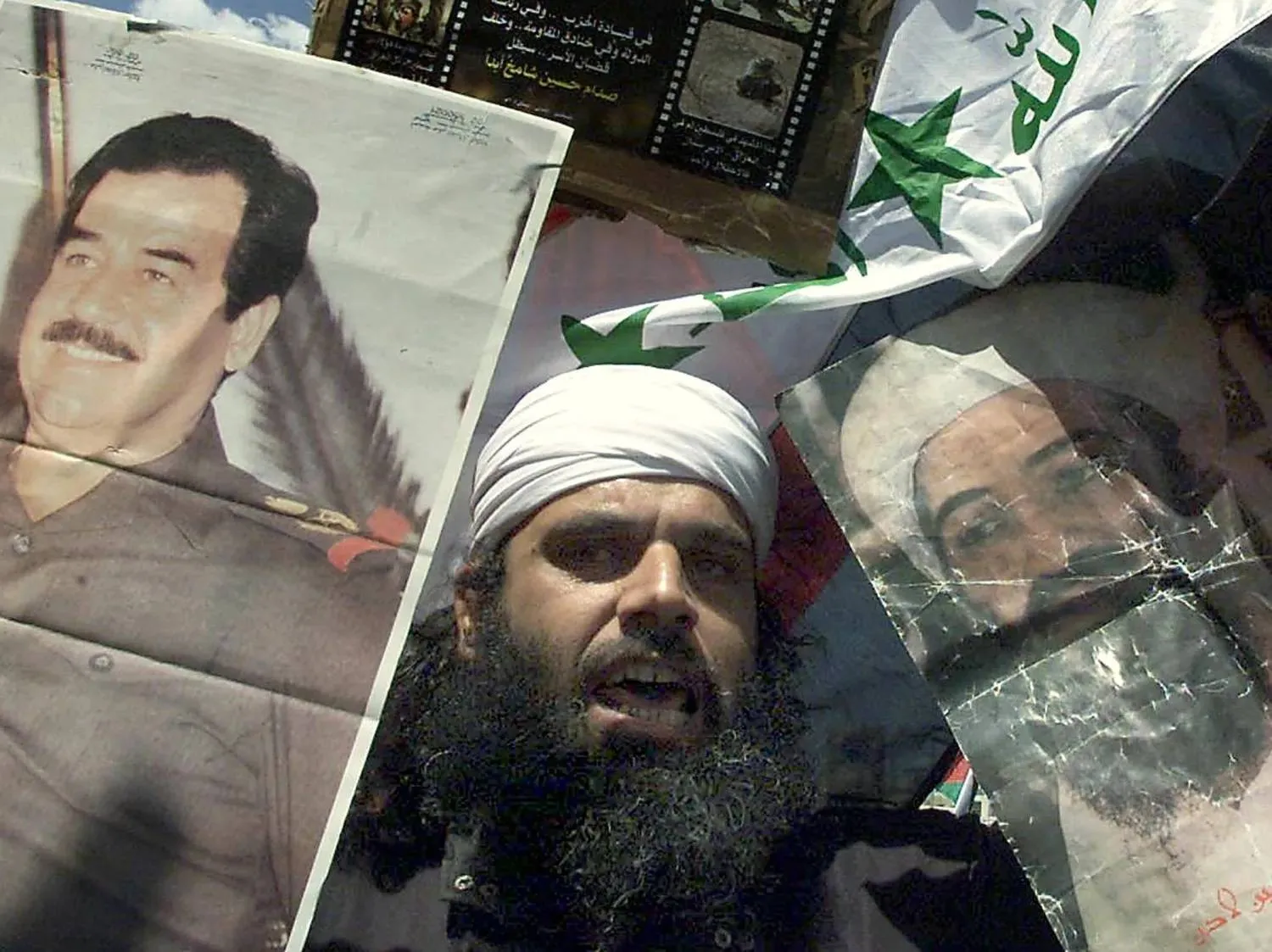
Iraqi factions that fought alongside Iran in the recent war with the United States. (Popular Mobilization Forces media)
TT

Baghdad Emerges as Next Arena in US-Iran Confrontation

Iraqi factions that fought alongside Iran in the recent war with the United States. (Popular Mobilization Forces media)

More than a month after winning parliament’s confidence on May 14, 2026, Ali al-Zaidi’s government remains unfinished. Nearly 10 ministerial portfolios are still unresolved, including two central pillars of the Iraqi state: interior and defense.

In Iraq, where governments often emerge only after long bargaining among parties, parliamentary blocs, influence networks and regional powers, the delay may look familiar. But that reading only goes so far.

The incomplete cabinet does not just reflect the usual struggle over posts. It shows, above all, that the deals that brought al-Zaidi to power have not yet produced a real governing balance.

Al-Zaidi has parliamentary legitimacy, but not full command of his executive branch. His government stands legally, but remains politically incomplete.

The central issue is no longer simply whether he can complete the formation of a cabinet. It is how much room he will have to carry out his political, economic and security program.

Will al-Zaidi be merely the manager of a settlement struck by the main forces inside the Shiite camp? Or can he gradually turn that settlement into a real tool for political action and recover even a limited measure of the Iraqi state’s ability to take initiative?

That is why al-Zaidi’s expected visit to Washington in mid-July matters. It is more than a conventional diplomatic trip. Alongside the economic, energy and security files announced for discussion, the visit will be the first real test of his premiership.

It will show whether he can strengthen his international legitimacy, widen his independence from the political forces that brought him to power and define his relationship with the US administration at a time when Washington’s priorities in Iraq appear to be shifting.

Iraq in a new regional equation

Many were struck by the strategic surprise Tehran unleashed, which altered some regional balances. The move disrupted navigation in the Strait of Hormuz and introduced a troubling shift in international law through what Tehran called its “right to control.”

The interim agreement reached by Washington and Tehran allowed for a ceasefire and opened the way for a new phase of negotiations. It is likely to reduce the chances of direct military confrontation in the short term.

But it resolves none of the core disputes that still divide the United States and Iran in the Middle East. On the contrary, their rivalry appears set to move toward arenas where their interests continue to overlap. Iraq comes first among them.

For Baghdad, the shift carries a clear paradox. Relative easing between Washington and Tehran could give Ali Falih al-Zaidi’s government more space to pursue reforms without directly absorbing the costs of regional escalation.

But the same easing could also move the competition between the two powers into Iraqi institutions, turning the Iraqi state into the main arena of conflict.

The Washington-Tehran agreement also reopens the Iraqi file on other geopolitical fronts.

Gulf states are expected to accelerate strategies aimed at consolidating their regional interests, especially in Iraq, Syria and Lebanon.

Türkiye, through its geopolitical strategy in energy and logistical connectivity, will seek to strengthen its position in Iraq. China and Russia, in turn, will try to entrench their presence in what they regard as the “southern front” of the US, and broader Western, offensive in the Eurasian space: Iran, alongside the western front in Ukraine and the eastern front in Taiwan, and the surrounding spaces of connection and influence.

In principle, Iraq should be able to benefit from this renewed competition for regional influence, particularly by attracting economic investment and securing stronger support for normalization and regional integration.

This geopolitical shift will inevitably affect Iraq’s place in the rivalry between Washington and Tehran. For nearly two decades, Iraq’s political system has rested on an ambiguous balance.

It is neither a US protectorate nor an absolute subordinate of Iran. It is an open space for constant negotiation among outside powers, local elites, sectarian parties, armed factions, fragile institutions and a rentier economy.

Despite its fragility, that model delivered a measure of relative stability for years. But current signs suggest it is entering a new phase; one expected to move toward consolidating the state and its institutions.

A shift in US policy

The Trump administration no longer appears fully prepared to accept the implicit logic that governed Iraq in recent years: a form of direct or indirect joint management between Washington and Tehran.

The signals so far point to a US approach built on long-term influence by strengthening Iraqi state institutions. The aim is to use technocratic tools and, perhaps, a greater degree of ideological neutrality to tilt the balance toward Iraqi national interests, especially economic ones, and away from Iranian influence.

Several officials inside the US administration appear to support this view. They argue that Iraq can gradually free itself from reliance on Iranian support if Iraqi state institutions regain credibility and effectiveness.

As the scheduled US military withdrawal in September 2026 approaches, a purely security-driven approach looks insufficient. Repeated operations targeting armed faction leaders and their organizational structures since 2020 have not produced a real shift in the balance of power.

One of the most prominent defenders of this approach is Tom Barrack, who occupies a special place in it. Barrack is the US ambassador to Türkiye and a close associate of Donald Trump.

He is also known for his close relationship with Turkish President Recep Tayyip Erdogan and for being one of the leading defenders of the effectiveness of centralized, even authoritarian, systems in producing transitions. Today, he is one of the key actors in the Syrian and Iraqi files.

Barrack belongs to a classical school that sees no sustainable influence in the Middle East without central states that possess at least a minimum of political and institutional credibility.

In Syria, this translates into support for a pragmatic path toward normalizing relations with the new authority in Damascus. In Iraq, there appears to be a focus on strengthening Baghdad’s role, without overlooking the importance and status of Erbil.

This is how the recent reactivation of several files should be understood. Efforts to ease tension between Baghdad and Erbil, the push for closer coordination between Baghdad and Damascus, and renewed interest in some regional projects are not merely diplomatic moves.

They all serve one logic: gradually strengthening the Iraqi state’s ability to reclaim its role as the central actor in regional balances.

A settlement of the chronic disputes between the federal government and the Kurdistan Region, whether over the budget, oil exports, energy management or the distribution of powers, would strengthen Baghdad. It would also strengthen al-Zaidi himself.

The same logic applies to Baghdad’s relations with Damascus. US authorities, under Barrack’s influence, now appear to favor pragmatic coordination between the two capitals. This is not so much because Washington supports the new Syrian authority, but because it wants to stabilize a border area that has become vital to regional security.

The Iraqi-Syrian border remains a major strategic challenge in the fight against armed groups, smuggling and illegal transit networks. At the same time, it could again become a space for economic exchange and energy movement if the right political conditions emerge.

In this context, the idea of restarting the Kirkuk-Baniyas pipeline regains special importance. The project is not only economic. It also carries deep geopolitical meaning. It would give Iraq an additional outlet for oil exports via the Mediterranean, reducing, at least in part, its reliance on existing routes through the Gulf or Türkiye.

More importantly, it would mark Iraq’s return to its historical role as a link between the Gulf, the Arab Levant and the Mediterranean. The project alone would not solve Iraq’s economic crisis. But it would signal a desire to reposition Iraq at the center of regional dynamics rather than leave it as a stage for regional and international competition.

Governing under financial constraints

That horizon remains extremely fragile because of Iraq’s internal economic situation. Al-Zaidi’s government inherited deteriorating financial conditions. The state’s room for maneuver has narrowed sharply because of obligations accumulated in recent years, particularly under Mohammed Shia al-Sudani’s government.

Public-sector wages, social spending, domestic debt, and other financial commitments now consume a large share of state resources.

Oil exports add another strain. Negotiations with Türkiye on resuming exports through the port of Ceyhan have not yet been settled, depriving Iraq of an important share of oil revenue. Before the crisis, exports through that route reached hundreds of thousands of barrels per day.

The current crisis is therefore not a passing economic problem or a temporary financial squeeze. It exposes the structural limits of the political and economic model built in Iraq after 2003.

The Iraqi state has gradually become a vast machine for redistributing oil rent. Public salaries, pensions, social assistance, government contracts, public companies and subcontracting networks have become the main tools for organizing political and social balances.

Under this equation, the regular payment of salaries is no longer just a matter of financial management or the state budget. It has become central to the stability of the political system itself. Nearly 5 million government employees depend directly on public finances, along with millions of retirees and social welfare beneficiaries.

Any prolonged disruption could quickly trigger broad social tensions and deepen the fragility of a government already facing several political challenges at once.

The executive’s options remain limited. Government bonds could provide temporary liquidity, but they would not fix deep structural imbalances. Domestic borrowing also remains constrained by weak liquidity inside the Iraqi economy.

Turning to the World Bank or the International Monetary Fund remains possible, but it would come with strict conditions. These could include reforming public companies, rationalizing government spending, improving public financial management, and gradually reducing some forms of state support.

Such measures could reassure international partners. But they also risk feeding social anger in a country where the state remains the largest employer and the main safety net against economic crises.

Factions between institutionalization and reconfiguration

Iraq’s economic crisis is tightly linked to the security question. The state is no longer just a rentier state distributing oil revenues. It has become a space where state institutions overlap with political, administrative, economic and military networks, all of which feed, to varying degrees, on public revenues.

Armed factions no longer draw their power from military capacity alone. They also draw it from a long process of institutionalization over the past two decades.

They now have extensions inside parliament and the executive, a presence in public administration, financial resources, economic networks and offices, protection offices dealing with oil companies, media outlets, social organizations and a measure of “legitimacy” acquired by some of them during the war against ISIS.

Seeing these factions as mere armed groups outside the state no longer reflects Iraq’s reality since 2003. The overlap between the state and the factions is no longer simply an infiltration of state institutions. It has become part of how those institutions function.

This reality also requires moving beyond another simplification often repeated in Western analysis: reducing these factions to “Iranian proxies.” They are not all equally close to Tehran, nor do they all have the same political or military relationship with it. Some have a considerable margin of independence and put Iraqi calculations first.

Others remain more deeply integrated into Tehran’s regional networks. It is therefore more accurate to speak of “Iraqi factions close to Iran” than to reduce them to direct Iranian extensions. That reduction obscures the transformations these groups have undergone inside Iraqi society and the Iraqi state.

The distinction is crucial to understanding current debates over the factions’ future. Part of this network now appears ready to discuss a gradual reorganization of its status.

Negotiations with the government are not centered on immediate disarmament so much as on deeper integration into the Popular Mobilization Forces and a clearer separation between political activity and military command.

Other groups, especially Kataib Hezbollah, Harakat al-Nujaba and Kataib Sayyid al-Shuhada, are more cautious about any process that could narrow their independence or redefine their relationship with the state.

The real question, however, is not whether political and military wings can realistically be separated. It is what kind of state Iraq has become. Can politics and weapons truly be separated when both operate inside the same institutional structure? Can traditional models of disarmament and reintegration be applied to groups that no longer stand outside the state?

Today, the factions are not defending their arsenals as much as they are defending their positions inside the state, their share of public resources, their economic networks and a social base that now depends, directly or indirectly, on the jobs, salaries, services and patronage they provide.

Estimates put their membership at between 200,000 and 300,000. Including their families, millions of Iraqis are linked to this system in varying degrees.

Any attempt to restructure the factions or reduce their role will therefore face a highly complex equation: US pressure to confine arms to the state, Iranian influence seeking to preserve part of the regional deterrence system, and broad local interests that view the factions’ survival as a guarantee of their economic and political positions.

Amid this overlap, the question is no longer how to disarm the factions. It is how to rebuild a state.

Time as a factor in the balance of power

This institutional complexity is compounded by another often-overlooked dimension: time.

The United States usually thinks within a relatively short political horizon, shaped by presidential terms, the search for quick results and near-term diplomatic deadlines.

Iraqi factions close to Iran, like Tehran itself, operate on a very different timeline. They know how to wait, postpone decisions, absorb pressure, multiply mediation efforts and turn time into a political resource.

In Iraq, time itself is part of the balance of power. The most entrenched actors are those that can withstand changes of government, international sanctions, shifting political balances and regional crises.

This ability to work according to the logic of the long term explains why repeated attempts to restructure the security sphere have produced limited results. Local forces know that international balances change far faster than Iraq’s internal balances.

These different timelines also help explain how the recent war between Iran, the United States and Israel was received by an important part of Iraq’s political scene.

A belief has gradually taken hold among a broad segment of political actors that Iran emerged from the confrontation politically stronger. This does not mean Tehran suffered no losses or faced no serious pressure.

It simply means the Iranian system did not fall and was not pushed to the margins of the regional equation. For many of its allies, its ability to endure was itself a form of “political victory.”

That reading directly shapes the behavior of Iraqi factions closest to Tehran. Many now ask a simple question: If Iran itself preserved its regional capabilities, why should the factions in Iraq make concessions?

Is there a new US doctrine?

At this stage, it is still too early to say a clear new US doctrine toward Iraq has taken shape. But several indicators suggest that part of the US administration now believes that limiting Iranian influence does not require direct confrontation with Tehran. It runs through the gradual strengthening of the Iraqi state’s credibility and capacity to act.

This approach, however, collides with the Iraqi reality described above. The United States, Iran and Iraq also move according to different clocks.

Al-Zaidi will have to confront several challenges at once. He must restore balance to public finances, preserve existing political settlements, redefine the relationship between the state and the factions, balance Baghdad’s relations with Erbil and Damascus, and maintain a constructive dialogue with Washington without reproducing internal polarization.

The challenge facing the new government is therefore not simply whether it can manage the country’s affairs. It is whether Iraq can rebuild a more credible state within the existing political balances that have provided a measure of relative stability.

In that space between reform and continuity, between state authority and the authority of influence networks, and between different national and regional rhythms, Iraq’s political future will most likely be decided in the years ahead.


Mojtaba Khamenei: Iran’s Unseen Leader Shadowed by Late Father

A bird flies near an Iranian flag and a banner with a picture of Iran's Supreme Leader Mojtaba Khamenei, in Tehran, Iran, June 28, 2026. Majid Asgaripour/WANA (West Asia News Agency) via Reuters
TT

Mojtaba Khamenei: Iran’s Unseen Leader Shadowed by Late Father

A bird flies near an Iranian flag and a banner with a picture of Iran's Supreme Leader Mojtaba Khamenei, in Tehran, Iran, June 28, 2026. Majid Asgaripour/WANA (West Asia News Agency) via Reuters

Mojtaba Khamenei, who has spent his career behind the scenes and is yet to appear in public as Iran's new supreme leader, faces the formidable challenge of occupying the role held by his father for most of the regime's existence.

Iranians knew little about the younger Khamenei when he was named to the lifetime post shortly after a US-Israeli airstrike killed his father Ali Khamenei, supreme leader since 1989, at the start of the Middle East war.

Said to have been wounded himself, Mojtaba Khamenei has issued over dozen written messages as leader that have carried on his father's confrontational ideology, taking aim at Israel and the United States.

In one of his most significant recent interventions, released on June 18, Mojtaba Khamenei said he had given his blessing to talks with the US to end the war despite having a "different view", likely an attempt to stay above the domestic political fray.

Despite the messages and activity on social media channels, there has been no concrete proof that Mojtaba Khamenei is even alive after the February 28 attack that also killed his wife Zahra Haddad Adel and other members of the Khamenei family.

But several Iranian officials have said he was wounded, sparking speculation he could be waiting to recover fully before appearing in public, as well as being mindful of his own security.

With Ali Khamenei's funeral starting Saturday, there will be intense scrutiny for signs of Mojtaba Khamenei emerging, and questions will mount if he fails to appear.

-'Radical' agenda -

Unlike Ali Khamenei, a prominent opponent of the shah who was president in the first decade of the republic from 1981-1989 before becoming supreme leader, Mojtaba Khamenei has never held a government position before.

But observers believe he was second-in-command at the office of the supreme leader under the veteran chief gatekeeper Mohammad Golpayegani.

He is also seen as close to the leadership of the powerful Revolutionary Guards, a connection that may have proved crucial in his selection by the Assembly of Experts clerical body.

One of the few official insights into the importance of Mojtaba Khamenei came in November 2019 when the US Treasury announced sanctions against him and other senior Iranian officials, including Golpayegani, on the grounds they were pushing Iran's "radical" agenda around the world.

The US said he was designated for representing Ali Khamenei "in an official capacity despite never being elected or appointed to a government position aside from work in the office of his father".

"The Supreme Leader has delegated a part of his leadership responsibilities to Mojtaba Khamenei," the US said, adding that he had "worked closely" with the commanders of the Quds Force -- the Guards branch responsible for operations outside Iran -- and the Basij militia "to advance his father's destabilizing regional ambitions and oppressive domestic objectives".

A sign of his potential sway came during the 2005 presidential elections when former parliament speaker Mehdi Karroubi wrote a letter to the supreme leader complaining that Mojtaba Khamenei had been intervening on behalf of his ultra-conservative rival Mahmoud Ahmadinejad.

Ahmadinejad went on to cause a sensation by defeating former president Hashemi Rafsanjani. Mojtaba was again seen by some commentators as coordinating the crackdown on protests that followed Ahmadinejad's disputed 2009 election victory.

A leaked US diplomatic cable from 2008 published by Wikileaks said that Mojtaba was "seen by many second only to Golpayegani within the office of the supreme leader".

- 'Unlikely' to have father's influence -

According to an investigation by Bloomberg, which cited anonymous sources and Western intelligence agency reports, Mojtaba Khamenei has amassed wealth estimated at more than $100 million.

It reported he has earned money from oil sales channeled into investments in luxury British real estate, hotels in Europe and property through shell companies in tax havens.

Born in his father's home city of Mashhad in northeastern Iran, Mojtaba Khamenei studied theology in the clerical hub of Qom where he also taught.

"The role of Mojtaba Khamenei is unclear," said Thomas Juneau, professor at the University of Ottawa.

"It is very unlikely at this point that he has the degree of influence that his father used to have."


Iran’s New Leaders Post-Ali Khamenei

People ride past a banner with a picture of Iran's Supreme Leader, Mojtaba Khamenei, in Tehran, Iran, June 28, 2026. Majid Asgaripour/WANA (West Asia News Agency) via Reuters
TT

Iran’s New Leaders Post-Ali Khamenei

People ride past a banner with a picture of Iran's Supreme Leader, Mojtaba Khamenei, in Tehran, Iran, June 28, 2026. Majid Asgaripour/WANA (West Asia News Agency) via Reuters

A group of military, theocratic and civilian figures, rather than a single individual, have led decision-making in Iran since the killing of longstanding supreme leader Ali Khamenei in a US-Israeli airstrike at the start of the war.

Khamenei's son Mojtaba was named supreme leader after his death but it is unclear what power he wields and he has yet to be seen in public.

US President Donald Trump said last month that the war had removed a "first set" and "second set" of leaders but maintained that the "third set" was "smart", "very rational" and "not radicalized".

Here AFP looks at the Iranian system's key figures, whose presence at the funeral ceremonies for Ali Khamenei starting Saturday will be closely watched.

- Supreme leader Mojtaba Khamenei -

After succeeding his father as supreme leader, Mojtaba Khamenei in theory sits at the top of Iran's theocratic system in a post-for-life with the final say on all significant policy matters.

But he has yet to be seen in public since being named, with officials saying he was wounded. He has issued numerous written statements on policy matters but is far from replicating the one-man rule of his father.

- Parliament speaker Mohammad Bagher Ghalibaf -

The most prominent public face of the leadership in the absence of Mojtaba Khamenei, Ghalibaf led Iran's negotiating team in talks with the United States, first in Pakistan and then in Switzerland last month.

During three decades at the center of the Iranian system he has held posts straddling civilian and military life, as commander of the aerospace forces of the Revolutionary Guards, Tehran police chief, Tehran mayor and now parliament speaker.

During the intense negotiating process with the US, he carefully avoided any joint photo with US Vice President JD Vance, possibly out of concern for possible hardline criticism at home.

- President Masoud Pezeshkian -

President since 2024 following the death of his predecessor Ebrahim Raisi in a helicopter crash, Pezeshkian is seen as belonging to the more moderate wing of politics in Iran.

However, his position as president in no way makes him Iran's number one, and presidents throughout recent Iranian politics have often struggled to impose their will.

But it was Pezeshkian who signed the accord last month with the US that ended the war.

- Foreign Minister Abbas Araghchi -

A veteran diplomat, Araghchi has held the post since 2024 following the death of former foreign minister Hossein Amir Abdollahian in the same crash that killed Raisi.

He accompanied Ghalibaf to the talks in Pakistan and Switzerland and also took part in talks in Oman in February with US envoys.

Araghchi, who holds a doctorate in political thought from the University of Kent in England, has vigorously defended Iran's position in TV interviews with foreign media and posts on X.

- Revolutionary Guards Commander-in-Chief Ahmad Vahidi -

A former interior and defense minister, Vahidi is the third commander-in-chief of Iran's ideological army in less than a year after his predecessor Mohammad Pakpour was killed on the first day of the war and Hossein Salami was killed during Israel's 12-day war against Iran in June 2025.

Possibly for this reason, Vahidi has kept a very low profile in the war, making no public appearance. Yet his position gives him immense political and military authority.

- Supreme National Security Council secretary Mohammad Bagher Zolghadr -

Another official who has kept the lowest of profiles but may wield immense power, Zolghadr was named to the key security position after the killing of his predecessor and veteran negotiator Ali Larijani in March in an Israeli airstrike.

Zolghadr's career has been embedded in the Guards and his appointment was seen as further bolstering the role of the ideological army.

- Judiciary chief Gholam Hossein Mohseni Ejei -

Ejei has, by contrast, been a familiar presence on Iranian television over the last months, on one occasion urging officials to speed up issuing execution verdicts as hangings surged against the backdrop of war.

A softly-spoken cleric and former intelligence minister, he has long been targeted by rights groups who accuse him of presiding over a situation of mass violations.

- Quds Force commander Esmail Qaani -

A shadowy figure, Qaani became commander of the force responsible for the external operations of the Guards after the killing of his predecessor Qassem Soleimani, a man described by Trump as a "mad genius", in a US strike in Iraq in 2020.

Qaani was reported to have been killed in the 12-day war but then later re-emerged in public.

Intense speculation has surrounded his standing after intelligence lapses. But in a rare appearance on state TV, he backed the talks with the US and said Araghchi and Ghalibaf should be "praised".