

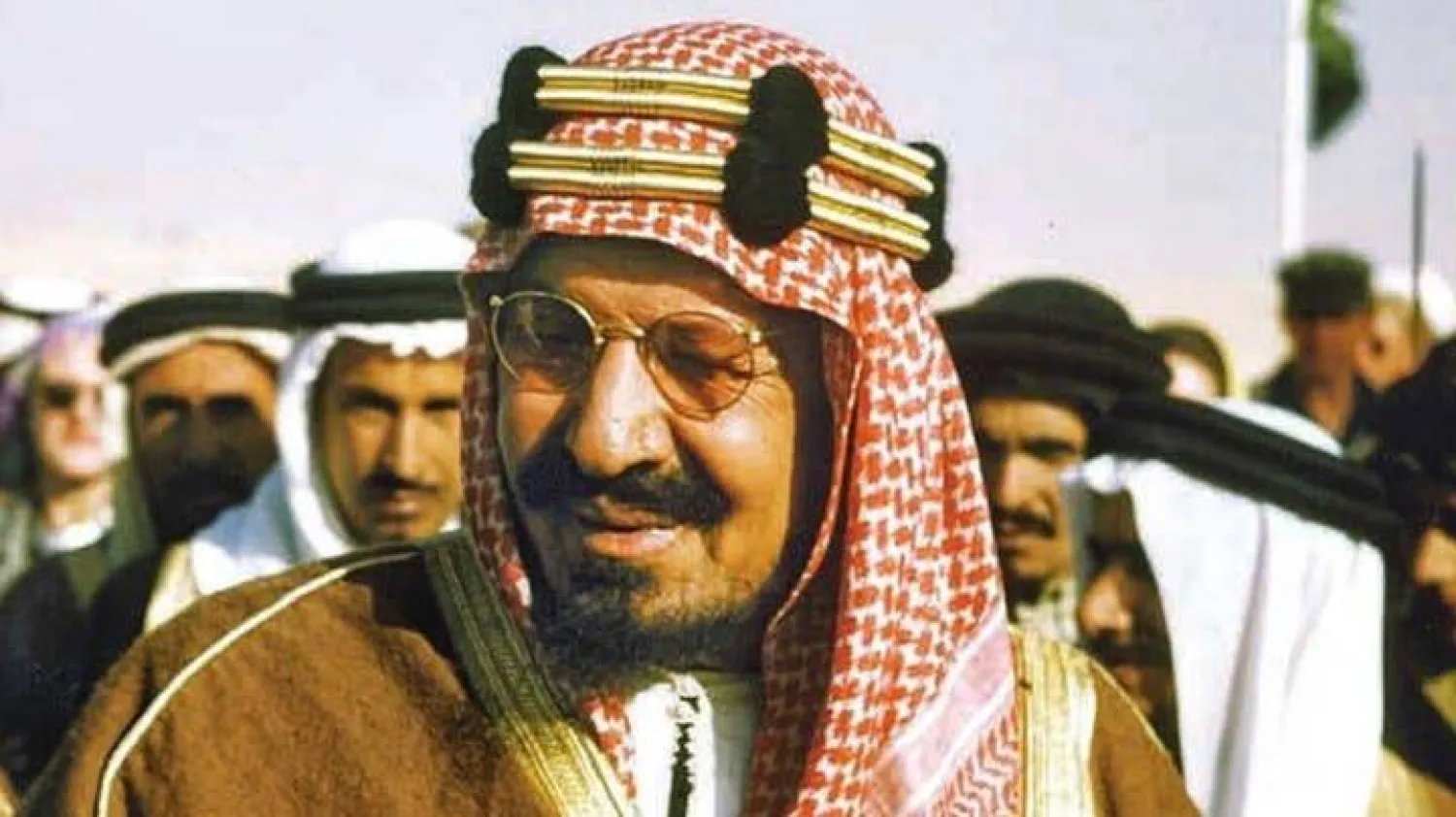

From Founding to Vision: Saudi State and Oral Memory

King Abdulaziz bin Abdulrahman (X)
TT

From Founding to Vision: Saudi State and Oral Memory

King Abdulaziz bin Abdulrahman (X)

Arabs, in their foundational makeup, cultural identity and inherited traditions, are an “oral” rather than a “written” nation. They are captivated by poetry, enchanted by eloquence and stirred by expression.

They celebrate the spoken word, using it to paint vivid images of their lives, environment, values and ethics. Their poems, proverbs and tales, and even their genealogies and chronicles of historic days, were transmitted orally.

The chains of transmission and narrators’ attributions in major works on early Islamic campaigns, biographies and history, along with certifications in Quranic recitation and the narration of prophetic traditions, remain living testimony to the centrality of orality in Arab culture.

This has endured despite the expansion of Arab intellectual horizons and the development of methods of documentation and writing across the arts, sciences and literature.

National memory as a source of legitimacy

States rest not only on territory and authority but on a shared narrative that grants them meaning and continuity.

Saudi oral memory has contributed to shaping a national narrative, reinforcing the image of a state of law and justice after chaos, affirming the symbolism of unification and transmitting values of loyalty and solidarity across generations.

Yet a modern state cannot confine such narratives to their traditional social spheres. It can transform them into institutional symbolic capital, managed and deployed within a national project. Here begins the transition from preservation to vision.

In times of transformation, national identity faces renewed challenges, particularly amid rapid economic and social change. National visions do not only build economies; they redefine citizenship and belonging.

The challenge, therefore, is not merely to safeguard oral narratives but to activate them, moving from simply preserving stories to rereading, interpreting and integrating them into education, converting them into interactive digital content and linking local memories to a unifying national narrative.

In this way, memory becomes a driving force of identity rather than nostalgia for the past.

Clarifying terminology

Before proceeding, three terms related to “oral” history require clarification.

1. Oral heritage: Material transmitted verbally, through speech, narration or performance from one generation to the next, including stories, proverbs, poetry, tales, songs, chants and myths.

2. Oral narrative: A source of history conveyed through direct transmission from eyewitnesses and contemporaries to later generations.

3. Oral history: A modern term and a scholarly discipline within historiography. It refers to a scientific method undertaken by specialized institutions to document oral accounts of individuals who witnessed historical events, according to established standards and through recorded and filmed interviews subject to review and scrutiny.

Oral narrative and documentation

Oral narrative forms the foundation of historical writing. As the discipline of history evolved, it became complementary to documentary sources. It clarifies aspects of specific periods, explains certain events and dispels ambiguity. It also reflects social behavior, values and characteristics.

Such narratives include personal memories and community stories addressing daily life, livelihoods and social relations. They describe professions, crafts and practices across agriculture, trade, herding and education, among other fields.

While official histories and written records focus largely on political and military developments, oral narrative emerges as spoken history centered on customs, traditions and social, economic and cultural issues.

It delves into details of food, clothing, remedies, arts and games, evening conversations, travel accounts and stories of love and life, as well as suffering, illness and death. It conveys emotions and thoughts that may appear only partially in records, personal memoirs and private papers.

Interest in oral heritage generally, and oral narrative in particular, is not a recent phenomenon among Arabs.

They were pioneers in establishing the foundations for collecting and documenting oral material by compiling the Prophet’s traditions according to precise principles and criteria.

Dr. Abdullah Al-Askar noted that Muslim scholars codified scientific rules for the use of oral accounts, which later developed into independent disciplines such as the science of transmission chains, biographical evaluation, criticism and validation, and the methodology of hadith.

Regarding literary oral heritage, including poetry and reports, Dr. Omar Al-Saif said that when fears grew over the loss of oral poetic heritage, systematic efforts were launched to collect, classify and document it before analyzing and studying it.

Narrators established strict criteria for collecting pure Arabic language from tribes considered linguistically untainted, and defined chronological parameters for admissible evidence. The transfer of oral material into written form granted it a degree of recognition that contemporary oral heritage often lacks.

In the Saudi case, much oral heritage remains undocumented, making it a historical reservoir yet to be fully explored.

Saudi historians’ methodology

Saudi history extends from broader Arab and Islamic history in its multiple components and channels.

Oral narrative has been a source relied upon by Saudi historians since the emergence of the first Saudi state three centuries ago. They received such accounts through various means and employed differing methodologies.

Dr. Abdul Latif Al-Homayed, in a study examining the methods of 18 historians from the founding of the Saudi state to the era of King Abdulaziz, classified them into three schools.

The first group, including Ibn Bishr, Mohammed Al-Obaid, Abdulrahman bin Nasser, Al-Zirikli and Mohammed Al-Aqili, applied rigorous methodologies. They received accounts from eyewitnesses or their transmitters, verified credibility and identified narrators, locations and circumstances.

The second and largest group, including Ibn Ghannam, Al-Bassam, Ibn Issa, Al-Rihani, Muqbil Al-Dukhair, Khalid Al-Faraj, Hafez Wahba, Saud bin Hathloul, Ahmed Attar and Mohammed Al Abdulqader, referenced oral accounts as sources but did not systematically document their methodologies.

The third and smallest group, including Ibn Abbad, Al-Fakhiri and Ibn Duyan, did not cite oral sources or explain their documentation methods.

During the founding of the Saudi state, collective memory preserved accounts of disorder and injustice prior to unification and the subsequent transformation.

Similar narratives circulated about the period before King Abdulaziz consolidated rule. Oral accounts also describe aspects of daily life and the roles of prominent families and tribal figures.

Traditional gatherings served as platforms of history, where news was exchanged, poetry recited and stories told according to established norms and customs.

Women also played a central role, not only as custodians but as narrators of detailed social histories passed down by grandmothers across generations, a practice that continues today.

Poetry, aphorisms and proverbs function as repositories of history, encapsulating events in verses and sayings. These are among the vessels that preserved accounts absent from official records.

Reliability, bias and selective memory

Oral narrative does not reproduce events verbatim. It reshapes them through time, the narrator’s awareness and collective identity. It should not be treated as a ready-made fact but examined critically through three dimensions.

Reliability: Memory evolves over time and is influenced by repetition and context. The solution is not exclusion but comparison with other accounts and available documents.

Bias: Narrators speak from social or political positions and may embellish or justify their group’s role. Narratives reveal as much about perspective as about events.

Selectivity: Societies preserve what serves their narrative and may omit disruptive elements. Silence itself can be meaningful.

Al-Askar stressed the importance of examining motivations, transmission methods and narrative structure before incorporating oral accounts into historical documentation.

Efforts to document oral heritage

Since the founding of the Saudi state, individual and institutional efforts have documented oral narratives. Media outlets conducted interviews across various fields, while the General Presidency for Youth Welfare, during its oversight of culture and arts, documented aspects of oral heritage in the 1980s.

Among individual efforts, Dr. Saad Al-Sowayan documented hundreds of recorded hours between 1983 and 1990 on Bedouin life, including history, poetry, genealogy and tribal markings, producing a project to collect Nabati poetry from oral sources.

Writer and cultural figure Abdul Maqsoud Khoja, through his book “Al-Ithnainiya” (1982–2015), honored more than 500 scholars, thinkers and writers. The sessions documented their biographies and experiences, later published in more than 30 volumes, contributing thousands of pages of oral testimony to the national memory.

Oral history as a discipline

Oral history, as a modern academic field, focuses on contemporary history. Institutions active in this field include:

The Hajj Research Center at King Abdulaziz University, which in the 1970s recorded interviews with service providers to pilgrims, documenting the history of their professions.

During its supervision of the Janadriyah National Festival for Heritage and Culture, the Ministry of National Guard recorded interviews in the 1980s and 1990s with men who accompanied King Abdulaziz, documenting aspects of the founder’s life. These recordings were later transferred to the King Abdulaziz Foundation.

King Fahd National Library, which launched an oral documentation project in 1994 and recorded more than 350 interviews with intellectuals and community figures, though they remain unpublished.

Government ministries, including Education and Transport, which recorded testimonies ahead of the 1999 centennial celebrations, used them in commemorative publications.

The King Khalid Foundation, which documented testimonies from around 100 princes, ministers, and officials about King Khalid’s life and published them in a dedicated database.

The King Abdulaziz Foundation established the first specialized oral history center in 1995 under the direction of King Salman bin Abdulaziz Al Saud. Drawing on the University of California, Los Angeles's experience, it developed scientific standards and recorded approximately 8,000 interviews covering multiple aspects of Saudi history.

These efforts reinforced oral narrative as a primary and complementary source to written documentation.

Toward a national digital archive

If oral memory preserved the story of unification and conveyed its values, the challenge today lies not only in collecting narratives but in managing them within a unified national digital archive governed by consistent standards of registration and classification.

Such an archive would link narratives to detailed metadata, ensure digital accessibility while protecting privacy and rights, and employ digital analysis and artificial intelligence tools to extract patterns and meanings.

The launch of the “Men of King Abdulaziz” project, a collaboration between the King Abdulaziz Foundation and the Ministry of National Guard during the first Oral History Forum in December 2025, underscores momentum in this direction.

Institutional governance of the oral archive would transform memory from accumulated information into a knowledge system that serves national identity, supports research and builds a balanced narrative reflecting diversity.

In the digital age, memory becomes not merely preservation of the past but a strategic pillar of national knowledge management.



Arab Leaders Congratulate Saudi Leadership on Founding Day

Saudi Arabia marking Founding Day - SPA
TT

Arab Leaders Congratulate Saudi Leadership on Founding Day

Saudi Arabia marking Founding Day - SPA

Palestinian President Mahmoud Abbas extended his congratulations to Custodian of the Two Holy Mosques King Salman bin Abdulaziz Al Saud and Prince Mohammed bin Salman bin Abdulaziz Al Saud, Crown Prince and Prime Minister, on the occasion of Founding Day.

In two cables, President Abbas expressed his heartfelt congratulations and best wishes to the Saudi leadership, government, and people for continued prosperity and progress.

According to SPA, he also expressed hope that the deep-rooted relations between the two countries would continue to develop and advance.

Furthermore, the Palestinian president commended the Kingdom’s honorable and supportive stance toward the Palestinian people and praised its historic success in securing recognition of the independent State of Palestine by major countries.

For his part, Sultan Haitham bin Tarik of Oman has sent a cable of congratulations to the Saudi King and Crown Prince expressing his warmest congratulations and sincere best wishes.

He prayed to Allah Almighty to bless the Kingdom of Saudi Arabia and its people with lasting stability, progress, and prosperity.

Also, Kuwait's Emir Sheikh Meshal Al-Ahmad Al-Jaber Al-Sabah congratulated the Saudi leadership on this occasion. In two cables, the Kuwaiti Emir praised the Kingdom of Saudi Arabia’s international standing, its continuous contributions to civilization and development, and its significant role in supporting security, stability, and promoting peace in the region.

Sheikh Meshal expressed deep pride in the enduring and close fraternal relations that have united the two families throughout history. He acknowledged the strong bonds between Kuwait and Saudi Arabia and prayed for further progress and prosperity for the Kingdom under the wise leadership of the Custodian of the Two Holy Mosques.

Additionally, Crown Prince of the State of Kuwait Sheikh Sabah Khaled Al-Hamad Al-Sabah sent two similar cables congratulating the Custodian of the Two Holy Mosques and the Crown Prince. He praised the Kingdom’s civilizational and developmental achievements, praying for further progress and prosperity for the Kingdom and its people.

Prime Minister of the State of Kuwait Sheikh Ahmad Abdullah Al-Ahmad Al-Sabah also sent two cables of congratulations to the Saudi King and Crown Prince on this occasion. 


Saudi Researcher: Women Played Pivotal Role in Historic Battles

A view of Diriyah, which witnessed numerous historic events during the First and Second Saudi States (Diriyah Gate Development Authority)
TT

Saudi Researcher: Women Played Pivotal Role in Historic Battles

A view of Diriyah, which witnessed numerous historic events during the First and Second Saudi States (Diriyah Gate Development Authority)

Women’s resistance during the Ottoman campaigns against Diriyah and other regions of the First Saudi State, and later the Second Saudi State, was a hard test of society’s capacity to endure.

The confrontation was not confined to the battlefield. It spread across the social fabric, where women played a decisive role in preserving cohesion and sustaining the community under siege and in the face of destruction.

Dr. Fatmah bint Hussein Al Fardan Alqhtani, professor of history at King Saud University, told Asharq Al-Awsat that recognizing women’s presence in the resistance does not mean casting them in stereotypical combat roles. It means acknowledging the practical responsibilities imposed by society and by the historical moment itself.

Daily resilience under siege

During the Ottoman siege, Diriyah was not merely a battlefield. It was a community under total pressure, and women stood at its center.

They ran households in the absence of men, shielded children and property, tended the wounded, secured what food they could and held the social fabric together at a decisive existential moment.

Ottoman reports, Alqhtani noted, treated Diriyah not as an isolated military force but as a full society. That helps explain the sweeping captivity and deportation measures imposed on women and children after the city’s fall, an implicit recognition that resistance was not only about weapons but about a community that believed in its cause and defended it to the end.

Foreign accounts add another layer. Harford Jones, tasked by the British Empire in the region, cited French historian Felix Mengin, who was then at the court of Muhammad Ali Pasha and had access to correspondence related to Ibrahim Pasha's campaign.

According to that account, when Imam Abdullah bin Saud learned Ibrahim Pasha was absent from his camp, he ordered attacks on all Turkish lines. The battle raged for hours in searing heat, with sustained gunfire and fierce exchanges.

Amid the clash, women of the Saudi state were seen carrying water jars, moving through live fire to supply defending fighters. The image is stark: women not as distant symbols of morale, but as active participants in danger, embodying sacrifice and solidarity in defense of their state and identity.

From trenches to vigilance

Alqhtani pointed to events in Shaqra in 1233 AH (1818) as a clear example of women’s direct engagement during Ibrahim Pasha’s march toward Diriyah.

The town was encircled by a trench whose construction had begun in the days of Tusun Pasha before stalling. As the threat intensified, the emir ordered the trench completed in anticipation of a prolonged siege.

Men and women mobilized together. Women took part in digging and in support tasks, enduring harsh conditions. Their role, Alqhtani said, went beyond moral backing. They were physically involved in fortifying the town and safeguarding the community.

Women were also part of the broader security awareness of war. During the siege of Al-Rass, Ottoman forces attempted to tunnel under the city wall to infiltrate it at night. A woman grinding grain late into the night heard unfamiliar sounds near her home and sensed the danger.

She reported it to Sheikh Qurnas bin Abdulrahman bin Qurnas, Emir of Al-Rass. The alert enabled defenders to act swiftly. The sheikh ordered a counter-trench to block the attempt.

The episode, Alqhtani said, underscores that women’s role in resistance was neither emotional nor symbolic. It was vigilant, responsible and operational, part of a collective defense effort spanning all segments of society.

When survival meant bearing arms

Women’s involvement was not limited to endurance and support. A contextual reading of Najdi and Ottoman sources suggests that in moments of extreme peril, particularly during sieges, some women took part in armed defense.

“In besieged societies, where survival itself becomes a battle, carrying weapons was not absolutely confined to men,” Alqhtani said. “It could become a direct act of defending self and place.”

Although sources do not record specific female names in these instances, references to fighting inside the city and to the participation of the “people of Diriyah” in its defense allow for a broader understanding of women as part of an armed home front when necessary.

Alqhtani cited Ghalia Al-Baqamiyya as one of the most prominent examples of direct female military leadership during the Ottoman campaigns against the First Saudi State.

Felix Mengin, then the French consul in Cairo, described the circumstances surrounding the Ottoman advance, including the arrival of forces in Turbah and the three-day siege it faced in a bid to subdue it.

The town held firm. Ghalia Al-Baqamiyya played a central role, raising the morale of fighters from her tribe, Al-Buqum. Some sources indicate she went out at the head of a group of her men to confront the attackers.

The standoff coincided with the arrival of Saudi reinforcements, leading to the Battle of Wadi Al-Sulaym. The fighting was fierce and ended with Ottoman forces defeated and withdrawing toward Taif, leaving behind casualties and substantial spoils in one of the most severe setbacks of those campaigns.

The episode, Alqhtani said, makes one point clear: women were not on the margins of resistance. At pivotal moments, they assumed leadership roles that directly shaped the course of battle, embedding their presence in the history of defending the state and society.


Political, Economic Stability Went Hand in Hand in Founding of the Saudi State

Agricultural activity in Diriyah formed the primary pillar of the First Saudi State’s economy (Ministry of Tourism).
TT

Political, Economic Stability Went Hand in Hand in Founding of the Saudi State

Agricultural activity in Diriyah formed the primary pillar of the First Saudi State’s economy (Ministry of Tourism).

Dr. Hala bint Dhiab Al-Mutairi, Secretary-General of the Saudi Historical Society, said the experience of Imam Muhammad bin Saud demonstrates that economic revival in the First Saudi State was inseparable from social and political reform.

She stressed that security was the decisive factor behind the prosperity that followed, particularly in agriculture, the backbone of the early state’s economy.

Speaking to Asharq Al-Awsat, Al-Mutairi explained that the First Saudi State arose in central Arabia at a time of deep political and economic fragmentation. Prior to its establishment, Najd was divided among rival local powers, with no central authority capable of maintaining order or protecting public interests.

This instability weighed heavily on economic life. Agriculture and trade declined amid frequent conflicts, raids, and highway robbery. Caravans were exposed to danger, weakening commercial links between Najd and neighboring regions. Economic activity was limited and unregulated, and residents relied largely on modest individual efforts to sustain themselves, in the absence of organized financial structures or reliable public revenues.

Security First

When Imam Muhammad bin Saud assumed leadership in Diriyah, he recognized that a durable state could not be built without security and disciplined management of resources. He worked to consolidate authority in surrounding areas, secure trade and pilgrimage routes, and protect caravans from attack.

As order was restored, confidence returned to Najd’s trade routes, many of which had been abandoned or considered unsafe. Merchants resumed overland journeys, stimulating internal trade and strengthening links with other parts of the Arabian Peninsula.

Al-Mutairi noted that the impact of security was particularly evident in agriculture. Diriyah and Wadi Hanifa experienced notable agricultural expansion once stability took hold. Production of staple crops - grains, dates, and vegetables - increased, strengthening food supplies for the population.

Farmers were encouraged to reclaim land, improve irrigation systems, and adopt better cultivation practices. A degree of self-sufficiency emerged, reducing reliance on imports. Agricultural surpluses supported local markets and provisioned caravans, reinforcing economic ties between settled communities and surrounding tribes.

Diriyah’s Commercial Rise

As agricultural output grew, Diriyah’s markets flourished and became among the most important commercial hubs in Najd. Merchants from across the region were drawn to its markets, where local produce, handicrafts, and imported goods were exchanged.

Craft industries expanded alongside trade. Carpentry, blacksmithing, and the manufacture of farming tools created new employment opportunities and improved living standards. Markets also functioned as centers of social interaction and knowledge exchange, enhancing Diriyah’s stature as both an economic and cultural center.

Al-Mutairi noted that the First Saudi State’s financial system was marked by simplicity, organization, and adherence to Islamic principles. Revenue was derived primarily from zakat and charitable contributions, collected and administered in an orderly manner. Additional income came from modest market levies, agricultural production, trade activity, and resources from territories under state authority.

The system avoided excessive taxation, sparing merchants and residents undue burden. At the same time, it provided sufficient revenue to fund administration and defense, maintain security, and ensure a measure of financial stability. This balance strengthened public confidence in the emerging state.

Economic Policy as Statecraft

Financial stability enabled Imam Muhammad bin Saud to invest in infrastructure and public order. Roads were secured and improved, markets were developed, and agriculture was supported. Crucially, political expansion was pursued without draining local resources or undermining economic vitality.

The resulting prosperity had tangible social effects. Living standards improved, disputes over resources declined, and bonds between tribes and the people of Diriyah were reinforced. Economic strength also bolstered political authority, allowing gradual territorial expansion without exclusive reliance on military force.

According to Al-Mutairi, this experience underscores how closely economic development was intertwined with social cohesion and political stability. As agriculture expanded and markets thrived, social solidarity deepened and loyalty to the state increased.

Diriyah’s strategic location along Wadi Hanifa further contributed to its success. The valley supported agricultural activity, while its position along caravan routes connected internal markets to wider regional networks. The steady movement of goods and capital generated employment and enhanced Diriyah’s role as a key economic center in the Arabian Peninsula.

Building Trust Between State and Society

Al-Mutairi emphasized that examining the economic foundations of the First Saudi State during Imam Muhammad bin Saud’s rule reveals the central role of economic management in state-building.

Security, agricultural growth, active markets, and organized financial administration collectively fostered social and political stability. Balanced economic policies addressed immediate challenges while laying the groundwork for sustainable development.

By promoting the values of work and productivity and linking economic discipline to religious and ethical principles, commercial dealings became more regulated. Fraud and monopolistic practices declined, while predictable zakat collection and equitable distribution strengthened social solidarity. Those with means supported the poor, narrowing disparities and reducing social tensions.

This framework fostered mutual trust among merchants, communities, and the state. Clear and straightforward economic regulations encouraged broader participation in productive activity, expanding the state’s economic base.

Al-Mutairi added that these policies were not merely tools for increasing revenue, but instruments for building a cohesive society and a resilient economy. In the formative years of the Saudi state, political and economic stability were not separate tracks, but mutually reinforcing pillars that ensured its endurance.