


NKorea Warns it Could Destroy South if Threatened, Leaves Door Open for US Dialogue

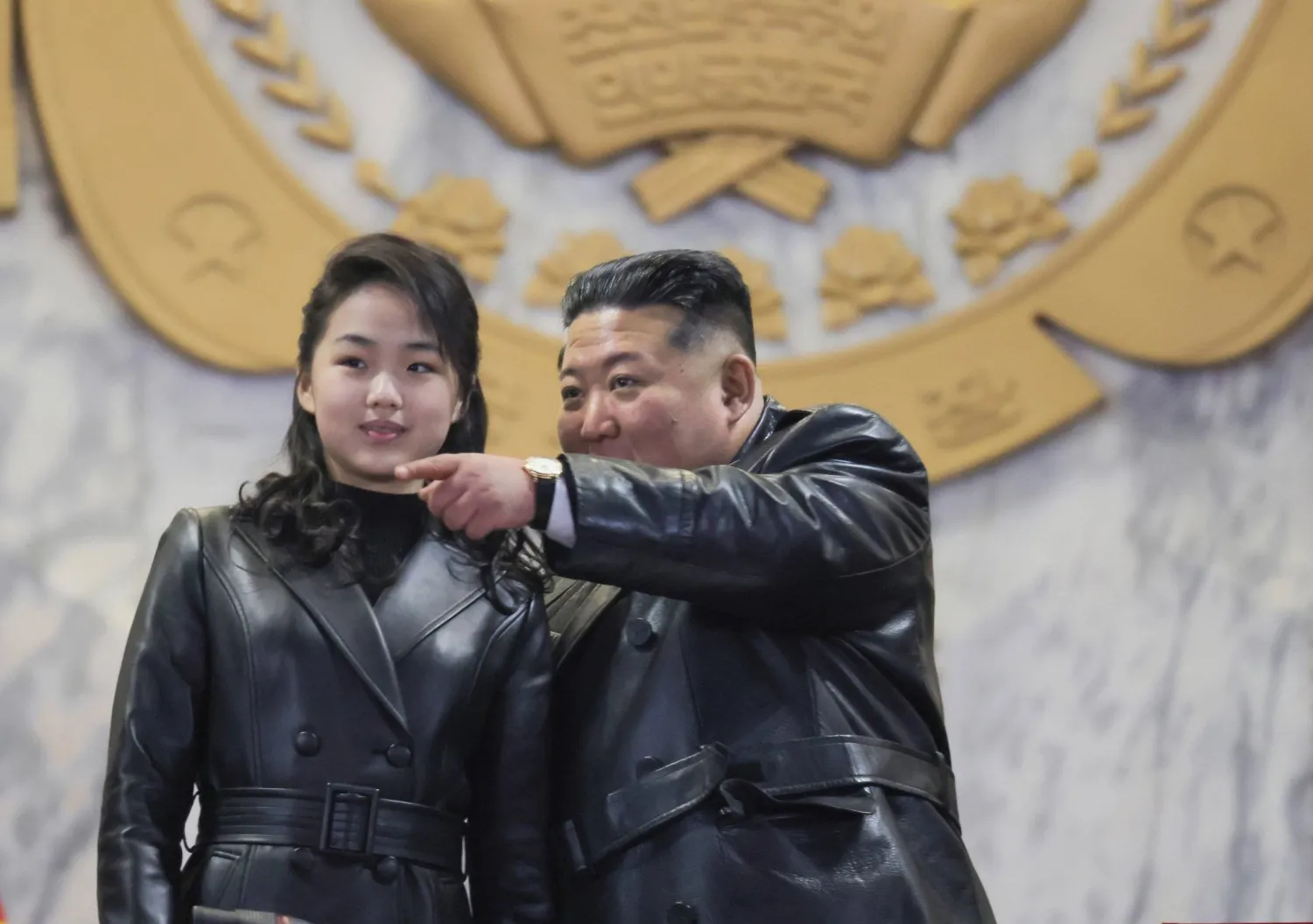
25 February 2026, North Korea, Pyongyang: North Korean leader Kim Jong-un (R), alongside his daughter, Ju-ae, attend a military parade at Kim Il Sung Square in Pyongyang, to mark the ninth congress of the ruling Workers' Party, in this photo released by Korean Central News Agency the next day. Photo: -/YNA/dpa
TT

NKorea Warns it Could Destroy South if Threatened, Leaves Door Open for US Dialogue

25 February 2026, North Korea, Pyongyang: North Korean leader Kim Jong-un (R), alongside his daughter, Ju-ae, attend a military parade at Kim Il Sung Square in Pyongyang, to mark the ninth congress of the ruling Workers' Party, in this photo released by Korean Central News Agency the next day. Photo: -/YNA/dpa

North Korean leader Kim Jong Un claimed his nuclear-armed country could “completely destroy” South Korea if its security were threatened, reiterating his refusal to engage with Seoul, state media said Thursday. However, he left the door open to dialogue with Washington as he concluded a ruling party congress outlining his policy goals for the next five years.

The official Korean Central News Agency said that Kim also called for developing new weapons systems to bolster his nuclear-armed military, including intercontinental ballistic missiles that could be launched from underwater and an expanded arsenal of tactical nuclear weapons, such as artillery and short-range missiles, targeting South Korea.

He said the accelerated development of his nuclear and missile program in recent years “permanently cemented” the country’s status as a nuclear weapons state, and called for the United States to discard what he perceives as “hostile” policies toward the North if it wants to resume long-stalled dialogue.

South Korea’s Unification Ministry said it was regrettable that the North continues to define inter-Korean relations as hostile and that Seoul will “patiently” pursue efforts to stabilize peace.

The Workers’ Party congress, which began last Thursday in Pyongyang, is the country's most important political event. KCNA said the North staged a military parade in the capital Wednesday as it wrapped up the congress, previously held in 2016 and 2021.

Watching the parade with his increasingly prominent daughter — believed to be around 13 years old and named Kim Ju Ae — Kim Jong Un in a speech said his forces were capable of “immediately and thoroughly retaliating” against any hostile threat. But the state outlet did not immediately say whether he showcased his largest weapons, including ICBMs potentially capable of reaching the US mainland.

Kim’s comments at the congress were widely anticipated as he has been issuing increasingly hard-line views toward South Korea since 2024, when he discarded the North’s long-standing goal of a peaceful reunification between the war-divided Koreas and declared the South as a permanent enemy. But analysts expected Kim to take a more measured approach toward Washington to preserve the possibility of future dialogue, with the long-term aim of securing US sanctions relief and tacit recognition as a nuclear state.

Kim has recently been prioritizing Russia in his foreign policy, sending thousands of troops and large amounts of military equipment to support Moscow’s war in Ukraine, possibly in exchange for aid and military technology.

But it would make sense to keep his options open as the war in Ukraine could wind down, potentially making North Korea less valuable to Moscow, experts say.

In a report wrapping up the congress, Kim said his government was maintaining the “toughest stance” against Washington, but added there was “no reason we cannot get along” with the Americans if they withdrew their supposedly “hostile policy” toward the North. North Korea often uses the term to describe US-led pressure and sanctions over Kim’s nuclear ambitions. His comments aligned with North Korea’s previous position calling for Washington to abandon its demands for the North’s denuclearization as a precondition for reviving talks, The Associated Press reported.

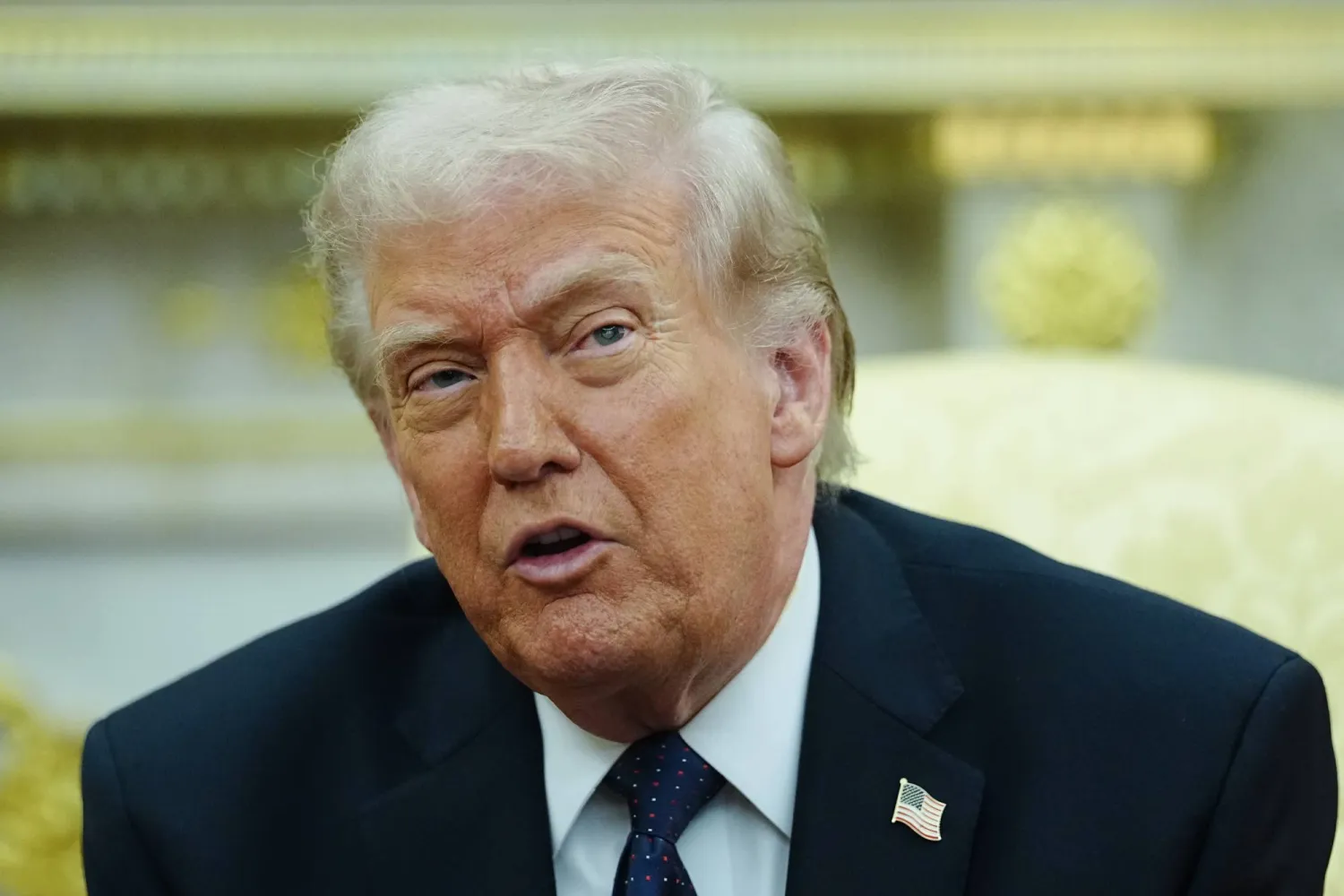
North Korea has repeatedly rejected Washington and Seoul’s calls to resume diplomacy aimed at winding down its nuclear program, which derailed in 2019 following the collapse of Kim’s second summit with US President Donald Trump during his first term.

The prospects of US-North Korea relations “depends entirely on the US attitude,” Kim said. “Whether it’s peaceful coexistence or permanent confrontation, we are ready for either, and the choice is not ours to make.”

At the congress, Kim derided liberal South Korean President Lee Jae Myung’s calls for engagement as a deception, accusing successive governments in Seoul of seeking the North’s collapse. He said there is “absolutely nothing to discuss” with an enemy state and that the North would “permanently exclude” the South from the notion of a shared nation.

“As long as the Republic of Korea cannot escape its geopolitical condition of sharing a border with us, the only way it can live safely is to abandon all ties with us and refrain from provoking us,” he said, disdainfully referring to South Korea’s formal name.

Tensions could further rise next month when South Korea stages its annual military exercises with the United States. North Korea portrays the allies' joint exercises as invasion rehearsals and often uses them as a pretext to dial up its own military demonstrations.

Kim set new goals to advance his nuclear forces in the next five years while calling for faster production of nuclear warheads and a broader range of delivery systems.

Emphasizing naval capabilities, Kim called for ICBMs that could be fired from underwater platforms, indicating potential plans to fit those weapons on the nuclear-propelled submarine being built. He called for developing artificial intelligence-equipped attack drones, stronger electronic warfare capabilities to disable enemy command centers, more advanced reconnaissance satellites and unspecified weapons to strike enemy satellites.

He also said the military will deploy more nuclear-capable artillery systems against South Korea in phases each year while speeding up efforts to “fortify” the inter-Korean border.


NGO Slams Greek Shippers over Deliveries to Israel

A boy rides his bicycle past an Israel flag on Yom Kippur in Tel Aviv, Israel October 12, 2024. (Reuters)
TT

NGO Slams Greek Shippers over Deliveries to Israel

A boy rides his bicycle past an Israel flag on Yom Kippur in Tel Aviv, Israel October 12, 2024. (Reuters)

A pro-Palestinian campaign group on Monday accused Greek shipping firms of transporting oil and military equipment to Israel that helps its war in Gaza, in some cases breaching a Turkish embargo on trade with Israel.

The "No Harbour for Genocide" group called on Greek authorities to investigate and sanction firms running vessels that "turned off their tracking signals and listed false end-destinations before arriving at Israeli ports" to avoid detection.

The group released a report that said between May 2024 and December 2025 at least 57 "covert crude oil shipments" took about 47 million barrels of oil from Turkey to Israel "in violation of Turkey's trade embargo on Israel" since May 2024.

It said some of the oil was being refined into "fuel for the Israeli air force and fuel for military vehicles and tanks".

The report named a number of firms involved in "the shipment of both energy products and military cargo to Israel" that made them "a critical enabler of Israel's genocide and illegal occupation of Palestine, as well as its escalating aggression across the region".

Israel denies that its actions in the Gaza conflict since the October 7, 2023 Hamas attacks amount to genocide.

The Union of Greek Shipowners did not immediately comment on the report, AFP reported.

Greek firms run one of the world's biggest shipping fleets and the industry accounts for about eight percent of Greece's gross domestic product.


Israel Defense Minister Says Struck Iran's Largest Petrochemical Facility

A satellite image shows a closer view of the Natanz Nuclear Facility with new building damage, amid the US-Israeli conflict with Iran, near Natanz, Iran, March 2, 2026. (Vantor/Handout via Reuters)
TT

Israel Defense Minister Says Struck Iran's Largest Petrochemical Facility

A satellite image shows a closer view of the Natanz Nuclear Facility with new building damage, amid the US-Israeli conflict with Iran, near Natanz, Iran, March 2, 2026. (Vantor/Handout via Reuters)

Defense Minister Israel Katz said Monday that Israel had conducted a "powerful strike" on Iran's largest petrochemical complex, after Iranian media reported multiple explosions at the site.

The military "just carried out a powerful strike on Iran's largest petrochemical facility, located in Asaluyeh -- a central target responsible for about 50 percent of the country's petrochemical production", Katz said in a video statement.

Israel carried out a similar strike on the Mahshahr Petrochemical Special Zone in southwest Khuzestan province on Saturday, a local Iranian official said, adding that five people were killed, AFP reported.

"At this point, the two facilities, which together account for roughly 85 percent of Iran's petrochemical exports, have been taken out of operation and are no longer functioning," Katz said.

"This represents a severe economic blow amounting to tens of billions of dollars to the Iranian regime."

Israel also carried out strikes last month on gas facilities at the South Pars Special Economic Zone in Asaluyeh.

The South Pars/North Dome mega-field -- the largest known natural gas reserve in the world -- is shared between Iran and Qatar.

In recent days, Israel has targeted key industrial sectors as part of the ongoing military campaign against Iran.

On Friday, Israeli Prime Minister Benjamin Netanyahu said Israeli strikes had destroyed around 70 percent of Iran's steel production capacity, significantly undermining Tehran's ability to manufacture weapons.

Steel is a strategically important material used in industrial and military production, including for missiles, drones and ships.

Katz said he and Netanyahu had ordered the military "to continue striking with full force Iran's national infrastructure".


Israel Says to Boost Production of Arrow Missile Interceptors

Emergency personnel carry a body at the site of a projectile impact, as the US-Israeli conflict with Iran continues, in Haifa, Israel, April 6, 2026. REUTERS/Shir Torem
TT

Israel Says to Boost Production of Arrow Missile Interceptors

Emergency personnel carry a body at the site of a projectile impact, as the US-Israeli conflict with Iran continues, in Haifa, Israel, April 6, 2026. REUTERS/Shir Torem

Israel's defense ministry on Monday said it plans to accelerate production of Arrow missile interceptors, as it fights a war with Iran.

The announcement came after questions emerged in the international media over how long Israel's interceptor stocks would last, with some analysts pointing to shortages of Arrow interceptors in particular.

Israel has a multi-layered air defense array, with a variety of systems intercepting threats at different altitudes.

The top tier consists of the anti-ballistic missile Arrow systems, with Arrow 2 operating both within the Earth's atmosphere and in space and Arrow 3 intercepting above the Earth's atmosphere.

"The Ministerial Committee for Procurement has approved the Israel Ministry of Defense (IMOD) plan for a major additional acceleration of Arrow interceptor production," AFP quoted a defense ministry statement as saying.

It added that the plan would enable "a significant increase in both the production rate and stockpile of Arrow interceptors as part of preparations for the evolving campaign".

Defense Minister Israel Katz was quoted in the statement as saying that "Israel has sufficient interceptors to protect its citizens, and this initiative is designed to ensure continued freedom of action and the sustained operational endurance we require."

Each Arrow 2 interceptor costs an estimated $1.5 million, with Arrow 3s around $2 million.
