


Saudi Privatization Strategy Lifts Logistics Development

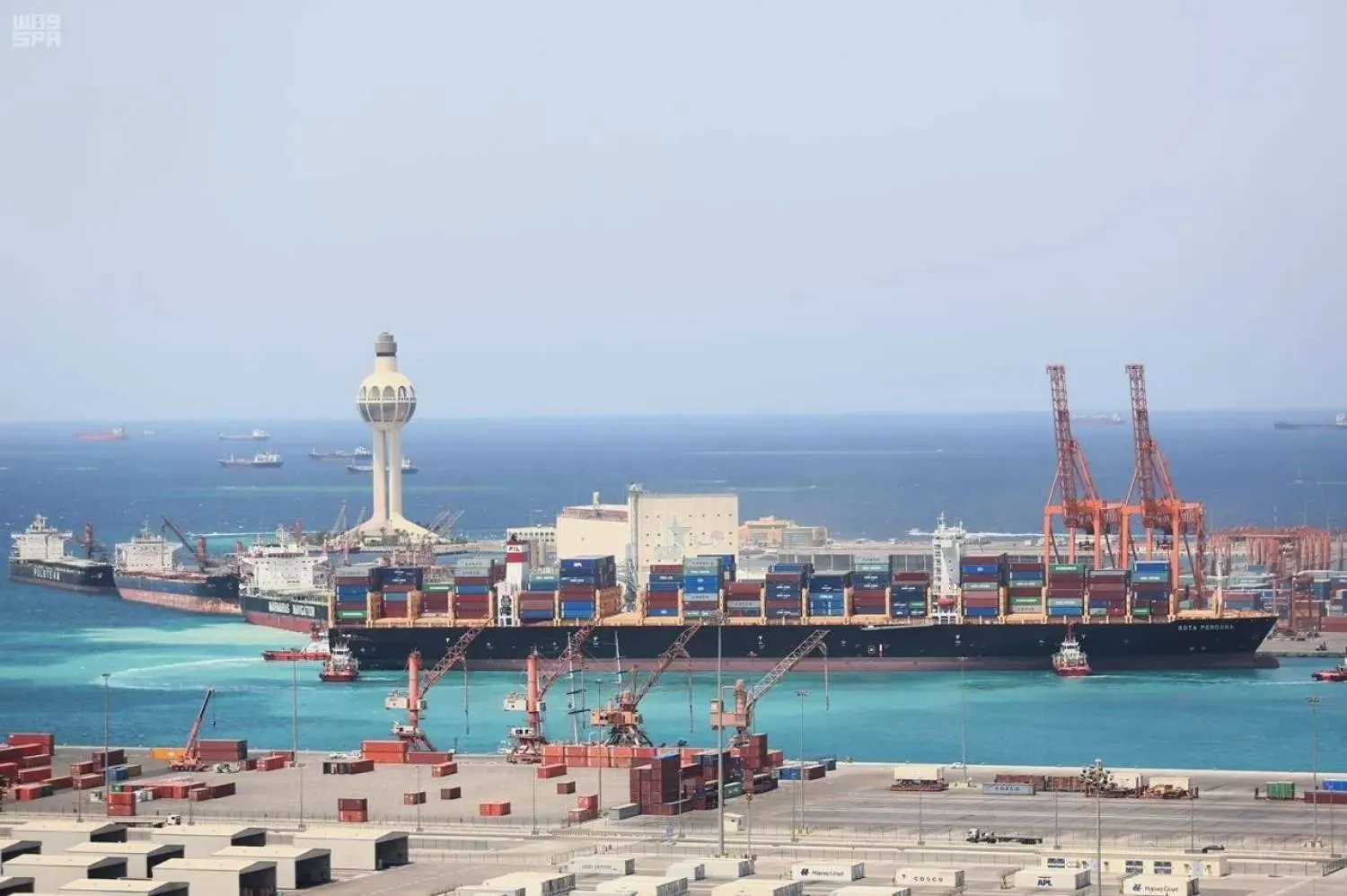
Jeddah Islamic Port (SPA)
TT

Saudi Privatization Strategy Lifts Logistics Development

Jeddah Islamic Port (SPA)

The launch of the National Privatization Strategy at the end of last month marked a decisive shift toward a sustainable, private sector-led model across Saudi Arabia’s economy, positioning it as a catalyst for advancing the Kingdom’s transport and logistics system and reinforcing the private sector’s role as a central development partner.

More than an administrative step, the strategy acts as a legislative engine designed to boost international competitiveness and translate the National Transport and Logistics Strategy from long-term ambition into measurable economic impact.

At its core is a clear objective: entrench Saudi Arabia’s position as a global logistics hub linking three continents under Vision 2030.

The momentum began in 2018 with the launch of the Privatization Program, one of Vision 2030’s flagship initiatives aimed at accelerating implementation and strengthening coordination across government entities.

By the end of 2025, the program had completed its plan, becoming the second Vision 2030 program to achieve its targets. It identified assets and resources for privatization across key sectors, including water, transport, health and education, improving service quality while creating jobs and attracting high-value investment.

The program laid firm institutional foundations, notably through the establishment of the National Center for Privatization and the approval of the Privatization Law. Together, they streamlined procedures, cataloged assets and services, and prepared sectors for public-private partnerships.

With the program formally concluded, the National Privatization Strategy and the Center now spearhead the next phase, expanding delivery and unlocking further opportunities.

Partnership at the core

Saudi Arabia’s model rests on Public-Private Partnerships (PPPs), aimed at improving economic performance while increasing private-sector participation in managing and owning public facilities and services.

The target is clear: lift the logistics sector’s contribution to GDP to 10% by 2030 by opening facilities to domestic and foreign investors, improving service quality and sharpening the Kingdom’s competitive edge in global trade.

Investment has already followed. Minister of Transport and Logistics Services Saleh Al-Jasser said private investments in the sector have surpassed 280 billion riyals ($74.7 billion), raising transport and logistics’ share of GDP to 6.2%.

In a further step, Airports Holding Company, in cooperation with the National Center for Privatization, announced a PPP project to develop Prince Naif bin Abdulaziz International Airport in Qassim.

Revitalizing logistics

Nashmi Al-Harbi, a logistics and supply chain specialist, said privatization policies have become the primary driver of the transformation of Saudi logistics into a magnet for global investment.

More than 18 billion riyals ($4.8 billion) have been injected into ports and logistics zones, while customs clearance times have been cut to under 24 hours through the FASAH platform. Port capacity has climbed to 40 million containers.

The results have been visible internationally. Saudi Arabia advanced 17 places in the World Bank’s Logistics Performance Index, strengthening confidence among major global shipping lines.

Al-Jasser told the Public Investment Fund and Private Sector Forum that 80% of targeted investments in transport and logistics will come from the private sector. Recently signed maritime and port contracts with private operators exceed 18 billion riyals, with most port investments now executed through private participation.

Al-Harbi said privatization is not simply a supportive policy but a core guarantee of Saudi Arabia’s transformation into a global logistics hub. It attracts financing and international operational expertise while accelerating adoption of technologies such as artificial intelligence and the Internet of Things, driving higher service standards and lower costs.

He said privatizing ports and airports has addressed longstanding bottlenecks, eliminating customs clearance delays that once stretched to nine days. Port operational efficiency has increased by 71%, alongside stronger integration between rail and road networks to ensure smoother cargo flows.

Boosting competitiveness

Logistics expert engineer Hassan Al-Halil said privatization has reshaped the sector, making it more attractive to leading global shipping companies through structural reforms.

Transferring port and airport management to private operators reduced shipping times and operating costs, enhancing market competitiveness. Significant investments modernized ports, warehouses and smart transport systems, offering advanced, user-friendly facilities.

Private sector participation also reduced operational bottlenecks, making shipping, unloading and storage faster and more organized. The introduction of private operators in customs clearance cut bureaucracy, accelerated procedures and increased transparency — key factors in attracting international players. Clear legal frameworks have reinforced investor confidence in major logistics projects.

Linking three continents

Al-Halil described privatization as a foundational pillar for connecting Asia, Europe and Africa, though part of a broader ecosystem. Sustained investment in technological infrastructure, airports and smart warehouses, combined with integrated land, sea and air networks, remains essential.

He stressed the need to align flexible regulation with specialized human capital. In this framework, privatization provides the necessary base, working alongside technology and policy to support the Kingdom’s global logistics ambitions.

Innovation and growth

Competition driven by privatization has spurred innovation, including digital tracking and integrated transport and storage services, strengthening international appeal. The mixed public-private model in ports and airports has created a more efficient, flexible and investment-ready environment that supports economic growth.

The transformation extends beyond seaports. Air cargo volumes have risen 34% annually to 1.2 million tons. Saudi Arabia ranked fourth among emerging markets in the 2025 Agility Logistics Index, reinforcing its ambition to enter the global top 10.

Domestically, 30 new logistics centers have been added, supporting an ecosystem that now employs more than 651,000 people.

Structural enablers

These gains reflect institutional efforts led by the National Industrial Development and Logistics Program (NIDLP), launched in 2019 to strengthen infrastructure and expand capacity. The program serves as a structural enabler linking domestic and regional networks, facilitating cross-border goods movement and ensuring competitively priced services for investors and consumers.

By engaging the private sector, NIDLP aims to reduce shipping costs through network integration, streamline customs procedures and ease cross-border trade while maintaining competitive domestic distribution services.

To sustain progress and address private-sector challenges, the Logistics Partnership Council was established as a bridge between investors and policymakers, turning on-the-ground feedback into policies that enhance competitiveness.

Saudi Arabia is moving beyond its traditional role as a facility operator to redefine its place in global logistics. Privatization and strategic partnerships are not only improving efficiency but positioning the Kingdom as a critical link in future supply chains, advancing Vision 2030’s goal of building a diversified and sustainable economy.




Japan Signals Greater Vigilance Over Yen's Weakness

People walk through Shinjuku shopping district in Tokyo, Japan, 27 February 2026. EPA/FRANCK ROBICHON
TT

Japan Signals Greater Vigilance Over Yen's Weakness

People walk through Shinjuku shopping district in Tokyo, Japan, 27 February 2026. EPA/FRANCK ROBICHON

Japanese Finance Minister Satsuki Katayama on Friday signaled heightened vigilance over currency moves, telling parliament the government is monitoring the yen's recent slide with a strong sense of urgency.

“We are watching recent movements very closely, with a strong sense of urgency,” Katayama told parliament, when asked if the yen's depreciation may be hampering wage growth by pushing up import costs.

“We are also maintaining extremely close communication with the United States, and will continue engaging in dialogue to ensure that the concerns you raise do not materialize,” she said, according to Reuters.

This came while data showed on Friday that annual core inflation in Tokyo slowed in February, running below the Bank of Japan's 2% target for the first time in 16 months, and potentially heightening friction between the central bank and the government on the future path of rate hikes.

The data is in line with the BOJ's projection that consumer inflation will temporarily slow due to the impact of fuel subsidies and the base effect of last year's spike, before reaccelerating on steady wage gains.

The Tokyo core consumer price index, which excludes volatile costs of fresh food, rose 1.8% in the year to February after a 2.0% gain in January, data showed, falling below the 2% target for the first time since October 2024. It compared with a median market forecast for a 1.7% gain.

The slowdown reflected the effect of fuel subsidies and the abolition of gasoline tax surcharges, while a wave of food price hikes has also run its course.

An index stripping away the effect of fresh food and fuel, which is closely watched by the BOJ as a better gauge of trend inflation, rose 2.5% in February from a year earlier, picking up from a 2.4% gain in January.

“I don't think this result alone would affect the Bank of Japan's stance of keeping to its commitment to raise interest rates,” said Kanako Nakamura, an economist at Daiwa Institute of Research, noting the slowdown in core inflation was expected.

But some analysts say the easing core inflationary impulse could give dovish Prime Minister Sanae Takaichi a reason to push the BOJ to go slow on its rate hikes.

In a potential sign of friction over monetary policy, the Mainichi daily reported this week that Takaichi had expressed reservations about additional interest rate hikes during her meeting with BOJ Governor Kazuo Ueda last week.

“If, going forward, the BOJ were to step back from its rate-hike stance, it would be easier to explain that shift not as pressure from the government but as a change in judgment strictly driven by data, namely, weakness in GDP and CPI,” said Masato Koike, a senior economist at Sompo Institute Plus.

Separate government data showed on Friday that Japan's factory output rose 2.2%, the first gain in three months driven by double-digit car output growth.

But the increase undershot even the most bearish economist forecast, with the median forecasting a 5.3% jump. Japanese manufacturers expect their output to fall again in February and March.

The BOJ raised interest rates to a 30-year high of 0.75% in December, taking another landmark step in ending decades of huge monetary support in a sign of its conviction that Japan is progressing toward durably hitting its 2% inflation target.

The central bank has signaled its readiness to continue raising interest rates if its economic and price forecasts materialize.


China Encourages Dollar Buying to Slow Surging Yuan

Headquarters of the People's Bank of China (PBOC), the central bank, is pictured in Beijing, China September 28, 2018. REUTERS/Jason Lee
TT

China Encourages Dollar Buying to Slow Surging Yuan

Headquarters of the People's Bank of China (PBOC), the central bank, is pictured in Beijing, China September 28, 2018. REUTERS/Jason Lee

China's central bank (PBOC) moved to rein in the fast-rising yuan on Friday, scrapping risk reserves requirements for forex forward contracts in a move that would encourage dollar buying as exporters start to feel the pinch from a stronger currency.

The decision came after the yuan hit a near three-year high against the dollar on Thursday. It pulled back in Friday, pausing a sparkling rally largely driven by an unexpected boom in exports, according to Reuters.

China's currency is up more than 7% on the dollar since last April.

The PBOC's move, along with its weaker-than-expected setting of the currency's trading band on Friday, are the strongest pushback yet on the months-long rally.

“It means the PBOC is intervening as the yuan's appreciation is too fast,” said Yuan Tao, an analyst at Orient Futures.

But he said the measure will only slow the yuan's appreciation, expecting the dollar to remain weak.

The People's Bank of China said it would remove the reserve requirement of 20% on forex forward contracts from March 2, vowing to maintain the yuan's exchange rate at a “reasonable and balanced level.”

The move would “make it less punitive for market participants to bet against the yuan,” Maybank said in a note to clients.

“It is clear that PBOC wants the yuan appreciation pace to slow.”

Although a stronger yuan would make Chinese assets more appealing to foreigners and makes imports cheaper, it would hit Chinese exporters whose receipts are mostly settled in dollars.

On Friday, Beijing Ultrapower Software Co blamed yuan strength for contributing to its 28% plunge in 2025 profit, joining a growing list of corporate victims.

“The company's revenues are mainly settled in the dollar, so we swung to forex conversion losses” as the dollar fell, it said in a flash earnings statement.

Rush to Sell Dollar

The PBOC's move comes amid exporters' rush to sell dollars in both the spot and forwards market, while importers delay buying the greenback for payment.

That resulted in net forex inflows totaling $79.9 billion in January, the third biggest in history, according to official forex settlement data. That followed record inflows in December.

Liu Yang, general manager of the financial market business department at Zheshang Development Group, said in the near term the PBOC's latest move will release some pent-up demand for buying dollars through forwards, helping to balance market supply and demand.

But the mild nature of the measures suggests “the PBOC sees little risk of further yuan depreciation and still believes there is significant room for the currency to appreciate.”

Last year, the yuan posted its biggest annual gain against the dollar since 2020, and the upward momentum has continued into the new year as analysts expect another strong year for Chinese exports.

Chinese shippers have been able to find more buyers in markets outside the US after Washington ramped up tariffs, helping to offset weak domestic demand which is weighing on the economy.

Xu Tianchen, a senior economist at the Economist Intelligence Unit, said “the renminbi has been strong even as the dollar is largely stable, suggesting strong market conviction that it's undervalued.”

Highlighting the urgency for Chinese companies to embrace forex hedging, a growing number of listed companies say the stronger yuan is hurting their profits.

Suzhou Junchuang Auto Technoloies, whose sales are mostly settled in dollars, said on Wednesday the yuan's strength contributed to its 31% slump in 2025 profit.

Robot maker Ninebot, Shenzhen Hello Tech Energy Co and Shenzhen Hui chuang Da Technology also disclosed negative impacts from yuan appreciation.


Oil Prices Rise 3% as US and Iran Extend Talks into Next Week

FILE PHOTO: A flame burning natural gas is seen at an heavy-crude treatment plant operated by Venezuela's state oil company PDVSA, in the oil rich Orinoco belt, near Cabrutica at the state of Anzoategui April 16, 2015. Picture taken on April 16, 2015. REUTERS/Carlos Garcia Rawlins/File Photo
TT

Oil Prices Rise 3% as US and Iran Extend Talks into Next Week

FILE PHOTO: A flame burning natural gas is seen at an heavy-crude treatment plant operated by Venezuela's state oil company PDVSA, in the oil rich Orinoco belt, near Cabrutica at the state of Anzoategui April 16, 2015. Picture taken on April 16, 2015. REUTERS/Carlos Garcia Rawlins/File Photo

Oil prices rose around 3% on Friday as traders remained on alert for potential supply disruptions after the United States and Iran extended nuclear talks.

Brent crude futures advanced by $2.01, or 2.8%, to $72.76 a barrel by 1310 GMT while US West Texas Intermediate crude was up $2.11, or 3.2%, at $67.32.

"Uncertainty prevails, fear is pushing prices higher today," said Tamas Varga, an oil analyst at brokerage PVM. "It is completely driven by the outcome of the Iranian nuclear talks and possible military action the US might take against Iran."

For the week, Brent and WTI were both set to finish with a gain of 1.4%, Reuters reported.

The United States and Iran held indirect talks in Geneva on Thursday after US President Donald Trump ordered a military buildup in the region.

Oil prices gained more than a dollar a barrel during the talks on media reports indicating that discussions had stalled over US insistence on zero enrichment of uranium by Iran. However, prices eased after the Omani mediator said the two sides had made progress in the talks.

They plan to resume negotiations with technical-level discussions scheduled next week in Vienna, Omani Foreign Minister Sayyid Badr Albusaidi said on X.

"We think the latest round of talks offers some hope on chances of a peaceful resolution, but military strikes are in no way out of the equation," said DBS analyst Suvro Sarkar.

Trump said on February 19 that Iran must make a deal over its nuclear programme within 10 to 15 days or "really bad things" will happen.

Geopolitical risk premiums of $8 to $10 a barrel have built in oil prices on fears that a conflict will disrupt Middle East supply through the Strait of Hormuz, where about 20% of global oil supply passes, Sarkar said.

Producer group OPEC+ is also likely to consider raising oil output by 137,000 barrels per day for April at its March 1 meeting, sources said, after suspending production increases in the first quarter.