


Israel Greets Iran Talks With Pessimism, Prepares for War

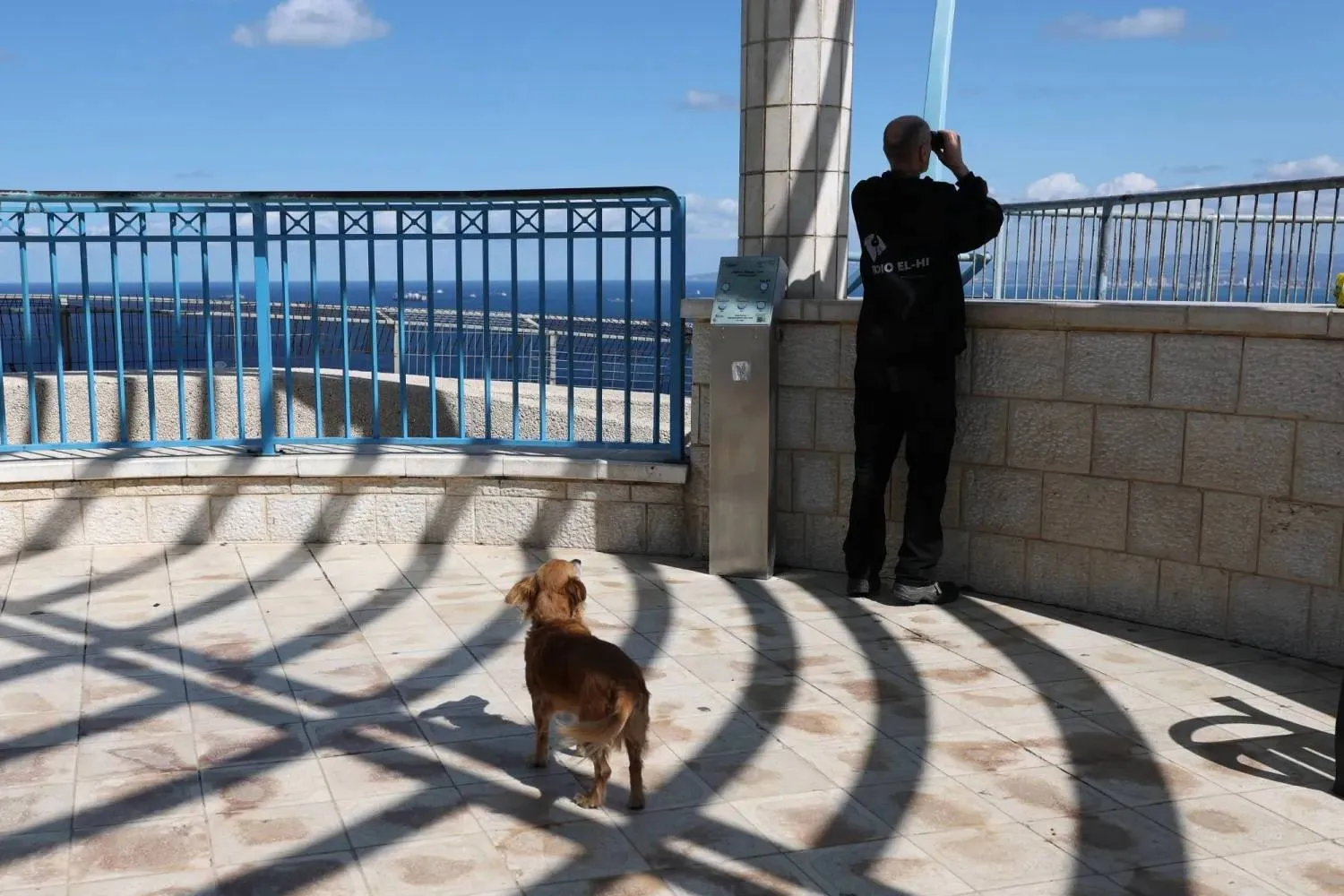
Man uses binoculars to watch the Mediterranean ahead of the expected arrival of the aircraft carrier Gerald Ford at Haifa port (EPA)
TT

Israel Greets Iran Talks With Pessimism, Prepares for War

Man uses binoculars to watch the Mediterranean ahead of the expected arrival of the aircraft carrier Gerald Ford at Haifa port (EPA)

Despite cautious optimism over negotiations between Iran and the US and hopes for a new nuclear deal, Israel’s political leadership and most of its media have struck a starkly different tone: pessimism, and open preparation for failure and war.

A growing conviction that a confrontation with Iran is inevitable has taken hold among Israelis, with opinion polls showing broad support for military action.

Political leaders have reinforced the mood, citing what they call “Iranian intransigence” and warning that any agreement Washington might reach with Tehran would be a bad one.

Military officials have stressed the Israeli army’s readiness for all scenarios, while media reports describe intensified Israeli and US military movements inside Israel.

On Friday, Yedioth Ahronoth splashed a headline reporting that US F-22 fighter jets that arrived in Israel were placed on maximum alert on the runway at Ovda airport in the Negev desert.

The F-22 is among the most advanced aircraft in service and is not sold to any other military because of the sensitivity of its combat technology. The newspaper said 26 of the 45 jets produced for the US military had reached Israel.

Tensions have also been fueled by reports that the aircraft carrier Gerald Ford docked at an Israeli port, that several airlines suspended flights to Israel, and that large numbers of US troops are stationed at Israeli bases to operate US air defense systems deployed to the country in recent weeks.

Some analysts say the flurry of activity could be part of a coordinated US pressure campaign on Iran. But most argue the main aim is to prepare for negotiations collapsing, allowing a swift pivot from diplomacy to war.

Israeli media reported that the army has privately signaled unease over what it sees as a drift toward support for war without reckoning with the potential cost to Israel.

Israeli army spokesperson Brigadier General Effie Defrin said there had been no change in public guidance.

In a recorded statement, he said the military was closely monitoring developments in Iran and remained on alert, ready to defend in full coordination with partners to bolster air defenses.

If there is any change, authorities will provide the public with an immediate update, he said.

Yedioth Ahronoth reported that the government is preventing the army from speaking openly about the risks. In a report two days earlier, it said the army was refraining from briefing the public under pressure from the political echelon not to disclose potential consequences.

The paper added that none of the army’s scenarios for the current year, including the possibility of a sudden round of fighting with Iran, envisioned a full-scale war with a major regional power like Iran, which has drawn lessons from the previous war.

It said Tehran is working to replenish its missile arsenal and restore its air defenses.

While 30 Israelis were killed in the previous war against Iran, the army is now warning that in a future conflict, scenarios such as an Israeli warplane being shot down inside Iran or greater destruction inside Israel, including the deaths of dozens of civilians, are more plausible.

It also cautioned against being dragged into a “war of attrition” lasting many months and imposing a heavy economic toll, with heavy missiles launched from Iran at a steady pace, disrupting operations at Ben Gurion Airport and striking the home front.

Media leaks continued on Friday, with reports that Israeli military chief of staff Eyal Zamir warned Prime Minister Benjamin Netanyahu that Hezbollah could join such a war, even though it stayed out of the previous conflict and recently said it did not intend to take part.

Zamir was quoted as saying Iran pumped $1 billion into the party’s coffers last year alone through smuggling operations, expanding its arsenal to include tens of thousands of precision missiles, long-range rockets, explosive drones and tens of thousands of fighters ready to confront Israeli forces if they enter Lebanon — a major challenge for Israel.

In contrast, Amos Harel, military analyst for Haaretz, struck a different note.

Entering a major, and possibly prolonged, war in the Middle East runs counter to US President Donald Trump’s instincts and everything he has advocated for years, he wrote.

Trump, Harel noted, has long argued that the United States became mired in costly wars in Vietnam, Afghanistan and Iraq, favoring swift, decisive outcomes that allow him to declare victory.

With US public support for war against Iran low and Americans more concerned about the cost of living and domestic turmoil, Harel suggested this may explain Trump’s reluctance to escalate his rhetoric and his repeated delays, while keeping a narrow opening for Tehran to step back and accept a new nuclear deal.



Netanyahu: Time Has Come to Remove the Yoke of Tyranny

Smoke rises following an explosion, after Israel and the US launched strikes on Iran, in Tehran, Iran, February 28, 2026. Majid Asgaripour/WANA (West Asia News Agency) via REUTERS
TT

Netanyahu: Time Has Come to Remove the Yoke of Tyranny

Smoke rises following an explosion, after Israel and the US launched strikes on Iran, in Tehran, Iran, February 28, 2026. Majid Asgaripour/WANA (West Asia News Agency) via REUTERS

Israeli Prime Minister Benjamin Netanyahu said Iran must not be allowed to gain nuclear arms and urged Israelis to "stand together" after Israel and the United States launched strikes against Iran on Saturday.

"This murderous terrorist regime must not be allowed to arm itself with nuclear weapons that would enable it to threaten all of humanity," Netanyahu said in a video statement.

"Together we will stand, together we will fight and together we will ensure the eternity of Israel," he added.

Netanyahu said that the joint US-Israeli attack "will create the conditions for ⁠the brave Iranian people ⁠to take their destiny into their own ⁠hands."

"The time has come for all sections of the people in Iran ... to remove the yoke of tyranny from (the ⁠regime) and ⁠bring a free and peace-loving Iran," Netanyahu said in a statement.

The attack follows a 12-day air war in June between Israel and Iran and repeated US-Israeli warnings that they would strike again if Iran pressed ahead with its nuclear and ballistic missile programs.

An Israeli defense official said the operation had been planned for months in coordination with Washington, and that the launch date was decided weeks ⁠ago.


Trump Announces Major Combat, Tells Iran Officials to Lay Down Arms or ‘Face Death’

US President Donald Trump speaks at the Port of Corpus Christi in Corpus Christi, Texas, Friday, Feb. 27, 2026. (AP Photo/Michael Gonzalez)
TT

Trump Announces Major Combat, Tells Iran Officials to Lay Down Arms or ‘Face Death’

US President Donald Trump speaks at the Port of Corpus Christi in Corpus Christi, Texas, Friday, Feb. 27, 2026. (AP Photo/Michael Gonzalez)

US President Donald Trump on Saturday called attacks on Iran “a noble mission,” saying they were necessary because of Tehran’s pursuit of nuclear weapons and missile systems that could reach the US.

The US and Israel launched the coordinated attacks on Iran to destroy the country's missile forces and "annihilate" the country's navy.

Trump encouraged the Iranian people to “take over your government — it will be yours to take.”

Despite claims that last year’s strike against Iran’s nuclear facilities destroyed the country’s nuclear program, Trump said that Iran “attempted to rebuild their nuclear program and to continue developing the long-range missiles that can now threaten our very good friends and allies in Europe, our troops stationed overseas, and could soon reach the American homeland.”

Trump said that Saturday’s strikes would be part of “a massive and ongoing operation” that will aim to “destroy their missiles and raze their missile industry to the ground” as well as “annihilate their navy,” and “ensure that the region’s terrorist proxies can no longer destabilize the region or the world and attack our forces.”

Trump urged Iranian forces to surrender, including the Revolutionary Guards.

"To the members of the Islamic Revolutionary Guard, the armed forces, and all of the police, I say tonight that you must lay down your weapons and have complete immunity or in the alternative, face certain death," Trump said.

The attack was widely expected after Trump ordered the biggest military deployment to the Middle East in years.


Israel Says it Launched Pre-emptive Attack Against Iran

A plume of smoke rises following a reported explosion in Tehran on February 28, 2026. (Photo by ATTA KENARE / AFP)
TT

Israel Says it Launched Pre-emptive Attack Against Iran

A plume of smoke rises following a reported explosion in Tehran on February 28, 2026. (Photo by ATTA KENARE / AFP)

Israel said it launched a pre-emptive attack against Iran on Saturday, pushing the Middle East into a renewed military confrontation and further dimming hopes for a diplomatic solution to Tehran's long-running nuclear dispute with the West.

The New York Times, citing a US official, reported that US strikes on Iran were underway. A source told Reuters that Iran's supreme leader, Ayatollah Ali Khamenei, was not in Tehran and had been transferred to a secure location.

The attack, coming after Israel and Iran engaged in a 12-day air war in June, follows repeated US-Israeli warnings that they would strike again if Iran pressed ahead with its nuclear and ballistic missile programs.

"The State of Israel ⁠launched a pre-emptive ⁠attack against Iran to remove threats to the State of Israel," Defense Minister Israel Katz said.

An Israeli defense official said the operation had been planned for months in coordination with Washington, and that the launch date was decided weeks ago.

Explosions were heard in Tehran on Saturday, Iranian media reported, and sirens sounded across Israel around 08:15 local time in what the military said was a proactive ⁠alert to prepare the public for the possibility of an incoming missile strike.

The Israeli military announced the closure of schools and workplaces, with exceptions for essential sectors, and a ban on public airspace. Israel closed its airspace to civilian flights, and the airports authority asked the public not to go to any of the country's airports.

The US and Iran renewed negotiations in February in a bid to resolve the decades-long dispute through diplomacy and avert the threat of a military confrontation that could destabilize the region.

Israel, however, insisted that any US deal with Iran must include the dismantling of Tehran's nuclear infrastructure, not just stopping the ⁠enrichment process, and ⁠lobbied Washington to include restrictions on Iran's missile program in the talks.

Iran said it was prepared to discuss curbs on its nuclear program in exchange for lifting sanctions but ruled out linking the issue to missiles.

Tehran also said it would defend itself against any attack.

It warned neighboring countries hosting US troops that it would retaliate against American bases if Washington struck Iran.