

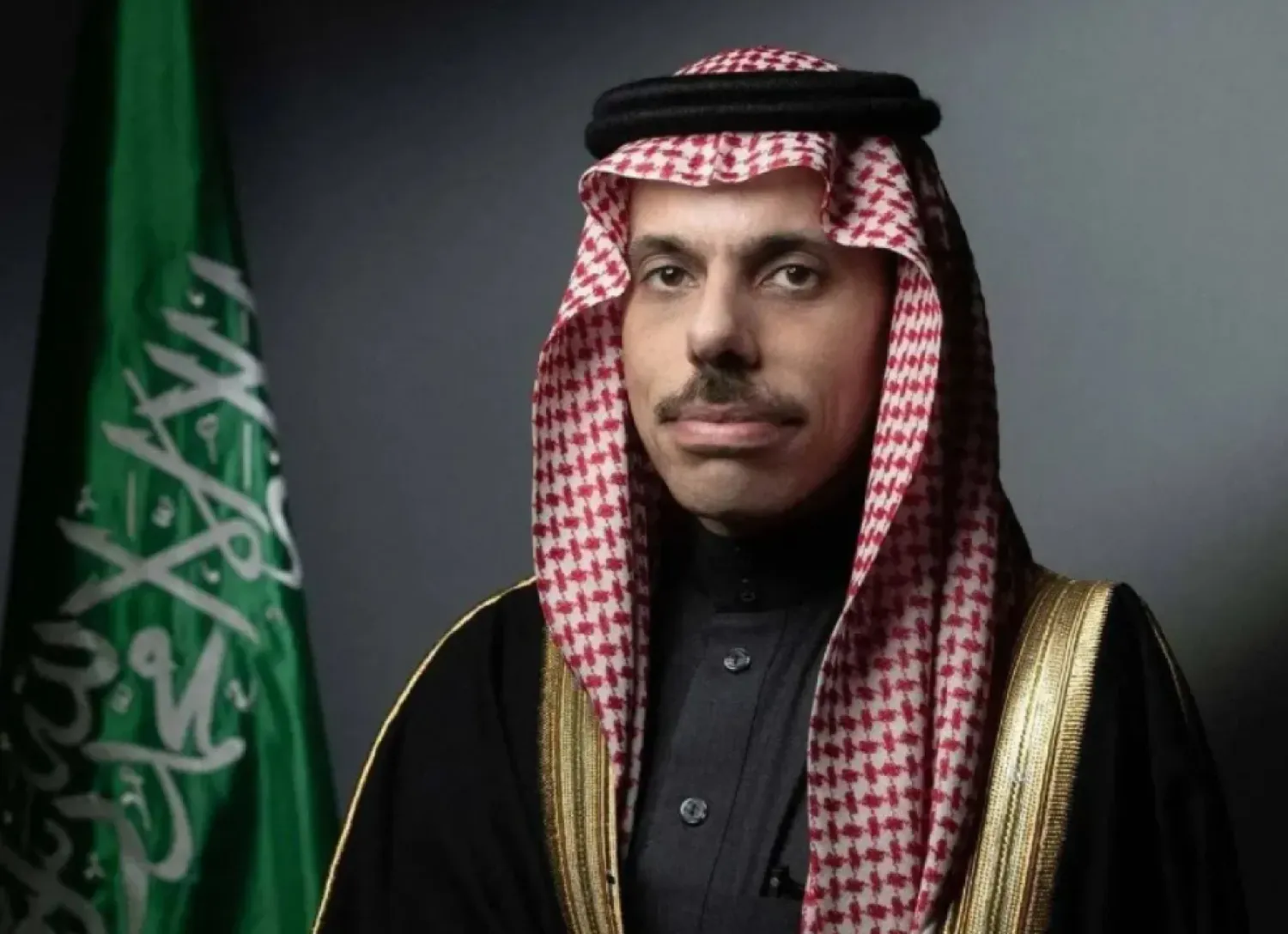

Saudi FM, UN High Commissioner for Human Rights Discuss Regional Developments

Saudi Foreign Minister Prince Faisal bin Farhan.
TT

Saudi FM, UN High Commissioner for Human Rights Discuss Regional Developments

Saudi Foreign Minister Prince Faisal bin Farhan.

Saudi Minister of Foreign Affairs Prince Faisal bin Farhan bin Abdullah received a phone call from the United Nations High Commissioner for Human Rights Volker Türk.

During the call they discussed regional developments and their humanitarian repercussions, as well as the importance of intensifying cooperation to support international efforts aimed at achieving security and peace.



Gulf Countries at UN Slam Iran’s Retaliatory Strikes

The skylines are seen in Doha, Qatar, 02 March 2026. (EPA)
TT

Gulf Countries at UN Slam Iran’s Retaliatory Strikes

The skylines are seen in Doha, Qatar, 02 March 2026. (EPA)

Gulf countries on Monday slammed Iran's wave of retaliatory strikes across the Middle East, decrying at the United Nations that Tehran had upended their attempts to avoid a regional escalation.

After the United States and Israel began striking Iran on Saturday, Tehran launched a wave of reprisal attacks at targets across the Middle East.

The Group of Arab States told the UN Human Rights Council in Geneva that Iran's attacks were an "extremely grave" violation of international law that threatened regional stability.

"The Arab countries were seeking to bolster dialogue and openness. The is an unjustifiable escalation that destabilizes all peace and stability efforts," Saudi ambassador Abdulmohsen Binkhothaila said, speaking for the group.

The six Gulf Cooperation Council countries – Saudi Arabia, Bahrain, Kuwait, Oman, Qatar and the United Arab Emirates -- plus Jordan -- all hit by Tehran's retaliation -- also jointly condemned the "Iranian aggressions", which came "despite our efforts to avoid escalation in the region".

On Thursday, Oman had mediated talks in Geneva between US and Iranian negotiators. Washington and Israel launched their attack two days later.

"We call for the immediate cessation of military actions... and return to dialogue because it's the only way to solve disagreements," said the sultanate's deputy permanent representative Mohamed Al-Balushi.

Kuwait's ambassador Naser Abdullah H. M. Alhayen added: "Terrorizing the civilians in countries seeking peace is an abhorrent crime.

"Iran should resort to self-restraint and... wisdom and refrain from further military escalation," he said.

- 'Raw power' -

Iran's ambassador Ali Bahreini said his country was "under indiscriminate and invasive military attacks by the United States and the regime of Israel".

He said Iran's schools had been bombed, hospitals indiscriminately attacked, its leaders assassinated and "more than 160 innocent schoolgirls were massacred in Minab".

"The deliberate killing of civilians" openly violates the UN Charter, he said, and the "ongoing, unlawful military aggression against Iran exemplifies the dominance of raw power over the principles of human rights".

The European Union urged maximum restraint, while the African group said the situation was eroding trust among nations.

Iran's neighbor Türkiye warned: "There is no ambiguity about the gravity of the moment. We stand at a precipice.

"The danger of further escalation is real and immediate," said ambassador Burak Akcapar, urging countries to prevent a "widening spiral of instability that could extend well beyond Iran and our region".

Some countries voiced support for Iran at the UN's top rights body.

China said the US-Israeli attack "brutally violates Iranian people's human rights" and the killing of supreme leader Ali Khamenei "seriously violates Iran's sovereignty".

Cuba said Washington was proclaiming the "exceptional right to conquer and to use force as a legitimate form of behavior".

Venezuela -- citing the US capture of President Nicolas Maduro -- said immunity for heads of state must be respected, otherwise others could be targeted with "unlawful bombing, abduction or assassination".


Saudi Crown Prince, Indian Prime Minister Discuss Regional Military Escalation

Prince Mohammed bin Salman bin Abdulaziz Al-Saud, Crown Prince and Prime Minister of Saudi Arabia. (SPA)
TT

Saudi Crown Prince, Indian Prime Minister Discuss Regional Military Escalation

Prince Mohammed bin Salman bin Abdulaziz Al-Saud, Crown Prince and Prime Minister of Saudi Arabia. (SPA)

Saudi Crown Prince and Prime Minister Mohammed bin Salman bin Abdulaziz Al Saud received a phone call on Monday from Indian Prime Minister Narendra Modi, during which they discussed regional developments and the dangerous military escalation threatening regional and global security and stability.

The Indian prime minister expressed his country's firm rejection of the blatant Iranian attacks against the Kingdom, SPA reported.

He affirmed India's solidarity with Saudi Arabia, condemning any actions that threaten its sovereignty, territorial integrity, and the safety of its citizens.


Saudi Ambassador to UN: Iranian Strikes on Residential Areas Violate Humanitarian and Human Rights Laws

The Kingdom also strongly condemned the Iranian attacks against the United Arab Emirates, Kuwait, Qatar, Bahrain, Oman, and Jordan - SPA
TT

Saudi Ambassador to UN: Iranian Strikes on Residential Areas Violate Humanitarian and Human Rights Laws

The Kingdom also strongly condemned the Iranian attacks against the United Arab Emirates, Kuwait, Qatar, Bahrain, Oman, and Jordan - SPA

The Kingdom of Saudi Arabia participated in the general debate under Item 2 of the 61st session of the Human Rights Council, during which Saudi Arabia's Permanent Representative to the United Nations Office and other international organizations in Geneva Ambassador Abdulmohsen Bin Khothaila delivered the Kingdom's statement expressing the strongest rejection and condemnation of the blatant and cowardly Iranian attacks targeting Riyadh and Eastern regions, noting they cannot be justified under any pretext, SPA reported.

The Kingdom also strongly condemned the Iranian attacks against the United Arab Emirates, Kuwait, Qatar, Bahrain, Oman, and Jordan, labeling them a flagrant violation of state sovereignty, the principles of good neighborliness, international law, and the UN Charter.

The statement emphasized that these attacks targeted civilian facilities and residential areas, threatening lives and violating international humanitarian and human rights laws while undermining regional stability.

Consequently, the Kingdom affirmed it will take all necessary measures to defend its security, territory, and residents, while calling upon the international community to strongly condemn these attacks due to their serious repercussions for regional and international peace.