


Fresh Starts at Gucci, Fendi and Marni Set the Tone at Milan Fashion Week

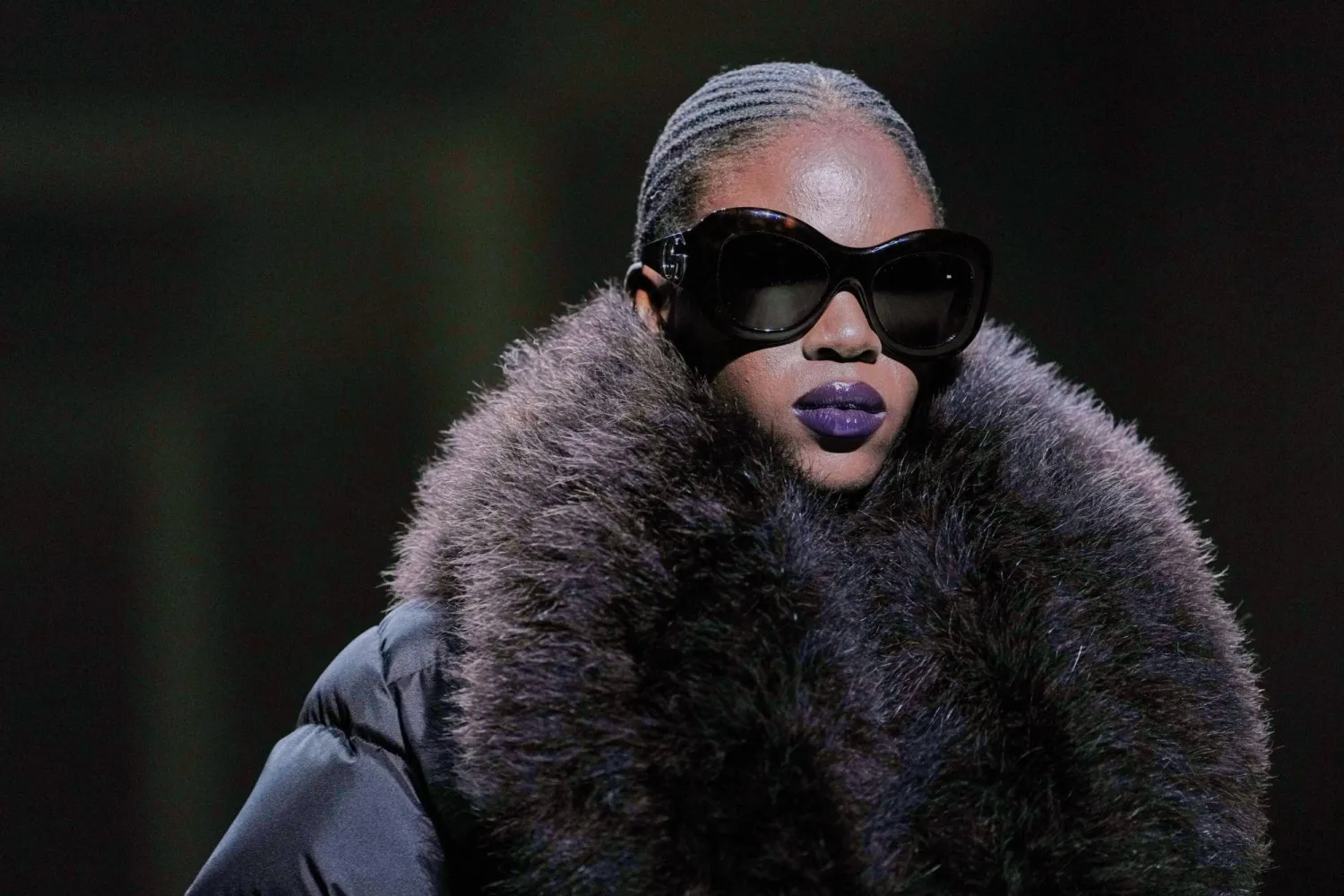
 A model wears a creation from the Gucci Fall/Winter 2026-2027 Men/Women's collection, presented in Milan, Italy, Friday, Feb. 27, 2026. (AP)
A model wears a creation from the Gucci Fall/Winter 2026-2027 Men/Women's collection, presented in Milan, Italy, Friday, Feb. 27, 2026. (AP)
TT

Fresh Starts at Gucci, Fendi and Marni Set the Tone at Milan Fashion Week

 A model wears a creation from the Gucci Fall/Winter 2026-2027 Men/Women's collection, presented in Milan, Italy, Friday, Feb. 27, 2026. (AP)
A model wears a creation from the Gucci Fall/Winter 2026-2027 Men/Women's collection, presented in Milan, Italy, Friday, Feb. 27, 2026. (AP)

It was a season of fresh starts and superstars across Milan Fashion Week. New creative directors shared their visions for Fendi, Gucci and Marni, while Madonna, Kate Moss and, most unexpectedly, Mark Zuckerberg lit up the runways and front rows.

Trends for the next cold-weather season from six days of runway previews that ended Sunday include suits to accompany women on back-to-work mandates and brutalist outerwear as an investment in uncertain times, with hints of feathers, (eco) fur and animal prints to lighten up the mood.

Zuckerberg caused a minor furor when he was ushered into the Prada runway show with presidential-style security. He sat next to Prada heir Lorenzo Bertelli, but the long-rumored pairing of Prada with Meta’s smart glasses was not revealed.

There was much buzz around new directions at multiple fashion houses: Gucci under Demna, Fendi under Maria Grazia Chiuri, Marni under Meryll Rogge, and Giorgio Armani under Silvana Armani, following the iconic Milanese designer’s death last September. Louise Trotter at Bottega Veneta and Simone Bellotti at Jil Sander had sophomore outings, often trickier than debuts.

A glance at five womenswear trends and buzzwords for next season:

Layering at Prada With just 15 models, instead of the usual 60 or more, Prada offered a master-class in layering, with models removing garments with each backstage pass.

Trenches, knit jackets and leather bombers gave way to long-cuffed men’s shirts, archival house coats and dresses that frayed into underlayers like sartorial archaeology, before arriving at cotton bloomers, sheer, embroidered slip dresses and bralettes.

Miuccia Prada, who designed the collection with Raf Simons, said in notes that the collection was meant to represent “layers of lives, of feeling.’’ She added backstage that it brought “minimalism and opulence together."

Prada’s self-described obsession with history was underpinned by a showroom decorated with artifacts spanning centuries: 16th-century tapestries, 18th-century Venetian mirrors and paintings from the 1900s.

Suitable suiting Back-to-work mandates are penetrating the runway, sometimes in unexpected places.

At Fendi, fur was worn over practical suiting and quarter-button collared shirts, best exemplified by front-row guest Uma Thurman.

At Jill Sander, Bellotti played with tiny, off-skew lapels contrasting with excess fabric that created volume in the back, Alice-in-Wonderland suiting that modernized the brand's minimalist aesthetic and tested the idea of whether the superfluous can be essential. Skirts had side slits that closed at the hems, while the silhouette of dresses traced a curve — detail without decoration.

Suits were in short supply at Gucci, where Demna veered dramatically from the brand's failed attempt at quiet luxury with clingy daywear and plunging crystal-encrusted evening gowns.

Fur, feathers and animal prints Fendi's designer Chiuri embraced the brand’s heritage as a furrier and leather goods maker, but with a twist: the furs were mostly upcycled, in a silent rebuff of the very noisy anti-fur demonstrators outside.

Chiuri had worked for a decade alongside the five Fendi sisters before creative director stints at Valentino and Dior.

Animal prints were glimpsed on many runways, including an eco-fur with the suggestion of a cow print at Dolce & Gabbana.

Prada featured laced-up boots fantastically covered with feathers, an antique touch that complemented beaded satin booties and pumps.

The coat game and chunky knitwear Louise Trotter said she aimed to lighten up her second Bottega Veneta outing. She embraced Milan as her inspiration, opening with a series of architectural overcoats in sturdy blue and grays that were meant to exemplify Milan’s Brutalist architecture, before an explosion of energy and color in outerwear constructed from fiberglass that shimmied kinetically with every step.

Ferragamo’s mariner twist of the season resulted in overcoats with button panels that could be twisted into new architectures. They perfectly complemented laced silken dresses underneath.

Rogge’s coed debut for Marni was youth-driven, a 1990s version of the 1970s, and her love of knitwear came through in chunky sweater jackets and retro-patterned pullovers. A luxurious short-haired fur coat with a cotton lining exemplified the brand’s high-low materials mix. Straight midi-skirts were covered with plastic sequins or mother of pearl discs that rattled like chimes.

Softness in tailoring Tod’s demonstrated how to turn leather into the softest tailoring with a seamless declination from foulard dresses to the same silhouette constructed from leather.

Silvana Armani embraced her uncle’s soft-shouldered jackets, including quilted Japanese-style jackets and colorful shearling coats. The biggest statement were the slate gray overcoats that grazed the runway with elegance.

“Working with fluidity and simplicity came naturally to me because that’s how I am,’’ she said after the show.

Footnotes While the muted color palettes and focus on basics suggest a conservative response to global turbulence, overt references to war was rare. One exception was Moschino, where designer Adrian Appiolaza included a pair of references including the graphic character Mafalda on a garment screaming: “Basta,” Italian for “Enough.”

‘Something Borrowed’: Dutch Bride Opts for Recycled Wedding

Sustainable development communications specialist and bride-to-be Lara Beters and groom Mathijs Dordregter walk through a ticket gate in Utrecht train station for their wedding inside the station as part of an initiative to highlight sustainability issues, in Utrecht on April 2, 2026. (AFP)
TT

‘Something Borrowed’: Dutch Bride Opts for Recycled Wedding

Sustainable development communications specialist and bride-to-be Lara Beters and groom Mathijs Dordregter walk through a ticket gate in Utrecht train station for their wedding inside the station as part of an initiative to highlight sustainability issues, in Utrecht on April 2, 2026. (AFP)

"Within like 30 minutes I knew this was the one," Lara Peters said of the second-hand wedding dress she had just worn to her marriage -- in the Netherlands' busiest rail station.

Peters, 42, had found the dress two days earlier in a shop run by "Free Fashion", a Dutch foundation devoted to recycling clothing to combat waste -- a cause close to her heart.

That is why she and her 44-year-old husband Mathijs Dordregter chose sustainability as the theme of their wedding -- with the help of Free Fashion.

The organization says it is the kind of trend people everywhere will need to adopt if humankind wants to curb over-consumption and its destructive effect on the planet.

"The message that during your wedding you can also choose sustainable options is very important to me," the bride explained.

Peters works in communications in the sustainable development field, so the couple's choice to hold their wedding ceremony in the bustle of Utrecht rail station had a certain logic to it.

Nina Reimert of the Free Fashion foundation helped organize the event.

"We know that in terms of emissions... producing a wedding dress is similar to something like 250 kilometers (155 miles) by car," she told AFP.

"And they're made of all different materials so they are really hard to recycle and almost everything is polyester," she added.

With 17,000 weddings a year in the Netherlands, she explained, that adds up to a lot of emissions. "It's a nightmare."

It was to draw attention to the over-consumption inherent in many weddings that the Free Fashion foundation decided to make an online appeal to convince couples to approach the happy day from a different perspective.

For as the old saying for weddings goes: "Something old, something new; Something borrowed, something blue."

- Love me, love my planet -

For Free Fashion's co-founder Lot van Os, opting for a second-hand bridal dress -- something that is normally only worn once -- sends a strong message.

"When you celebrate love you should also celebrate love for the planet," he told AFP.

Free Fashion's team of 800 volunteers is much in demand by local councils who want to meet their targets for reducing waste and recycling.

The foundation also works with businesses, helping them organize exchanges of clothing between employees.

For van Os, this practice of exchanging rather than constantly buying new items is a habit people are going to have to acquire in the future.

This "circular transition", he says is something we are all going to have to go through. "It's not a matter of if but when we are going to change," he said.

To underline the wedding's sustainability theme, a pop-up store at the rail station offered dozens of wedding dresses, free to anyone willing to sign up to the concept.

"There are now already enough clothes in the world for the next six generations," said a sign printed outside the store.

Both the bride and the bridegroom wore second-hand outfits for the big day -- as did all their guests.

And the sustainability theme did not end there, said Peters.

Their wedding meal was vegetarian -- less harmful for the environment -- and they travelled to the venue on bikes or by public transport.

"Everything I bought for the wedding was already used at other weddings," added the bride.

As for her wedding dress, she promised: "It's not going to be hanging in my closet!"


Nike’s Turnaround Put to Test as Middle East Conflict Poses New Risks

A man walks past Nike booth with installation of shoes at the 8th China International Import Expo (CIIE) venue in Shanghai, China, November 5, 2025. (Reuters)
TT

Nike’s Turnaround Put to Test as Middle East Conflict Poses New Risks

A man walks past Nike booth with installation of shoes at the 8th China International Import Expo (CIIE) venue in Shanghai, China, November 5, 2025. (Reuters)

Nike's efforts to steady its business ‌face a fresh setback, with executives cautioning that unrest in the Middle East could further complicate the turnaround, while the sportswear giant still struggles to regain traction in China.

The company on Tuesday warned of a sharp drop in current-quarter sales and slower-than-expected progress on its turnaround, as higher trade-related costs squeeze its margins and cautious consumers rein in spending.

Shares of the company slumped 10% to $47.35 in premarket trading on Wednesday and were on track to open at their lowest in over a ‌decade.

On an earnings ‌call, Chief Financial Officer Matthew Friend said ‌the ⁠conflict in the ⁠Middle East had already disrupted shopping behavior in parts of Europe, the Middle East and Africa, contributing to softer store traffic and weaker sportswear sales.

"The Middle East conflict is compounding the pressure, with Nike flagging traffic disruption and elevated inventory across EMEA," said Josh Gilbert, market analyst at eToro.

Nike CEO Elliott Hill, ⁠who took the helm in 2024, has ‌been looking to steady the company ‌as it grapples with several challenges, including a sluggish digital business, ‌stubborn excess inventory and intensifying competition from Chinese sportswear brands.

To boost ‌margins and bolster investor confidence, Hill has moved to rein in promotions, sharpen product innovation and refocus the business on core franchises such as running.

The efforts showed some signs of improvement in the ‌reported quarter, with the running category growing over 20%, but analysts still see a long road ⁠ahead for ⁠Nike.

At least eight brokerages cut their price target on the stock.

"We are turning at least somewhat frustrated, with seemingly slower than planned pace of recovery," Oppenheimer analyst Brian Nagel said.

The company's forward price-to-earnings multiple, a common benchmark for valuing stocks, is 25.47, compared with 13.54 for Adidas and Under Armour's ratio of 25.72, according to LSEG data.

"These earnings show Nike is keeping pace at a steady jog, but it keeps tripping over hurdles along the way," eToro's Gilbert added.

"Patience is clearly the price of admission."


From Plastic Jars to Transport, Iran War Drives up Beauty Industry Costs

Visitors browse stalls at the beauty industry Cosmoprof trade show, in Bologna, Italy, March 26, 2026. Picture taken with a mobile phone. (Reuters)
TT

From Plastic Jars to Transport, Iran War Drives up Beauty Industry Costs

Visitors browse stalls at the beauty industry Cosmoprof trade show, in Bologna, Italy, March 26, 2026. Picture taken with a mobile phone. (Reuters)

The Iran war is seeping into the cosmetics supply chain, pushing up the cost of everything from plastic jars and lipstick tubes to transport, and reminding the beauty industry that even a tub of face cream depends on fragile global trade routes.

Cost pressures were a recurring theme last week at one of the sector's largest trade fairs in the northern Italian city of Bologna, as executives watched Iran's blockade of the vital Strait of Hormuz shipping route approach a fifth week.

The Cosmoprof fair drew 3,100 exhibitors from 68 countries and 255,000 visitors from 150 nations, ranging from companies seeking packaging solutions to retailers scouting new products.

Cosmetics companies are primarily worried about higher raw material and transport costs due to rising oil prices ‌and disrupted shipping, five ‌industry executives told Reuters.

"We are beginning to see cost increases driven ‌by ⁠energy price inflation, compounded ⁠by delivery delays," said Simone Dominici, CEO of Italian cosmetics group Kiko, who estimates additional logistics-related costs of about 1.5 million euros ($1.7 million) for the group over the year.

Kiko, which sells lipsticks starting at 5 euros and mascaras from 7.5 euros, operates more than 1,000 stores worldwide.

"With so many containers stuck in the Middle East, there is a tighter container availability ... and goods are not being moved efficiently," Dominici said, adding that higher prices for some chemical components and packaging - much of it sourced from the ⁠Far East - would add further pressure.

As the Iran crisis upends supply ‌chains, Yonwoo, a container maker for L'Oreal and K-beauty firms, ‌said it was scrambling to secure stocks of plastic resin to manufacture the pots used for skincare and cosmetics.

ALTERNATIVE ‌ROUTES

Beyond higher costs, the industry could also face softer demand from consumers whose purchasing power ‌is being eroded by inflation, Dominici said.

"It's the perfect storm," he warned.

Milan-listed Intercos and privately owned Ancorotti Group, among Italy's largest contract manufacturers in the sector, said they had not yet faced major supply shortages but cited higher logistics costs, longer delivery times and rising raw material prices as challenges.

"Lead times have lengthened as routes have ‌become longer and ports more congested. What once took eight weeks now can take 12 to 14 weeks," said Ancorotti Chief Executive Roberto ⁠Bottino.

Some clients have turned ⁠to rail transport to reach Asia, Bottino added.

Ancorotti Group makes around 220 million euros in revenues per year from selling products to beauty brands worldwide.

Bottino said it was difficult to imagine supply-chain cost increases not ultimately being passed downstream.

"Middle East customers value quality and are willing to pay a premium for added value, so being unable to access these markets can have a negative impact," said Fabio Franchina, chairman of haircare products maker Framesi.

Franchina said the company's distributor in the region was exploring alternative delivery routes.

"They are looking at ... (options such as) shipping to Jeddah and then moving goods by road instead of routing them through Gulf ports," he said.

Some goods are currently being shipped by air rather than by sea, he added, further lifting costs.

Italy produced 18 billion euros of cosmetics in 2025, including 8.4 billion euros in exports, according to industry body Cosmetica Italia, making the country the world's fifth-largest exporter of beauty products and one of the leading producers of hair dyes, eye make-up and fragrances.