


AI May be Creating Instead of Destroying Jobs for Now, ECB Blog Argues

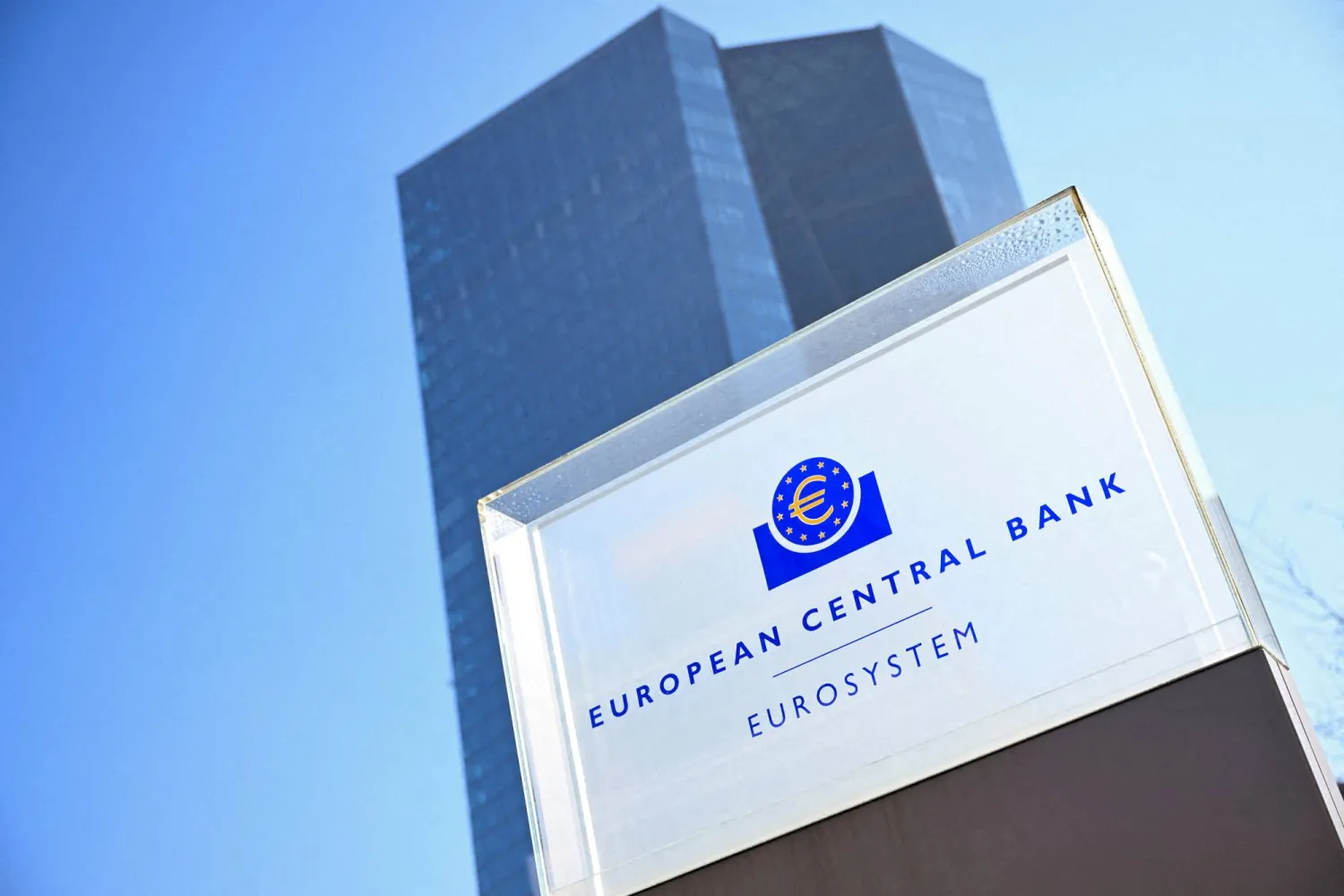
FILE PHOTO: A view of the European Central Bank (ECB) headquarters in Frankfurt, Germany, March 6, 2025. REUTERS/Jana Rodenbusch/File Photo
TT

AI May be Creating Instead of Destroying Jobs for Now, ECB Blog Argues

FILE PHOTO: A view of the European Central Bank (ECB) headquarters in Frankfurt, Germany, March 6, 2025. REUTERS/Jana Rodenbusch/File Photo

The increasing use of artificial intelligence by firms may be creating some jobs in the euro zone rather than destroying them as many fear, a European Central Bank blog post argued on Wednesday.

Economists have been debating whether AI could put white collar staff out of work, and a recent study by Germany's Ifo Institute found that more than a quarter of German firms expect AI to ⁠lead to job ⁠cuts in the next five years.

But the ECB's own Survey on the Access to Finance of Enterprises found that companies making significant use of AI are more likely to take on additional staff ⁠in the near term.

"In other words, AI-intensive firms tend, on average, to hire rather than fire," the blog post, which is not necessarily the view of the ECB, said.

Firms planning to invest in AI are also more likely to have positive expectations for future employment growth, the blog argued.

"This is true regardless of the level of planned AI investment ⁠and ⁠suggests that a pause in hiring due to investment in AI technology is also unlikely over the next year," the blog, written by two ECB staff economists, said.

However, the outlook may change on the longer horizon, the authors said.

Most of the gloomier surveys cover longer horizons than the ECB's own question and the outlook could change once AI starts to significantly transform production processes.



Google to Open German Center for 'AI Development'

Google has launched a massive AI investment drive in Germany. Tobias SCHWARZ / AFP
TT

Google to Open German Center for 'AI Development'

Google has launched a massive AI investment drive in Germany. Tobias SCHWARZ / AFP

Google will open an AI center in Berlin on Thursday, the latest sign of Europe's deepening reliance on US firms in cutting edge technologies despite the continent's stated aim to catch up with its rivals.

Germany's ministry for digital affairs told AFP the center will bring together cloud computing and data infrastructure, "AI development" operations as well as a space for cooperation between start-ups and research centers.

Europe is struggling to gain ground in the battle for AI dominance with the United States and China, which are pumping vast sums into the field and producing the most advanced models underpinning the technology.

The Google project is part of a 5.5 billion euro ($6.4 billion) investment drive into Europe's top economy announced by the US tech titan in November, planned to include a new data center.

The firm said at the time it would renovate its Berlin office to add three floors equipped with meeting rooms, a new conference room and a demo space but made no mention of an AI center in the capital.

Chancellor Friedrich Merz's coalition has signaled it wants to make progress in the area as part of efforts to revive the struggling economy, and there have been a flurry of announcements related to AI recently.

"I want technological leadership to once again become the core of our economic model," said Finance Minister Lars Klingbeil last month at the opening of an industrial AI hub, spearheaded by German telecoms giant Deutsche Telekom and US chip juggernaut Nvidia.

- 'Enormous challenges' -

But while efforts are being made to build up infrastructure and data storage capacities, the "challenges are enormous" for Germany, said Janis Hecker of the digital business association Bitkom.

The government still "underestimates the importance of these technologies for value creation, but also for sovereignty and the defense of our values", he said.

The United States builds more computing capacity each year than Germany has in total, the group says.

According to its calculations, one-thousandth of the proposed central government budget for 2026 is dedicated to AI, and only a fraction of a massive pot of funding to modernize the country's infrastructure is dedicated to cutting-edge technologies.

Against this backdrop, Google's investments in Germany are a "big win", Bitkom believes.

But such investments add to concerns about Europe's technological dependencies on the United States at a time of strained ties under the administration of US President Donald Trump.

Even when American tech giants are not the main players in a project, they often still play a vital role in areas from providing cloud infrastructure to cutting-edge semiconductors.

At a summit on so-called "digital sovereignty" in November, Merz and French President Emmanuel Macron backed the idea of favoring European firms in a bid to develop regional champions.

"Sovereignty does not mean self-sufficiency, but strategic capacity for action," says Barbara Engels of the IW Institute.

She also welcomed Google's projects but said that "we must use this infrastructure while developing our own capabilities".

Antonio Krueger, head of the German Research Centre for Artificial Intelligence (DFKI), believes it makes no sense to try to overtake China and the United States in areas such as producing the most advanced AI models.

Instead, Europe should leverage its advantages in industry, he said, adding that data collected by companies can by use to train smaller AI models to "solve very specific tasks".

In this area, "the race is still wide open," he said.


EU Experts to Start Work on Social Media Ban for Children Thursday

The TikTok Inc. building is seen in Culver City, Calif., Friday, March 17, 2023. (AP)
TT

EU Experts to Start Work on Social Media Ban for Children Thursday

The TikTok Inc. building is seen in Culver City, Calif., Friday, March 17, 2023. (AP)

An EU expert group is to begin work this week on whether to ban social media for children with the aim of coming up with recommendations by the summer, Brussels said Tuesday.

European Union chief Ursula von der Leyen will attend the consultative panel's inaugural meeting on Thursday, having launched the initiative in September, the European Commission said.

Brussels is considering setting a minimum age to access social media after Australia in December required TikTok, YouTube, Snapchat and other top sites to remove accounts held by under-16s, or face heavy fines.

The EU panel will hold a series of meetings to then "advise the President and the commission as a whole on potential additional measures to put in place to protect our kids online," said commission spokesman Thomas Regnier.

The commission did not say who was on the panel.

Brussels is keeping a close eye on how successful the Australian ban proves, with legal challenges already filed against it.

France, along with Denmark, Greece and Spain, has been pushing for similar action at EU level.

Von der Leyen has advocated going further with a minimum age limit, but first wants to hear from experts on what approach the 27-nation bloc should take.

EU efforts to rein in the influence of big tech firms -- most of which are based in the United States -- have angered the administration of President Donald Trump.


Tech Sovereignty and AI Networks Set to Dominate Mobile Meet

A picture taken on March 2, 2026 in Barcelona shows Qualcomm's stand adverstising 6G technology during the inauguration of the Mobile World Congress (MWC), the world's biggest mobile technology showcase and fair. (Photo by Josep LAGO / AFP)
TT

Tech Sovereignty and AI Networks Set to Dominate Mobile Meet

A picture taken on March 2, 2026 in Barcelona shows Qualcomm's stand adverstising 6G technology during the inauguration of the Mobile World Congress (MWC), the world's biggest mobile technology showcase and fair. (Photo by Josep LAGO / AFP)

Tens of thousands flocked to the Mobile World Congress (MWC) in Barcelona Monday, with this year's edition of the telecoms trade fair marked by efforts to integrate AI into networks.

Celebrating its 20th year in the Catalan capital, the annual event is expected to draw around 109,000 professionals and visitors as well as major telecoms operators and equipment manufacturers from around the world, AFP reported.

Usually the day for major announcements, Monday will see appearances from the heads of Indian telecoms giant Bharti, America's AT&T and France's Orange.

And attendees are expected to pack an address by SpaceX chief Gwynne Shotwell, as press reports swirl of an imminent stock market listing for the Elon Musk-owned satellite internet firm.

The broader satellite communications sector will once again be "one of the defining themes of MWC this year", analysts from British research firm CCS wrote.

So-called "direct-to-device" connectivity -- in which phones or other connected gadgets communicate directly via satellites overhead -- "is the hottest topic right now, not just in the satellite industry, but in the mobile operator community", they added.

The telecoms industry can look back on a year of strong growth for global smartphone sales in 2025, adding 1.9 percent to reach 1.26 billion devices.

But firms will also have to ride the waves of multiple upcoming transformations in the sector.

"Sovereign AI will be a big discussion item" at this year's MWC, according to analysts from the GSMA telecoms industry association that hosts the fair, as countries look to insulate their tech infrastructure from geopolitical tensions.

Beyond political considerations, "the mobile industry is facing one of the most unprecedented challenges in its history," said Francisco Jeronimo, an analyst for market intelligence firm IDC.

Manufacturers are confronted with a surge in the price of working memory (RAM) for devices, pumped up by massive demand from tech giants building up their AI computing capacity.

Korean heavyweight Samsung showed off its latest phone models on Wednesday, with the expected prices of the three new gadgets already higher due to the cost of memory.

Over the short term, the price surge will likely trigger a "market contraction" in phones this year, IDC predicted.

But manufacturers will still be keen to show off the innovations crammed into their latest models.

Chinese producer Honor is displaying what it calls a "robot phone" designed to function as a portable AI companion.

The device has a camera on a small robot arm that acts as its head, which Honor said in a Sunday demonstration would be able to nod along with a conversation or look around in response to the user's questions.

The phone is set for launch in the second half of this year.

Chinese competitors Xiaomi and Huawei, sales champions in the connected devices sector, this weekend announced new ranges of watches, headphones and tablets.

Displayed on flashy corporate stands, such new gadgets will line the avenues of the multiple cavernous halls at MWC for visitors to peruse until Thursday.